

The quickest-looking weed treatment can be the wrong choice for a Bermuda lawn. If weeds keep returning, it’s understandable to wonder how to control them without damaging the turf. Effective weed control for bermuda grass starts with identifying the plant, then matching the treatment to the weed and the lawn’s condition. A product suited to broadleaf weeds may not work on grassy weeds, and Bermuda grass needs suitable timing and treatment to stay healthy.
This guide explains how to recognize common weeds in Middle Tennessee lawns, why identification matters, and how the season and active Bermuda growth affect control options. You’ll also learn why challenging grassy weeds such as Dallisgrass and Johnsongrass may need a separate, targeted approach from common broadleaf weeds. Use the practical checks below to assess weed pressure and decide when a professional assessment may help.
Weed Control for Bermuda Grass Starts with Identifying the Problem
Weed control in Bermuda grass means managing unwanted plants while supporting the turf you want to keep. The right approach depends on what’s growing and where. An unwanted plant in an established Bermuda lawn calls for a different decision than Bermuda grass spreading into a fescue lawn, where Bermuda itself is the problem.
Before choosing a treatment, look at the plant’s leaves, growth pattern, and location. Are the leaves broad and low-growing, or narrow blades that blend into the lawn? Is the plant scattered through the turf or concentrated in a thin area? These clues can help narrow down the possibilities, but lookalike weeds may still need careful identification. Start there before deciding how to treat the lawn.
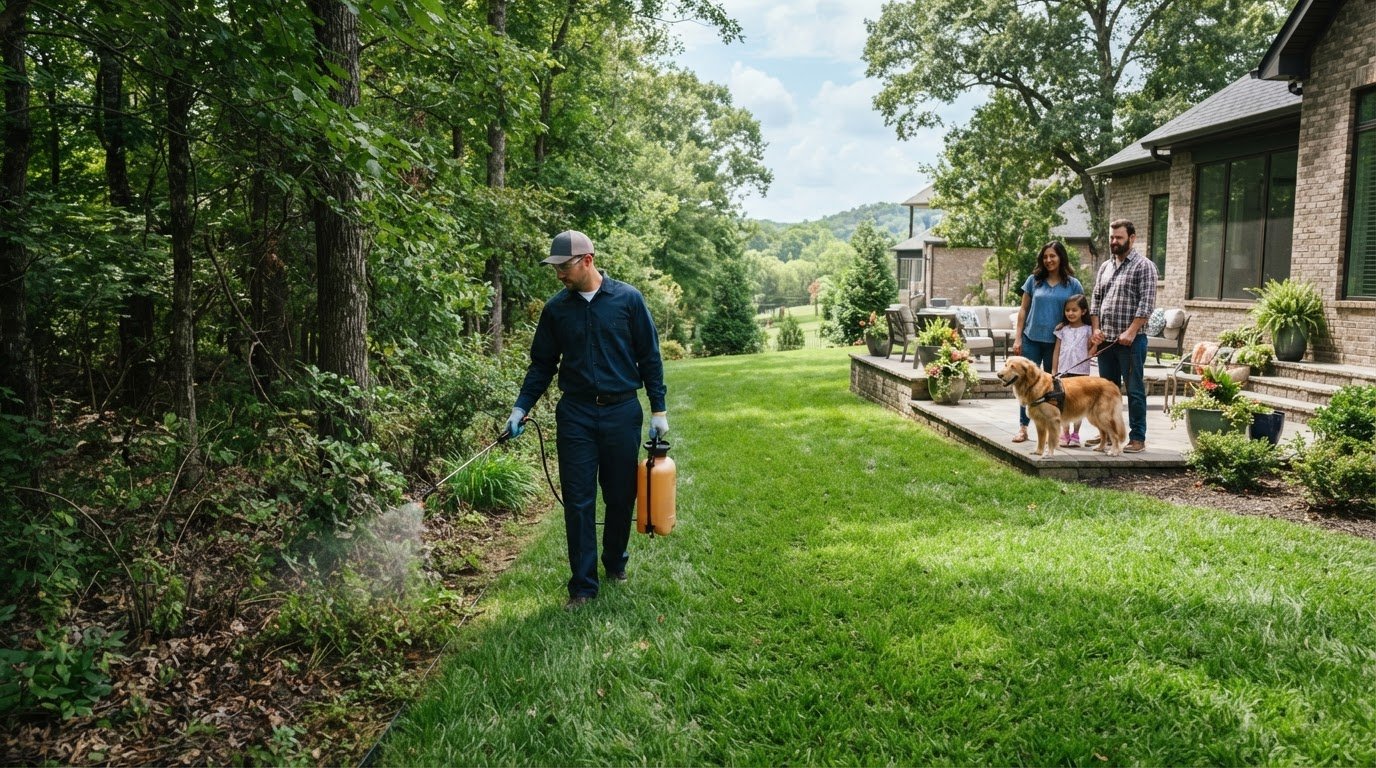
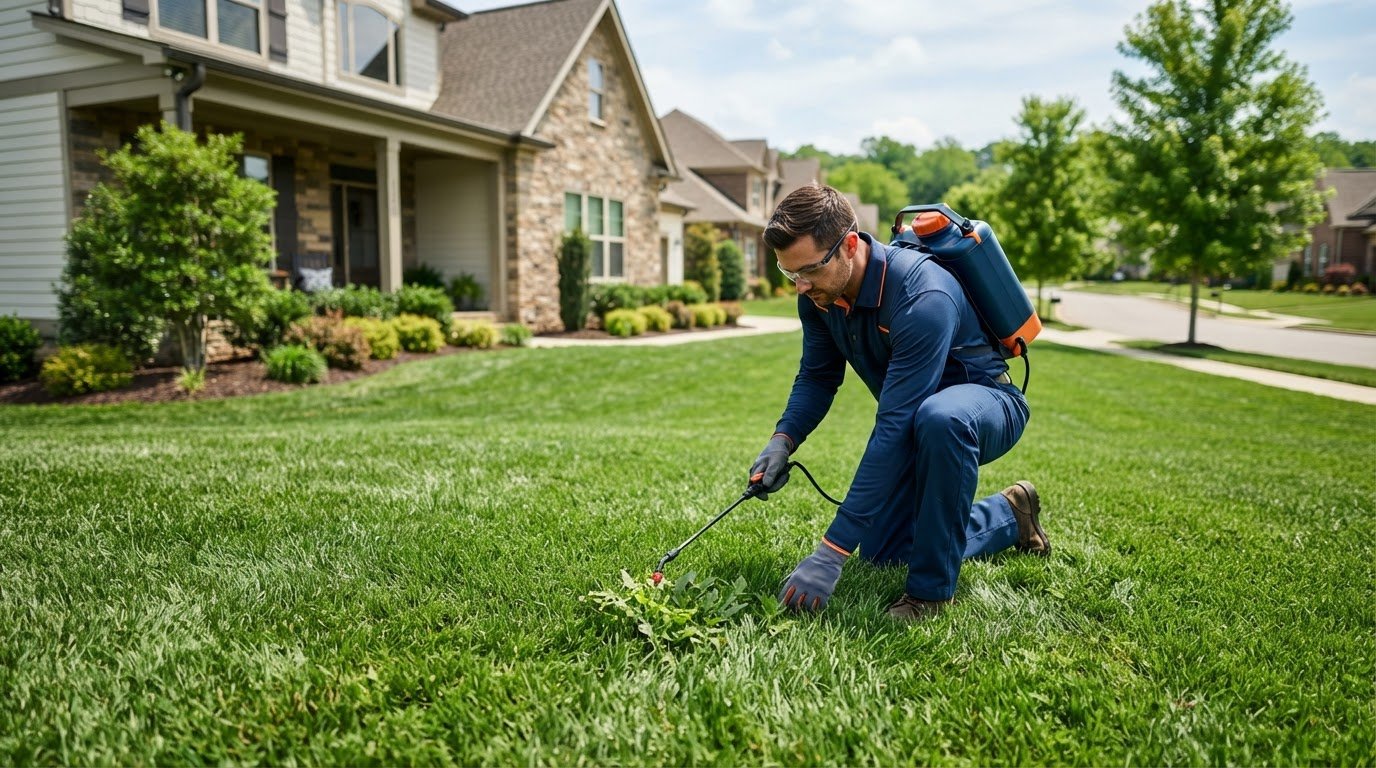
A practical look at lawn spraying can help explain why application technique matters:
Broadleaf weeds and grassy weeds need different identification
Broadleaf weeds often have wider, more visibly shaped leaves. Grassy weeds have narrow blades and can resemble the surrounding turf. Growth habit offers another clue: some weeds spread close to the ground, while others form upright clumps. Check both open areas and thin or stressed patches, where unwanted plants may stand out or become established.
Appearance matters because a treatment designed for broadleaf weeds may not be suitable for grassy weeds. Dallisgrass and Johnsongrass are challenging invasive grassy weeds that may need a separate, targeted approach rather than treatments commonly used for broadleaf weeds. Correct identification helps set realistic expectations and avoids treating the wrong problem.
Is Bermuda grass the lawn or the weed?
Bermuda is desirable turf in some yards, but it can become unwanted when it spreads into an established fescue lawn. Its spreading growth habit helps explain why it can be persistent; the botanical overview of Bermuda grass describes the species and its growth. The goal depends on the lawn: managing weeds within Bermuda is not the same as managing Bermuda within fescue.
Bermuda grass that has spread into established fescue can be extremely difficult to eliminate completely. Management generally focuses on limiting its spread, reducing its presence, and helping the desired fescue remain healthy and competitive. Ongoing or additional strategies may be needed. If you’re unsure what’s growing or which treatment fits, review Performance Lawns’ fertilization and weed control services.
How Bermuda Grass Growth and Middle Tennessee Seasons Affect Weed Control
Good timing depends on the weed’s identity, the Bermuda lawn’s condition, and the weed’s growth stage. Bermuda grass changes through the seasons, and different weeds become active at different times. A treatment that suits one weed or season may not address another, so plan weed control around what’s happening in the lawn, not just a date on the calendar.
Effective timing matches the target weed’s activity with the condition of the Bermuda turf and the treatment’s label directions. That matters especially if the lawn is thin, visibly stressed, or not actively growing. Don’t assume a treatment is suitable just because weeds are easy to see. Check the product label and the lawn’s current condition before acting.
Why weed pressure changes through the growing season
Weather and seasonal growth affect which weeds emerge and become noticeable. In Middle Tennessee, spring pre-emergent applications for summer annual weeds such as crabgrass are generally timed before soil temperatures consistently reach 55°F, often from late February to mid-March. Fall pre-emergent treatment for winter annuals such as annual bluegrass is generally timed before soil temperatures drop below 70°F, usually in September. These are seasonal reference points, not a guarantee that every weed will be addressed.
Pre-emergent treatments target weeds as they germinate; they aren’t a universal treatment for weeds already growing in the lawn. Different species have different growth patterns and treatment needs, so one timing window won’t suit every weed. The University of California Statewide IPM Program’s Bermudagrass control methods discusses Bermuda grass as an unwanted plant. Its recommendations are specific to that context, so don’t assume they apply directly to every Middle Tennessee Bermuda lawn.
What to assess before treating a Bermuda lawn
Before choosing a treatment, check whether Bermuda coverage is thick or thin, whether the turf looks stressed, and where weeds are concentrated. Note whether the plants appear broadleaf or grassy, and consider recent lawn work such as aeration or overseeding. These observations can help distinguish a scattered weed problem from a broader turf-health concern.
- Photograph affected areas and note whether the weeds are spreading.
- Look for signs of stress, and avoid guessing at the weed’s identity.
- Check the label for suitability on Bermuda grass and for the lawn’s current condition.
If identification or treatment selection remains uncertain, a local lawn treatment professional can help assess the situation. Performance Lawns provides lawn care assistance for homeowners considering their next step.
Which Weed Control Approach Fits Bermuda Grass and the Weed Type?
The right approach depends on the weed, how established it is, and how the Bermuda turf is growing. Broadleaf and grassy weeds can look and behave differently, so a treatment that helps with one group may not suit the other. Use identification to guide the next step rather than applying a one-size-fits-all treatment.
Common broadleaf weeds versus invasive grassy weeds
Broadleaf weeds have wider leaves that often stand apart from Bermuda’s narrow blades. Grassy weeds can blend into the turf, making careful identification especially useful. Broadleaf weed control may be part of an ongoing lawn program, but that doesn’t mean every weed will respond to the same treatment. Dallisgrass and Johnsongrass are challenging invasive grassy weeds that may need separate assessment and a targeted approach.
| Weed group | What to assess | Treatment focus and expectations |
|---|---|---|
| Broadleaf weeds | Leaf shape, growth habit, and distribution in the lawn | Choose an approach suited to the identified weed and Bermuda turf; control is part of ongoing lawn care. |
| Grassy weeds | Narrow blades, clumping or spreading growth, and how closely the plant resembles the turf | Confirm the species before treatment. Dallisgrass and Johnsongrass may require a separate or targeted approach. |
A standard fertilization and weed control program can support turf and help manage common weeds, but it doesn’t automatically eliminate difficult grassy weeds. Results depend on the weed, timing, severity, turf condition, and treatment suitability. For persistent or unclear patches, identifying the cause is more useful than repeating a treatment that may not fit.
DIY treatment or professional weed control?
Homeowners can inspect affected areas, compare weed features with reliable identification resources, and follow the treatment label carefully. Don’t assume a product is suitable for Bermuda grass or for every weed in the lawn. Misidentification can lead to poor control or unintended turf injury.
A professional assessment can help distinguish weeds from desirable turf, consider lawn condition, and determine whether a targeted treatment is appropriate. This can be especially useful when grassy weeds persist or the affected area is spreading. Professional weed control can help reduce weed pressure and support healthier turf, though results vary with conditions and the weed involved. Learn more about professional fertilization and weed control as an option for ongoing lawn care.
A Practical Checklist Before Treating Weeds in Bermuda Grass
A measured plan is more useful than treating every unfamiliar patch at once. Before starting weed control for bermuda grass, confirm what you’re seeing, which turf you want to protect, and whether the lawn is in suitable condition for the treatment you’re considering. Use this checklist to make an informed decision.
Five checks to make before choosing a weed treatment
- Confirm the desired grass. Is Bermuda grass the intended lawn, or is it spreading through a fescue lawn? The answer changes the management goal.
- Identify the weed. Note whether it appears broadleaf or grassy, and look for features such as leaf shape, clumping, or spreading growth. If you can’t confidently identify it, don’t guess at a treatment.
- Map the affected areas. Record where weeds are growing, whether they’re scattered or concentrated, and whether their presence appears to be increasing. Photos can help you compare the areas later.
- Check the turf’s condition and recent care. Look for thin coverage or visible stress, and note any recent treatments or other lawn work. These details may affect whether a treatment is suitable.
- Review timing and directions before acting. Consider seasonal conditions and the weed’s growth stage. Read and follow the product label, including directions and cautions for use on Bermuda grass. Don’t guess at an application rate or interval.
How to evaluate progress without expecting instant perfection
After treatment, monitor both the weeds and the surrounding turf. Compare your notes and photos over time: are the affected patches changing, are new areas appearing, and does the Bermuda grass look healthy? Don’t judge results immediately or assume one application will provide lasting control. Response can vary with weed species, treatment timing, severity, and environmental conditions. Some problems may need additional management or a different approach.
Pause before applying more product if the weed’s identity is uncertain, the lawn appears stressed, or you’re unsure whether the treatment is appropriate. A qualified lawn care professional can assess the weed and turf together, clarify the next step, and help avoid an unsuitable application.
If you’d like help assessing your lawn and treatment options, contact Performance Lawns about weed control.
Professional Bermuda Grass Weed Control in Middle Tennessee
Professional help can be useful when weeds keep returning, spread into new areas, or are difficult to distinguish from Bermuda turf. The right next step depends on the plant’s identity and the lawn’s condition. An assessment can help clarify whether the issue calls for routine broadleaf weed control or a more targeted approach for a difficult grassy weed.
Performance Lawns, INC provides lawn treatments and professional fertilization and weed control for residential and commercial properties in Middle Tennessee, including Mt. Juliet, Lebanon, Gallatin, and Hendersonville. The company brings more than 15 years of experience to local lawn care. Professional weed control can help reduce weed pressure and support healthier turf, but results depend on the weed and conditions. No treatment should be understood as a promise of a completely weed-free lawn.
What local lawn treatment can help homeowners assess
A lawn treatment assessment can consider which weed is present, how it’s distributed, and whether the Bermuda grass appears healthy enough for the approach under consideration. That context matters: a treatment suited to a common broadleaf weed may not address an invasive grassy weed. Dallisgrass and Johnsongrass can be more challenging to manage and may need separate or targeted consideration. A standard fertilization and weed control program doesn’t automatically eliminate them.
Professional guidance can also help homeowners understand what a treatment is intended to manage and what to monitor afterward. Weed control is part of ongoing lawn care, not a guarantee that weeds won’t return or that every species will respond the same way.
When to ask for help with a Middle Tennessee lawn
Consider seeking professional advice if weeds recur despite treatment, appear to be spreading, or remain difficult to identify. It can also help when you’re unsure whether a treatment is appropriate for Bermuda grass or whether the weed may need a specialized approach. Bringing clear photos and noting where the problem appears can make the conversation more useful.
For broader context on local weed management, see this Middle Tennessee weed control guide. If you’d like help considering your lawn’s weed-control needs, ask about professional weed control. A thoughtful assessment can help you choose a sensible next step and support the health of your turf.
Build a Healthier Bermuda Lawn with a Thoughtful Plan
Lasting progress starts with knowing what’s growing. Identify the weed before choosing a treatment, consider Bermuda grass and seasonal conditions, and follow the product label. Broadleaf and grassy weeds may call for different approaches, while Dallisgrass and Johnsongrass can require separate, targeted consideration.
Weed control for bermuda grass is ongoing care, not a promise that every weed will disappear. Monitor the lawn’s response and seek help if weeds keep returning, spread, or are difficult to identify. A professional assessment can clarify the next step and support healthier turf.
Performance Lawns has more than 15 years of experience providing lawn treatments and professional weed control in Mt. Juliet, Lebanon, Gallatin, Hendersonville, and Middle Tennessee. Talk with Performance Lawns about weed control and take a confident next step toward a lawn you can feel good about.
Frequently Asked Questions
How do I control weeds in Bermuda grass without damaging the lawn?
Start by identifying the weed and confirming that Bermuda grass is the turf you want to protect. Choose only a treatment labeled for use on Bermuda grass and appropriate for the target weed, and follow its instructions carefully. Broadleaf and grassy weeds may need different approaches. If the weed is hard to identify, the lawn looks stressed, or you’re unsure about treatment suitability, seek qualified guidance before applying anything.
Can weed killer be used on Bermuda grass?
Yes, some weed-control products can be used on Bermuda grass, but suitability depends on the product, the specific weed, and lawn conditions. Check the label to confirm that Bermuda grass and the target weed are included, then follow all directions and cautions. Don’t assume a product is safe for Bermuda simply because it’s intended for lawns. If the instructions or weed identification are unclear, ask a qualified lawn care professional for help.
What weeds are hardest to control in Bermuda grass?
Dallisgrass and Johnsongrass can be more challenging to manage than many common broadleaf weeds. These invasive grassy weeds may not respond to the same treatments used for broadleaf weeds, so a separate or targeted approach may be recommended. Nutsedge and Virginia buttonweed can also be persistent lawn problems. Correct identification matters: a general weed treatment may not address the species present, and a standard fertilization and weed control program doesn’t automatically eliminate difficult grassy weeds.
When should I treat weeds in a Bermuda grass lawn in Middle Tennessee?
Time treatment to the weed’s growth stage, soil conditions, and the health of the Bermuda turf, rather than relying only on a calendar. In Middle Tennessee, spring pre-emergent applications for summer annuals such as crabgrass are generally made before soil temperatures consistently reach 55°F, often in late February to mid-March. Fall pre-emergent applications for winter annuals such as annual bluegrass are generally timed before soil temperatures drop below 70°F, usually in September. Check product directions for the specific use.
Why are weeds still growing after lawn treatment?
Weeds may remain after treatment if the product wasn’t suited to the species, the timing didn’t match the weed’s growth stage, or the weed needs a separate approach. Some treatments target weeds before they emerge, while others are intended for weeds already growing. Persistent species and environmental conditions can also affect results. Identify what remains, note whether new weeds are appearing, and follow the label before considering further treatment.
Can Bermuda grass be removed from an established fescue lawn?
Bermuda grass that has spread into an established fescue lawn can be extremely difficult to eliminate completely. Management usually focuses on limiting its spread, reducing its presence, and helping the desired fescue stay healthy and competitive. Additional or ongoing strategies may be needed, and the right approach depends on the lawn and its condition. Avoid treating Bermuda as an ordinary weed in a fescue lawn without checking that the method won’t harm the fescue.