

The calendar alone can’t tell you when to fertilize. Custom turf fertilization schedules in Mt. Juliet should follow active grass growth: a practical window is when temperatures stay between 50°F and 85°F. That means the right start depends on your turf and the season, not simply the arrival of spring.
It makes sense to want a clear schedule, but applying fertilizer at the wrong time can miss the period when grass can use it effectively. A seasonal plan may include fall feeding to support root strength before winter and late-spring feeding to help turf keep growing before summer heat and stress. Timing depends on the grass type and how it is growing.
This article explains how to plan fertilization across the seasons in Mt. Juliet, what grass growth and soil conditions can tell you, and why one fixed calendar may not suit every yard. You’ll get a clearer picture of when to begin and how a tailored schedule can support healthier, more resilient turf.
Fertilization timing for Mount Juliet’s growing season
Custom turf fertilization schedules in Mt. Juliet should follow grass growth, seasonal conditions, and soil temperature. Cool-season tall fescue and warm-season turf do not use nutrients on the same calendar.
Seasonal Fertilizer Applications
Seasonal feeding supplies nutrients when turf is actively growing and preparing for changing conditions. A late-spring application supports continued growth before summer heat and stress. Fall feeding helps strengthen roots before winter and supports a stronger start in spring. Base timing on grass type and growth, not just the month.
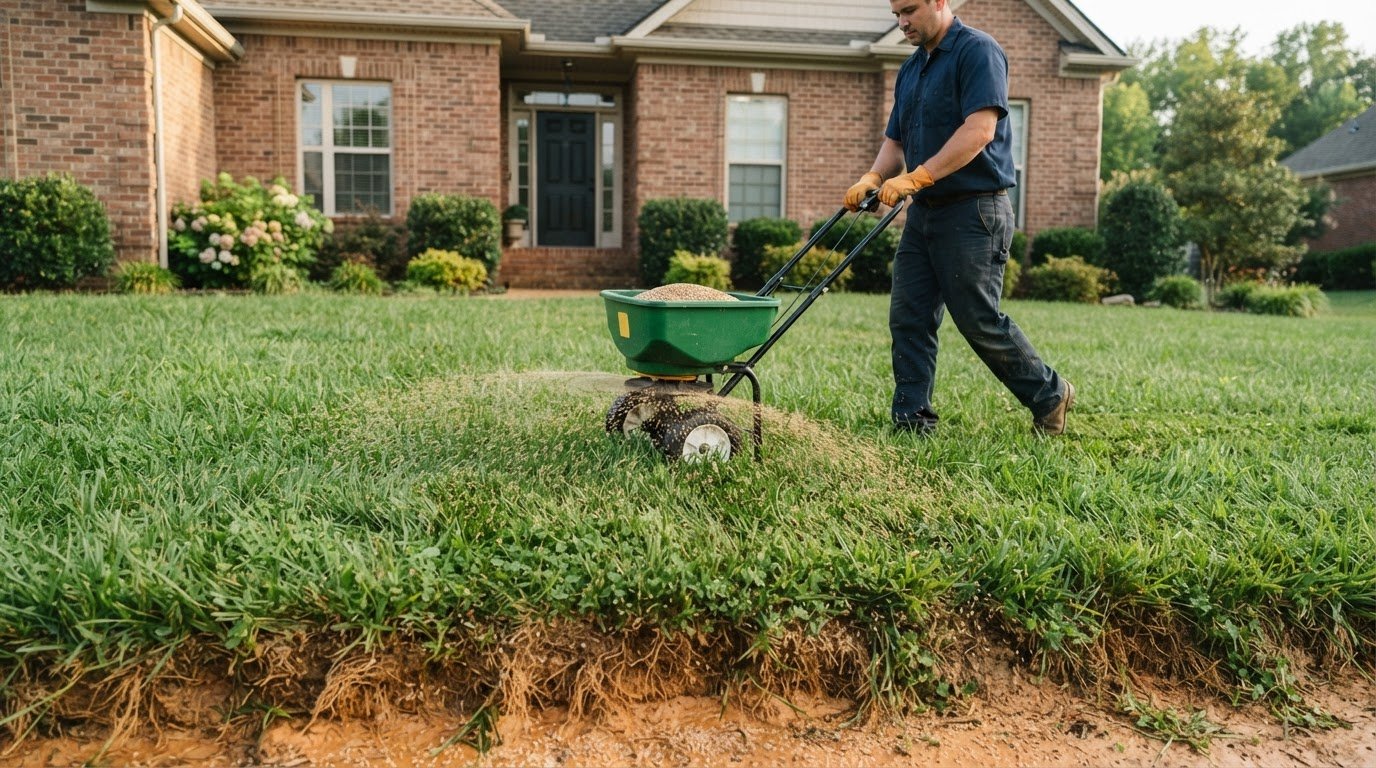
Granular, liquid, and slow-release fertilizers differ in how they are applied and how nutrients become available. Granules are spread across turf, liquid products are applied in solution, and slow-release formulas provide nutrients over time. Choose according to the lawn’s needs and follow the product label. Seasonal products also have specific label directions, so match the product to your grass and intended use.
Warm-season and cool-season annuals are not the same as perennial turfgrass. Their growth cycles differ, so an annual planting schedule should not replace a lawn fertilization plan.
Month-by-Month Turf Scheduling
A practical approach to Juliet follows growth rather than assigning fertilizer to every month. During winter, skip extra fertilizer unless managing cool-season grass. In spring, apply when grass is actively growing and temperatures stay between 50°F and 85°F. Late spring is a feeding period that can help turf continue growing before summer stress.
During summer, avoid treating dormant or drought-stressed turf. In fall, cool-season lawns can receive nitrogen when the 2-inch soil temperature is between 40°F and 55°F. The schedule reports 52°F on November 8, 2026. A typical fertilizer schedule allows eight weeks between feedings, but turf type and growth still matter. That seasonal approach is more useful than applying automatically each month.
Weather-Related Fertilization Risks
How do granular, liquid, and slow-release fertilizers compare for Tennessee turf? Granular and liquid describe how fertilizer is applied; slow-release describes how nutrients become available over time. Product instructions determine appropriate timing and watering, so these terms are not interchangeable application directions.
What are the risks of fertilizing turf during drought, heat, or heavy rain in Mt. Juliet? Drought and heat can stress turf and limit active growth, while heavy rain can carry nutrients away from the intended area. Wait until conditions and grass growth are more suitable, and avoid applying fertilizer before forecast heavy rain.
For homeowners, a schedule should also account for emerging growth and seasonal stress. Fertilization and weed control can be timed around turf type, current growth, and seasonal needs rather than a fixed monthly routine.
Fall feeding and root strengthening
Fall feeding supports root development as cool-season grasses prepare for winter dormancy. In Mt. Juliet, a well-timed application can help roots build strength before spring growth resumes. The goal is not simply to add nutrients, but to match feeding with active turf growth, seeding plans, and soil condition.
For a cool-season lawn, late-fall nitrogen timing depends on soil temperature. The application window opens when the 2-inch soil temperature is between 40°F and 55°F. The Mount Juliet schedule reported 52°F on November 8, 2026, placing that reading within the stated window. Soil conditions and grass growth matter more than choosing a date by habit.
Coordinate Feeding With Aeration and Seeding
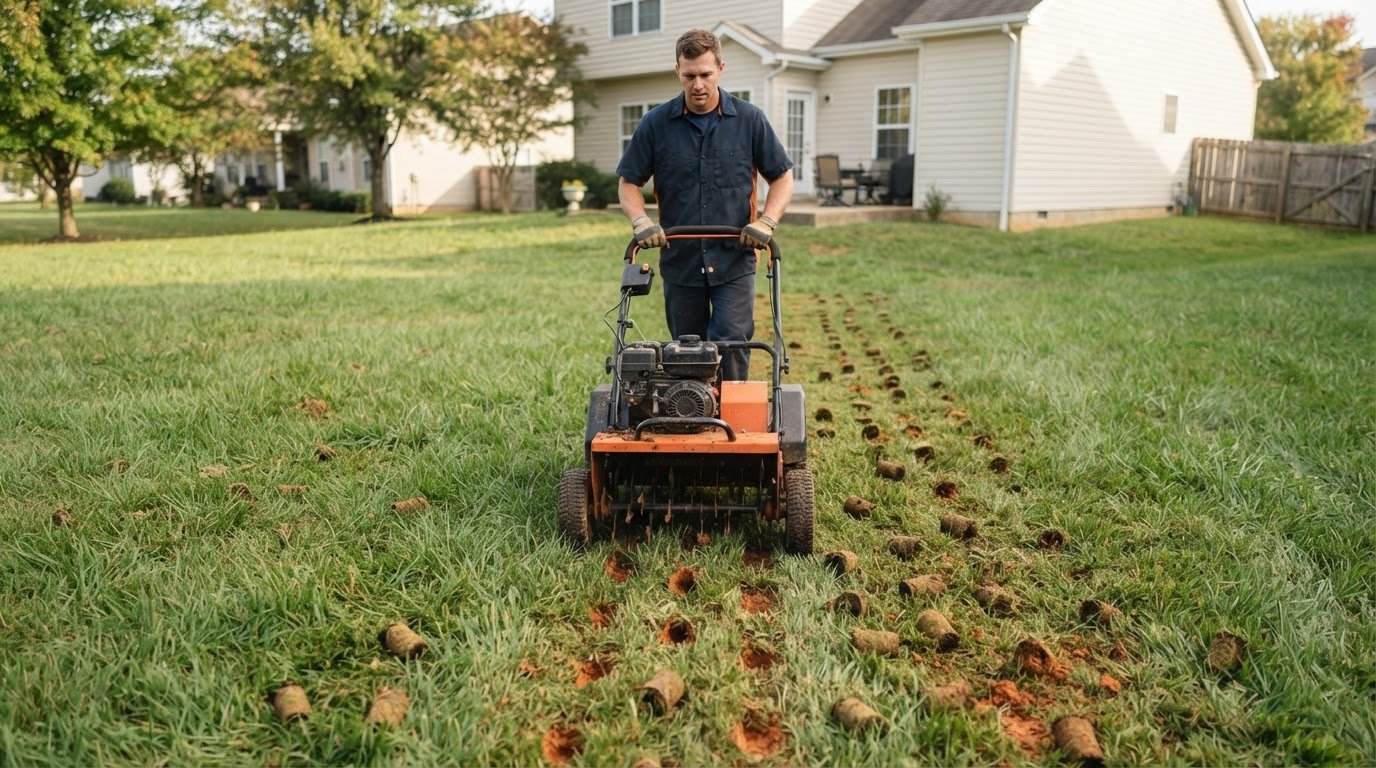
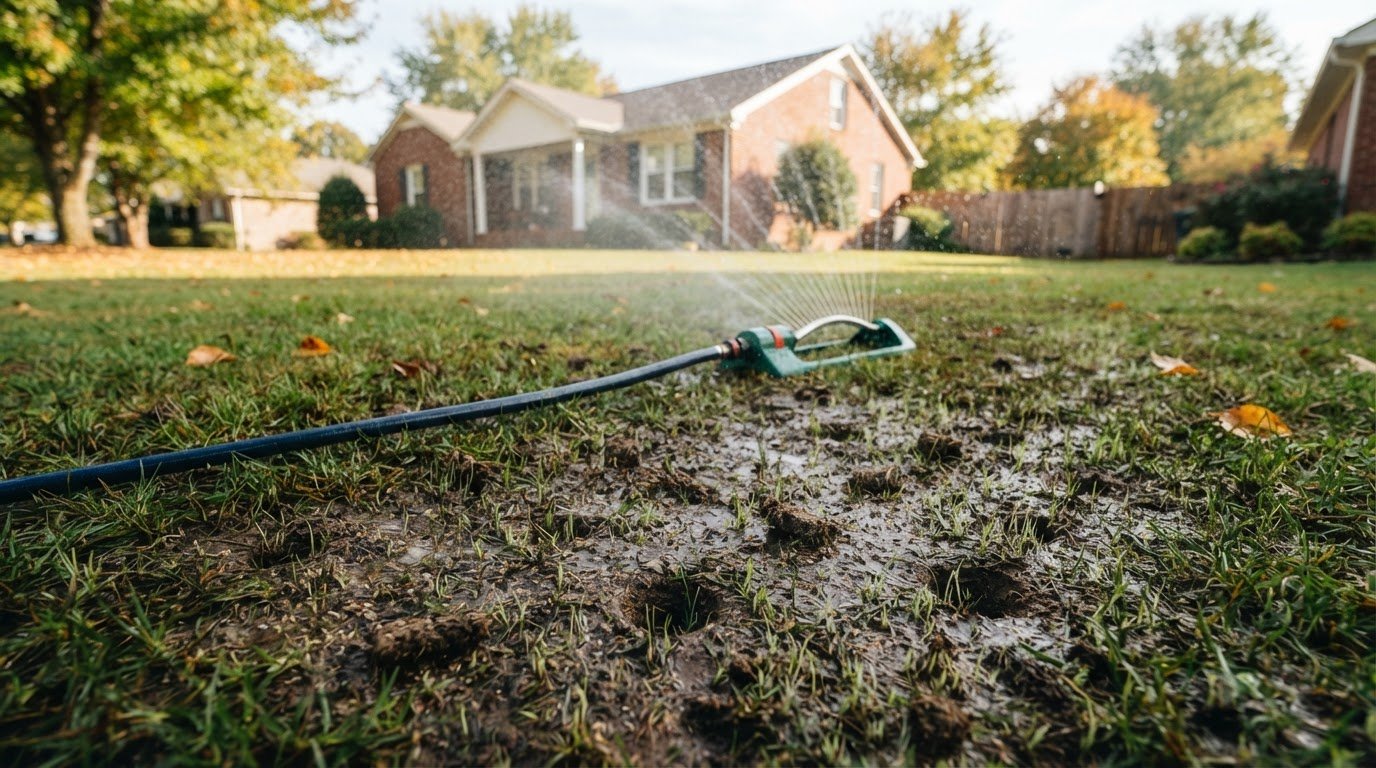
Core aeration removes small plugs of soil, creating openings that let oxygen, water, and nutrients reach the root zone. Pairing aeration with overseeding can help new grass establish in thin areas. Fall is a practical time to plan both jobs together, because the local fall seeding window runs from September 28 to October 19.
Spring seeding has a shorter local window, from April 10 to May 2. That timing gives homeowners a clear planning reference, but seed type and turf condition still guide the work. Fall and spring grasses may have different establishment needs, so a beautiful lawn depends on matching seed, preparation, and watering rather than applying fertilizer alone.
A useful sequence is to assess thin or compacted areas, schedule aeration where needed, and coordinate seeding with a suitable local window. Then align fertilizer timing with active growth and grass type. Aeration and overseeding improve soil access and turf density; fertilizer supplies nutrients. Each step supports a different part of lawn establishment.
Use Soil Information to Guide Fall Care
Fall soil testing in Mt. Juliet runs from September 1 to November 30. Test results help determine whether soil amendments are appropriate, rather than relying on guesswork. The fall lime-application window runs from October 1 to November 30. Lime and fertilizer serve different purposes, so a lime application shouldn’t replace a nutrient plan.
For properties near Nashville, seasonal planning can keep aeration, seed, and feeding from competing for the same window. Residential aeration and overseeding can bring these steps together when thin turf or compacted soil calls for renovation. For a next step, discuss fall aeration and overseeding in relation to your lawn’s condition and schedule.
Late-spring weed control and lawn feeding
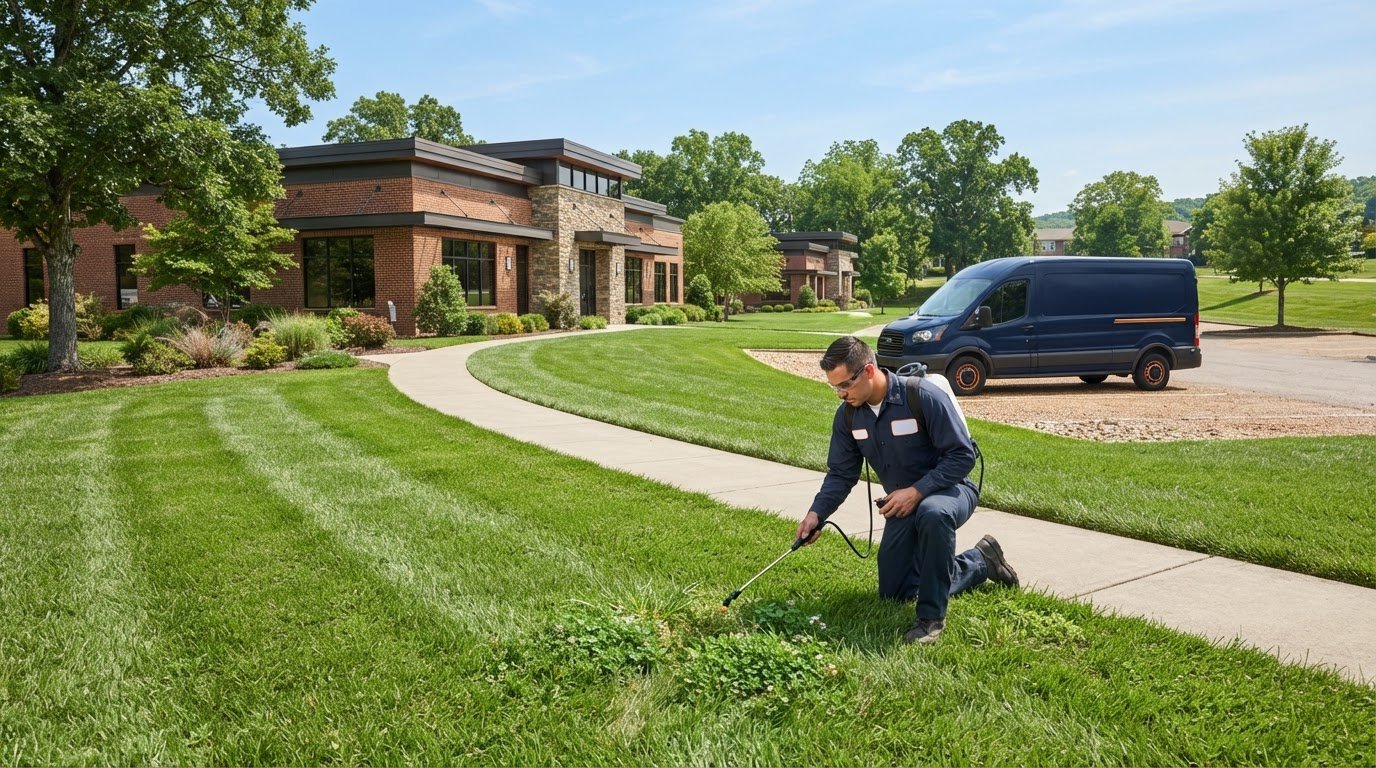
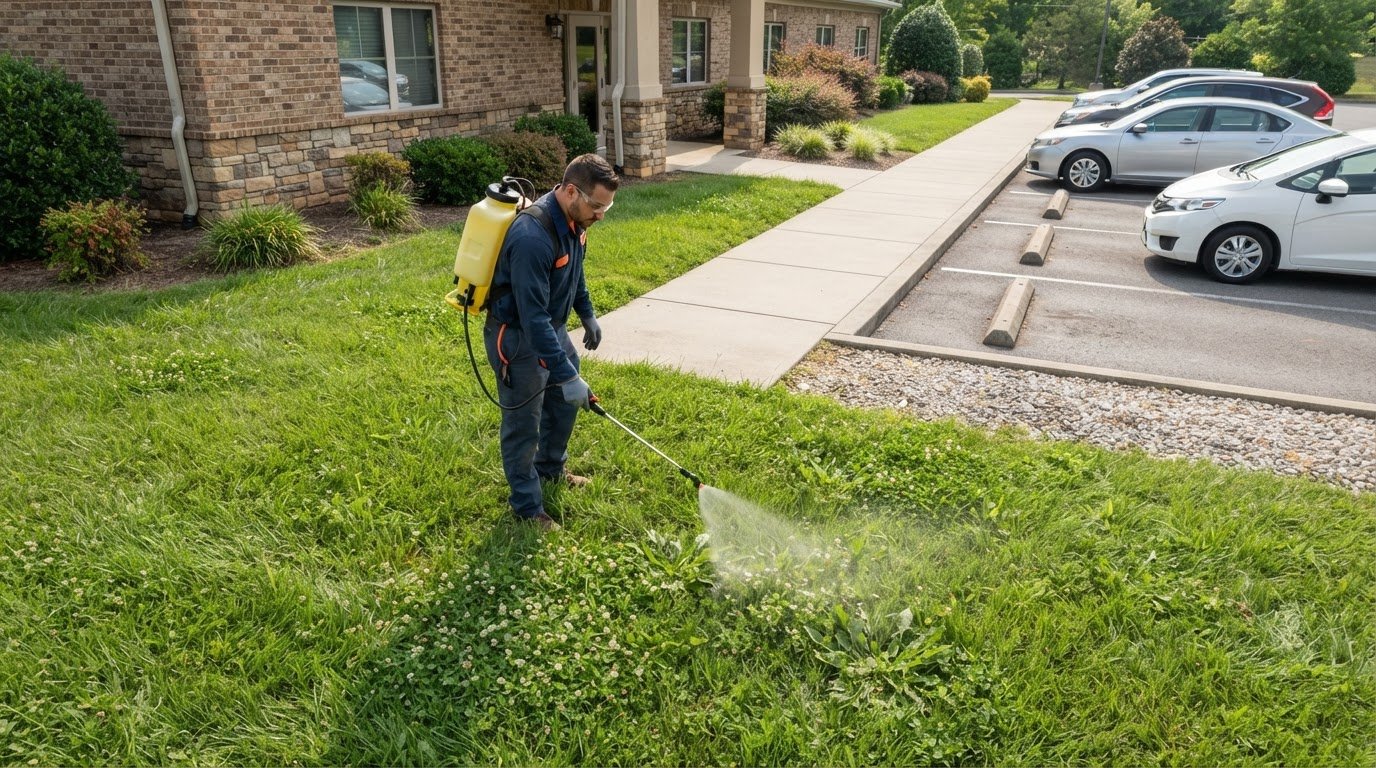
Late spring brings two related but distinct decisions: feeding actively growing turf and managing weeds. A late-spring fertilizer application can help grass keep growing before summer heat and stress. Weed control addresses unwanted plants, but the right timing and treatment depend on the weed and the turfgrass. Fertilizer is not a substitute for identifying a weed or choosing an appropriate treatment.
A year-round lawn fertilization plan doesn’t mean feeding every month. It means considering seasonal growth, grass type, and soil conditions across the year. In Mt. Juliet, a soil test can help identify nutrient needs before selecting amendments. Fall soil testing runs from September 1 to November 30. Results can guide choices, while the lawn’s active growth helps determine when feeding fits.
For late-spring feeding, look for actively growing grass and suitable weather, rather than following a fixed date. Mt. Juliet lawn-care guidance places fertilizer application within temperatures of 50°F to 85°F when grass is actively growing. Late-spring feeding can support growth ahead of summer stress, but the product label and turf condition should guide the application. Too much fertilizer won’t correct poor soil structure or solve a weed problem.
Weed control starts with identifying what is growing. Common broadleaf weeds and invasive grassy weeds may need different approaches. Dallisgrass and Johnsongrass can be more challenging to manage than many broadleaf weeds and may require targeted treatment. Bermuda grass in an established fescue lawn can also be extremely difficult to eliminate completely; management focuses on limiting its spread and supporting the desired fescue.
Fertilizer near waterways calls for careful application. Follow the product label and avoid applying when rain could carry granules or nutrients into storm drains or nearby water. These steps help reduce runoff, but they do not replace applicable Tennessee or Mt. Juliet requirements. Do not assume one setback distance applies to every property or waterway.
A healthy, thicker lawn can look better when feeding meets the turf’s actual needs. Lawn health also depends on adequate watering, appropriate mowing, and identifying pest or weed pressure. Mosquitoes, ticks, and fleas differ from turf-feeding insects, so their presence alone does not indicate a fertilizer problem. In Mt. Juliet, assess visible turf damage and the plants present before deciding whether fertilizer, weed control, or separate pest management is the right response.
Annual application schedules by program
An annual fertilizer program should match the grass, soil, and lawn goals. A fescue lawn, for example, needs a schedule built around cool-season growth. A program for another turf type may emphasize different growth periods. The aim is to provide nutrients when turf can use them, not to repeat applications automatically.
How much nitrogen fertilizer should Mt. Juliet lawns receive per year and per application? There is no single amount that suits every lawn. Nitrogen needs depend on turf type, soil-test results, active growth, and lawn condition. Those factors also shape the amount for each application, so a fixed annual figure would not suit every property.
A practical program begins with a soil test and a clear assessment of the turf. Test results help identify nutrient needs, while grass type indicates when growth is active. Then account for conditions such as drought, recent seeding, or visible stress. These factors can change whether an application supports the lawn or adds nutrients when growth is limited.
- Established fescue: Build the schedule around cool-season growth and seasonal recovery.
- Recently seeded areas: Coordinate fertilizer with seeding and the needs of establishing grass.
- Drought-stressed turf: Prioritize suitable growing conditions before planning another application.
- Soil-test findings: Use identified nutrient needs to guide product selection and timing.
Each program should also account for the purpose of an application. A maintenance schedule supports established turf; a seeding plan must consider new grass. Weed control can be coordinated with fertilizer, but the treatments address different needs. Dallisgrass and Johnsongrass, for example, may require targeted management rather than the approach used for common broadleaf weeds.
Application timing matters as much as the annual plan. Mt. Juliet guidance recommends fertilizing while grass actively grows and temperatures stay between 50°F and 85°F. During drought or heat stress, turf may not be growing well enough for a routine feeding. Heavy rain can also move nutrients from the treated area. A thoughtful program adjusts to those conditions instead of applying on autopilot.
For a locally appropriate schedule, connect soil-test results, grass type, growth, and recent treatments. This creates a clear record of each application and its purpose. Residential and commercial fertilizer and weed control programs can follow those same factors while accounting for the lawn’s specific turf and seasonal needs.
For lawns receiving treatment for large patch, the follow-up fungicide timing can vary with the guidance used: the second large-patch fungicide application may follow the first by 3 weeks (Clemson), 4 to 5 weeks (Arkansas) or 4 to 6 weeks (NC State). Use the interval tied to the chosen guidance rather than treating every schedule as interchangeable. This timing belongs in the program record alongside fertilizer and other treatments, so repeat applications are planned rather than assumed.
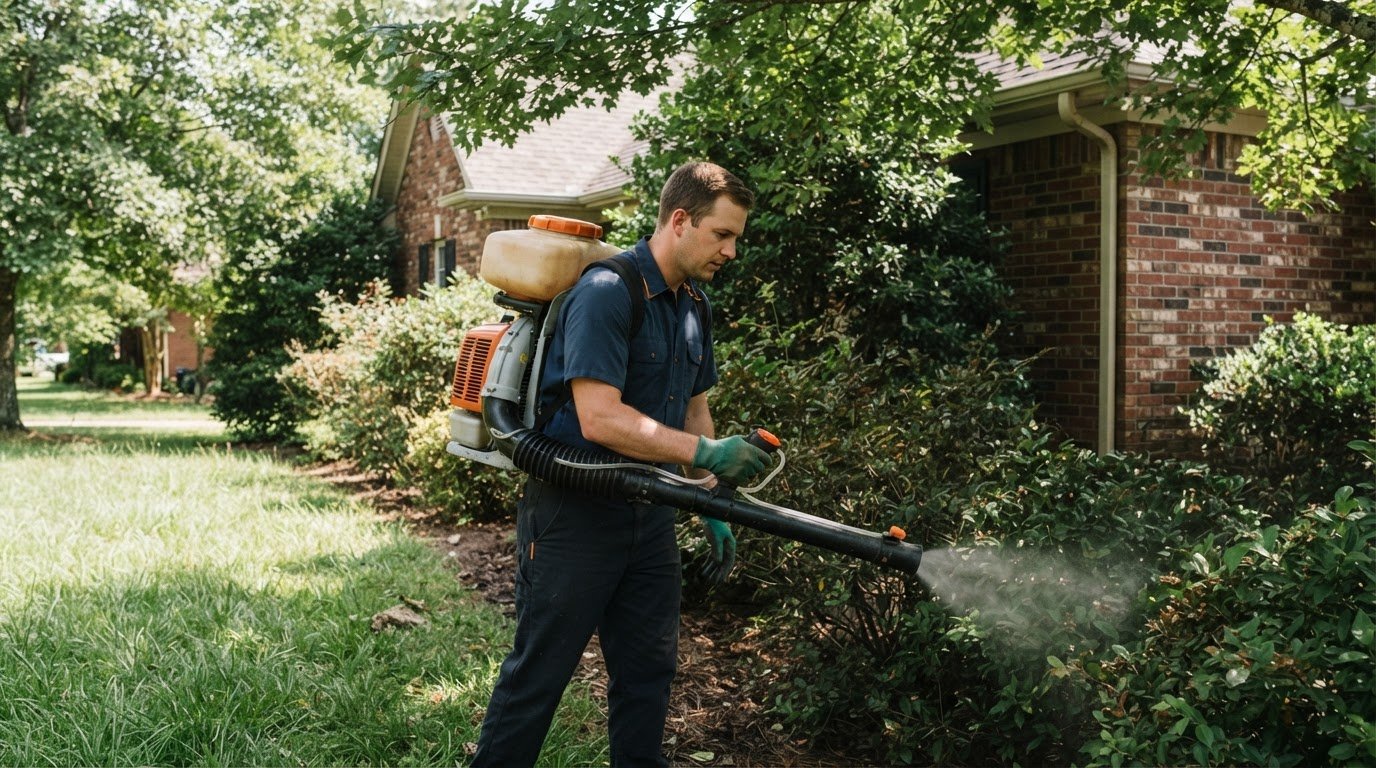
After fungicide application, keep pets and children off treated areas for 12 hours. Delay fungicide application when air temperatures are above 90°F. These precautions also affect scheduling: a planned treatment may need to wait until conditions are suitable and the treated area can remain undisturbed. Keeping the timing and purpose of each treatment clear helps a program respond to lawn conditions without turning a calendar into an automatic routine.
Tennessee turf maintenance calendars
A Tennessee turf calendar coordinates feeding, soil testing, and other seasonal work. For Mt. Juliet lawns, grass type matters: zoysia and cool-season turf do not share identical growth patterns. A calendar is most useful when it records each treatment, the lawn’s condition, and the reason for the application. That record helps prevent routine tasks from becoming automatic treatments.
What soil test services are available in Wilson County, Tennessee, and how do I interpret the results? A lawn soil test service analyzes a sample for pH and nutrients, then provides results to guide soil amendments. Mt. Juliet lawn averages include pH 6.9, potassium 157 ppm, and phosphorus 111 ppm; compare your test report with its recommendations rather than treating local averages as targets.
Build the calendar around the work each season calls for. In spring, assess turf growth and note thin areas before scheduling seeding or other repairs. During summer, account for heat and drought stress before planning fertilizer. In fall, record soil-test findings and arrange any needed amendments. Each entry should identify the turf type, treatment, and condition that informed its timing.
Zoysia lawns also have a separate large-patch disease calendar. The Mt. Juliet timing uses a 70°F soil-temperature threshold for fungicide applications. The local application window runs from September 1 to December 31 and typically stays open for 2 to 3 weeks. This is disease management, not fertilizer timing, so keep fungicide dates distinct from nutrient applications.
The second large-patch fungicide application is timed while soil remains above 50°F. A calendar can track soil conditions alongside the first application, rather than relying on a fixed interval alone. Fertilizer, lime, and fungicide serve different purposes; list each separately to prevent one treatment from being mistaken for another. For example, a zoysia fungicide entry shouldn’t automatically trigger a fertilizer application.
- Record the lawn type: Note whether the area is zoysia or cool-season turf.
- Log test results: Keep pH and nutrient readings with the relevant lawn area.
- Track treatment purpose: Separate fertilizer, lime, seeding, and disease-management entries.
- Update for conditions: Adjust plans when drought or heat stress changes turf growth.
In Mt. Juliet, a seasonal calendar can organize complex lawn care without forcing every treatment onto a monthly routine. Discuss a seasonal lawn-care plan that accounts for turf type, soil results, and the work your lawn needs.
Mt. Juliet, Tennessee, lawns have an average organic matter content of 4.33%. The average lawn size in Mt. Juliet, Tennessee, is 5,036 square feet. Keep these local figures as context beside the soil report and the area being managed, not as automatic treatment instructions.
For an individual lawn, record its test results and the area covered by each entry. This makes it easier to connect soil observations to the part of the yard receiving care, especially when conditions vary across the property. Over time, the calendar can show whether a treatment was followed by a change in turf condition, helping guide future decisions without assuming local averages describe every lawn.
Performance Lawns: Weed Control and Fertilization
Performance Lawns, INC helps property owners in Mt. Juliet, Lebanon, Gallatin, and Hendersonville coordinate fertilizer applications and weed control with seasonal turf needs. Its lawn treatments support an organized approach to residential and commercial lawn care, with timing guided by grass type, growth, and lawn condition. For thin residential turf, aeration and overseeding can improve soil access and support grass establishment as part of a broader lawn care plan.
Turn to Performance Lawns, INC when you want professional help connecting seasonal lawn needs with appropriate fertilization and weed control. Treatments can help manage common weeds and support healthier turf, without promising a completely weed-free lawn. The right next step is a conversation about your lawn’s condition and goals. Contact Performance Lawns, INC to discuss your lawn care needs.
Set Your Lawn Up for the Seasons Ahead
Your lawn’s needs can change as it fills in, thins, or responds to weather. Treat the plan as flexible, not fixed. Juliet can adapt as the lawn changes, keeping future applications aligned with its condition and goals.
Use the schedule as a working framework, revisiting it when growth patterns or lawn priorities shift. This gives each next step a clear purpose, whether you are maintaining established turf or addressing thin areas.
For guidance tailored to your property, contact Performance Lawns, INC about your lawn’s needs. A considered plan can help you move forward with confidence.
Frequently Asked Questions
When should I start?
Start when your turf is actively growing, not simply when a new season begins. In Mt. Juliet, local lawn-care guidance places suitable fertilizer timing between 50°F and 85°F, while grass is growing. For a spring application, look for renewed leaf growth after winter. For late-fall nitrogen on cool-season grass, use the 2-inch soil temperature, with the application window between 40°F and 55°F.
What grass types are most common in Mt. Juliet lawns, and how do their fertilizer needs differ?
Tall fescue is the predominant cool-season grass in Mt. Juliet lawns. Zoysia and bermudagrass are warm-season examples, and their active growth periods differ from fescue’s. That difference affects when fertilizer can best support growth. If a yard contains mixed turf, identify which grass covers each area before planning applications; a schedule built for fescue may not suit a zoysia section.
When should warm-season grasses such as bermudagrass and zoysiagrass be fertilized in Mt. Juliet?
Fertilize bermudagrass and zoysiagrass during active warm-season growth, rather than while the turf is dormant or struggling through stress. Mt. Juliet guidance recommends applying fertilizer when grass is growing and temperatures stay between 50°F and 85°F. Use the grass’s growth as the practical cue: a dormant zoysia lawn shouldn’t receive a routine feeding just because another lawn area is growing.
When should cool-season grasses such as tall fescue be fertilized in Mt. Juliet?
Tall fescue is best fed during active growth, with fall offering a key opportunity to support roots before winter. For late-fall nitrogen, the local timing window opens when 2-inch soil temperature is between 40°F and 55°F. Avoid adding winter fertilizer automatically. First consider whether the fescue is growing and whether the planned application fits the lawn’s seasonal needs.
How should a homeowner customize a fertilization schedule based on turf type, soil test, and lawn condition?
Start by identifying the grass in each lawn area, then use soil-test results to understand nutrient and pH needs. Next, assess visible conditions such as thin growth, recent seeding, or stress. Treat areas separately when their turf types or conditions differ. A soil test informs nutrient decisions but does not diagnose every cause of poor growth, so consider the whole lawn before adding fertilizer.