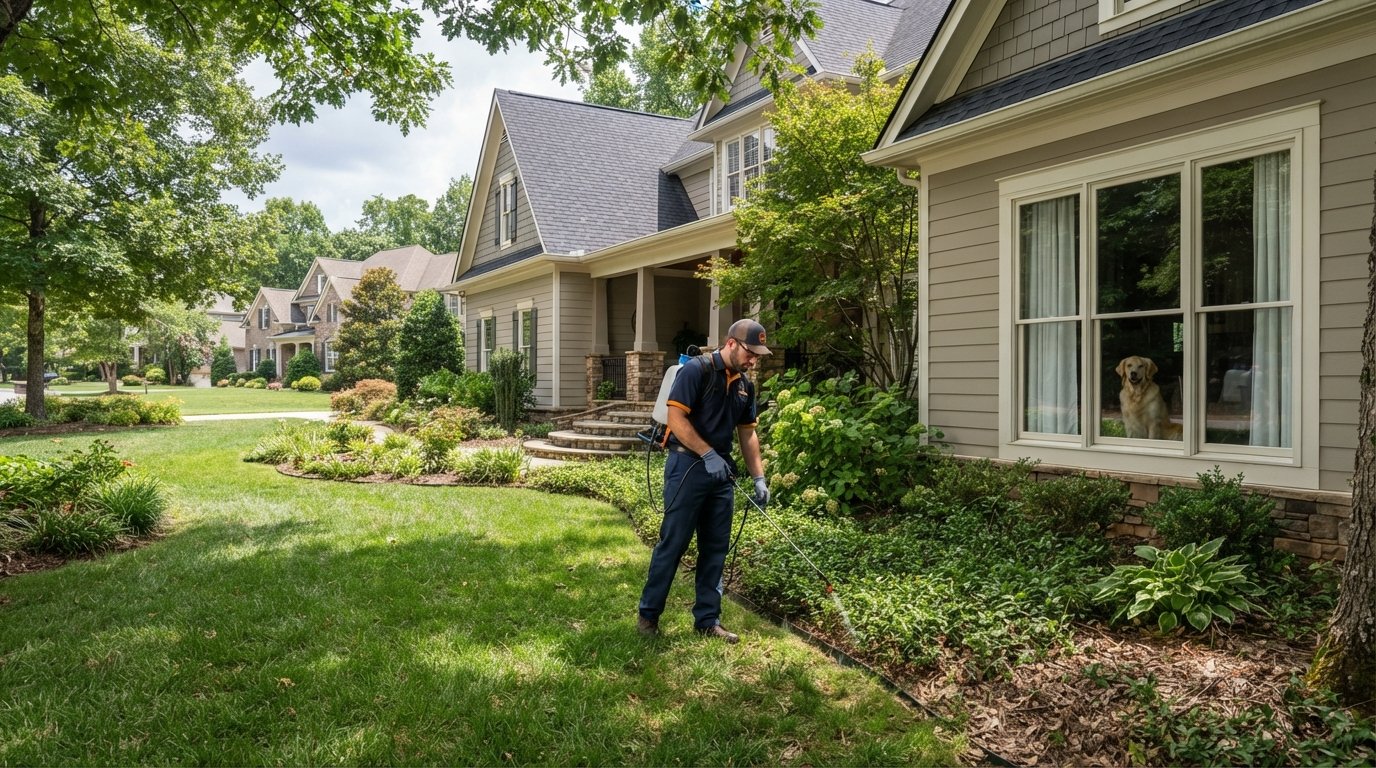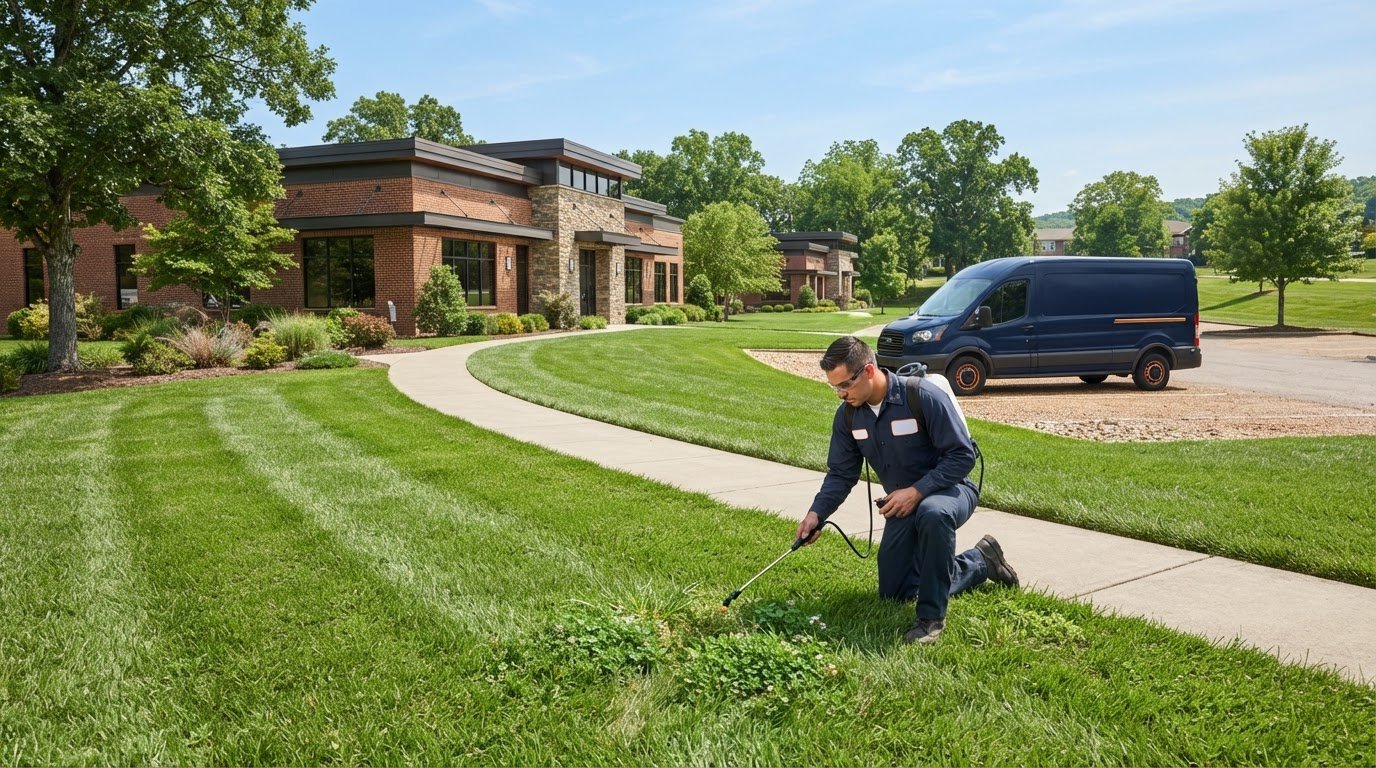


Business lawns rarely respond well to a one-size-fits-all schedule. Professional lawn treatments for businesses in Mt. Juliet typically combine seasonal fertilization with recurring weed control suited to the turf, site conditions, and weeds present. Commercial weed management is especially important on high-visibility grounds, where unwanted growth can affect appearance and usability.
A dependable treatment plan can support a healthy, attractive lawn without adding another task to your workday. The right approach considers more than fertilizer: timing, turf health, and the weeds present all help shape the program.
This guide explains what seasonal fertilization and recurring service can include, how targeted weed treatments address different lawn conditions, and what influences pricing. The price depends on the property and requested services and is provided after a quote request. Factors include lawn size, turf condition, weed pressure, and treatment scope.
Fertilization and seasonal lawn care
Seasonal fertilization works best when it follows the turf’s growth cycle and the property’s conditions. For commercial grounds, consider grass type, soil, drainage, shade, and weed pressure when selecting treatments. The goal is steady turf health, not simply applying fertilizer on a fixed calendar.
What Tennessee rules apply to commercial pesticide and fertilizer applications? Applications must follow the product label and applicable Tennessee requirements for that product and use. Specific requirements depend on the product and the work being performed.
What affects treatment results in Mt. Juliet’s climate and soil? Seasonal temperatures, rainfall, soil drainage, turf type, shade, and application timing all influence how grass responds. For example, shaded, poorly drained turf may respond differently from sunny areas with faster-draining soil.
Local figures offer useful context, but they don’t replace a site assessment. Mount Juliet lawns average 6,896 square feet, and 15% are fertilized. Bermudagrass makes up 38% of the listed popular grass types. These figures suggest why commercial plans need to account for property size and grass type rather than copy a neighboring schedule.
A practical seasonal review can follow a clear sequence:
- Identify the turf: Bermudagrass and fescue have different growth patterns and treatment needs.
- Assess the site: Note compacted ground, runoff, dry patches, shade, and areas with recurring weeds.
- Set treatment timing: Match fertilizer and weed control to active growth and current conditions.
- Reassess after application: Observe turf response and adjust future treatments as conditions change.
Dallisgrass and Johnsongrass can be harder to manage than common broadleaf weeds. They may require a targeted approach different from the treatments used for broadleaf weeds. Bermuda grass that has spread into an established fescue lawn can be extremely difficult to eliminate completely. Management generally focuses on limiting its spread, reducing its presence, and helping fescue remain healthy and competitive.
Nearby Tennessee lawn care providers may offer recurring fertilization and weed control, but commercial properties benefit from plans tailored to each site. A business with sunny entrance turf, shaded walkways, and high-visibility beds may need different attention across those areas. Tree and shrub care is also distinct from turf treatment: trees, shrubs, and lawn grass have different growing needs, so their care should be considered separately when planning property maintenance.
For professional lawn treatments for businesses in Mt. Juliet, connect seasonal decisions to turf type, site conditions, and weed activity. This helps maintain attractive grounds while aligning treatment choices with the property’s needs.
The local context also helps explain why commercial lawn care calls for site-specific planning. Mount Juliet, Tennessee, covered 25 square miles of land in the page's description. The United States Census figure cited for Mount Juliet, Tennessee, was an estimated population of 23,671 in 2010, while the page's description states a population of 35,725 in 2018. The page states that Mount Juliet, Tennessee, was formally created in 1835 and fully incorporated in early 1972.
That listing provides a local price point for cutting, but it does not establish the cost of fertilization or other treatments. Business managers can use local service information as context while planning seasonal work around turf type, site conditions, and how each area responds.
Lawn care professionals serving Mount Juliet
For a Mt. Juliet business, compare providers by commercial treatment scope, local coverage, and how clearly they explain estimates. Distinguish turf treatments from mowing and broader yard work.
Commercial Treatment Providers
Commercial lawn treatment in Mt. Juliet involves serving business properties with fertilizer and weed control. Look for a service description that addresses commercial turf, recurring treatment, and weed pressure instead of assuming residential lawn care covers every property’s needs.
Which companies offer professional commercial lawn treatment in Mt. Juliet, TN? Providers offering commercial fertilizer and weed control serve this need. The key distinction is whether their stated scope fits a business lawn. In Mt. Juliet, compare the treatment plan and property coverage, not just a general lawn-care label.
Reliable service coverage matters for businesses with multiple sites in Mt. Juliet, Lebanon, Gallatin, and Hendersonville. The service area should include each property receiving treatment, with the planned scope clear for every address.
Service Areas and Neighborhoods
Mt. Juliet business properties range from compact storefront lawns to larger grounds around offices and commercial sites. Plan service around the exact property location, turf areas, access points, and landscaped edges, rather than treating a neighborhood name as a complete description.
Which commercial lawn treatment companies serve Mt. Juliet, Lebanon, Gallatin, and Hendersonville? Look for providers whose commercial service area includes Mt. Juliet and the specific Middle Tennessee locations involved. For multiple sites, a useful estimate identifies each address and separates lawn-treatment areas from other yard work.
Recurring lawn care can cover fertilization and weed control, while mowing, trimming, and landscape work are separate tasks. Defining these boundaries helps businesses understand what the treatment schedule includes.
Estimates and Service Pricing
Mt. Juliet mowing prices and lawn-treatment estimates cover different work, so don’t treat a mowing quote as a treatment price. Treatment pricing is provided after a quote request and reflects property size, turf condition, weed pressure, and requested scope.
A clear estimate should identify the treated areas, planned fertilizer and weed-control work, and whether service recurs. For example, an estimate for a property with a front lawn and separate side grounds should account for both areas, not bundle them into an unexplained description.
For an estimate, share the business property details, including its location and the lawn areas requiring treatment. That gives the quote a practical basis.
Reviews, Guarantees, and Qualifications
Reviews, written service terms, and stated qualifications provide different information. Reviews can show how customers describe communication and consistency; service terms explain the scope and any stated guarantee; qualifications indicate relevant professional preparation.
How do Mt. Juliet lawn treatment providers compare on reviews, service guarantees, and qualifications? Compare recent, specific feedback with written service terms and clearly stated qualifications. Don’t treat a positive review as a guarantee or assume a broad promise explains how follow-up works.
Are lawn treatments in Mt. Juliet safe for employees, customers, pets, and landscaping? Safe application starts with following product-label directions and communicating access precautions for treated areas. Treatment planning should also account for nearby planting beds and the people using the grounds.
Recurring service features and seasonal pricing
Recurring lawn care combines scheduled visits with services chosen for the property’s needs. In Mt. Juliet, distinguish turf treatments from mowing and broader landscape work before comparing schedules.
Recurring Service Features
A recurring plan may include mowing, trimming, weed treatment, and other landscaping. The included tasks depend on the service agreement, so identify what happens during each visit. Mount Juliet listings show biweekly mowing as the most common listed schedule, at 41% of cuts. That figure describes mowing frequency, not a recommended schedule for fertilization or weed control.
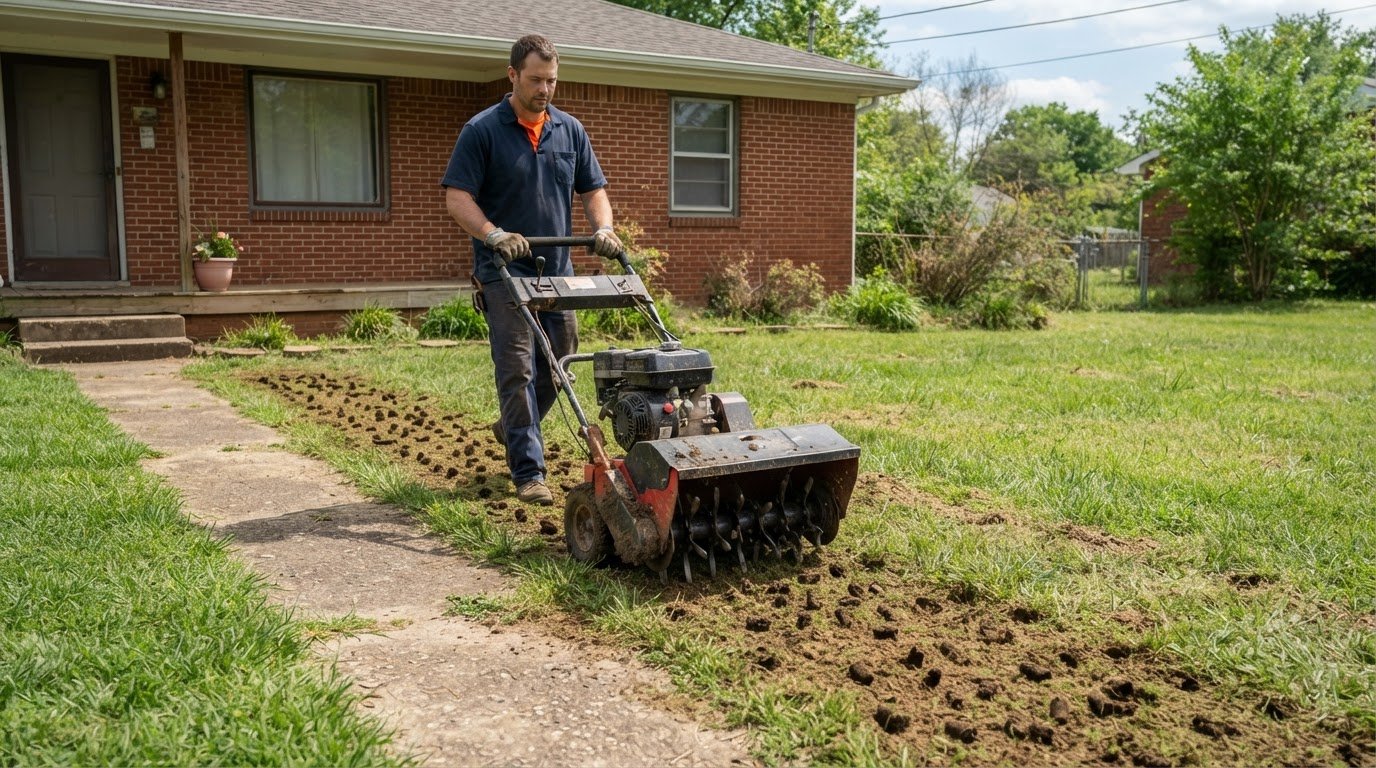
For a business with a front entrance and separate lawn areas, define which areas receive each service. Aeration is a distinct lawn task, while fertilizer and weed treatments have their own timing and scope. Keeping these tasks separate makes the schedule easier to understand and avoids assuming every visit includes every service.
Seasonal Pricing
Seasonal pricing reflects the work included, its timing, and the lawn’s condition. Lawn-service pricing depends on the property and requested work and is provided after a quote request. Factors include lawn size, turf condition, service frequency, and treatment scope. A recurring mowing plan and a seasonal treatment schedule are different arrangements.
One-time mowing can suit a property needing a single cut, while recurring mowing follows a repeated visit pattern. The Mt. Juliet listing data identifies biweekly mowing as the leading listed schedule, but that does not establish a schedule for every commercial site. Business traffic, grass growth, and the expected appearance of entrances can shape mowing needs.
Matching a property with lawn service professionals starts with its location and requested work. For commercial grounds, identify the Mt. Juliet address, lawn areas, desired treatments, and whether work is one-time or recurring. This clarifies the relevant service scope instead of treating all yard work as interchangeable.
Match neighborhood and ZIP-code coverage to each property address. Mt. Juliet businesses with multiple sites can list each location separately, including the ZIP code, to clarify service-area boundaries. A neighborhood label alone doesn’t describe lawn size, access, or treatment needs; those details matter when defining the work.
Lawn and landscape services can include trimming, weed control, and aeration, but the services included depend on the selected plan. A business seeking recurring lawn treatments should distinguish turf care from mowing or landscape tasks. A written scope can identify the areas and services covered, planned frequency, and how seasonal changes affect the schedule.
Other lawn and landscape services can have separate price ranges.
These figures describe listed prices, so compare service scope and requested work when considering them for a property.
Customized weed treatments
Commercial weed treatment begins with a clear record of where weeds appear and how each area is used. A patch beside a loading entrance, for example, gets different foot traffic from weeds along a rear fence. Mapping affected zones helps set priorities and keep the plan specific to the property instead of applying one approach everywhere.
Identify the desirable turf in each zone before selecting treatments. A mixed lawn may contain different grass types near buildings, under trees, and along sunny road edges. Record Dallisgrass, Johnsongrass, and Bermuda grass separately during the site assessment, since each can affect treatment planning. Note the location and extent of each occurrence.
Application planning also accounts for site features. Mark walkways, drainage paths, planting beds, and areas where employees or customers gather. For instance, weeds beside a storefront call for attention to nearby ornamental plants and access routes. Product directions and conditions at the time of application guide the work in each zone.
Use a repeatable assessment sequence to build a customized program:
- Map the property: Mark entrances, lawn edges, shaded sections, and isolated weed patches.
- Record the turf: Note grass types and transitions between lawn sections.
- Describe weed activity: Identify visible weeds and where they occur across the grounds.
- Set priorities: Consider customer-facing areas, traffic patterns, and recurring problem spots.
- Track changes: Compare observations from later visits and update the treatment plan.
Good records help distinguish a new issue from a familiar one. If clover appears near a sign while a separate patch grows beside a shaded walkway, tracking those locations makes changes easier to assess. The treatment plan can then focus on affected areas and account for differences in turf and site use.
Timing matters, too. Weather, soil moisture, mowing activity, and active weed growth can influence treatment decisions. A recently mowed section, for example, may need different timing from an area with actively growing weeds. The treatment approach should follow product directions and suit the lawn’s observed conditions.
Customized weed treatments help manage unwanted growth while maintaining the grass a business wants to keep. A property-specific plan can respond to changing weed locations and conditions over time. The practical goal is consistent, informed control, not a promise that weeds will never return.
Commercial weed control
Mt. Juliet businesses typically need fertilization and weed control suited to their turf and property conditions. Priorities may differ between a storefront entrance, office grounds, and a lawn bordering a parking area. A commercial plan should identify the areas being treated and the weeds affecting them.
Commercial weed control works best when organized around how people use the grounds. A retail entrance may need attention near walkways, while an office lawn may have problem areas along shaded building edges. Marking these zones helps focus treatment where weeds affect the property’s appearance and distinguish recurring concerns from isolated patches.
Before treatment, review the property to record turf type, weed locations, and nearby landscape features. A planting bed beside a lawn edge, for example, calls for careful attention to the treatment area and product directions. Recording these details also helps keep the plan consistent across separate sections of a business property.
A useful commercial control process can include:
- Define treatment areas: Identify entrance lawns, roadside edges, and grounds beside buildings.
- Note weed locations: Record clusters and recurring patches rather than describing the whole property generally.
- Account for site features: Include walkways, landscape beds, shade, and drainage in the site review.
- Plan follow-up observations: Track changes in treated areas and note where weed activity remains.
Fertilization can support turf health, while weed control addresses unwanted plants. These purposes are related, but not interchangeable. A green lawn, for example, can still have clover around a sign, and weed treatment alone doesn’t address every factor affecting turf condition.
Commercial sites also benefit from clear treatment records. Notes about a patch near a customer entrance or along a parking edge give future assessments useful context. If weed activity returns in the same area, those observations can inform the next treatment decision. Dallisgrass and Johnsongrass can also be recorded as distinct concerns.
Consistent observation helps keep commercial weed control responsive to changing conditions across the grounds. The goal is to manage unwanted growth and support attractive turf, not to promise weeds will never return. For a commercial property with recurring weed pressure, request a commercial weed-control plan suited to its lawn areas and treatment needs.
Performance Lawns: Lawn Treatments
Performance Lawns, INC provides commercial lawn care, fertilizer, and weed control for businesses in Mt. Juliet. If a property has recurring weed pressure, uneven turf health, or several distinct lawn areas, professional treatments can address those needs with a plan suited to the grounds.
Commercial properties have different priorities. A customer-facing entrance may need focused weed control, while a larger lawn may benefit from coordinated fertilization and ongoing treatment. Performance Lawns, INC provides lawn treatments to help manage common weeds and support healthier turf, without promising a completely weed-free result.
Share the property location, the areas needing treatment, and the concerns affecting the lawn. That information helps define a useful next step for your business grounds. For commercial lawn treatment in Mt. Juliet, contact Performance Lawns, INC to discuss your property’s needs.
Plan the Next Season of Care
Set a clear purpose for your business grounds before planning the next season. Decide what matters most: a welcoming entrance, healthier turf, or a more orderly appearance around customer areas. In Mt. Juliet, shape the plan around those priorities and the needs of each lawn rather than applying the same approach everywhere.
Performance Lawns offers Lawn Treatments and Weed Control and Fertilization for commercial properties. Residential Aeration & Overseeding is also available for residential lawns. Matching the service to the property helps keep expectations and treatment goals clear from the start.
Consider how the grounds should look and function through changing seasons, then share those priorities when planning service. A thoughtful starting point makes it easier to focus care where it matters to your business. Contact Performance Lawns to discuss service and take the next step toward well-cared-for grounds.
Frequently Asked Questions
What lawn care plans and treatment frequencies do local providers offer?
Performance Lawns provides commercial lawn care, fertilizer, and weed control for businesses in Mt. Juliet, Lebanon, Gallatin, and Hendersonville. Visit timing depends on the service and property, and a treatment schedule is distinct from mowing frequency. Businesses can discuss recurring turf treatments without assuming mowing is part of the plan.
How can a business request a commercial lawn treatment quote in Mt. Juliet?
Contact Performance Lawns with your business property’s Mt. Juliet address and the treatment needs you want addressed. Include the lawn areas involved and concerns such as recurring weeds or uneven turf. Mention whether the property is in Mt. Juliet, Lebanon, Gallatin, or Hendersonville, especially if several locations need service. These details help shape a quote around the commercial property and requested treatment scope.