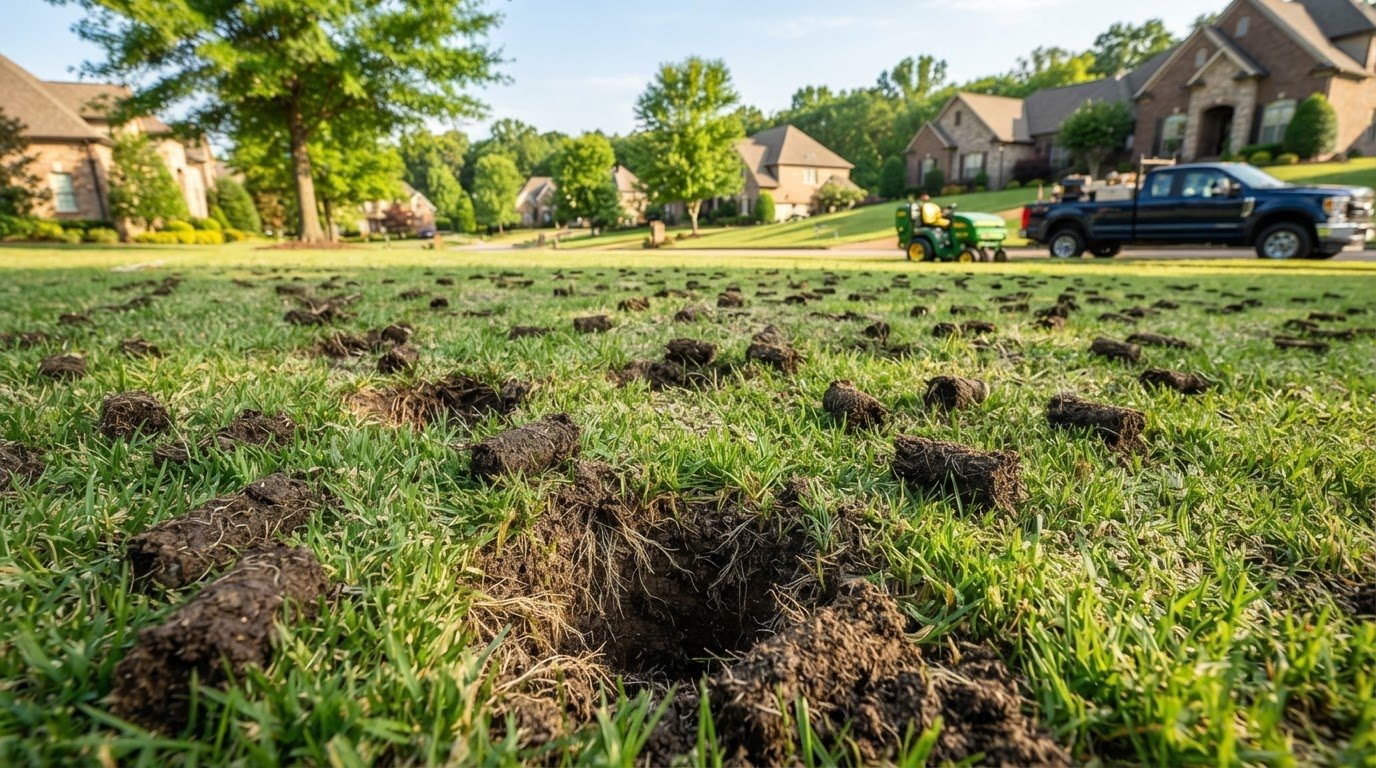


Annual aeration and turf seeding in Gallatin, TN isn’t automatically necessary; it makes sense when compaction, thinning grass, or bare areas show the lawn needs help. Fall is a practical time to pair aeration with seeding, and grass seed typically germinates within 7-14 days under proper conditions. The right timing still depends on the lawn’s condition and the weather.
It’s understandable to want a simple yearly schedule, especially when heavy rain, foot traffic, and settling can compact soil. But repeating the same service every year isn’t the only way to strengthen a lawn. Match the work to your turf’s condition to make a more informed decision.
This guide explains when annual service may be worthwhile, how core and liquid aeration differ, and what to consider when planning fall work in Gallatin. You’ll also learn how mowing, watering, and foot traffic affect newly seeded areas, so you can prepare for service and give emerging grass room to establish.
Aeration and overseeding services in Gallatin, Tennessee
In Gallatin, foot traffic, heavy rain, and natural settling can compact lawn soil, making it harder for water, oxygen, and nutrients to reach grass roots. Aeration creates openings in the soil, while overseeding adds grass seed to thin areas or an established lawn. Together, these steps can support denser turf when the lawn’s condition calls for them.
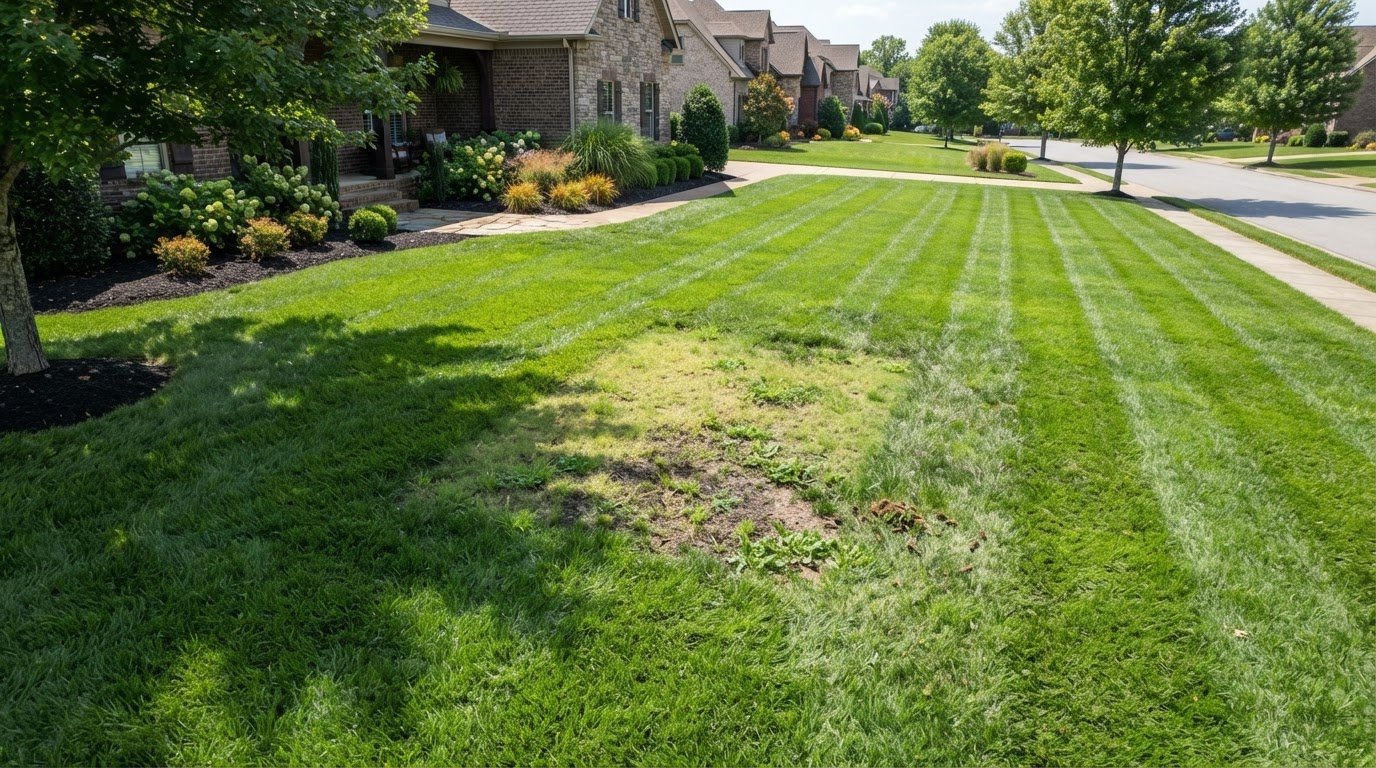
Annual service isn’t automatically necessary. Look for signs such as thinning grass, bare patches, or soil that feels firm underfoot. A lawn with recurring foot traffic may need attention sooner than a lightly used lawn. Base the decision on actual turf conditions, not just a calendar reminder. A one-time visit and recurring service are different arrangements, so review the written terms to understand what future visits involve.
Fall planning gives newly seeded grass time to establish under suitable conditions. In Middle Tennessee, grass seed typically germinates within 7-14 days when conditions are proper. Germination is only an early stage; establishment also depends on moisture, temperature, seed-to-soil contact, and follow-up care. For a Gallatin property, details about residential aeration services can help explain the soil-preparation step.
- Before service: For homeowners who don’t receive ongoing maintenance, mow to about 2.5 inches before aeration and overseeding.
- After seeding: Minimize heavy traffic on seeded areas for 4-6 weeks while roots establish.
- First mowing: Wait until new grass reaches about 3 inches, then avoid cutting more than one-third of the blade length at a time.
These steps help protect young turf from disturbance before it takes hold. If irrigation serves the property, keep the system running through October and possibly into November after seeding. Make sure watering reaches seeded areas, including lawn edges and patches near walkways. Consistent moisture supports germination, while concentrated foot traffic can disrupt those same sections.
Properties around Gallatin can differ in soil, slope, shade, and lawn use, even within the same neighborhood. Before scheduling, identify which areas need work and note access challenges or boundaries such as planting beds and walkways. Review the service agreement to understand whether the visit is one-time or recurring and what it covers. This preparation clarifies the scope and keeps the plan focused on your lawn’s needs.
Gallatin, Tennessee, experiences temperatures ranging from 30°F to 90°F throughout the year. That range makes it useful to assess the lawn’s present condition rather than assume every area is ready for the same treatment. A walk-through can help distinguish thin grass from spots where seed may need protection and clarify which areas are being considered for aeration and overseeding.
The Gallatin, Tennessee, ZIP code is 37066. When new grass is ready for its first cut, homeowners in Middle Tennessee should avoid removing more than one-third of the blade length at a time. Keeping that limit in mind, along with the guidance on mowing height and traffic, can help protect seeded areas as they establish. Confirming the work area and expected follow-up before a visit also keeps the service plan aligned with the lawn’s needs.
Core versus liquid aeration for local soil and terrain
Core and liquid aeration address compacted soil in different ways. For Gallatin lawns, compare the method with the soil condition, surface, and turf’s needs.
Core Aeration and Soil Compaction
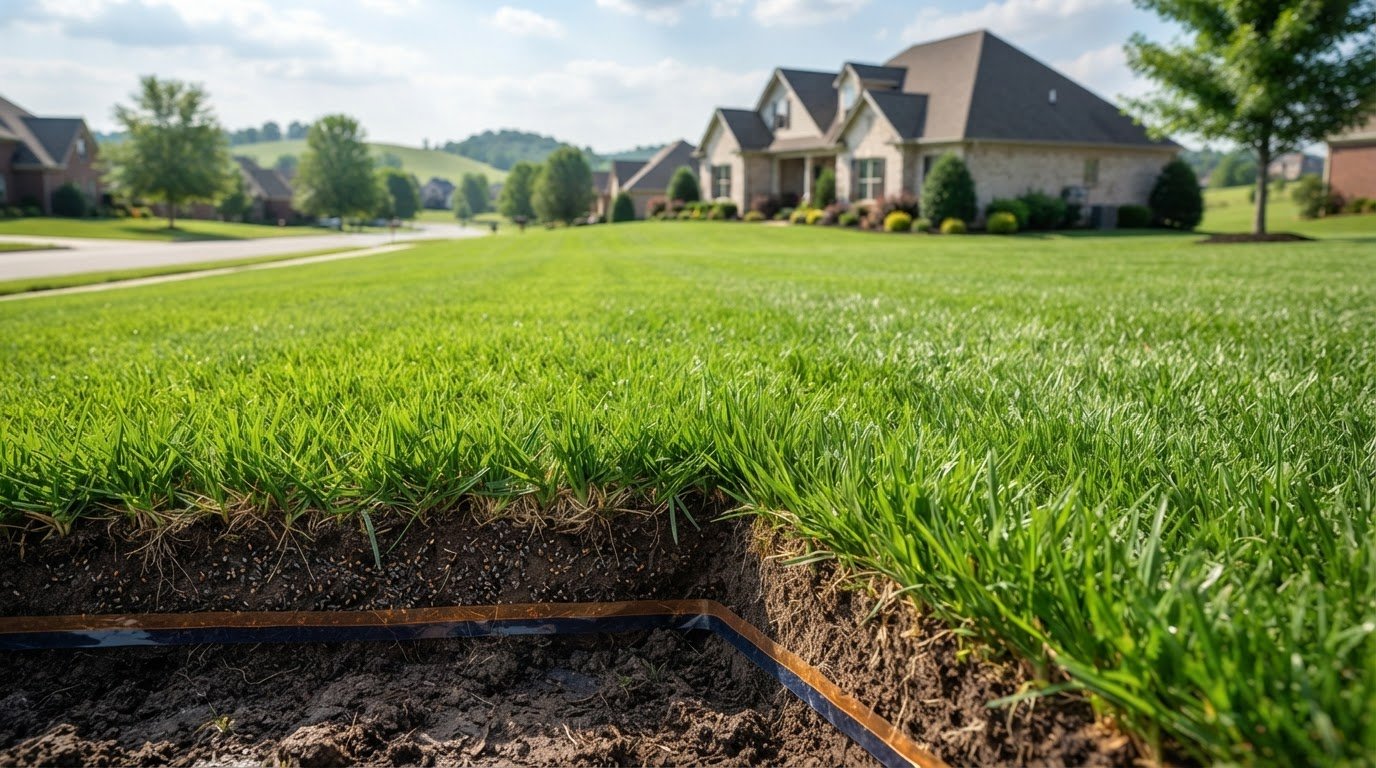
Core aeration uses equipment to remove small soil plugs from the lawn. The openings create pathways for water, oxygen, and nutrients to move toward grass roots. By relieving compaction, the process can encourage deeper root growth and help turf use available resources.
Look for areas that feel firm or show thin growth, especially along frequently used routes. Core aeration physically opens the soil, making it a practical option to consider when compaction is the main concern. The plugs left on the surface can break down over time and return soil material to the lawn.
Soil Structure and Nutrient Infiltration
Soil structure affects how water and dissolved nutrients move through the root zone. In compacted soil, tightly pressed particles can restrict those pathways. Aeration creates openings that can support water and nutrient infiltration and improve fertilizer absorption.
When assessing a lawn, compare compacted areas with places where water soaks in more readily. Consider thatch, the layer of organic material between grass and soil. Excessive thatch can impede water and nutrient movement, and aeration can help it break down.
Liquid aeration typically means applying a liquid soil treatment intended to improve soil conditions. Unlike core aeration, it doesn’t remove physical plugs. Formulations and intended effects can vary, so consider the product label and the lawn’s specific issue when evaluating this approach.
Start by identifying the problem. If compacted soil is the main concern, consider whether physically opening the soil is appropriate. If the aim is to support soil conditions without removing plugs, a liquid treatment may be an option, but it isn’t the same as core aeration.
- Check the surface: Note firm, heavily used areas and places where grass growth is thin.
- Assess infiltration: Observe whether water enters the soil or tends to remain on the surface.
- Consider thatch: Look for a dense layer that could hinder water and nutrient movement.
These observations help clarify which method addresses the lawn’s actual limitation. If a property has mixed conditions, such as firm pathways and healthier open areas, prioritize spots showing compaction rather than assuming every section needs the same treatment.
Core aeration and overseeding can also be considered together when the goal includes improving thin turf. To discuss which aeration approach fits your lawn’s soil and terrain, contact Performance Lawns, INC.
Fall aeration and overseeding timing in Middle Tennessee
Fall is generally the better season for aeration and overseeding in Gallatin, while spring can suit some lawn needs. The best choice depends on turf condition, seed establishment, and the care the lawn can receive afterward.
Annual Aeration and Overseeding
Annual aeration and overseeding isn’t a rule for every Gallatin lawn. Assess the lawn each season: thinning turf, bare areas, and recurring compaction may indicate it’s time for service, while dense, healthy grass may need a different plan. Aeration addresses compacted soil, and overseeding adds seed where existing turf needs reinforcement. Let visible conditions guide the decision instead of repeating service automatically.
Aeration creates openings in soil that can improve the movement of water, oxygen, and nutrients toward roots. Overseeding distributes seed into existing turf, helping fill thin areas without replacing the whole lawn. Together, these steps can support stronger coverage where compaction and sparse growth are present. In a Gallatin yard, compare high-use paths, shaded sections, and open areas before deciding whether the entire lawn needs treatment.
Overseeding and Power Seeding
Overseeding places seed across an existing lawn, while power seeding uses equipment to place seed into the soil. Both approaches aim to establish new grass among existing turf, but placement and lawn condition matter. Consider how much healthy grass remains, whether bare soil is exposed, and how evenly seed can reach the ground. These details help determine which approach fits.
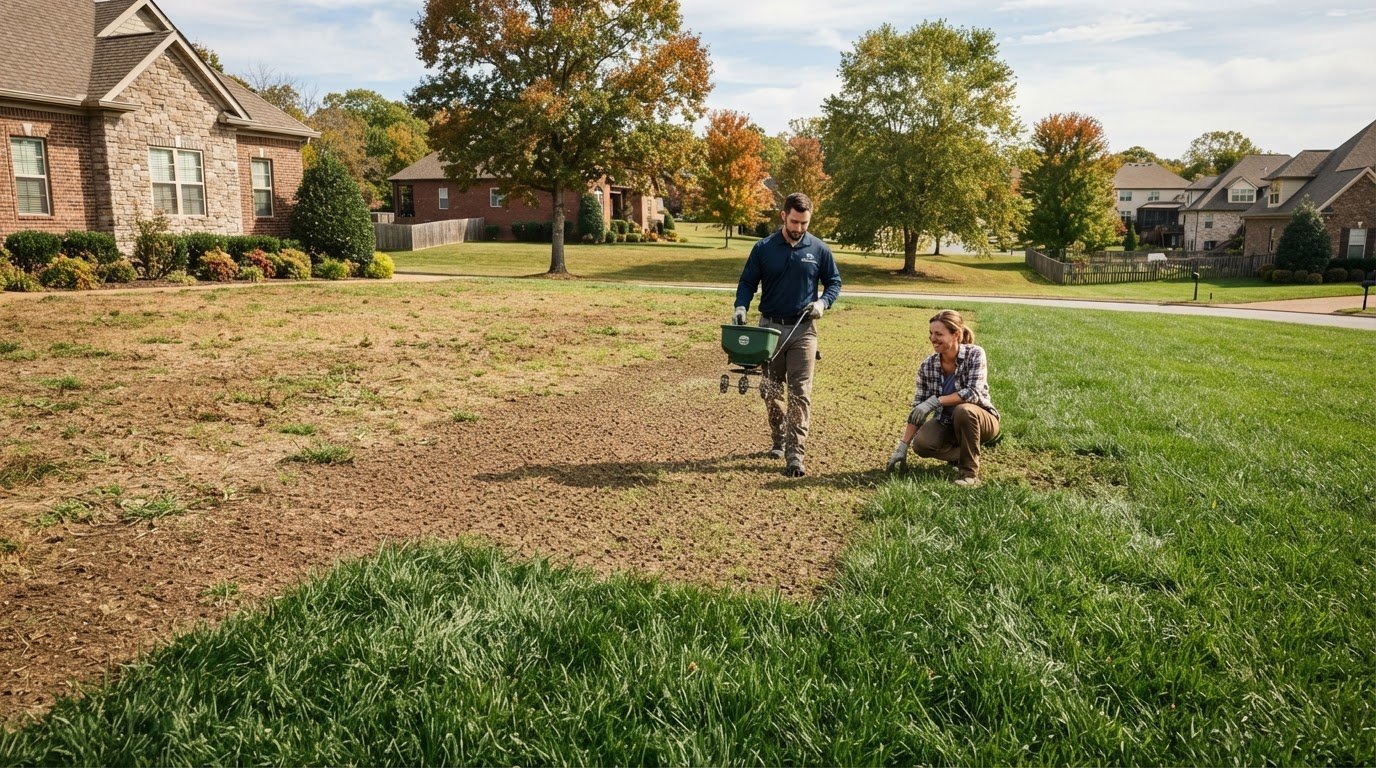
Professional aeration may be paired with overseeding or power seeding. This combination can make sense when the lawn needs relief from compacted soil and added grass coverage. Seed still needs suitable moisture and contact with soil to establish. Don’t treat seed application alone as a fix for every thin area: identify why growth is sparse before choosing the work.
Seasonal Timing and Common Risks
For Gallatin homeowners, fall is generally preferable because it gives new grass a season to establish before summer stress returns. Spring seeding remains an option when lawn conditions or timing make fall impractical, but seedlings then face approaching summer heat. Plan around the lawn’s condition and the care available after seeding, rather than choosing a season by habit.
Common mistakes include aerating soil that is too wet, leaving seed with poor soil contact, and allowing heavy use across newly seeded areas. Inadequate watering can also interrupt establishment. Follow the post-service care plan, protect seeded sections from foot traffic, and avoid rushing the first mowing. For a lawn-specific discussion of fall preparation, ask about aeration timing.
Lawn aeration can help water, oxygen, and nutrients penetrate the root zone by mitigating soil compaction. Lawn care professionals use specialized equipment to aerate lawns and alleviate compaction.
Fall timing for aeration and seeding in Gallatin
For aeration and turf seeding in Gallatin TN, plan around lawn readiness, fall weather, and the care available afterward. A calendar date alone can’t show whether a particular yard is ready for service.
Start by identifying where new grass is needed. Mark thin strips beside a driveway separately from healthy turf, and note whether slopes, shade, or runoff affect those areas. These details help define the work area and show why some sections may need different follow-up care.
Choose a workable stretch of fall conditions rather than relying on a date selected far in advance. A dry, firm surface is easier to prepare than waterlogged soil, while seed needs suitable moisture to establish. In Gallatin, changing weather can affect scheduling and follow-up care, so leave room to adjust plans around rain and soil conditions.
Plan the sequence before service: assess thin areas, prepare the lawn, aerate, then seed. This order matches the work to the lawn’s condition. For example, a bare patch beside a downspout may need attention to drainage as well as seed. Seeding alone won’t correct a site condition that repeatedly disturbs the soil.
After seeding, watch for germination rather than judging progress immediately. Under proper conditions, Middle Tennessee grass seed typically germinates within 7-14 days. That marks an initial growth window, not a promise of even coverage. Compare sections and look for differences in moisture, exposure, and seed-to-soil contact.
Build follow-up care into your fall plan. Keep seeded areas accessible for routine care, and avoid moving heavy materials across them. Make sure water reaches each planned section, not just the broad, open lawn.
Use visible progress to guide next steps. If one section emerges while another stays bare, compare sunlight, slope, and surface moisture before adding more seed. Planning aeration and turf seeding in Gallatin TN around each area’s specific conditions supports more focused decisions than treating every section alike.
What factors affect the cost of aeration and turf seeding in Gallatin?
The price depends on the lawn and is provided after a quote request. Factors include treated area, access, soil condition, aeration method, and seeding scope. Two Gallatin properties can need different work, even when their front lawns look similar. A narrow side yard, compacted ground, or several thin sections can change the work involved.
Treated area: The amount of lawn included affects the service scope. You may want only a bare section seeded, while another homeowner may plan work across the front and backyard. Identify the areas you want addressed before requesting a quote. Clear boundaries help distinguish the lawn from garden beds, walkways, and other surfaces.
Site access: Gates, slopes, and tight passages can affect equipment movement. A fenced backyard with a narrow entrance, for example, differs from an open lawn beside a driveway. Note obstacles such as play structures, planting beds, and retaining edges. Clear access details help describe the property accurately.
Soil and turf condition: Firm, compacted areas may call for a different scope than open soil with sparse grass. A lawn with isolated thin spots may need less coverage than one with widespread thinning. Thatch, uneven ground, and areas where water tends to collect can also affect preparation. Describe these conditions rather than relying only on the property’s overall appearance.
Aeration method and seeding plan: Core aeration physically removes soil plugs, while liquid aeration uses a liquid treatment. The selected method affects what the service includes. Seeding scope matters too: adding seed to selected thin sections differs from overseeding a larger area. Match seed quantity and placement to the intended coverage rather than assuming a one-size-fits-all treatment.
Preparation and follow-up: Existing grass height, debris, and access can affect how ready the site is for service. A prepared surface may require less additional work than an area with obstacles or heavy debris. Post-service watering and limiting foot traffic are practical homeowner care steps to consider when planning around treated sections.
Before requesting a quote, walk the lawn and note the work area, access points, visible compaction, and thin patches. Mention whether you want aeration alone or aeration with seeding. These details help define the scope and make the estimate more relevant to your Gallatin property. Request a lawn service quote based on the areas and conditions you’ve identified.
Performance Lawns: Lawn Treatments
Performance Lawns provides residential aeration and overseeding to help homeowners address thin turf and compacted soil. This can be a practical next step when a Gallatin lawn needs more than routine seasonal care, especially where compaction or sparse grass affects its appearance. The right approach starts with the lawn’s condition and the areas that need attention.
Performance Lawns also provides lawn treatments, including weed control and fertilization, to support ongoing turf care. These services address different needs, so match the focus to what you’re seeing, whether that’s thin coverage or unwanted weeds.
For a Gallatin lawn that may benefit from fall aeration and overseeding, contact Performance Lawns to discuss your property’s needs.
Set Your Lawn Up for the Season Ahead
Turn your lawn observations into a clear service plan. Decide which areas matter most, how you use the yard, and what changes you want to support. This context helps shape a conversation about aeration and turf seeding in Gallatin, TN, around your property rather than a one-size-fits-all routine.
Performance Lawns offers residential aeration and overseeding, along with lawn treatments, weed control, and fertilization. These services address different lawn care needs, so start with the concern that prompted your research. A thoughtful plan can help prioritize work and care for your outdoor space with purpose.
Contact Performance Lawns to discuss your lawn care needs and take a confident step toward a healthier, more attractive yard.
Frequently Asked Questions
Do I Need to Do This Every Year?
No, annual aeration and overseeding isn’t necessary for every lawn. Decide based on persistent thinning, compacted areas, and how the lawn responds after prior care. For example, if a well-used path keeps thinning while surrounding turf stays dense, focus your assessment there. A healthy lawn with even coverage may not need the same work. Let visible changes and use patterns guide your next service decision.
When is the best time to aerate and overseed a lawn in Gallatin, TN?
Fall is generally the best season for aeration and overseeding in Gallatin. Plan for a period when the lawn can receive consistent care after seed is applied, and don’t choose a date solely for convenience. Consider whether you can keep people and pets off newly seeded areas and maintain moisture. These practical conditions help determine whether your fall schedule is workable.
How should I prepare my lawn for core aeration and overseeding?
Prepare by clearing the lawn and identifying the areas that need treatment. Move toys, hoses, and loose yard items, then note beds, walkways, and other boundaries. Point out thin patches separately from healthy turf so the service plan reflects the lawn’s actual needs. Plan how household foot traffic will avoid seeded sections afterward. A clear surface and defined work area make preparation more straightforward.
What are the steps for aerating and overseeding a lawn?
Start by identifying thin or compacted areas and clearing the work surface. Next, aerate the soil, then apply seed to the intended sections or across the existing lawn. After service, follow the watering and traffic-care plan, and watch how each area develops. Compare a bare patch with nearby turf, for example, rather than assuming the whole lawn will respond identically. Adjust follow-up care to the conditions you observe.
How often should lawns in Gallatin be aerated and overseeded?
There isn’t one schedule that fits every Gallatin lawn. Consider how quickly compacted areas return, whether thinning reappears, and how much activity the yard receives. A lawn used often for gatherings may need closer observation than a lightly used space. Review the turf after each growing season and decide whether the same areas still need attention. This approach ties service frequency to changing lawn conditions.
How should I water and care for newly seeded grass in Middle Tennessee?
Keep the seeded surface consistently moist without creating puddles or runoff. Check areas beneath trees and beside buildings, since they may dry differently from open lawn. Reduce foot traffic while seedlings establish, and avoid letting pets repeatedly cross newly seeded sections. When new grass is ready for its first cut, use sharp mower blades and avoid scalping. Careful, even attention helps seedlings develop across the treated area.
Which lawn aeration and overseeding companies serve Gallatin, TN?
Performance Lawns serves Gallatin and provides residential aeration and overseeding. Its local service area also includes Mt. Juliet, Lebanon, and Hendersonville. Homeowners planning fall lawn work can consider this service when thin turf or compacted soil needs attention. Share which parts of the property concern you, such as a worn side yard or sparse front lawn, to make the conversation specific to your needs.