

Safety starts with the product label, not the word “liquid.” For liquid fertilizer application for lawns in Lebanon, follow the label’s handling and re-entry directions, and keep children and pets away from treated areas until those directions allow access. Application rates depend on the product’s nutrient analysis and your lawn’s needs, so there is no single rate for every yard.
It’s reasonable to be careful about what goes on your lawn when children and pets use the space. A responsible approach balances turf health with careful handling, accurate measuring, and close attention to product instructions.
This guide explains how liquid fertilizers differ, what nutrient analyses mean, how application rates are determined, and which safety steps matter around children and pets. You’ll also learn what spoon-feeding means, what influences professional fertilization costs, and how to choose a next step for your Lebanon lawn.
Liquid turf fertilizer products and nutrient analyses
Product labels identify the nutrients a fertilizer supplies and their concentrations. Read the analysis before choosing a product or determining an application rate.
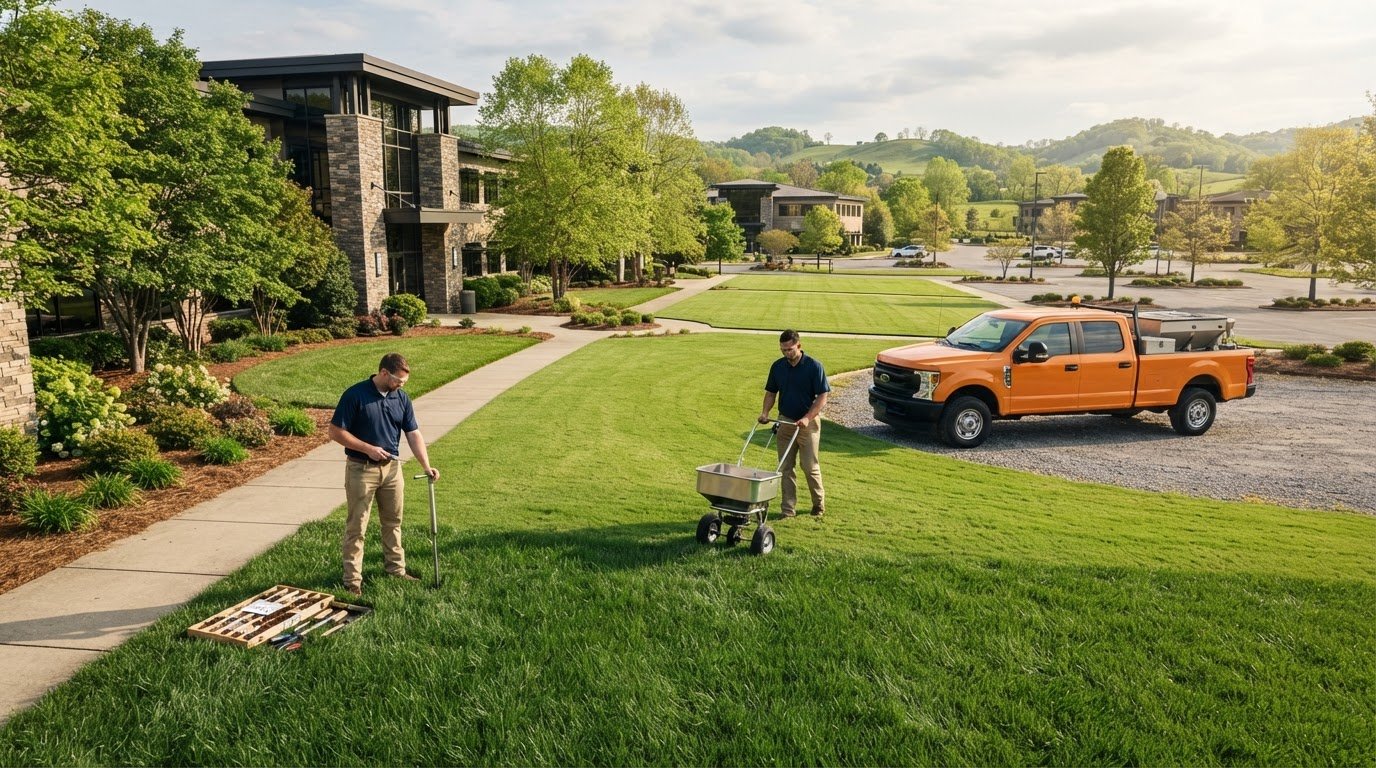
See how liquid fertilizer is diluted and applied in this lawn demonstration:
Liquid Product Options
Liquid turf products can supply nutrients, iron, or a combination of fertilizer and herbicide. ROOTS Fe 8% contains 8% chelated iron. That analysis identifies its iron content, not a complete feeding plan for every lawn. Match the product to the lawn’s needs and follow its label for dilution and use.
Combination products need a closer label review. Prodiamine pre-emergent herbicide with fertilizer has a listed formula of 0-0-7 and a listed concentration of 0.38%. Dimension pre-emergent herbicide with fertilizer has a listed concentration of 0.15%. These examples show why both the nutrient analysis and active ingredient matter. A formula such as 0-0-7 supplies potassium, while the herbicide ingredient serves a different purpose. Don’t treat these products as interchangeable.
A sound plan for liquid fertilizer application for lawns in Lebanon starts with the label and your turf’s condition. Check the nutrient analysis, intended use, and measuring and mixing directions. Then consider whether the lawn needs nutrients, iron, or a product that combines fertilizer with another treatment. Choosing carefully helps you avoid using an unsuitable product.
Liquid Versus Granular Results and Cost
Liquid and granular fertilizers can both deliver nutrients, but they’re applied differently. Liquid products are mixed with water and sprayed over the lawn; granular products are spread dry. In either case, measure the lawn and follow the product’s stated rate. Neither form guarantees better results on its own. The product analysis, application accuracy, and turf’s needs all matter.
How do liquid and granular lawn fertilizers compare in cost and results? Cost depends on the product, concentration, application rate, coverage, and equipment. Compare how much of each product is needed to treat the same area. Results depend on choosing nutrients that suit the turf and applying the product evenly according to its label.
For a fair comparison, consider the same questions for each option:
- Analysis: Which nutrients does the product provide, and in what proportions?
- Rate: How much product does the label call for across the measured lawn?
- Application: Can the chosen equipment distribute it evenly?
- Purpose: Is the product meant to feed turf, supply iron, or combine fertilizer with another treatment?
Liquid application may suit a targeted feeding plan, while granular fertilizer requires a spreader. Choose based on the label directions and your lawn’s needs, not the product form alone.
Fertilization assessment and calculations
There is no single liquid fertilizer rate for every Lebanon lawn. Use the product label’s rate for your measured lawn area, then calculate the required concentrate and dilution.
Lawn Fertilization Assessment
Start by assessing the lawn’s size, turf condition, and fertilizer history. Measure the area to be treated rather than using the property’s total lot size. Buildings, planting beds, and paved areas don’t need turf fertilizer. Record the grass type and note thin, pale, or uneven patches before choosing a nutrient program.
Next, compare the lawn’s needs with the product’s nutrient analysis. A 25-0-10 fertilizer supplies nitrogen and potassium, while a 20-0-25 product has a different nutrient balance. The analysis helps identify what each product contributes; the application rate determines how much reaches each square foot. Consider recent treatments too, so the plan accounts for nutrients already applied.
Season and product type also shape the assessment. A Lebanon-area schedule lists ProScape 25-0-10 at 2.40 lbs per 1000 sq ft in April. It lists Lebanon Pro 25-0-6 30% PCU 2% Fe Biosolids at 2.40 lbs per 1000 sq ft in June, and ProScape 20-0-25 100% EXPO at 3.00 lbs per 1000 sq ft in September. These are product-specific schedule rates, not universal liquid rates.
Application Rate Calculations
How much liquid fertilizer should you apply per 1,000 square feet of lawn? Apply the amount stated on that liquid product’s label for 1,000 square feet. The correct quantity depends on its analysis and labeled rate, so don’t substitute a rate from a different product or a granular schedule.
Use this calculation: labeled product amount per 1,000 square feet multiplied by the lawn’s measured area, then divided by 1,000. For example, a measured 3,000-square-foot treatment area uses three times the label’s per-1,000-square-foot amount. Follow the label’s dilution directions separately; water carries the concentrate but doesn’t change the fertilizer quantity required.
Check the units before mixing. A label may specify concentrate by volume, finished mixture by volume, or product per area. Keep these quantities distinct. Calibrate the sprayer according to its directions, then apply evenly across the measured turf. If the area changes, recalculate rather than stretching one batch over more lawn.
- Measure: mark the actual turf area in square feet.
- Read: locate the liquid product’s rate and dilution directions.
- Calculate: scale the labeled rate to the measured area.
- Apply: distribute the mixture evenly over that area.
If you’d like support matching an application plan to your lawn, use the lawn care contact page to discuss your property’s needs.
Fertilizer application instructions and safety
In Lebanon, fertilize according to grass type, product directions, and seasonal conditions. A local schedule lists cool-season fall nitrogen when 2-inch soil temperatures are between 55°F and 65°F, and late-fall nitrogen between 40°F and 55°F.
Timing varies because cool-season and warm-season grasses grow actively at different times. For cool-season turf, use the soil-temperature windows noted above. For warm-season turf, time applications to active growth and follow the fertilizer label.
Application Instructions
Before mixing liquid fertilizer, read the entire label and prepare the sprayer as directed. Confirm the product is intended for the grass and purpose you’re treating. A Lebanon schedule lists ProScape 25-0-10 at 2.40 lbs per 1000 sq ft April. That’s a product-specific granular schedule rate, not a universal liquid-fertilizer instruction.
With liquid products, keep concentrate and dilution amounts separate. Measure the lawn, mix only as directed, and maintain a steady walking pace. Slightly overlapping spray passes can help prevent untreated strips, but too much overlap may create uneven coverage. Avoid spraying garden beds, pavement, or neighboring plants. Clean equipment according to its instructions after use, and store the container securely with its label intact.
Weather and surface conditions affect spraying. Choose conditions that allow even application without wind carrying droplets off the lawn. Don’t apply during rain if it could wash the product off before the label’s stated interval. If the grass is stressed, pause and review the directions before treating. Careful preparation, controlled spraying, and cleanup help keep the application on target.
Fertilizer Safety Practices
Protect children and pets by following the product label’s handling and re-entry directions. Keep them away from the mixing area and treated lawn until the label permits access. Store fertilizer in its original, closed container and out of reach. Never transfer concentrate into a drink bottle or an unmarked container.
While mixing, avoid splashes and contact with skin or eyes. Use protective equipment when the label directs you to, and wash your hands after handling fertilizer. Keep measuring tools, open containers, and leftover mixture out of reach of children and pets. If concentrate spills, follow the label’s cleanup directions rather than rinsing it toward a storm drain or planting bed.
Keep the label available while applying the product. It contains specific handling, storage, and cleanup instructions. If you’re applying fertilizer with an herbicide, treat it as both a fertilizer and a weed-control product. Follow all directions for the combination rather than assuming fertilizer-only precautions cover every ingredient.
Timing by Grass Type and Climate
Lebanon’s seasonal conditions influence when nutrients support active turf growth. Cool-season grass timing can follow 2-inch soil readings: fall nitrogen is listed between 55°F and 65°F, while late-fall winterizer nitrogen is listed between 40°F and 55°F. These are soil temperatures, not air-temperature targets.
Grass type affects the schedule. Cool-season turf uses the fall windows noted above; warm-season turf needs a plan suited to active growth and its fertilizer label. Don’t apply a cool-season schedule to warm-season grass simply because both lawns are in Lebanon. Match timing and nutrient analysis to the grass, product, and season.
For example, the local schedule lists a fall application for cool-season turf when soil reaches the specified range. Check the soil at the specified depth, then compare the reading with the appropriate seasonal window. The product directions still determine the application method and rate. This keeps calendar dates from replacing the conditions the schedule is based on.
Liquid fertilizer prices and container sizes
Liquid fertilizer costs depend on the product, coverage, and application plan. Compare the label’s treated area and concentrate amount, not just the container size. A larger bottle may cover more lawn, but its value depends on the labeled rate and how much product your yard needs.
What affects the total price?
For professional fertilizer service, price depends on the lawn and treatment plan and is provided after a quote request. Factors include lawn area, product type, application plan, and site conditions. Liquid and granular applications may use different materials and equipment, so compare the full scope of work.
For DIY purchases, compare a product’s intended purpose and nutrient analysis as well as its package size. A fertilizer with added ingredients may serve a different purpose from one formulated only to supply nutrients. Use the listed coverage to estimate how much product your measured lawn needs, and follow the directions rather than comparing packages by volume alone.
Package quantity doesn’t indicate how long a treatment program lasts. Some lawn bundles state that liquid products provide enough product for 3 months of treatment. The same bundle information describes granular fertilizer and Essential-G quantities as enough for 1 month of treatment. These durations apply to those stated bundle quantities, not to every liquid or granular product.
How to compare container sizes
Start with the label’s coverage statement and compare it with your lawn area. A container that treats less area may need replacing sooner, while a larger one may leave unused concentrate if your lawn is smaller. Before choosing, compare the product needed for your yard with the package’s stated coverage.
That weight doesn’t tell you how much lawn a bag covers. Coverage depends on the product’s labeled rate, so use the stated application amount to calculate how much you need. Liquid containers have their own labeled units and coverage directions.
A practical comparison should account for more than shelf price:
- Coverage: how much lawn the labeled amount treats.
- Application rate: how much product the label directs per area.
- Purpose: whether the product supplies nutrients or combines treatments.
- Remaining product: whether the container size suits your planned applications.
For liquid fertilizer application for lawns in Lebanon, compare products by their coverage, directions, and intended use. A lower container price doesn’t necessarily mean a lower cost per treatment. Measure your lawn, calculate the amount required, and compare products for the same treatment area and purpose.
Liquid fertilizer spoon-feeding
Spoon-feeding means applying smaller, measured amounts of nutrients over the growing season instead of relying on one large feeding. For a Lebanon lawn, the approach still depends on grass type, product analysis, and label directions. “Small” doesn’t mean guessing at the rate. Follow the selected product’s instructions for every application.
The goal is to match nutrient delivery to the lawn’s changing needs. A product containing nitrogen, for example, supplies a different nutrient balance from one formulated to add iron. Check the analysis before planning a spoon-feeding program. Repeatedly applying a mismatched product won’t make it suitable.
Liquid fertilizer can make measured applications convenient, but its form alone doesn’t determine how often or how much to apply. Follow the label’s rate and timing, and account for nutrients supplied by other products. Combining treatments without reviewing their analyses can result in an unsuitable overall plan for your turf.
A practical spoon-feeding plan starts with these steps:
- Identify the grass: note whether the lawn contains cool-season or warm-season turf.
- Review the analysis: identify the nutrients and their proportions on the product label.
- Measure the lawn: calculate the actual turf area before preparing the mixture.
- Track applications: record the product, date, and amount used for each treatment.
Application records show what the lawn has received. If the turf looks pale or grows unevenly, compare those observations with your records and the fertilizer analysis. Don’t automatically increase the amount. First, recheck the label, measured area, and previous nutrient applications. This keeps a spoon-feeding plan grounded in what you know about the lawn.
Lebanon’s seasonal growth patterns also matter. Cool-season and warm-season turf don’t follow the same calendar. Use the schedule for your grass type and the product directions to plan each feeding. If the lawn isn’t actively growing, a routine application may not suit its current needs. Let the turf and season guide your plan, not just a recurring date.
Spoon-feeding is a method, not a promise of a particular color or growth response. The product’s nutrient analysis, application accuracy, and lawn condition shape what a treatment can support. For example, uneven coverage calls for accurate measurement before another application. Applying more fertilizer without correcting the measurement won’t solve the underlying problem.
For a spoon-feeding plan built around your lawn’s condition and fertilizer needs, contact the lawn care team.
Performance Lawns, INC: Lawn Treatments
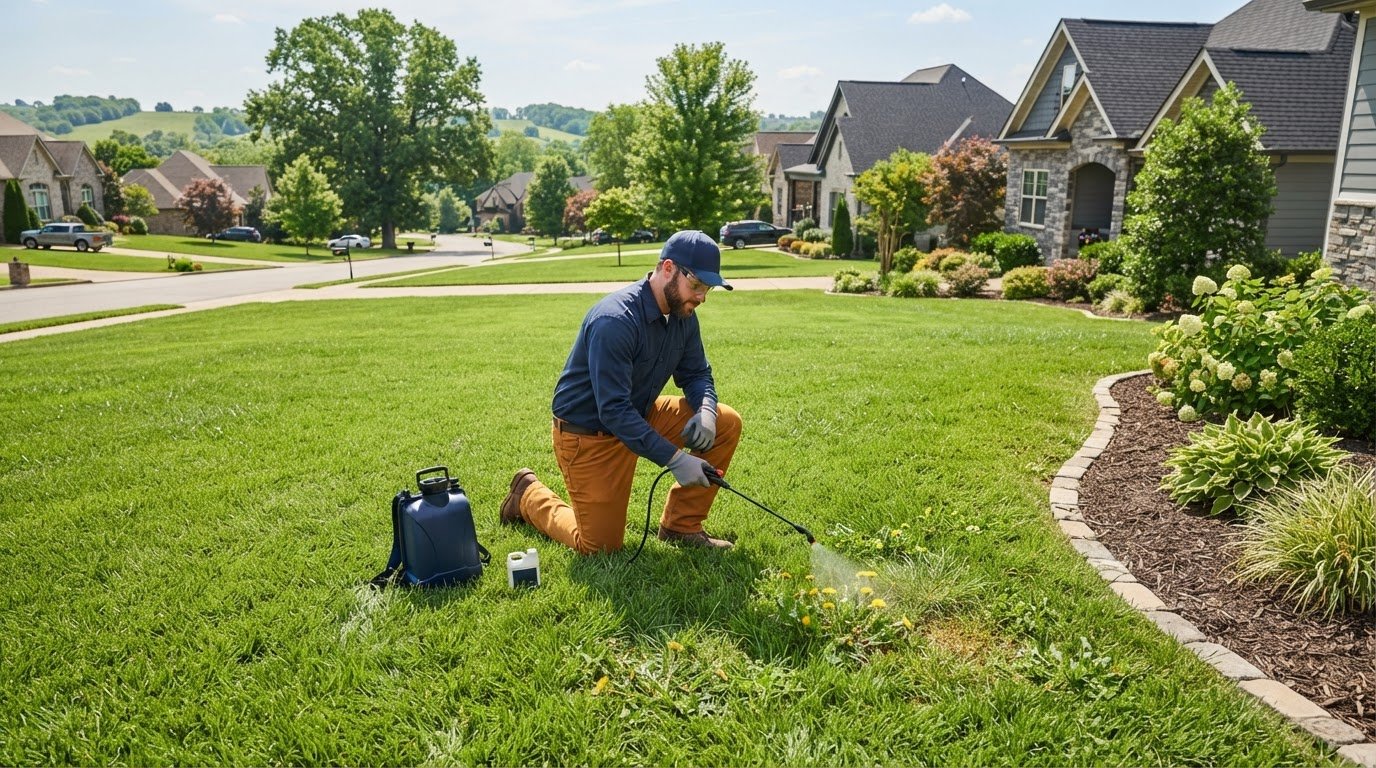
Performance Lawns, INC provides lawn treatments, including fertilizer and weed control, for homeowners seeking ongoing turf care. Invasive grassy weeds such as Dallisgrass and Johnsongrass can be harder to manage than common broadleaf weeds and may require a separate or targeted treatment approach.
For a Lebanon lawn, professional treatment can help coordinate fertilization with weed control based on the turf’s needs. Explore fertilization and weed control services to see how this approach may fit your lawn care.
Contact Performance Lawns, INC to discuss your lawn’s treatment needs.
Make your next lawn-care decision with confidence
Good turf care is an ongoing practice shaped by how your lawn responds through the seasons. When planning liquid fertilizer application for lawns in Lebanon, look beyond a single treatment: consider how you want to use your outdoor space and how much care you want to manage yourself. A clear goal can make your next decision easier, whether you’re addressing turf health, weed pressure, or areas that need renewal.
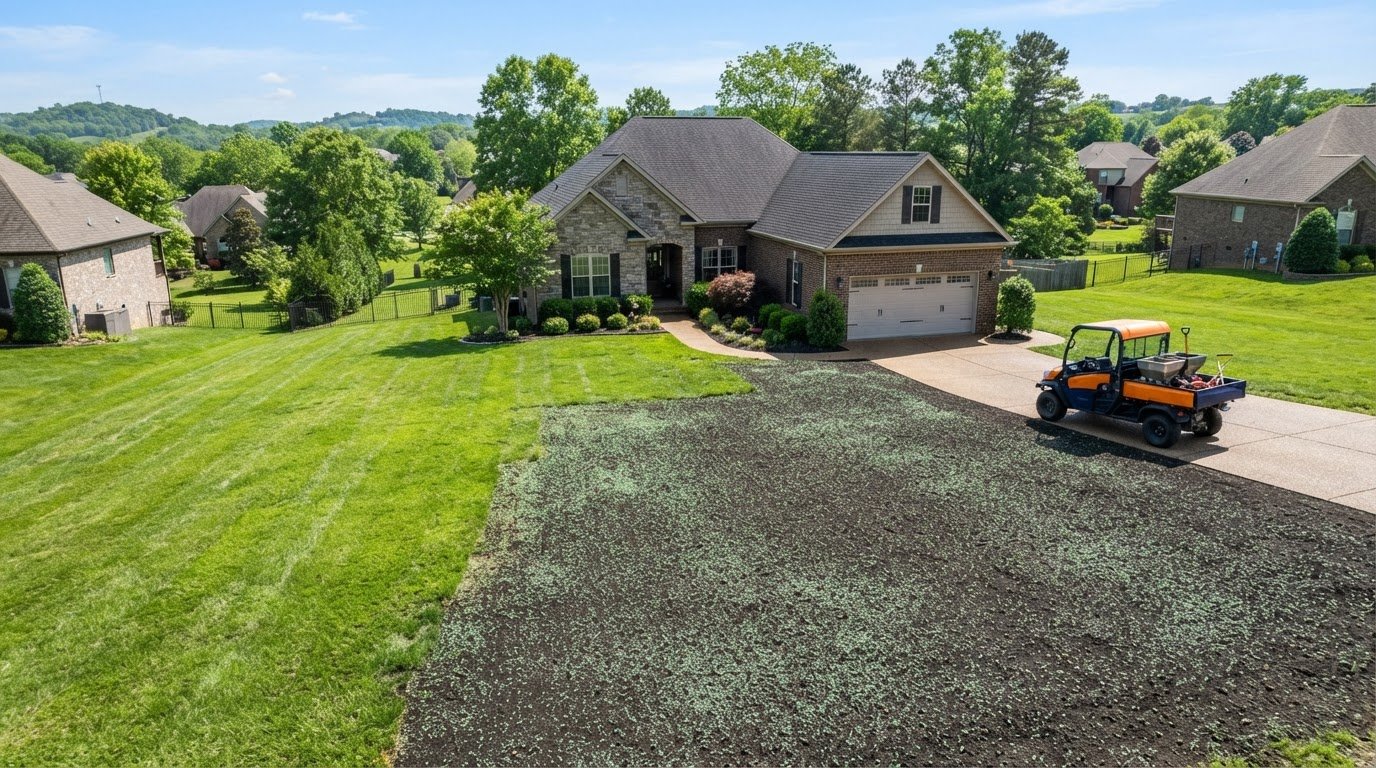
Performance Lawns, INC offers lawn treatments, weed control and fertilization, and residential aeration and overseeding. These services address different needs, from routine treatments to improving conditions for thicker turf. The right starting point depends on your lawn’s condition and goals.
For a practical next step, contact Performance Lawns, INC about lawn fertilization and discuss what you’d like your lawn to achieve. A thoughtful plan can help you care for your outdoor space with greater clarity and confidence.
Frequently Asked Questions
Is it safe to use these products if I have kids or pets?
Use lawn fertilizer around children and pets only as directed by the specific product label. Follow its handling and re-entry instructions, and keep people and animals away from the mixing area and treated lawn until the label permits access. Store the closed container out of reach. Liquid fertilizers differ, so don’t assume one product’s directions apply to another.
What if I don't know what my lawn needs?
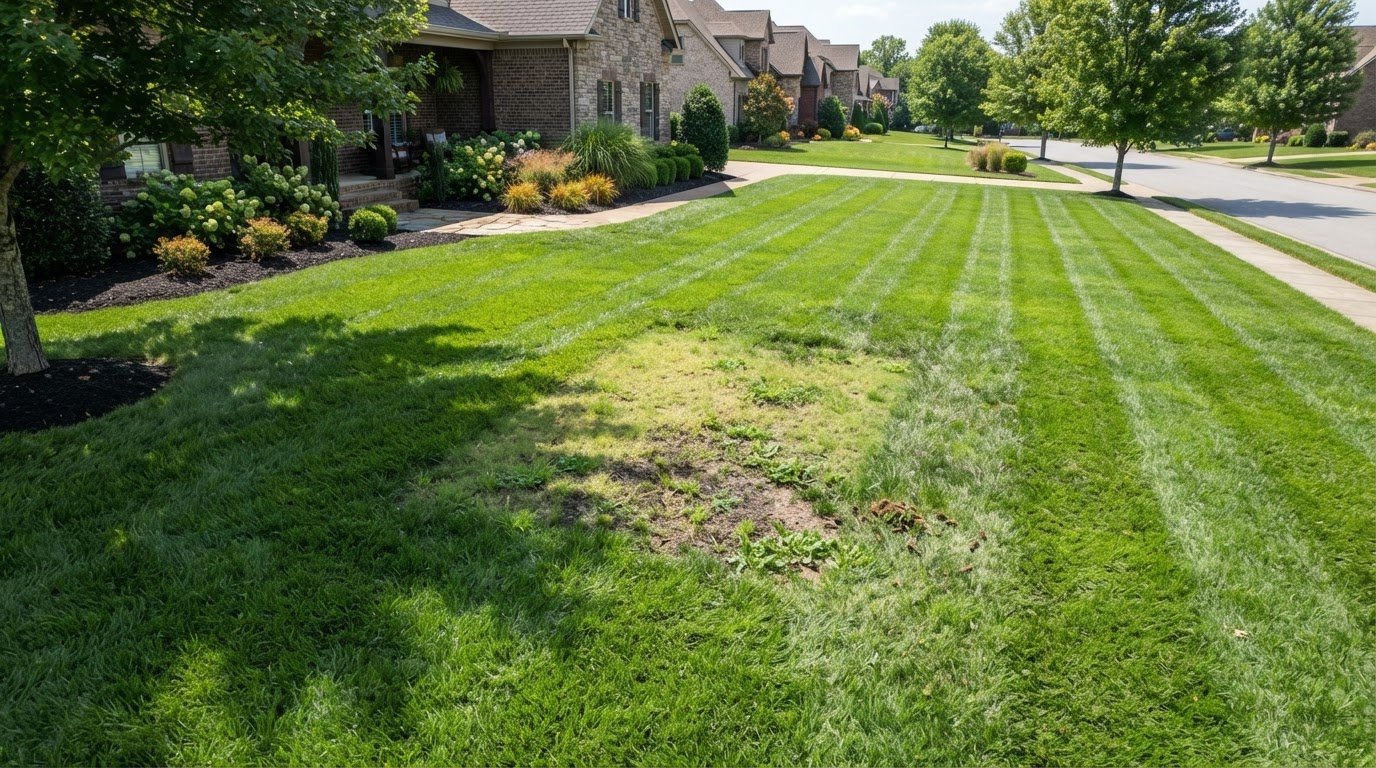
Start by identifying the grass and describing the issue. For example, note whether growth is thin across the lawn or only in one patch. Record recent treatments and changes in the turf. These observations can help distinguish a general feeding question from a localized problem. If the cause remains unclear, a lawn-care assessment can help identify a suitable treatment approach instead of relying on guesswork.
What liquid fertilizer nutrients and N-P-K ratios are best for lawns in Lebanon?
There is no single N-P-K ratio that suits every Lebanon lawn. The three numbers represent nitrogen, phosphorus, and potassium, in that order. The right balance depends on grass type, soil conditions, and the turf’s needs. A lawn needing a different nutrient balance shouldn’t receive a formula just because it’s popular. Match the label analysis to the lawn’s condition and follow its application directions.
How do I calculate and apply liquid lawn fertilizer with a hose-end or pump sprayer?
Measure the turf area, then use the product label’s rate to calculate the required concentrate. For a hose-end sprayer, set it up and fill it according to the product directions. For a pump sprayer, mix concentrate and water as directed, then apply consistently across the measured area. Keep the concentrate rate distinct from the dilution water amount, and clean the equipment as instructed.
What are typical prices for liquid lawn fertilizer in Lebanon?
Liquid fertilizer prices vary by product, container size, nutrient analysis, concentration, and labeled coverage. Compare the amount needed for your lawn rather than judging by bottle price alone. Professional fertilization costs depend on the lawn and treatment plan. For professional service, the price depends on the case and is provided after a quote request. No single price applies to every property or product.
What precautions prevent fertilizer burn, runoff, and harm to pets or children?
Follow the label’s rate and mixing directions; applying more than directed can damage turf. Keep fertilizer on the lawn rather than spraying hard surfaces or drains, where it can wash away. Avoid spills, clean equipment as directed, and store containers securely. Follow the product’s instructions for when children and pets can return after application. Don’t combine products unless their labels direct that use.
Where can I buy liquid lawn fertilizer and find lawn-care services in Lebanon?
Performance Lawns, INC provides fertilizer and weed control service for homeowners in Lebanon, Mt. Juliet, Gallatin, and Hendersonville. The company offers lawn treatments and can discuss your property’s needs. For retail fertilizer, compare labels and coverage when you buy, then choose a formula suited to your lawn. If you want professional care, contact Performance Lawns, INC through its website.