

Fertilizer isn’t always the answer to struggling turf. Soil testing can guide commercial turf fertilization in Middle Tennessee, where nutrient needs vary and poor growth may also stem from soil, water, or shade. A suitable seasonal plan also depends on whether the property has tall fescue or Bermuda.
For commercial properties in Mt. Juliet, Lebanon, Gallatin, Hendersonville, and across Middle Tennessee, timing matters. Treatments should align with the turf’s growth cycle, and pre-emergent weed control needs to be planned around seasonal conditions. A calendar is a useful framework, but using the same products and timing for every grass type may not meet a property’s needs.
This article explains how soil testing can inform fertilizer decisions, how seasonal treatment windows fit local turf, and how pre-emergent applications support ongoing weed control. You’ll also learn why fescue and Bermuda call for different approaches, helping you plan for healthy, well-kept commercial grounds.
Commercial turf fertilization and pre-emergent weed control
A sound commercial turf program matches fertilizer and weed control to grass type, season, and site conditions. Tall fescue and Bermuda need different approaches, particularly during transition seasons.
For a quick overview of seasonal feeding schedules for cool- and warm-season grasses, watch this video:
Pre- and Post-Emergent Weed Control
Pre-emergent herbicides target weeds before they emerge, so application timing matters. Post-emergent treatments address weeds that are already visible. A practical program considers turf type, weeds present, and whether the goal is prevention or control of existing growth. Dallisgrass and Johnsongrass are invasive grassy weeds that can be harder to manage than common broadleaf weeds. They may call for a targeted approach separate from typical broadleaf weed treatments.
Across Mt. Juliet, Lebanon, Gallatin, and Hendersonville, identify the grass type before selecting treatments. Bermuda in Middle Tennessee needs a different fertilization and weed-control approach from tall fescue, particularly during transition seasons. Bermuda that has spread into established fescue can be extremely difficult to eliminate completely. Management focuses on limiting its spread, reducing its presence, and helping the desired fescue stay healthy and competitive.
Fertilizer Release and Organic Options
Slow-release fertilizer supplies nutrients over a longer period than quick-release fertilizer, which makes nutrients available more rapidly. Organic fertilizers come from organic materials, and their release can depend on soil conditions and microbial activity. Compare release patterns, turf needs, and timing rather than assuming one type suits every commercial site.
Soil testing helps identify the nutrients turf needs before you choose a fertilizer. It can also help avoid applying nutrients the soil doesn’t need. Where soil conditions, shade, or grass types vary, assess each area separately before selecting a blend.
A Middle Tennessee program may use six treatment windows: February to mid-March, mid-March to April, April to mid-June, mid-June to mid-August, mid-August to mid-October, and mid-October to November. Match each application to grass type and seasonal growth instead of treating every area alike.
Annual contracts and estimates should describe the property scope and planned work. Review turf types, treatment areas, fertilizer and weed-control steps, and seasonal visits. A written outline helps managers coordinate care across separate grounds and understand which treatments the plan covers.
Tennessee applicator credential requirements depend on the products and work involved. Distinguish fertilizer-only applications from herbicide applications, then match the applicator’s credentials to the specific task before scheduling.
Do you soil-test before fertilizing in Nashville?
Soil testing gives Nashville property managers a basis for fertilizer decisions. It helps distinguish nutrient needs from problems related to soil, water, or shade.
Tennessee’s applicable fertilizer-use and water-quality requirements form the regulatory framework for commercial applications. Nutrient runoff is an environmental concern, so application practices should keep fertilizer on the intended turf.
Overfertilizing can stress turf and leave excess nutrients that may move beyond the treated area. Runoff can carry those nutrients toward drains and waterways, while unnecessary applications add inputs the lawn may not need.
Soil Testing and Nutrient Availability
Soil testing measures nutrient conditions, but results should be considered alongside turf performance. A Nashville-area lawn that stays thin or fails to green up may reflect soil, water, or shade rather than a fertilizer shortage. Compare test results with visible symptoms and site conditions before choosing a nutrient blend. This helps target treatment instead of guessing.
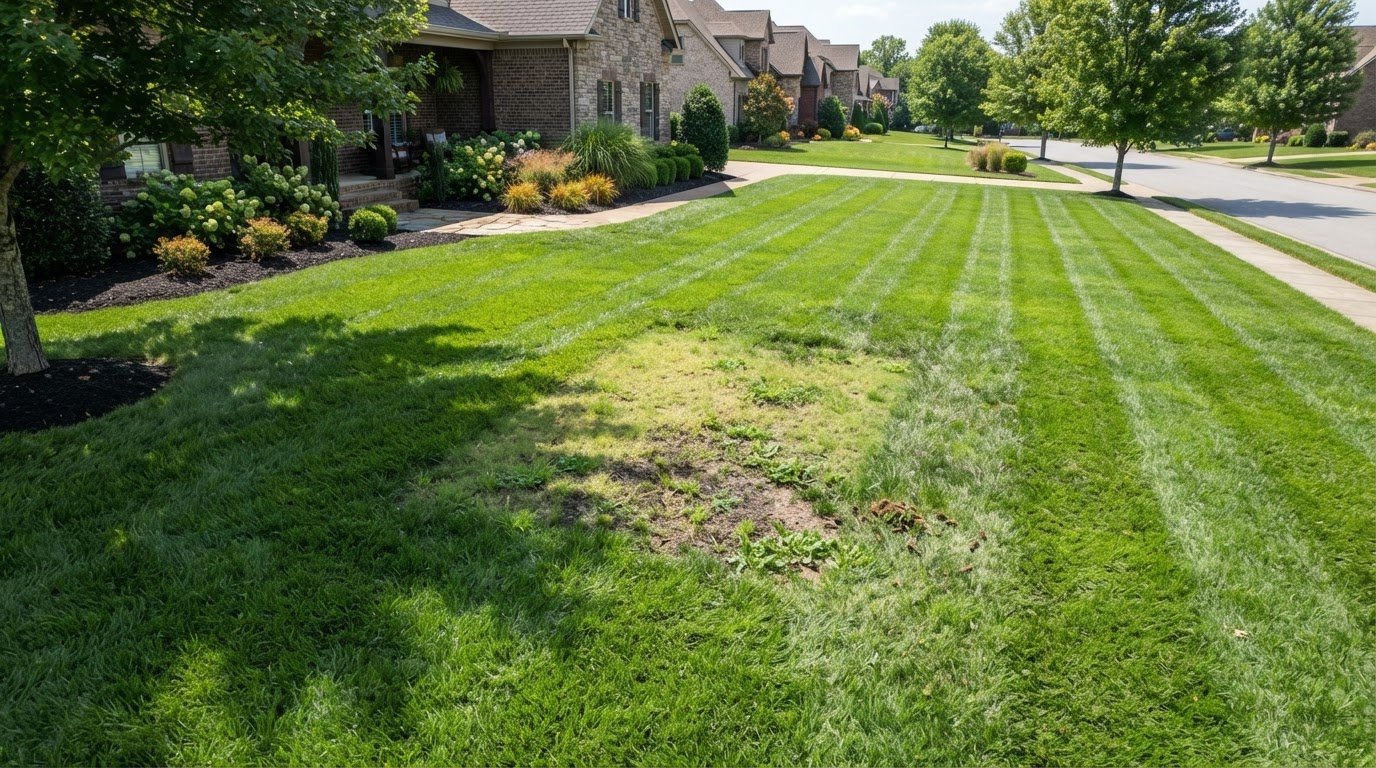
Heavy Middle Tennessee clay can limit nutrient availability to roots. A soil test informs decisions, but it doesn’t replace a turf assessment. Note where growth differs, whether an area gets shade, and how water moves across the site. A persistent bare patch can point to a problem beyond fertilizer.
Soil-Matched Fertilizer Blends
Middle Tennessee clay calls for attention to nutrient availability, not simply more fertilizer. Use soil-test results to identify which nutrients the turf needs, then select a blend that addresses those needs. Avoid applying a nutrient just because a neighboring property uses it. Different soil conditions can produce different results, even within Nashville.
Keep records by property area, including turf type and observed growth. For example, a shaded section and a sunny entry lawn may need different assessments. Comparing them helps refine later applications and reduces the chance of treating the entire site as one uniform surface.
Weather, Soil, and Site-Use Adjustments
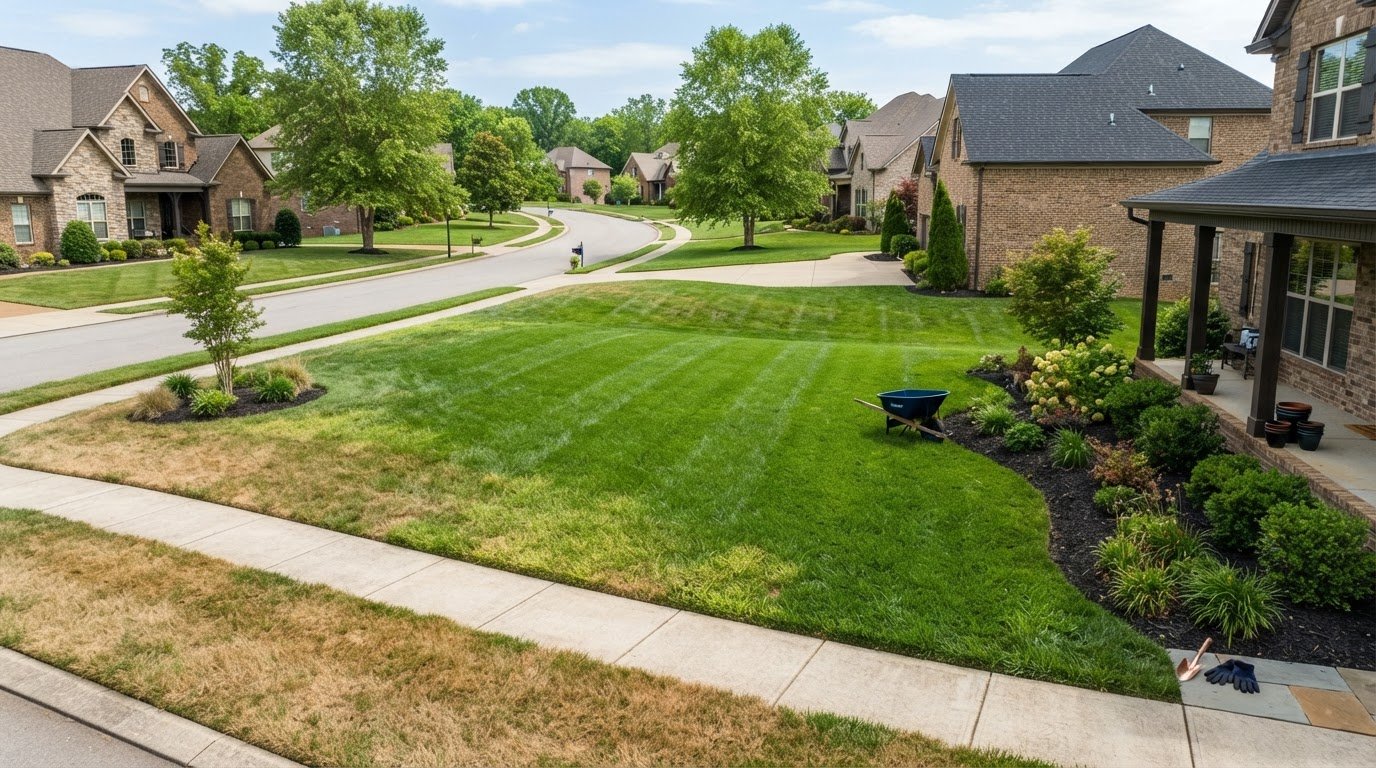
Weather, compaction, shade, and foot traffic all affect turf response. Tall fescue struggles with heat and heavy drought, so consider its condition during stressful weather when planning care. A high-traffic entrance may also show wear differently from a lightly used lawn. Assess each area before changing fertilizer inputs.
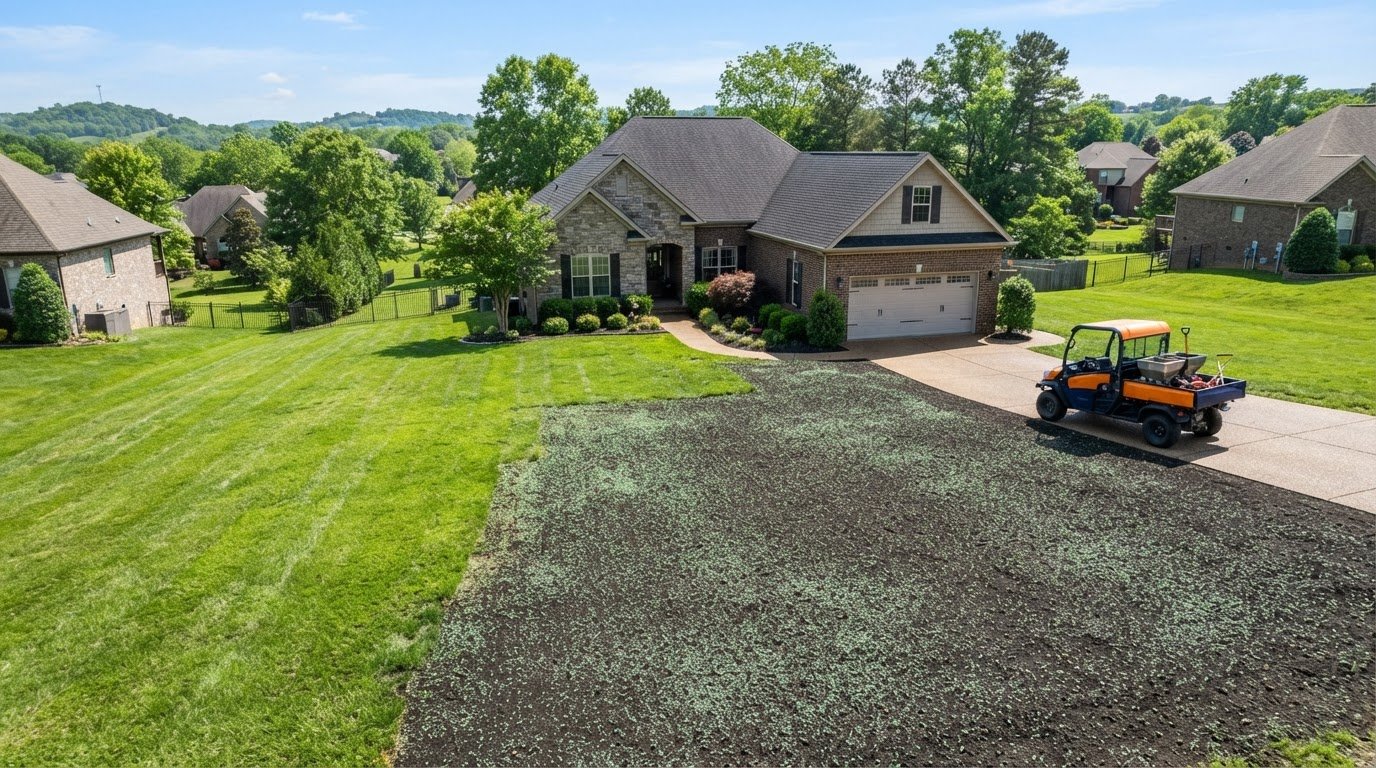
Compacted soil can limit root growth, water absorption, and oxygen movement. Some turf benefits from annual aeration to relieve compaction and support roots. Fall aeration can also assist reseeding where a fescue area needs help maintaining density. For a property with changing soil or use conditions, a site-specific lawn assessment can help connect observations with a practical care plan.
Seasonal fertilizer application timing
Middle Tennessee fertilizer timing follows turf growth, not a fixed date for the whole property. The six treatment windows below provide a framework for planning applications across commercial grounds.
Tall fescue, the dominant turf type in Middle Tennessee, is a cool-season grass. It generally looks best in spring and fall but struggles with summer heat and heavy drought. Bermuda needs a different approach, particularly during transition seasons. Identify each turf area before assigning its treatment window.
- February - Mid March: Schedule the first treatment window. Check turf type and site conditions before applying fertilizer or pre-emergent weed control.
- Mid March - April: The second window follows. Review the first application and current turf growth before choosing the next step.
- April - Mid June: The third window spans spring growth. Match treatment decisions to the grass type and seasonal conditions.
- Mid June - Mid August: The fourth window covers summer. Tall fescue may struggle with heat and heavy drought during this period.
- Mid August - Mid October: The fifth window reaches into fall. Consider the needs of cool-season tall fescue as conditions change.
- Mid October - November: The sixth window closes the described schedule. Assess turf condition and the prior applications before planning treatment.
These windows help organize a program, but they don’t make every application identical. Tall fescue and Bermuda, for example, can reach different growth stages within the same calendar window. Separate treatment plans by grass type, then use observed growth and soil conditions to guide decisions. A calendar is a starting point, not a substitute for assessing the turf.
Spring and fall better suit tall fescue’s growth pattern than stressful summer conditions. During hot, dry weather, assess fescue before making fertilizer decisions. Summer stress can affect turf response, so don’t treat a struggling area as though it were actively growing in spring. Record site conditions alongside each application date.
Bermuda requires its own seasonal approach. Its fertilization and weed-control needs differ from tall fescue, especially during transition seasons. On a mixed property, map Bermuda and fescue areas separately. This prevents one grass type’s calendar from dictating treatment for the other and helps ensure each section gets an appropriate plan.
For practical scheduling, keep a property record for each window, noting grass type, treatment, and observed turf condition. Compare notes from February - Mid March with conditions in later windows. This can help show whether a change followed seasonal stress, site differences, or a treatment decision. It also gives property managers a clearer basis for planning care in the next season.
Commercial turf care in Gallatin and Middle Tennessee
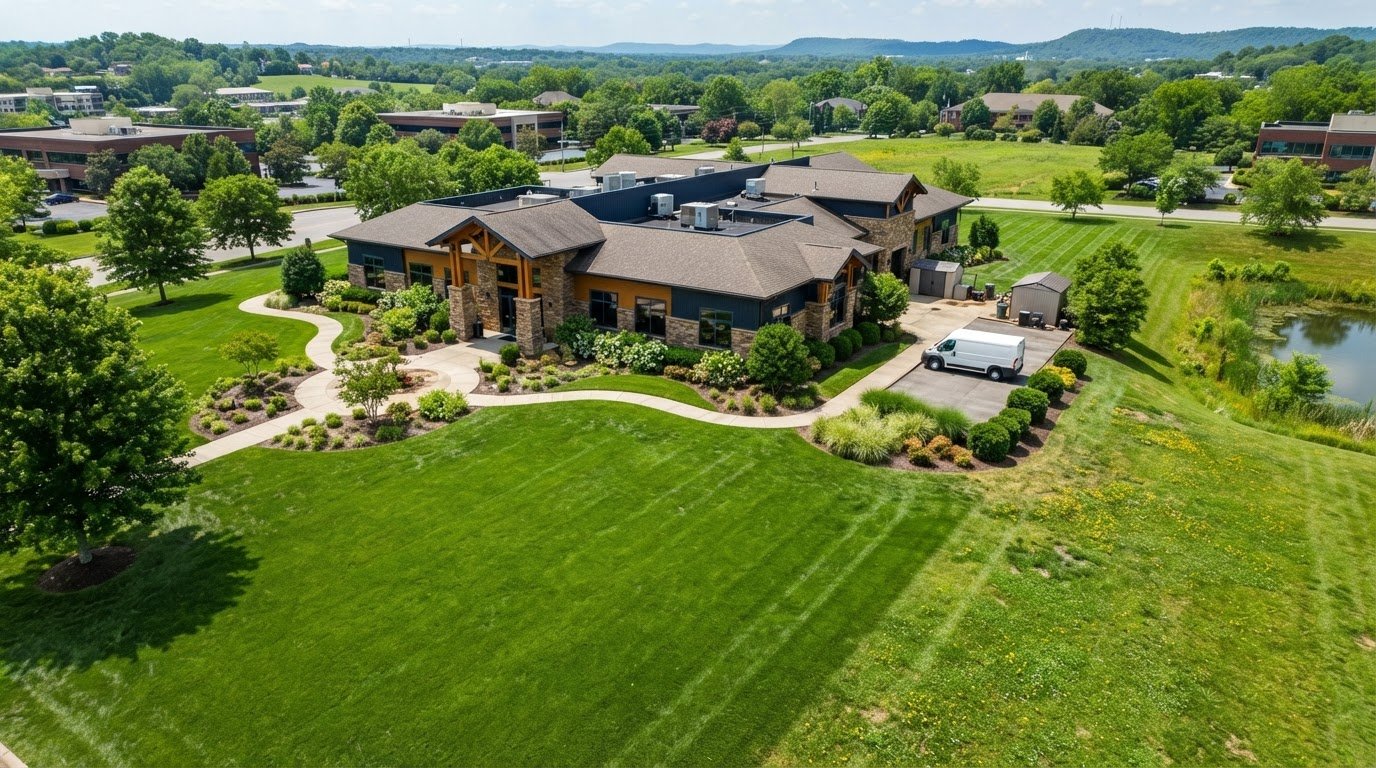
Commercial properties in Gallatin and across Middle Tennessee can have different turf types, uses, and growing conditions. A practical care plan starts by mapping those differences and matching maintenance decisions to each area.
Tall fescue is the dominant turf type across Middle Tennessee. It is a cool-season grass and often needs annual overseeding to remain dense. Bermuda follows a different growth pattern and needs a different fertilization and weed-control approach, especially during transition seasons. On a mixed property, mark fescue and Bermuda separately before setting a treatment schedule.
Use each site’s purpose to guide your assessment. An office entrance, a shaded lawn, and an athletic field, for example, face different conditions. Natural athletic turf is designed to withstand heavy foot traffic, recover rapidly, tolerate intense sun, and provide a safe, resilient playing surface. That performance depends on care suited to the turf and site use.
- Entry areas: Note foot traffic, shade, and visible thinning near doors.
- Open grounds: Record grass type and differences between sunny and shaded sections.
- Athletic turf: Consider traffic, recovery needs, and intense sun exposure.
Mowing records can add useful context to fertilizer decisions, even when mowing is handled separately. Commercial turf recommendations call for 34 mowings per season for tall fescue and 30 to 32 mowings per season for Bermuda. These figures help frame seasonal workload; they don’t make the grasses interchangeable. Track turf type and growth response alongside each property’s maintenance schedule.
Across Middle Tennessee, seasonal stress also shapes what managers observe. Tall fescue generally looks best in spring and fall but struggles with heat and heavy drought. Assess a thin summer area for its conditions and turf type rather than treating it like actively growing spring grass. Compare affected sections with healthier areas on the same property.
Keep a straightforward site record for Gallatin grounds: turf type, location, use, shade, and visible changes. A map can show where Bermuda meets fescue, where traffic concentrates, or where an athletic field gets intense sun. Pair those observations with treatment dates and turf responses. This record gives property managers a clearer basis for adjusting care as conditions change, rather than applying one uniform plan to unlike areas.
Which commercial turf fertilization companies serve Nashville and surrounding Middle Tennessee areas?
For properties in Nashville, Gallatin, and surrounding Middle Tennessee communities, look for a program suited to commercial turf. Service fit depends on the property’s location, grass types, soil conditions, and treatment needs. A clear site description helps connect those needs with a practical care plan.
Start by mapping the grounds. Mark each turf area, note whether it contains tall fescue or Bermuda, and identify heavily used sections. Tall fescue is Middle Tennessee’s dominant turf type, while Bermuda needs a different fertilization and weed-control approach. A property map helps ensure unlike grass areas aren’t treated as one surface.
Next, define the work the grounds require. A commercial fertilizer and weed-control program may include seasonal applications and pre-emergent or post-emergent weed treatment. Soil testing helps guide fertilizer choices, while a visual turf assessment can flag issues related to shade, water, compaction, or site use. These are distinct steps, not interchangeable fixes.
Use a concise property brief to describe the scope. Include:
- Location: Nashville, Gallatin, or another Middle Tennessee community.
- Turf: Tall fescue, Bermuda, or separate areas of both.
- Conditions: Clay soil, shade, heavy traffic, or visible thin patches.
- Prior care: Recent fertilizer and weed-control treatments, if known.
- Goals: Support turf density, manage common weeds, or address site-specific concerns.
These details help make an estimate specific to the grounds instead of relying on a generic property description. For example, a Gallatin site with fescue and sunny Bermuda sections needs its turf areas identified before planning treatment timing. Seasonal windows serve different purposes, and transition periods can affect treatment decisions. Accurate notes also give property managers a record for comparing turf response over time.
Request an estimate that explains the planned scope, treatment sequence, and areas covered. A written outline makes it easier to see whether fertilization, weed control, and seasonal visits address the property’s actual needs. It also helps distinguish routine turf care from separate concerns, such as invasive grassy weeds that may need targeted management.
For a commercial property in Nashville or Gallatin, share the site details and request a plan for its turf needs through a commercial turf care inquiry. Include a property map or describe the grass types, soil concerns, and high-traffic areas. Specific information helps shape the conversation around the grounds, not assumptions.
Aeration can also be raised as a distinct part of the site discussion, especially where soil compaction is a concern. Some turf benefits from annual aeration to relieve soil compaction, improve topsoil oxygen and water absorption, encourage root growth, and assist reseeding. Ask whether this work is appropriate for the mapped turf areas and how it would fit alongside fertilization and weed control. Keeping it as a separate question helps clarify which services are included in the proposed scope and which are being considered as additional work. Property managers can note the areas of concern in the site brief, then request an estimate that identifies the treatment and the grounds it would cover. This keeps the care plan tied to the property’s conditions and stated goals.
Performance Lawns: Lawn Treatments
Performance Lawns, INC helps commercial property managers across Middle Tennessee care for turf with fertilizer and weed-control treatments. Its commercial lawn care services can suit properties that need a seasonal plan to support healthier turf and manage common weeds. Soil conditions, grass type, and site use all help shape the approach.
For commercial grounds in Nashville, Gallatin, and surrounding Middle Tennessee communities, consider professional support when fertilizer timing, weed pressure, or changing turf conditions become difficult to coordinate. Performance Lawns, INC also provides residential aeration and overseeding to support soil health and turf density on residential properties.
To discuss commercial lawn care for your property, contact Performance Lawns, INC.
Set Your Commercial Turf Plan in Motion
A considered approach to commercial turf fertilization in Middle Tennessee starts with clear priorities for each property. Before the next treatment window, gather a simple site map, note visible turf concerns, and mark areas with different grass types or uses. This gives your next planning conversation a practical foundation.
Use those notes to identify what matters most to your grounds: consistent appearance, healthier turf in high-traffic areas, or a more coordinated seasonal care plan. Performance Lawns can help you discuss the property’s needs and determine a sensible next step. The goal is a plan that fits the site, not a one-size-fits-all schedule.
When you’re ready to talk through your commercial grounds, contact Performance Lawns. A clear starting point can help you move toward healthier, better-managed turf with confidence.
Frequently Asked Questions
When should commercial lawns in Middle Tennessee be fertilized?
Use the turf’s growth season to guide fertilizer timing. For commercial turf fertilization in Middle Tennessee, a schedule may use treatment windows from February to mid-March, mid-March to April, April to mid-June, mid-June to mid-August, mid-August to mid-October, and mid-October to November. Record turf condition before each window and adjust by grass type. Tall fescue and Bermuda shouldn’t automatically share identical application timing.
What fertilizer N-P-K ratios and application rates are recommended for commercial turf in Middle Tennessee?
There isn’t one N-P-K ratio or application rate that suits every commercial lawn. The appropriate blend depends on soil-test results, turf type, and the property’s growing conditions. A site with differing soil conditions across its grounds, for example, may need separate assessments before fertilizer is selected. Don’t choose a formula solely because it was used on another property. Match nutrient decisions to the tested site and its turf.
How do recommendations differ for bermudagrass, tall fescue, zoysiagrass, and cool-season turf?
Recommendations vary by grass type and growth pattern. Tall fescue is cool-season turf, while Bermuda and zoysiagrass are warm-season grasses; their active growth and seasonal needs don’t align. Separate these turf areas in a property plan rather than applying one schedule throughout. For example, a site with fescue at its entrance and Bermuda elsewhere should track each area’s condition independently before planning treatments.
What do commercial turf fertilization services cost in Middle Tennessee?
Price depends on the case and is given after a quote request. Factors include the property’s size, turf types, site conditions, and the requested fertilizer and weed-control scope. A property with separate fescue and Bermuda areas may need a different plan than one consistent turf area. Sharing a site map and treatment priorities helps describe the grounds clearly for an estimate.
How should commercial turf be soil-tested before fertilization, and where can Middle Tennessee businesses get tests?
Test distinct turf areas separately when soil or growth conditions differ. For example, don’t combine samples from a shaded entrance and a sunny field if their turf performs differently. Label each sample by location, then use the results alongside visible turf conditions to guide fertilizer choices. Middle Tennessee businesses can arrange testing through a soil-testing laboratory or a county extension office serving their area.
What is a seasonal commercial turf fertilization program for Middle Tennessee?
A seasonal commercial turf fertilization in Middle Tennessee program connects fertilizer decisions with turf type, soil findings, and observed site conditions. Keep a calendar noting each application window, treatment area, and turf response. Review those notes before the next seasonal visit, especially if weather or site use has changed. This creates a property-specific record and helps distinguish recurring nutrient needs from concerns related to shade, water, or compaction.