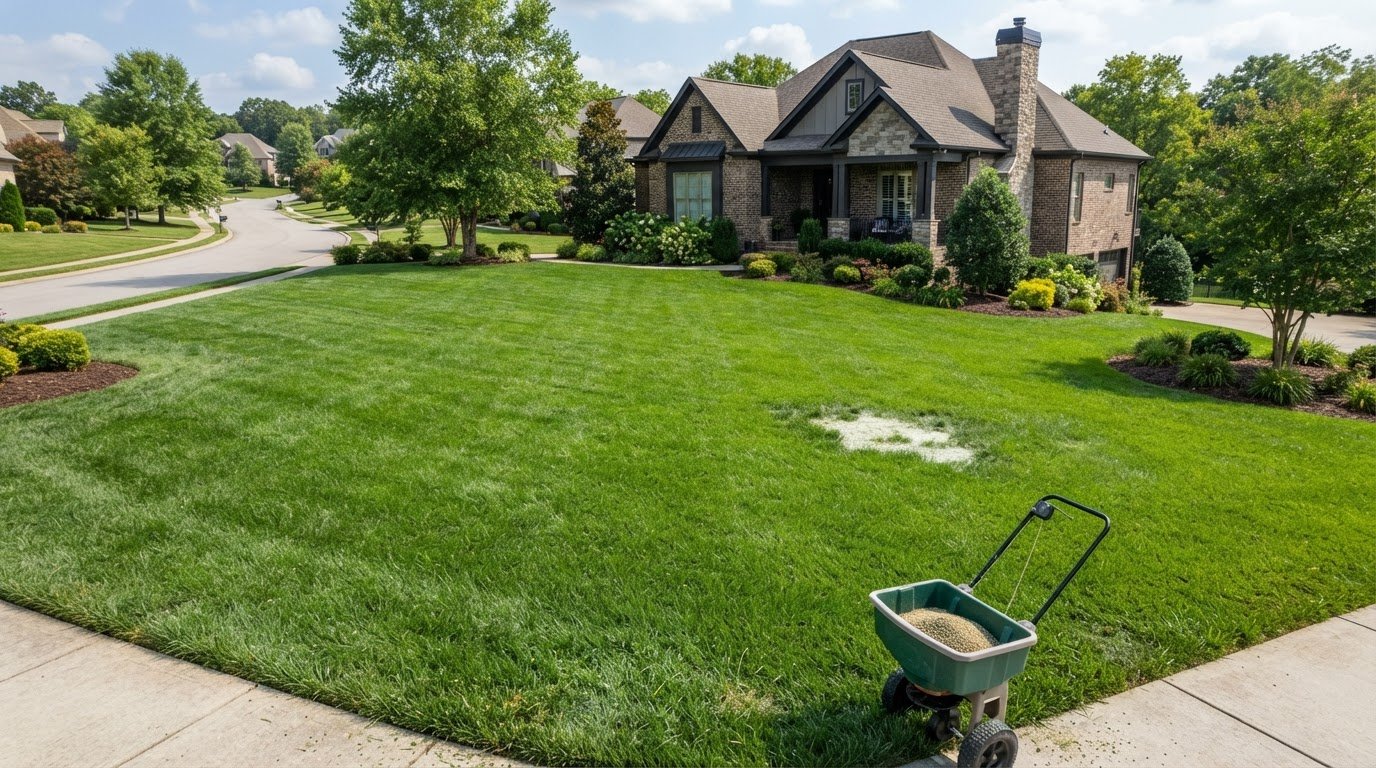


What if the best response to a thin Gallatin lawn isn’t simply adding more seed? When you’re weighing core aeration and overseeding in Gallatin TN, first consider whether the main issue is compacted soil, sparse turf, or both. The right service should fit the lawn’s condition, not just promise thicker grass.
Core aeration removes small plugs of soil and can improve the movement of air and water into the root zone. Overseeding adds grass seed to an existing lawn to help fill thin areas. The services can work well together, but a lawn doesn’t automatically need both.
This guide explains what each service can address, which lawn conditions may call for one or both, and what to consider before choosing a plan. It also covers practical preparation and why local growing conditions matter for Middle Tennessee lawns. Performance Lawns provides residential aeration and overseeding for Gallatin homeowners, helping match the service to the property’s needs.
What Core Aeration and Overseeding Can Address in a Gallatin, TN Lawn
Core aeration removes small plugs of soil from the lawn, while overseeding adds grass seed to existing turf. They address different needs: aeration can improve access for air and water in compacted soil, while overseeding can add grass where an established lawn has become thin. Used together, they may support better soil access and denser turf when conditions are suitable for new growth.
Clay soil and regular foot traffic can contribute to compaction in Gallatin and across Middle Tennessee, but soil type alone doesn’t determine whether aeration is needed. When considering core aeration and overseeding in Gallatin TN, look at how the lawn grows, where water moves or pools, and whether thin areas overlap with places that seem compacted.
Aeration can relieve some soil compaction, and overseeding can add grass to thin turf. Neither guarantees a uniform lawn or resolves every cause of poor growth.
How to recognize possible compaction in a Gallatin yard
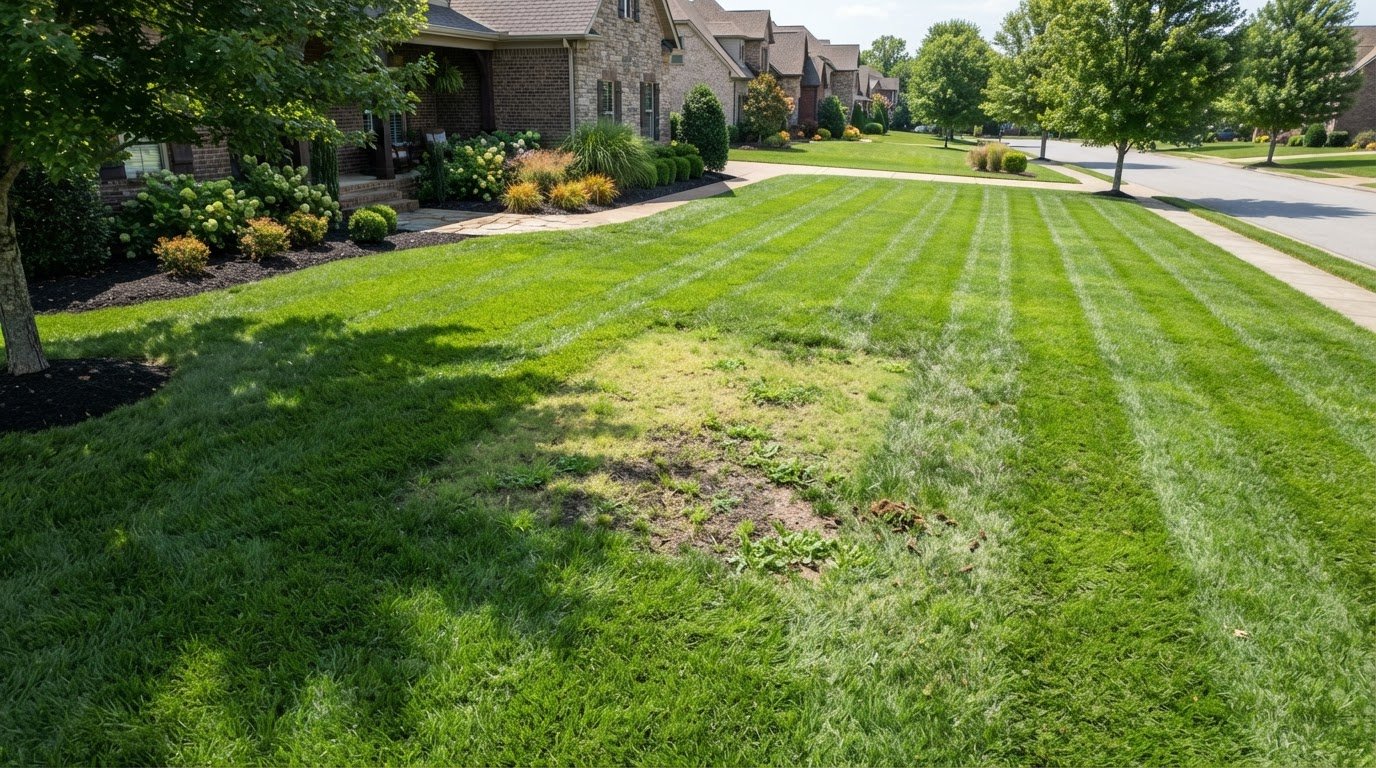
Hard soil or difficulty pushing a probe into the ground can be a reason to investigate compaction, but neither is proof that aeration is needed. Water that pools or runs off, along with sparse growth, can also have several causes. Note where these signs occur and what may contribute: regular foot traffic, shade, moisture patterns, and the condition of the existing turf all provide useful context.
For example, a shaded area may stay thin even when compaction isn’t the main issue. Compare affected areas with healthier parts of the lawn. If thin turf and firm soil appear in the same places, that pattern may help guide an assessment. If the symptoms follow shade or a heavily used path instead, those conditions may also need attention.
What overseeding can and cannot change
New seed can add grass to an established lawn when it has suitable conditions to take hold. Overseeding may help where turf has thinned, but it doesn’t correct every reason grass is struggling. If bare spots persist because of heavy traffic, shade, moisture patterns, or another unresolved condition, adding seed alone may not address the cause.
Think of overseeding as adding grass, not as a one-step repair for every bare area. It doesn’t guarantee consistent coverage or a particular density after one service. The same principle applies to aeration: a hard-looking surface is a reason to assess the lawn, not automatically a reason to proceed. Performance Lawns provides residential core aeration and overseeding for Gallatin homeowners.
How Core Aeration and Overseeding Work Together in Middle Tennessee
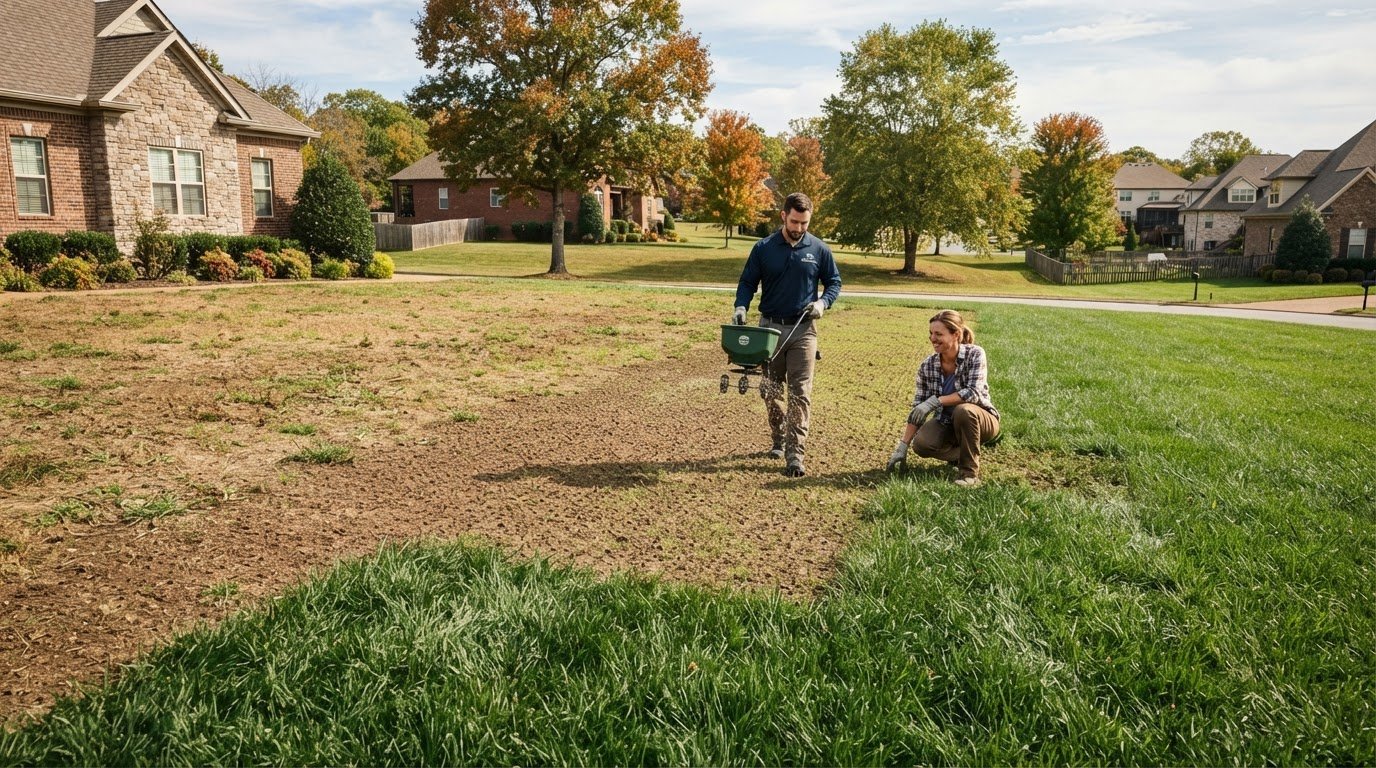
These services address two parts of lawn establishment. Core aeration removes small plugs of soil, leaving openings that may improve access for air and water. Overseeding supplies additional grass seed to an existing lawn. If compacted soil and thin turf are both concerns, pairing the services may make sense: one addresses soil access, while the other adds grass. A lawn with only one of those needs may not require both.
In a combined treatment, aeration creates openings that can support better soil access, while overseeding adds seed. Neither guarantees that new grass will establish or fill every thin area.
What core aeration contributes to the combination
The small soil plugs removed during core aeration leave openings at the surface. Those openings can help air and water move into the soil, though the benefit depends on the lawn’s condition. They may also give seed more opportunity to reach soil rather than remain caught in dense turf or surface debris. Aeration creates a more receptive setting, not a guarantee of seed growth.
Why seed choice and establishment conditions matter
Grass type, sun exposure, and existing turf all affect which seed is suitable and how well it may establish. Tall fescue is common in seeded Middle Tennessee lawns, but it isn’t necessarily right for every property or every section of a yard. A sunny front lawn and a shaded side yard may have different needs, so matching seed to the site matters.
Seed also needs suitable conditions to establish. The lawn’s starting condition, access to soil, and follow-up care can all affect whether new grass takes hold. If an area remains stressed by shade, traffic, or moisture issues, seed alone may not resolve the underlying limitation. Results can vary across one property: seedlings may establish well in one section and struggle in another.
Plan core aeration and overseeding in Gallatin TN around the lawn as it is, rather than treating them as a standard pair for every yard. Note which areas are thin, whether soil access may be a concern, and what conditions could affect new growth. An assessment can help clarify whether the services belong together or whether one need should take priority.
Gallatin homeowners can discuss their lawn with the Performance Lawns team and consider an approach suited to the existing turf and growing conditions.
Aeration Alone, Overseeding Alone, or Both: Which Fits Your Gallatin Lawn?
The best fit depends on what the lawn needs, not on which service sounds more comprehensive. Look at the pattern: is turf mostly established but the soil seems hard, or is grass coverage thin where growing conditions appear suitable? These clues can help narrow the options, though they don’t replace an assessment. Use the comparison below as a starting point, not a diagnosis.
| Lawn condition | Service to consider | Limitation |
|---|---|---|
| Turf coverage is generally established, but soil feels hard or water movement appears limited. | Core aeration may be worth discussing. | Hard soil and pooling can have causes other than compaction. Aeration isn’t a cure for every drainage or growth issue. |
| Grass is thin in areas where the desired turf has a reasonable opportunity to grow. | Overseeding may be appropriate. | Seed establishment depends on suitable conditions, follow-up, and the lawn’s existing state. |
| Thin coverage and possible compaction occur in the same areas. | Consider aeration and overseeding together. | Pairing services doesn’t guarantee seed will establish or resolve stresses such as shade or ongoing traffic. |
| Symptoms are widespread, inconsistent, or difficult to explain. | Start with an assessment before choosing a service. | Visible symptoms alone may not identify the underlying cause. |
When aeration alone may be worth discussing
If the grass is reasonably established but the soil feels unusually firm, aeration alone may be worth considering. Interpret that clue alongside the lawn’s pattern and conditions. Poor water movement or weak growth can have multiple causes, and aeration shouldn’t be treated as a fix for disease, drainage, or every turf problem. The goal is to match the service to a likely need.
When overseeding or a combined approach may fit better
Overseeding may suit thin turf when the desired grass has a fair chance to establish. If the same areas also show signs that compaction could be limiting soil access, both services may be reasonable to consider. If thinness is tied to persistent shade, heavy use, or another unresolved condition, adding seed may not address the main challenge. Conditions can differ across a property, so one treatment choice may not fit every area.
For homeowners considering core aeration and overseeding in Gallatin TN, a measured assessment can help avoid choosing a combination that doesn’t fit the lawn. Note where grass is sparse, where soil feels firm, and whether the signs overlap. Discuss your lawn with Performance Lawns to consider an approach suited to its condition.
How to Prepare for Aeration and Overseeding and Support New Seed
Good preparation starts with useful information about the property, not a one-size-fits-all set of instructions. Before core aeration and overseeding in Gallatin TN, point out where grass is thin, where people or pets regularly cross the lawn, which areas stay shaded, and where problems tend to return. These details help connect the service plan and follow-up care to the conditions on your property.
Before the service visit
Make the lawn accessible and follow the preparation directions provided for your service. Mowing height, watering, and other preparation steps can depend on the property and service plan, so use the directions for your lawn rather than guessing.
- Identify thin patches, high-traffic routes, shaded sections, and recurring trouble spots.
- Make the areas included in the service accessible as directed by the service team.
- Share relevant observations about the lawn and follow the team’s property-specific instructions before the visit.
After seeding: care, patience, and realistic expectations
After seeding, follow the lawn-specific watering and mowing plan provided by the service team. Consistent care matters, but there isn’t a universal timeline for establishment. Weather, seed choice, soil conditions, and the lawn’s starting condition all influence how new grass develops. Even within one yard, sunny and shaded sections may respond differently.
- Use the service team’s watering directions rather than a generic schedule.
- Follow the recommended mowing guidance, including when to resume routine mowing.
- Watch for differences in growth across the lawn and arrange a reassessment if concerns persist.
New seedlings may appear unevenly when conditions vary across the property or change after seeding. A slower-growing area doesn’t automatically mean the service failed. If concerns persist, a reassessment can help identify possible factors and next steps. It’s a way to respond to the lawn as it develops, not a promise of perfect coverage.
Nutrition may also be part of a broader lawn-care plan, depending on the property’s needs. Performance Lawns’ fertilization and weed control service can be considered alongside aeration and overseeding. A thoughtful plan accounts for the lawn’s condition and follow-up care rather than treating seed as a stand-alone solution.
For guidance tailored to your property, contact Performance Lawns about your aeration and overseeding plan. Clear observations before service and consistent, lawn-specific care afterward can help set realistic expectations as new grass establishes.
Choosing Performance Lawns for Core Aeration and Overseeding in Gallatin
A service recommendation should start with the lawn in front of you. Performance Lawns provides residential aeration and overseeding in Gallatin, bringing more than 15 years of experience to decisions about soil conditions, turf coverage, and the needs of each property. The aim is a well-matched plan, not a one-size-fits-all promise.
Learn more about the professional aeration and overseeding service and how it can fit into care for your yard. Aeration and seeding can support soil access and denser turf, but results depend on site conditions and follow-up. A service recommendation should reflect what the lawn needs now and what you hope to improve.
What to discuss when evaluating your lawn
Useful details make the conversation specific. Point out areas where grass is thin, places where soil seems compacted, and sections that receive regular foot traffic or stay shaded. Mention whether the same trouble spots return and what you’ve observed about water movement. These patterns help connect visible symptoms with the lawn’s use and growing conditions.
It also helps to describe your desired outcome, such as adding grass to sparse sections or addressing suspected compaction in established turf. Core aeration and overseeding in Gallatin TN may be considered together or separately, depending on those needs. A thoughtful recommendation accounts for the property’s condition rather than assuming every lawn benefits from the same combination.
A local service relationship built around realistic expectations
Good lawn care depends on clear communication before, during, and after service. Performance Lawns brings local experience to that process, helping homeowners understand what aeration and overseeding are intended to address and what conditions can affect establishment. Broader lawn-treatment planning may also matter when other issues need attention, with each treatment serving a clear purpose in the care plan.
Performance Lawns offers a no-risk guarantee. It should not be read as a promise of a particular lawn appearance, seed establishment, or turf density. Grass responds to the conditions on the property, so realistic expectations and property-specific guidance matter alongside the service itself.
If you’re weighing service options, share where you’ve noticed thin turf, firm soil, or recurring trouble, along with how your yard is used. Discuss your Gallatin lawn with Performance Lawns to consider a plan suited to your property.
Take the Next Step Toward a Lawn Plan That Fits
A lawn plan works best when it reflects your property and what you want from it over time. As you consider core aeration and overseeding in Gallatin TN, focus on a practical next step: describe what you’re seeing and what you’d like your lawn to support, whether that’s more usable outdoor space or stronger-looking turf.
Performance Lawns can help Gallatin homeowners consider residential aeration and overseeding suited to their property. A thoughtful plan starts with your priorities and keeps expectations grounded in the lawn’s conditions.
Ready to move forward? Discuss core aeration and overseeding for your Gallatin lawn with Performance Lawns and take the next step toward caring for your outdoor space.
Frequently Asked Questions
How often should a Gallatin lawn receive core aeration?
There isn’t one schedule that fits every Gallatin lawn. The decision depends on soil condition, foot traffic, turf type, and whether compaction appears to be limiting growth. A high-use area may need a different assessment than a lightly used section with healthy coverage. Rather than aerating automatically each year, observe recurring signs and consider the lawn as a whole. The same property-specific approach applies across Middle Tennessee communities such as Mt. Juliet, Lebanon, and Hendersonville.
How long do the soil plugs from core aeration stay on the lawn?
There’s no set number of days for soil plugs to disappear. Their breakdown depends on moisture, soil texture, and weather. They may crumble naturally over time, so visible plugs immediately after service aren’t necessarily a concern. Follow the service team’s directions about managing them, including whether to leave them in place. Avoid raking or disturbing the lawn unless that guidance recommends it, especially if overseeding was part of the service.
Can I mow after overseeding my Gallatin lawn?
Yes, but wait until the service team’s lawn-specific instructions say mowing can resume. Cutting too soon or moving equipment over tender new growth may disrupt seedlings, while waiting too long can also affect routine lawn care. Timing depends on the seed, site conditions, and how establishment is progressing, so a universal number of days may not fit your yard. Follow the plan provided for your Gallatin lawn rather than a generic mowing schedule.
Will core aeration damage the grass that is already growing?
Core aeration removes small soil plugs, so the lawn may look temporarily disturbed after service. In a properly planned treatment, the aim is to address soil conditions while retaining the existing turf, not remove the whole lawn. Avoid heavy use of the area immediately afterward if the service team advises it. If you notice substantial damage or an unexpected change in a particular section, note its location and share that observation with the lawn care team.
Can overseeding fix bare spots without addressing lawn disease?
Not reliably. If disease is causing bare or thinning areas, adding seed alone won’t address that cause, and new grass may struggle while the problem remains active. First determine whether disease is involved and what management is appropriate; timing and effectiveness depend on the specific issue and conditions. Once the underlying problem is addressed, overseeding may be considered if the desired grass can establish. Bare spots can also have non-disease causes, so identify the reason before choosing a response.
What should I do if new grass appears uneven after overseeding?
Give the lawn-specific care plan time to work, and keep following the service team’s watering and mowing directions. Uneven growth can reflect differences in shade, moisture, soil, or seed-to-soil contact across the yard. Note which patches are slow to fill and whether the pattern follows a tree line, walkway, or low area. If unevenness persists, arrange a reassessment to understand possible causes and discuss practical next steps, without assuming one remedy fits every spot.