Protecting your pet outdoors takes more than focusing on the pet alone. Fleas and ticks can be found in shaded vegetation, leaf litter, and brushy edges, so a thoughtful plan for flea and tick prevention for pets in yards near Hendersonville should consider both your animal and the spaces it explores. Yard treatment can help reduce outdoor pest activity, but it doesn’t replace pet-specific prevention recommended by your veterinarian.
It’s useful to understand what each step does, how yard conditions can affect pest activity, and why product directions determine when pets can return outside after treatment. This guide explains how residential lawn pest control fits into a broader prevention plan, which everyday habits can help make outdoor spaces less inviting to fleas and ticks, and how to prepare for treatment. Performance Lawns provides residential lawn pest control for Hendersonville homeowners, including targeted flea and tick treatments, to help make outdoor time more comfortable.
Why flea and tick prevention for pets starts with the Hendersonville yard
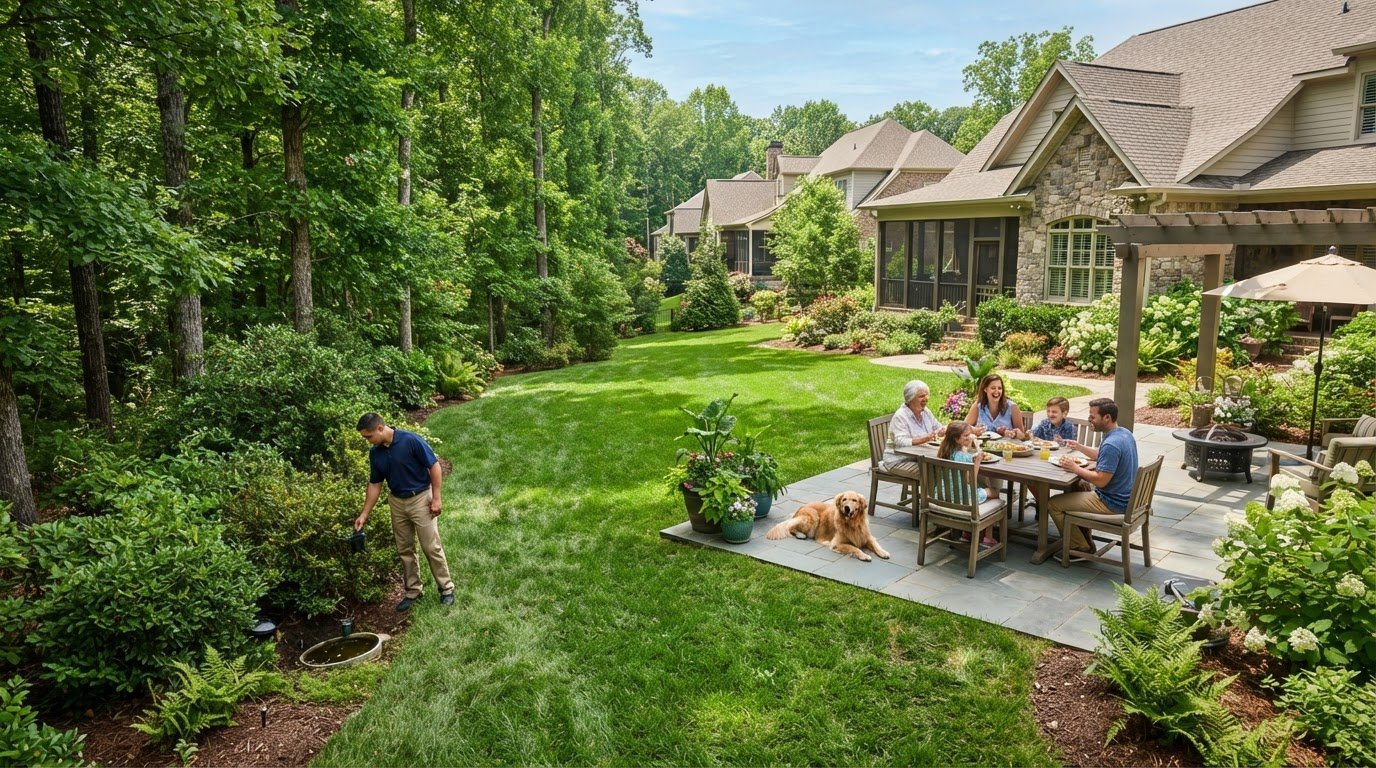
A dog’s route through the yard may cross open turf, shaded planting beds, leaf litter, and brush near a fence or wooded edge. Yard-focused prevention considers these areas as part of your pet’s outdoor environment. The goal is to reduce outdoor flea and tick activity, not to promise a pest-free property. For homeowners looking into flea and tick prevention for pets in yards near Hendersonville, that distinction sets realistic expectations from the start.
Think of the yard as one part of a broader prevention plan. Residential lawn pest control targets outdoor areas where fleas and ticks may be active. It isn’t veterinary care, medication applied to an animal, or treatment for indoor spaces such as carpets, pet bedding, and furniture. Fleas have multiple life stages and habitats, as described in this overview of the flea life cycle and habitats, so a lawn application shouldn’t be mistaken for treatment of every place a flea might be found.
What can a yard treatment help with?
Targeted residential lawn treatments help reduce flea and tick populations outdoors and lower the likelihood of encounters while people and pets use the yard. The treatment focuses on outdoor areas, not on an individual pet or an indoor infestation. If your pet is scratching or you find pests indoors, yard treatment alone won’t address those concerns.
Property conditions influence the treatment approach and what to expect. Shaded vegetation, accumulated leaves, brush, nearby wooded edges, and the level of pest activity can all shape the challenge. A yard with sunny, open lawn and one with dense, shaded borders may present different conditions, so expectations should reflect the property rather than a blanket promise.
Why combine yard care with pet-focused prevention?
Outdoor pest control and veterinarian-guided pet prevention serve different purposes. Yard treatment is intended to reduce outdoor pest populations. A veterinarian can guide you on prevention measures used directly on your pet. Combining those steps addresses both the animal and its outdoor environment, without assuming either can prevent every encounter.
Follow your veterinarian’s advice for pet products, and use the directions for the specific yard treatment to guide preparation and when people or pets can return to treated areas. Don’t infer re-entry timing from a general description of a service. Follow the applicable product directions.
For Hendersonville homeowners, the aim is to reduce outdoor pest pressure and make time in the yard more comfortable while keeping pet-specific care in place. Performance Lawns provides residential lawn pest control with targeted flea and tick treatments as one part of that broader approach.
How fleas and ticks use outdoor spaces around Middle Tennessee homes
Outdoor pest activity can vary with weather, habitat, wildlife, and how a property is maintained. A shaded strip beside a fence offers different conditions from an open, sunny lawn. Pets can also carry their routes from the yard to a porch or back door. These are reasons to look closely at your own property, not proof that fleas or ticks are present or a claim about how common they are in Hendersonville.
For practical flea and tick prevention for pets in yards near Hendersonville, start with the places your pet actually uses. A walk-through can help you notice overlooked edges and routines, giving you a clearer picture of where exposure may occur and what to include in your prevention plan.
Which parts of a yard should pet owners observe?
Walk the same paths your pet takes, from the door through play and resting areas, then back inside. Look at the surroundings without assuming any one feature means pests are present. Note where your dog pauses, brushes against vegetation, or settles down. Pay particular attention to:
- Shaded edges: Look along fences, planting beds, and the margins of wooded areas.
- Groundcover and dense planting: Notice where leaves or stems touch the ground and pets pass or rest.
- Stored items and clutter: Check around items left outdoors, especially in spots that are seldom moved or inspected.
- Pet traffic: Identify favorite resting spots, play areas, and routes between the yard and the home.
This simple map helps you focus routine attention on the parts of the yard that matter to your household. It can also make a conversation about residential lawn pest control more useful because you can describe the areas your pet uses.
What routine yard habits can support prevention?
Keep outdoor spaces orderly where practical. Put away items that don’t need to remain on the ground, and clear unnecessary clutter so pet-use areas are easier to inspect. Regular lawn and landscape upkeep can improve visibility, but mowing or tidying alone shouldn’t be treated as a way to eliminate fleas or ticks.
After outdoor activity, check your pet as recommended by your veterinarian, following their guidance on what to look for. If you find a tick or notice persistent scratching, follow veterinary advice rather than relying on yard care to address your animal’s needs. No single habit or treatment prevents every outdoor encounter. The aim is to reduce opportunities for exposure and make prevention more consistent.
If you’d like to discuss how your yard’s layout and pet-use areas fit into an outdoor pest-control plan, share your Hendersonville yard details with Performance Lawns.
How to compare pet-focused prevention with professional yard treatment
Pet prevention, household routines, and professional lawn pest control each address a different part of the picture. Comparing their purposes and limits can help you build a practical plan for flea and tick prevention for pets in yards near Hendersonville, without expecting any one measure to prevent every encounter.
| Approach | Purpose and where it applies | Limits |
|---|---|---|
| Pet-focused prevention | Uses products or other measures selected for an individual animal with veterinary guidance. | It addresses the pet, not the outdoor property or household environment as a whole. Follow your veterinarian’s directions for products used on your pet. |
| Household habits | Supports ongoing awareness and care around the home, including checking pets after outdoor activity and keeping commonly used areas easier to inspect. | Routine habits can support prevention, but they don’t guarantee that a pet will never encounter a flea or tick. |
| Professional outdoor lawn treatment | Targets outdoor areas of a residential property to help reduce flea and tick populations in the yard. | It doesn’t treat pets, indoor spaces, or animal bedding, and it can’t promise zero exposure or eliminate every pest. |
What is the difference between pet prevention and yard treatment?
Pet-focused prevention is selected for the animal with advice from a veterinarian who can account for that pet’s needs. Lawn pest control, by contrast, targets outdoor areas of a residential property. The two approaches address different parts of the prevention plan: yard treatment doesn’t replace veterinarian-guided pet prevention, and pet products don’t treat the yard itself.
Keeping those roles clear helps prevent a common misunderstanding: treating the lawn isn’t the same as treating a pet or an indoor flea concern. For products used directly on your animal, follow your veterinarian’s guidance. For lawn applications, follow the directions that apply to the treatment.
What should homeowners expect from a lawn pest service?
Performance Lawns provides residential flea and tick lawn pest control for Hendersonville homeowners. The service targets outdoor areas to help reduce pest populations and support more comfortable use of the yard. It doesn’t treat pets or indoor areas of the home.
Results can vary with pest activity, property conditions, and treatment details. Outdoor treatment can support a broader prevention plan, but it can’t guarantee that a flea or tick will never reach a pet. Keep household routines and veterinarian-guided care in place, and view professional outdoor treatment as one useful layer rather than a complete guarantee.
When comparing local options, focus on what the service treats and how it fits your household’s prevention plan. A yard-focused service works on outdoor spaces to help reduce pest pressure, while pet-specific care remains a separate part of prevention.
How to prepare a Hendersonville yard for flea and tick prevention
Preparation makes it easier to describe your yard and follow treatment directions carefully. For flea and tick prevention for pets in yards near Hendersonville, focus on four steps: map where pets spend time, note concerns, plan the treatment, and follow the directions for the specific application. Preparation helps set clear expectations, but it doesn’t guarantee every pest will be removed or that pets will have no further exposure.
What should you note before arranging treatment?
Start with a simple yard map or written list. Include the areas your pet visits most, such as a favorite resting spot, a path along the fence, a shaded bed, or the route to the back door. Note where you’ve noticed a flea or tick concern, treating those observations as useful context rather than proof that pests are present throughout the yard.
Then list property features that may shape a treatment plan: shaded vegetation, leaf litter, brush, dense groundcover, wooded edges, and places where outdoor items are stored. Describe how your pet uses these spaces and whether the yard has distinct areas, such as open lawn beside a shaded border. These details help explain the property, but they don’t predict a specific result.
Before treatment, read and follow the directions for the application. Don’t apply, mix, or add other pest-control products in a way that conflicts with their label directions. If you’re unsure how a direction applies to your yard or household, don’t guess. Use the product information for guidance.
What should happen after a yard treatment?
Don’t assume pets can return outdoors immediately. Read and follow the directions for the specific treatment, including instructions about people and pets entering treated areas. Re-entry guidance can depend on the product and application, so a general rule of thumb can’t replace the actual label directions. Keep pets away from treated areas as directed, and make sure everyone in the household understands the instructions.
Once the directions allow you to resume outdoor use, continue your prevention routine. Check pets after outdoor activity and follow your veterinarian’s advice for pet-specific prevention. If you notice ongoing concerns, keep track of where and when they occur. That information can help guide next steps without assuming yard treatment addresses every source.
If mosquitoes are also a concern around the property, Performance Lawns offers an outdoor mosquito control service as a separate part of residential lawn pest control. To discuss flea and tick treatment for your Hendersonville yard, contact Performance Lawns about your yard.
Choose local flea and tick lawn control near Hendersonville
A well-rounded plan considers both the pet and the places it spends time outdoors. Veterinarian-guided prevention is specific to your animal; residential lawn pest control focuses on outdoor areas where fleas and ticks may be active. Together, these measures can help reduce outdoor pest pressure, but neither guarantees that a pet will never encounter a flea or tick.
For homeowners considering flea and tick prevention for pets in yards near Hendersonville, the useful question isn’t whether one treatment can solve every concern. It’s whether a yard-focused service makes sense as one practical part of a broader prevention plan. Performance Lawns provides residential flea and tick treatments for Hendersonville-area homeowners, drawing on more than 15 years of experience. The goal is to help reduce outdoor pest populations and support more comfortable use of the yard, not to replace pet care.
When does professional yard treatment make sense?
Professional treatment may be worth considering if your household wants targeted help with outdoor flea and tick pressure, especially when pets regularly use the lawn, shaded borders, or other outdoor spaces. A useful starting point is to identify the areas pets frequent and the conditions you’ve noticed, such as dense vegetation, leaf litter, or a wooded edge.
Those details help frame a realistic approach. They don’t establish that pests are present in every area or predict a specific result. Property layout, habitat, and pest activity can influence treatment considerations. Outdoor treatment cannot promise a pest-free yard or prevent every encounter, so keep veterinarian-recommended pet prevention in place alongside any lawn service.
How to take the next step with Performance Lawns
For a useful discussion, describe the layout of your outdoor spaces in practical terms: where your pet plays or rests, which areas are shaded, and where you’ve noticed concerns. This helps connect the service to how your household uses the yard. Residential lawn pest control targets outdoor property areas. It isn’t medication for pets or treatment for the home’s interior.
Performance Lawns serves Hendersonville and other Middle Tennessee communities, including Mt. Juliet, Lebanon, and Gallatin, with residential lawn pest control targeting fleas, ticks, and mosquitoes. A clear picture of your yard’s conditions can help set appropriate expectations while keeping pet-specific care separate and veterinarian-guided. The aim is steady, informed prevention, not a promise that outdoor pests will never appear.
To discuss residential flea and tick lawn control for your Hendersonville property, contact Performance Lawns about your yard.
Make your yard plan work for everyday life
A useful prevention plan should fit the way your household spends time outdoors. When routines change, pets discover new corners of the yard, or outdoor spaces are rearranged, revisit your approach. Keep pet-specific guidance with your veterinarian, and consider whether outdoor pest pressure calls for a yard-focused step.
That balance is central to flea and tick prevention for pets in yards near Hendersonville. Professional lawn pest control can support a more comfortable outdoor space, while ongoing pet care remains its own important part of the plan. No single measure can promise that every flea or tick encounter will be avoided, but steady, informed choices can help you feel more prepared when your pet heads outside.
When you’re ready to discuss a yard-focused option for your property, connect with Performance Lawns about flea and tick lawn control. A thoughtful next step can help make outdoor time more comfortable for the whole household.
Frequently Asked Questions
Is lawn treatment enough to prevent fleas and ticks on pets?
No. Yard treatment addresses outdoor areas, but it isn’t a preventive product for an individual animal. A broader plan for flea and tick prevention for pets in yards near Hendersonville can include veterinarian-guided prevention, routine checks after outdoor activity, and attention to where pets spend time. Even when these steps are combined, outdoor treatment can’t promise a pet will never encounter a flea or tick.
Can pets go outside right after a flea and tick yard treatment?
Don’t assume they can. The directions for the specific product and application determine when pets may return to treated areas. Read the applicable label before planning outdoor time, and don’t rely on a waiting period you’ve heard elsewhere. If the directions are unclear, keep pets out of treated areas until you have product-specific guidance.
How often should a yard be treated for fleas and ticks?
There isn’t one treatment interval that fits every yard. A property with shaded borders, nearby brush, or recurring pest concerns may present different considerations from a more open space, and weather and pest activity can change over time. Keep a simple record of when concerns arise and where your pet was spending time. Share that pattern when discussing a treatment plan instead of assuming one calendar schedule applies to every property.
What should I do if I find a tick on my pet after yard treatment?
Follow your veterinarian’s guidance for removing an attached tick and deciding whether your pet needs care. Finding one after treatment doesn’t automatically mean the application failed, since yard treatment can’t ensure that a tick will never reach an animal. Note the date and where your pet had been, then continue checks after outdoor activity. That record can help you describe any recurring pattern to your veterinarian.
Are flea and tick yard treatments safe for pets?
Precautions depend on the specific product and its directions, so don’t assume all treatments have the same requirements. Read and follow the label instructions for pets, people, and treated areas, including any guidance about access after application. Avoid relying on general claims or a guessed return time. For prevention products used directly on an animal, follow your veterinarian’s advice about what’s appropriate for that pet.
Does Performance Lawns treat fleas and ticks in Hendersonville yards?
Yes. Performance Lawns provides residential lawn pest control targeting fleas and ticks in Hendersonville and nearby Middle Tennessee communities, including Mt. Juliet, Lebanon, and Gallatin. The service focuses on outdoor lawn areas. It isn’t medication for pets or treatment for indoor spaces, so keep animal-specific care and indoor concerns separate when planning prevention.