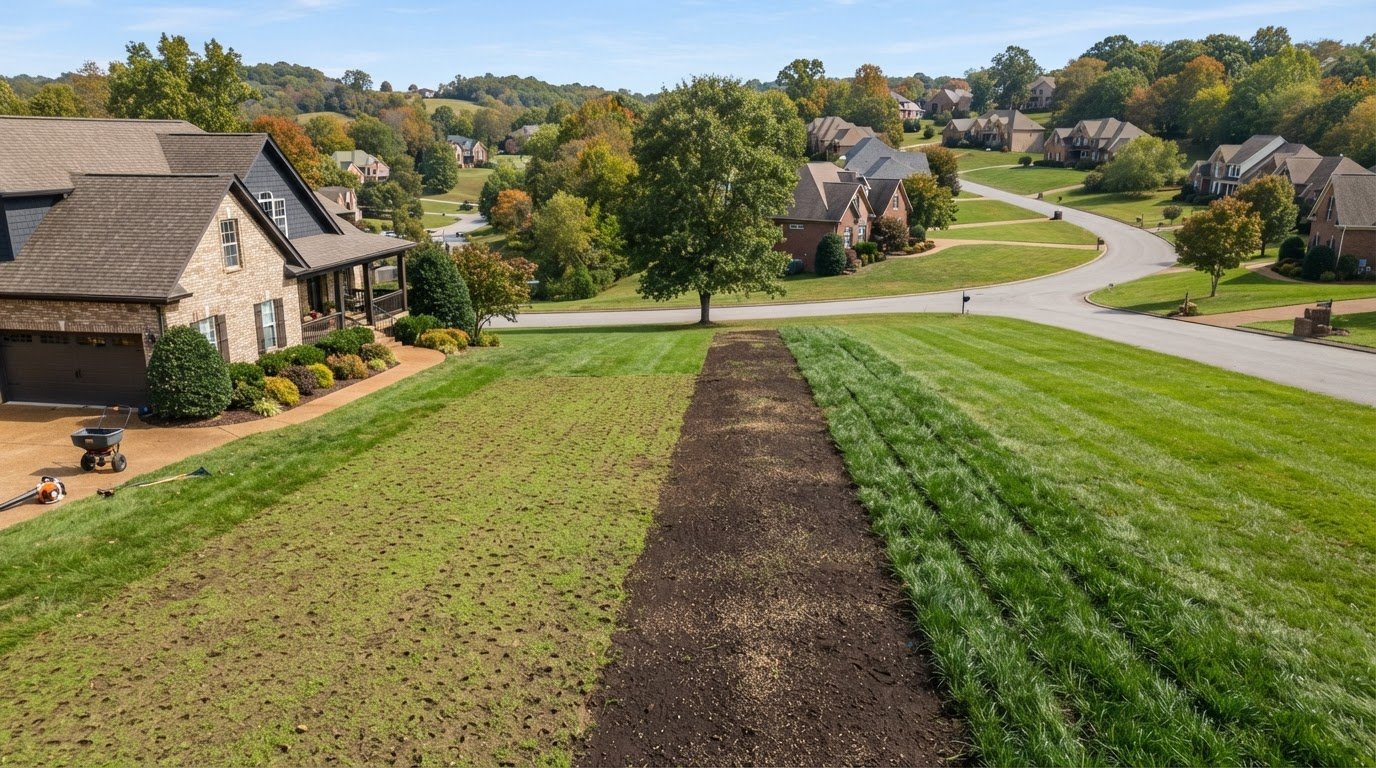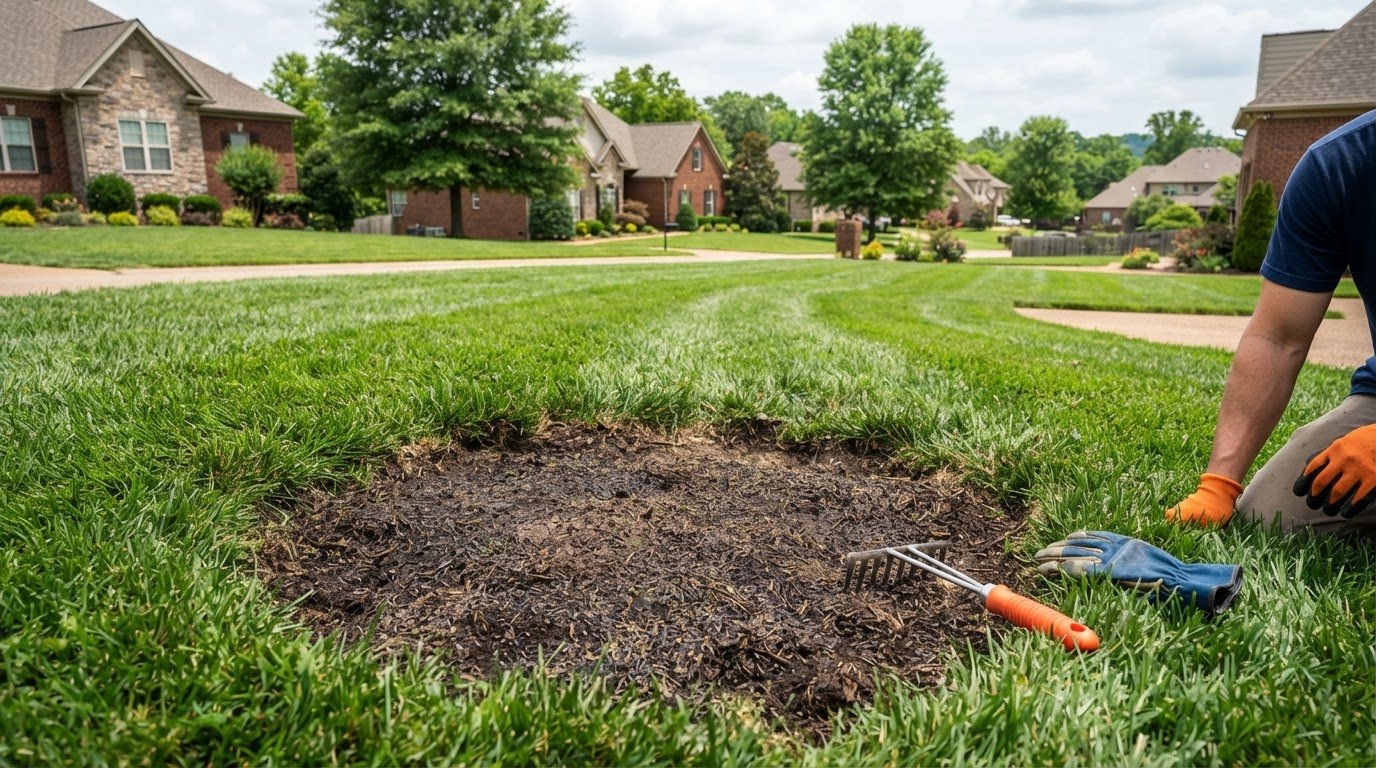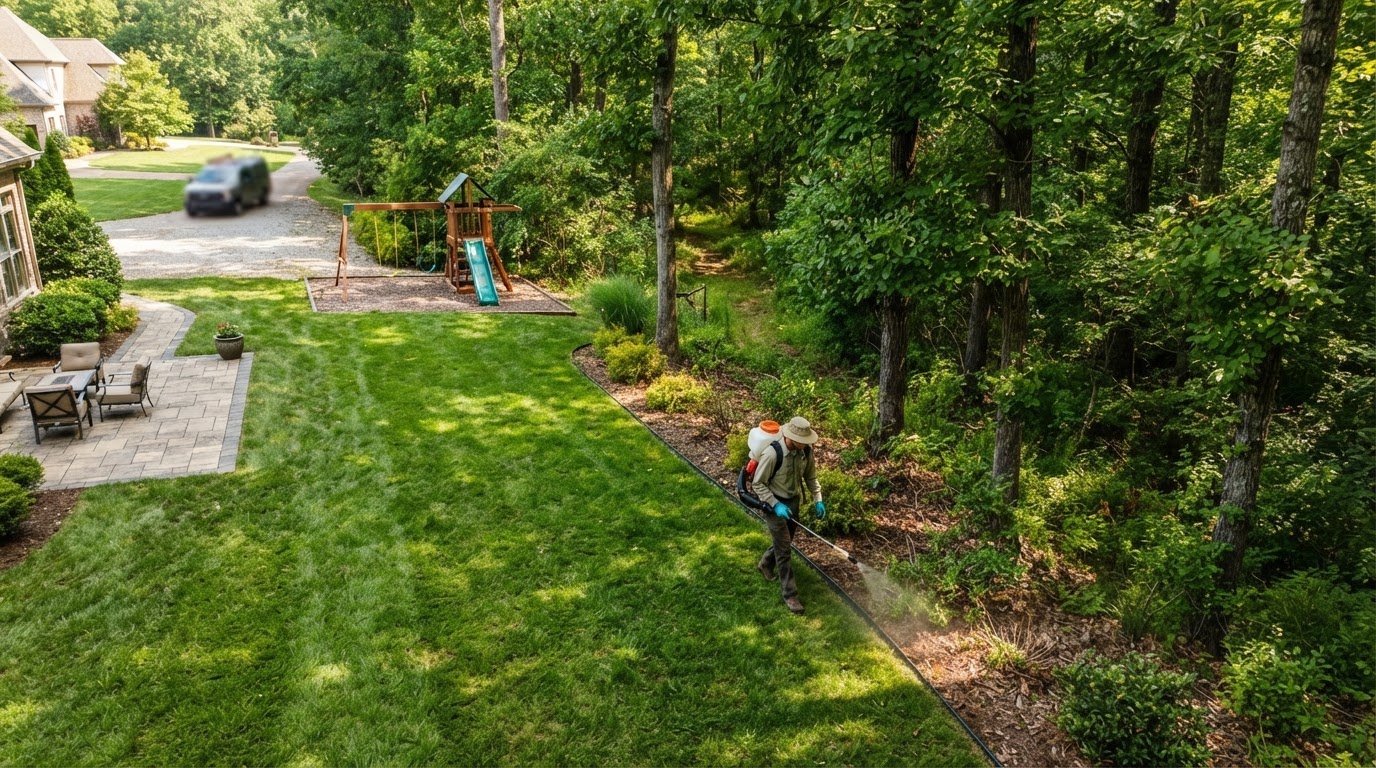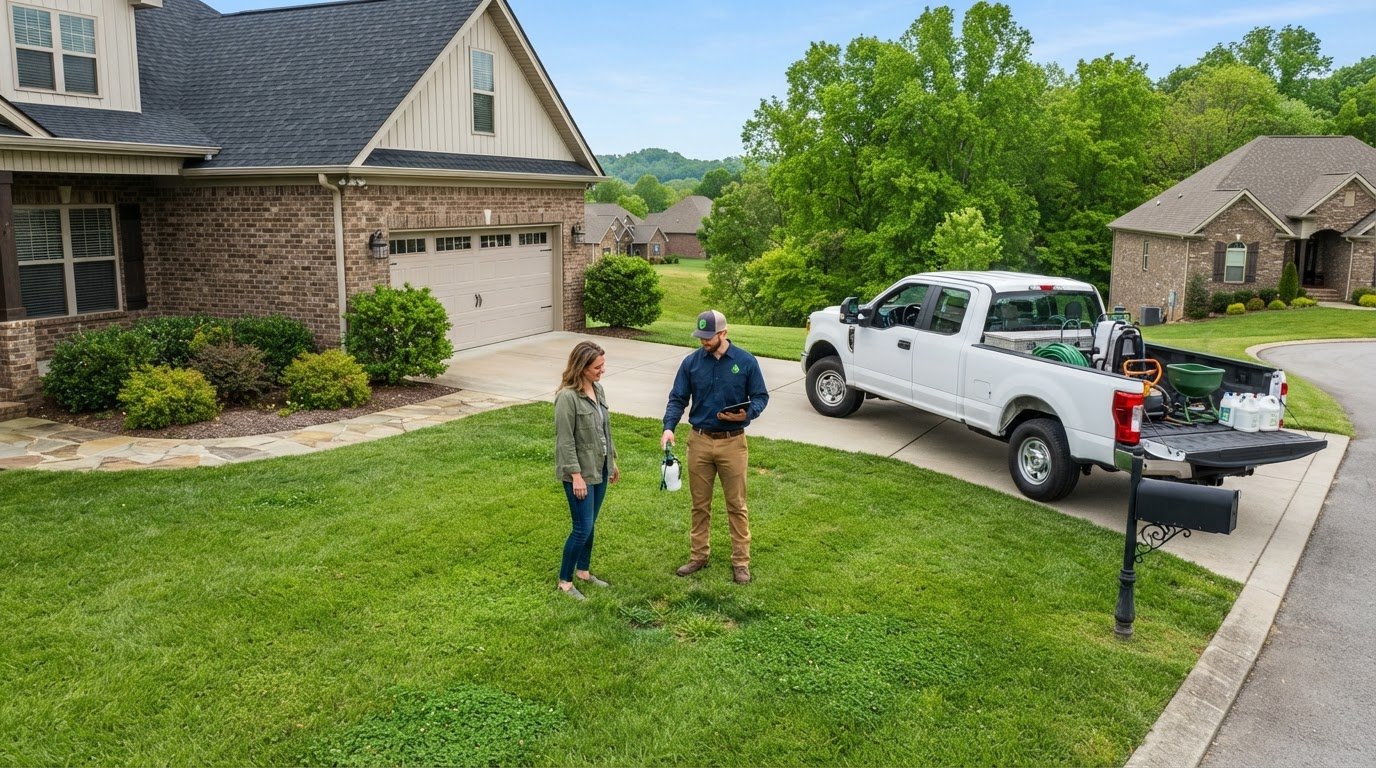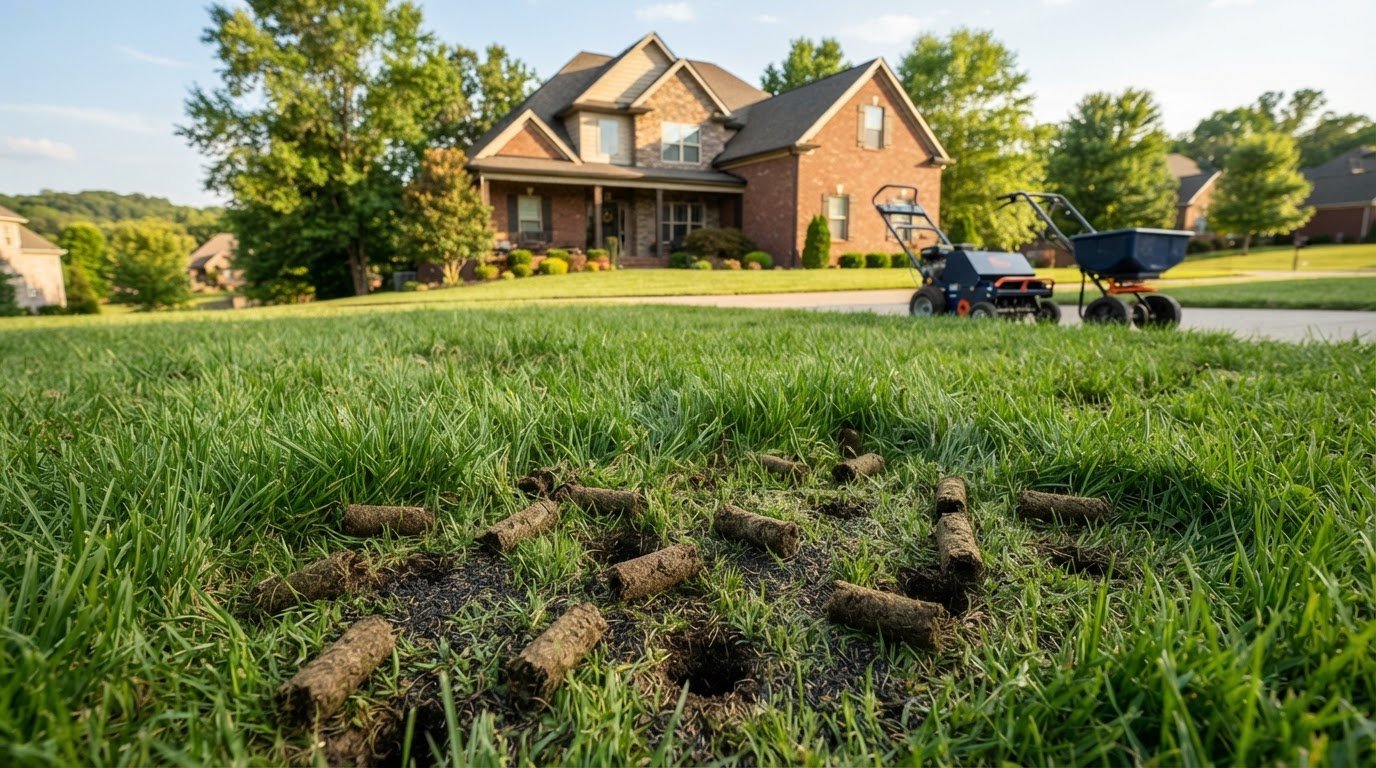


What if thin turf and hard, compacted soil are connected? In Middle Tennessee, a lawn can struggle to fill in when soil limits root growth and new seed has trouble reaching it. Fall aeration and seeding services pair core aeration with overseeding to open the soil and give seed better contact with the ground.
It’s understandable to wonder whether aeration is right for your lawn or whether seed will take after the work is done. Timing, seed-to-soil contact, and aftercare all matter. For tall fescue, the local seeding window generally runs from late August through mid-October, when conditions can support new growth before winter.
This guide explains how aeration and seeding complement each other, what professional service involves, and how to prepare for and care for your lawn afterward. Performance Lawns, INC provides residential aeration and overseeding in Middle Tennessee, with a focus on healthier soil and denser, more resilient turf. You’ll also learn what realistic establishment looks like, so you can make a confident plan for your lawn.
Why consider fall aeration and seeding for a Middle Tennessee lawn?
Thin turf can be frustrating, especially when you’re putting in effort but still see bare patches or uneven growth. In some yards, compacted soil restricts the space roots need and can make it harder for water and nutrients to move through the soil. Fall aeration and seeding services address two related needs: opening compacted ground and introducing grass seed where turf has become sparse.
Middle Tennessee lawns don’t all face the same conditions. Clay soil, foot traffic, shade, drainage, grass type, and seasonal weather can influence how a lawn responds. The right approach starts with the lawn’s actual condition, not a one-size-fits-all calendar or the assumption that every thin patch has the same cause. In Mt. Juliet, Lebanon, Gallatin, and Hendersonville, those property-specific factors matter just as much as the time of year.
A short visual overview can help explain the core aeration and seeding process:
What signs suggest a lawn may benefit from service?
Look for areas where grass stays thin, turf struggles to fill in, or the ground feels unusually firm underfoot. Compaction may be more likely in high-traffic spots, such as paths between a patio and gate, play areas, or places where vehicles regularly cross the lawn. These clues can point to soil that may benefit from core aeration, but they aren’t a diagnosis by themselves.
Thin growth can also result from shade, unsuitable growing conditions, pests, disease, or inconsistent moisture. Notice where the problem occurs: a narrow strip along a walkway may point to repeated wear, while thinning across a shaded section may have a different cause. Comparing the affected areas with healthier parts of the yard can help identify patterns and guide a suitable plan.
Why pair aeration with seeding?
Core aeration removes small plugs of soil, creating openings that can ease compaction and improve the movement of air and water through the soil. Seeding adds grass seed to thin areas. The two steps complement each other by opening the ground and helping seed reach soil, though aeration alone can’t guarantee germination. For a general overview of aeration, see how the practice creates air space in soil.
In brief: aeration opens compacted soil, while overseeding adds grass seed to sparse turf. Together, they support better conditions for new grass to establish. Performance Lawns, INC provides coordinated residential core aeration and overseeding for Middle Tennessee lawns.
Expectations matter. Results depend on the lawn’s starting condition, suitable seed, weather, and consistent follow-through after service. New grass needs attentive care as it establishes, and some areas may fill in differently from others. The goal is to support denser, more resilient turf over time, not promise an immediate or uniform transformation.
How professional core aeration and overseeding work together
A coordinated service follows a practical sequence: assess the lawn, create openings in compacted soil, distribute seed across existing turf, then support establishment with appropriate care. Each step has a distinct purpose. A thin lawn with established grass is different from one with extensive bare areas, so the plan should account for how much turf remains and its condition.
For residential lawns, professional core aeration and overseeding brings the soil and seed work together. The goal is to give new grass a more favorable starting point, not to promise that every thin area will fill in at the same pace.
- Assess the lawn. Consider turf density, compacted areas, and existing grass before choosing how to approach the work. Note whether thin spots follow traffic patterns, occur in shade, or appear across the yard. Those observations can help distinguish possible compaction from other issues.
- Aerate the soil. Core aeration removes small plugs of soil, creating openings that can help relieve compaction and improve air and water movement.
- Distribute seed. Overseeding places grass seed over existing turf, with the aim of adding growth to thinner areas. Seed selection should suit the lawn’s conditions and existing grass.
- Support establishment. Follow-through after service matters. Seed needs suitable conditions and attentive care to germinate and grow, so follow the care guidance provided for your lawn.
What happens during core aeration?
A core aerator uses hollow tines to pull small cores of soil from the lawn. Those openings can ease compacted conditions and allow air and water to move into the soil more readily. The removed soil plugs may remain on the surface and break down over time. Aeration supports healthier growing conditions, but it won’t address every reason turf may be thin, such as shade or other site-specific stress.
How does overseeding support thinner turf?
Overseeding distributes grass seed across existing turf rather than replacing the entire lawn. Suitable seed matters: it should be selected with the lawn’s existing grass and growing conditions in mind. After application, seed needs contact with soil and consistent follow-through to establish. Overseeding can help strengthen thin turf, but new grass develops over time and results depend on conditions and care.
The work doesn’t end when seed is distributed. Watering guidance, weather, and the lawn’s starting condition all influence establishment, so a newly seeded area may not change visibly right away. Staying attentive to aftercare gives seed a better opportunity to grow, while avoiding the expectation of an instant, uniform result.
Performance Lawns, INC provides residential aeration and overseeding to bring these steps together. Learn more about discussing your aeration and overseeding needs.
Professional service or DIY: which fall aeration and seeding approach fits?
There isn’t one right choice for every yard. A homeowner with a relatively small, accessible lawn, suitable equipment, and time to manage each step may be comfortable handling aeration and overseeding. Professional help can be useful if the lawn is large, uneven, heavily compacted, or difficult to assess, or if coordinating the work and follow-through feels like too much to take on.
Think about more than whether you can spread seed. The decision also involves access to an aerator, the physical work of covering the lawn evenly, preparation, and care after service. A DIY approach gives you direct control over the work, but you’ll need to plan the sequence and make time for establishment. Professional service brings the aeration and seeding together, while leaving the homeowner an important role in aftercare.
When might a homeowner prefer professional aeration and seeding?
Professional service can simplify the process for larger lawns or properties with slopes, irregular sections, and areas that have different turf conditions. It can also help when you’re unsure whether the lawn needs aeration, overseeding, or both. Performance Lawns, INC provides residential aeration and overseeding in Mt. Juliet, Lebanon, Gallatin, Hendersonville, and Middle Tennessee, drawing on local lawn-treatment experience to tailor the work to observed conditions and existing turf.
Local experience matters because Middle Tennessee yards can vary in soil, shade, drainage, and grass condition, even from one property to the next. A coordinated service can suit homeowners who don’t want to manage equipment and timing on their own. Still, hiring a professional doesn’t remove the need for attentive care after seed is applied. Establishment depends in part on conditions and follow-through.
What should homeowners understand about DIY results?
DIY work involves more than scattering seed. You’ll need to prepare the lawn, use aeration equipment appropriately if compaction is a concern, distribute seed across the intended areas, and follow care guidance afterward. If the ground is compacted, seed alone may not address the underlying condition. Conversely, aeration won’t solve every cause of thinning, so consider what the lawn actually needs before choosing the work.
Before choosing, weigh the practical details:
- Equipment access: Can you use an aerator safely and cover the lawn consistently?
- Lawn layout: Are slopes, tight spaces, or uneven sections likely to make the work harder?
- Time and follow-through: Can you prepare the yard and keep up with care after seeding?
- Confidence in the plan: Do you understand whether compaction, thin turf, or another condition needs attention?
Seed by itself isn’t a shortcut to thicker turf. It may struggle if soil conditions, seed choice, or aftercare don’t suit the lawn. Professional fall aeration and seeding services can be a practical fit when you value coordinated work and local guidance; a manageable yard and confidence with the process may make DIY a reasonable option. Either way, set expectations around gradual establishment, not an instant transformation. Learn more about Performance Lawns, INC’s residential aeration and overseeding.
How to prepare for and care for a lawn after fall seeding
Good preparation and thoughtful aftercare help create a supportive setting for new seed. The details can vary with the lawn’s condition, the work being performed, and Middle Tennessee’s changing fall weather, so avoid relying on a rigid checklist that assumes every property is alike. Before and after fall aeration and seeding services, use the guidance provided for your lawn and service.
What should homeowners do before the service?
Start with practical preparation, not guesswork. Clear ordinary lawn debris where you can, and make note of thin patches, areas that feel especially hard, or places with frequent foot traffic. Sharing these observations can help clarify which parts of the lawn need attention. Yard layout, existing turf, and access can all influence what preparation is useful.
- Clear what’s practical: Remove loose branches, toys, and other everyday items from the lawn.
- Flag areas of concern: Note thin spots, compacted-feeling ground, and sections that struggle to grow evenly.
- Consider access: Identify gates or yard sections that may affect access to the areas being treated.
- Use lawn-specific guidance: Follow any preparation instructions provided for your service rather than assuming a particular mowing height or deadline.
There’s no need to diagnose the cause of every bare area before the visit. Observations are helpful, but shade, drainage, turf condition, and other factors may contribute to poor growth. Preparation needs can vary, so the service instructions for your property should take priority over generic advice.
How can homeowners support new seed afterward?
After seeding, pay close attention to the watering guidance provided for your lawn. Seed needs suitable moisture to begin establishing, but the right approach depends on the conditions and the specific service plan. Weather can change how quickly soil dries, so follow the instructions you receive instead of applying a universal watering schedule. For homeowners considering automated options to maintain consistent soil moisture, landscape and irrigation specialists like Kultgarden highlight how dedicated watering systems can simplify the establishment process.
While new grass is developing, limit unnecessary activity on the seeded areas. Repeated walking, play, or other traffic can disturb the soil and emerging seedlings. If a route across the lawn is unavoidable, use a consistent path where possible rather than spreading foot traffic over newly seeded sections.
- Follow the care instructions: Use the lawn-specific watering guidance supplied for the service.
- Watch the conditions: Pay attention to changing weather and adjust only as directed for your lawn.
- Reduce disturbance: Keep avoidable foot traffic and activity off seeded areas as they establish.
- Be patient: Germination and visible growth vary, so don’t judge results by an immediate change in appearance.
Establishment takes time, and different parts of a lawn may respond differently. Consistent care gives seed a better opportunity to grow, but it can’t guarantee a uniform result. Performance Lawns provides residential aeration and overseeding for homeowners throughout Middle Tennessee.
Choose local fall aeration and seeding service in Middle Tennessee
A useful service plan should fit the lawn in front of you, not rely on a generic promise. Performance Lawns provides residential core aeration and overseeding for homeowners in Mt. Juliet, Lebanon, Gallatin, Hendersonville, and across Middle Tennessee. The locally owned team brings practical knowledge of area lawns to the work, with a focus on soil health and resilient turf.
For a lawn with thin areas or suspected compaction, coordinated fall aeration and seeding services bring soil preparation and new seed together in one plan. The best fit depends on the turf already growing, the areas that need attention, and whether aeration and overseeding suit the lawn’s condition. Results still depend on establishment conditions and care after service, so a realistic plan matters as much as the work itself.
What local service means for your lawn
Local experience can make the conversation specific to your property. A lawn’s turf, shade, soil condition, and use all inform what it may need, and those factors can vary even between nearby homes. Rather than assuming every yard has the same issue, consider the work in light of the lawn’s observed condition. That practical perspective helps homeowners make a more informed decision about aeration and overseeding.
Performance Lawns’ residential aeration and overseeding is designed to support healthier soil and denser, more resilient turf. The service can be a useful next step if you’re looking for coordinated professional care rather than managing the process yourself. Local guidance can also help you understand what to expect and what follow-through your lawn needs, without treating a particular result as guaranteed.
Request help with fall aeration and seeding
Before reaching out, note where turf looks thin, whether some areas see heavier use, and any questions you have about preparation or aftercare. You don’t need to diagnose the cause on your own. Sharing what you’ve noticed gives the conversation a useful starting point and connects your concerns with the lawn’s condition and the service being considered.
Choosing a local service is about finding a practical fit for your yard and having clear expectations for the work ahead. Performance Lawns serves homeowners in Mt. Juliet, Lebanon, Gallatin, Hendersonville, and Middle Tennessee with residential aeration and overseeding. If you’re ready to discuss your lawn, contact Performance Lawns about fall aeration and seeding.
Give your lawn a thoughtful next step
A stronger lawn takes more than a single visit. It starts with a plan that suits the turf you have and continues with attentive care as new grass establishes. If thin patches or firm soil have you wondering what your yard needs, use what you’ve learned to start a focused conversation about your options.
Performance Lawns brings local experience to residential lawn care, with a practical approach centered on the condition of your property. The right fall aeration and seeding services can support healthier soil and denser turf, but establishment takes time and depends on conditions and follow-through. Set a realistic goal, share the areas that concern you, and take the next step with a clear understanding of what your lawn may need.
Contact Performance Lawns to discuss fall aeration and overseeding for your lawn. With a thoughtful plan and consistent care, you can give your Middle Tennessee lawn a better opportunity to grow stronger.
Frequently Asked Questions
Is fall aeration and seeding right for every lawn?
No. Fall aeration and seeding services may suit lawns with compacted soil or thin turf, but the approach depends on the grass already growing and the reason it’s struggling. For example, a lawn with extensive bare ground may need a different plan than one with scattered thin areas. Grass type, site conditions, and the underlying problem all matter, so assess the lawn before deciding.
Can aeration and seeding help a thin fescue lawn?
Yes, it can help a thin fescue lawn by creating an opportunity to add grass among the existing turf, provided conditions support establishment. Consider why the fescue has thinned, since shade, soil conditions, and other stressors can affect results. Bermuda grass that has spread into established fescue can be extremely difficult to eliminate completely. Management generally aims to limit its spread and help fescue remain competitive.
How soon will new grass appear after fall seeding?
There isn’t a reliable number of days that applies to every lawn. Seed type, soil moisture, temperature, and changing fall conditions can affect when sprouts become visible. Check the seeded areas periodically rather than expecting the whole lawn to green up at once. Some spots may show growth before others, and a slower-looking patch doesn’t automatically mean the seed has failed.
What happens if it rains after aeration and seeding?
Rain may supply useful moisture, but its effect depends on how much falls and how the lawn drains. After a downpour, look for standing water, washed soil, or seed gathered at the edge of a slope. Avoid assuming you need to water again immediately; check the soil and follow the care directions for the service. If runoff has visibly disturbed an area, make a note of it.
Do I need to water after overseeding?
Usually, new seed needs suitable moisture to establish, so follow the watering instructions provided for your lawn. Rainfall, drainage, shade, and exposure to sun can all change how quickly soil dries. Check the seeded areas rather than relying on a fixed schedule, and avoid letting the soil become waterlogged. If local watering requests affect your routine, use the service’s lawn-specific guidance to plan appropriately.
Should I fertilize at the same time as fall seeding?
Not automatically. Fertilizer decisions should reflect the lawn’s condition, seed plan, and nutrient needs rather than a blanket rule. A soil test can help identify pH and nutrient levels before a major renovation; the University of Tennessee Extension recommends testing in that situation. Coordinate any fertilizer application with the seeding plan and follow the instructions for your lawn.
Can aeration and seeding fix bare spots caused by every lawn problem?
No. Adding seed may not resolve bare areas if the cause remains, such as persistent shade, poor drainage, heavy wear, pests, or disease. For instance, seed in a repeatedly trampled shortcut may struggle unless foot traffic changes. Identify what’s contributing to the bare spot before choosing a treatment. Addressing the underlying condition can help set more realistic expectations for whether new grass will establish, or whether alternative solutions—such as the low-maintenance yard concepts showcased by Nu Scape Designs —might better suit chronic problem spots.