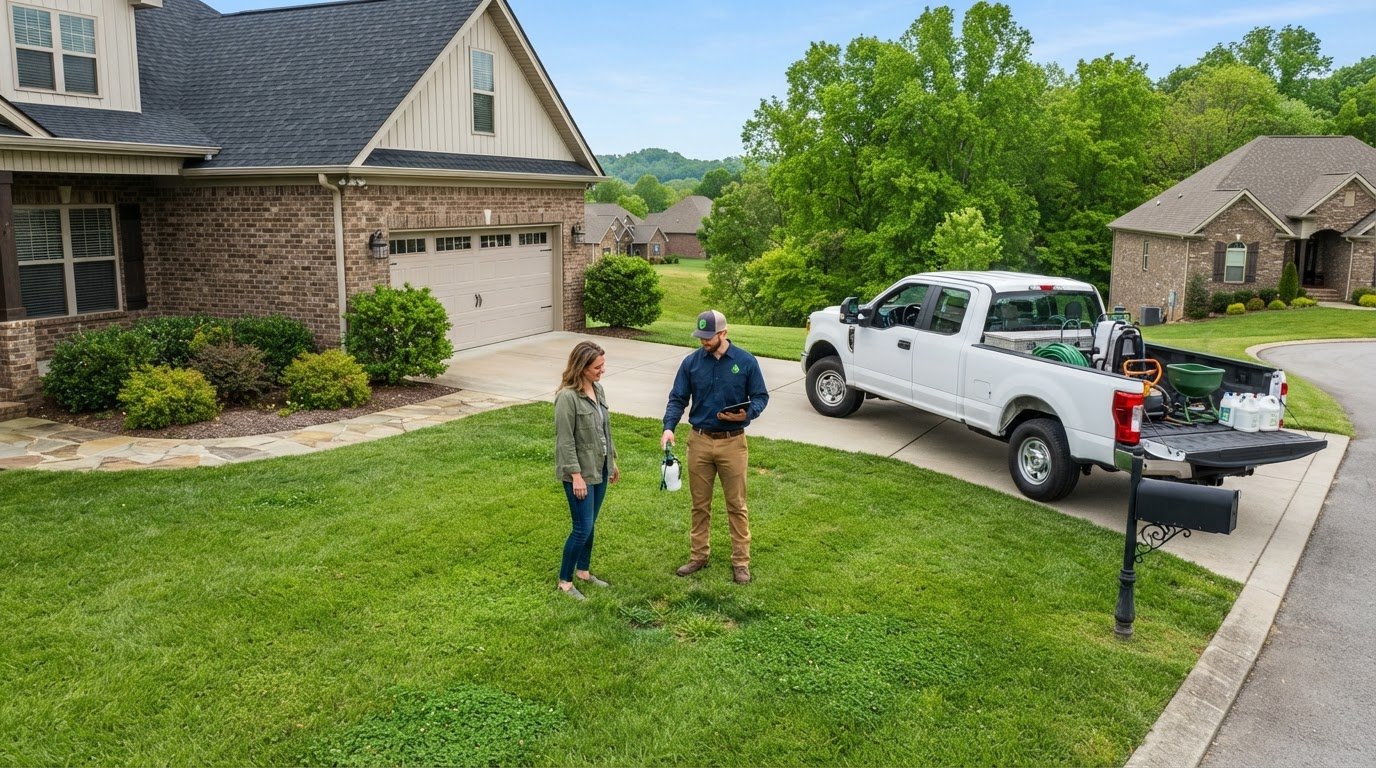


What if the fertilizer schedule that works for a neighboring lawn is the wrong fit for yours? A lawn’s color and growth reflect more than nutrient levels. Soil conditions, weed pressure, and seasonal stress all affect what may help, so custom lawn nutrient programs start with the property rather than a copied calendar.
It’s reasonable to want a clear plan without paying for applications that don’t address the real issue. A lawn-specific approach considers the turf’s condition and available soil information, including a soil test that can identify pH and nutrient levels. Those details can help guide fertilization, while weeds, compaction, or summer stress may need separate attention.
In this guide, you’ll learn what can inform a tailored nutrient plan, how it differs from a fixed schedule, and what to consider when choosing an approach for your property. We’ll also cover how Middle Tennessee conditions affect lawn health and how professional fertilization and weed-control treatments can support steady, realistic improvement for residential and commercial lawns.
Why Custom Lawn Nutrient Programs Make Sense for Middle Tennessee
A lawn-care plan should fit the property rather than rely on a universal recipe. Custom lawn nutrient programs account for the turf and the owner’s goals when shaping fertilization decisions. That can help when pale color, thin growth, or other visible changes leave you unsure what the lawn needs. Start by identifying what you see instead of assuming another fertilizer application will solve it.
What makes a lawn nutrient program custom?
A tailored approach takes into account the turf type, growing conditions, lawn history, and what you hope to improve. Uneven growth and recurring areas of stress help put the concern in context. A soil test can provide additional information about pH and nutrient levels. Customization means matching care to the property’s circumstances, not promising perfect turf or assuming every lawn needs the same treatment.
Nutrients are only one part of lawn health. Fertilization can support turf growth when nutrients are needed, but it won’t automatically resolve weeds, compaction, disease, or thin areas with other causes. Grass type also matters when unwanted plants appear. Bermuda grass that has spread into an established fescue lawn can be extremely difficult to eliminate completely. Management generally focuses on limiting its spread, reducing its presence, and helping the desired fescue stay healthy and competitive. Ongoing management or additional treatment strategies may be needed.
Why Middle Tennessee conditions belong in the conversation
Local conditions matter because turf types and seasonal growing patterns influence lawn-care decisions. A plan for a property in Mt. Juliet, Lebanon, Gallatin, or Hendersonville should draw on regional guidance rather than dates copied from a different climate. The University of Tennessee Extension offers research-based recommendations for Tennessee lawns. The right choices still depend on the property’s turf and condition.
Before settling on a program, consider the grass type, previous treatments, areas that consistently struggle, and the improvement you hope to see. These details help distinguish nutrient support from other concerns. For product selection, consider recommendations for the best fertilizer for Tennessee lawns alongside regional guidance and your property’s specific circumstances. Performance Lawns, INC provides professional fertilization and weed-control treatments for residential and commercial lawns across Middle Tennessee, with a focus on steady, realistic turf improvement.
How Nutrient Programs Support Turf Growth Through the Season
Fertilizer supplies nutrients, but the goal isn’t to apply every nutrient at every visit. A sound plan considers what the turf needs, what the soil can provide, and how the lawn is growing. That’s the value of custom lawn nutrient programs : treatment choices reflect lawn condition and seasonal context instead of assuming one formula suits every property.
What do the main lawn nutrients do?
Nitrogen supports leafy growth and green color, which is why it often features prominently in lawn fertilizers. Phosphorus plays a role in plant energy processes and root development, while potassium supports functions that help turf handle environmental stress. These are general roles, not a recommendation to apply all three. A nutrient’s presence on a fertilizer label doesn’t mean every lawn needs it. Soil conditions and turf needs should guide the decision.
A soil test can help clarify what’s available in the soil and whether pH or nutrient levels may need attention. The Turfgrass Fertilization Guide from Penn State Extension explains how soil testing and nutrient decisions fit into turf fertilization. Test information is one useful input alongside the lawn’s appearance, growth pattern, and treatment history.
How season and lawn condition shape treatment decisions
Season affects how actively turf grows and responds to care. Middle Tennessee’s climate includes warm-season stress and periods of active growth, so the same treatment choice may not make sense year-round. Tall fescue, a common cool-season turf in the region, can struggle during summer heat. Slow or discolored growth at that time doesn’t automatically indicate a nutrient deficiency. Heat, moisture conditions, disease, and other stresses can produce similar symptoms.
Before changing a fertilizer plan, look for patterns. Is the color change across the whole lawn or limited to one patch? Did it appear after a change in weather or treatment? Is growth uneven despite otherwise favorable conditions? These observations help distinguish a lawn-wide concern from a localized problem that may need a different response. Investigate symptoms rather than treating them as proof of a nutrient deficiency.
“A lawn’s nutrient needs should be assessed from its soil, turf, and growing conditions, not assumed from the calendar.”
For homeowners in Mt. Juliet, Lebanon, Gallatin, and Hendersonville, regional guidance provides a useful foundation, while the property’s condition helps shape practical treatment decisions. Performance Lawns, INC provides professional fertilization and weed-control treatments for residential and commercial lawns. If you’re considering a property-focused approach, you can discuss your lawn’s treatment needs with the local team.
Custom Nutrient Programs vs. Fixed Schedules and DIY Fertilizer
A fixed schedule can make lawn care easier to plan, while choosing fertilizer yourself gives you control over products and applications. Neither approach is automatically wrong. The key question is whether the plan fits your lawn’s condition and goals or simply repeats a routine. Custom programs aim to connect treatment decisions to the property instead of assuming one approach suits every yard.
| Approach | Personalization | Homeowner involvement | What it can address |
|---|---|---|---|
| Fixed-calendar applications | Usually follows a preset schedule | Varies by plan | Routine seasonal care, but not necessarily a specific lawn concern |
| DIY fertilizer | Depends on product choice and homeowner observations | High, including product selection and application | Nutrient support when the product suits the lawn’s needs |
| Professional lawn treatments | Can reflect the property and observed turf condition | Less application work for the homeowner | Fertilization and weed control as related but distinct parts of lawn care |
When a fixed schedule or DIY approach may fit
A predictable calendar may suit homeowners who want a straightforward routine. DIY care can work for people who prefer selecting products and managing applications themselves. Either way, follow product directions and application requirements carefully. A schedule or bag of fertilizer can provide structure, but it may not account for the lawn’s turf type, history, or changing condition.
For instance, uneven color might lead someone to apply fertilizer, even though color alone doesn’t confirm a nutrient deficiency. A preset application may leave the underlying concern unaddressed if the cause is something else. A fixed plan can still be convenient, but it may not answer every property-specific question.
What professional customization can add
Professional treatment brings experience with fertilization and weed control to lawn care. Fertilizer supplies nutrients when appropriate, while weed control helps manage unwanted plants. Professional weed-control treatments can help manage common lawn weeds as part of ongoing care, though results vary and no program should be expected to address every weed. These services support different goals, even when they’re part of the same property-focused approach.
Some concerns call for a different response from routine applications. Dallisgrass and Johnsongrass are invasive grassy weeds that can be more challenging to manage than many common broadleaf weeds. They may need a separate or targeted treatment approach rather than the treatments used for typical lawn weeds. The same practical approach applies to thin or stressed turf: assess the concern before assuming more fertilizer is the answer.
Choosing between DIY and professional care comes down to how much time you want to spend applying products, what questions your lawn’s condition raises, and how much property-specific guidance you want. A useful plan should make those decisions clearer while keeping expectations grounded in what treatments can reasonably support.
How to Prepare for a Lawn Nutrient Program
A little preparation makes it easier to discuss what your lawn needs and what you’d like to improve. You don’t need to diagnose the problem before planning care. A clear description of what you see, where it occurs, and what has already been applied helps keep the conversation focused on practical next steps.
Before planning custom lawn nutrient programs, gather a few useful details:
- Describe your goal. Note whether you want to encourage more even growth, address pale areas, or support the lawn’s overall condition.
- Map visible concerns. Record where growth looks thin, discolored, or different from the rest of the yard. Notice whether the pattern appears throughout the lawn or in particular areas.
- Identify the turf, if you know it. Share whether you believe the lawn is fescue, another grass type, or a mix. It’s fine to say you’re unsure.
- Review the lawn’s history. Write down recent fertilizer, weed-control, or other lawn treatments, including roughly when they were applied if you remember.
What lawn details help shape a useful conversation?
Be specific about the condition and your expectations. “The back area is thinner than the front” is more useful than “the lawn looks bad,” especially if the difference appears near a tree, along a slope, or across a larger section. Mention whether the concern is new or recurring, and share any known turf type or recent treatment history. These details provide context without requiring you to identify the cause.
It can also help to note whether the pattern changes over time or after weather shifts. A simple written list is enough. Photos showing how a concern has changed may also help describe what you’ve observed.
How to set realistic expectations for improvement
A nutrient program supports turf health. It isn’t an instant repair or a solution to every lawn problem. Visible changes depend on the lawn’s starting condition, treatment timing, weather, and the issue being addressed. If a thin area is related to something other than nutrient availability, fertilizer alone may not resolve it. A thoughtful plan starts with understanding the concern and choosing care that fits.
Weed control has its own limits. Professional treatments can help manage common lawn weeds and reduce weed pressure, but results vary with the weed and conditions. Fertilization and weed control have related roles in lawn care, yet one treatment shouldn’t be mistaken for a fix for every visible problem.
Performance Lawns, INC provides professional fertilization and weed-control treatments for residential and commercial properties. Bring your observations and treatment history to the conversation, then contact Performance Lawns, INC to discuss your lawn’s needs and a practical approach to care.
How Performance Lawns Builds a Local Lawn Treatment Approach
A sound lawn treatment approach starts with the property and its goals. Performance Lawns, INC provides professional fertilization and weed-control treatments for residential and commercial properties in Mt. Juliet, Lebanon, Gallatin, Hendersonville, and across Middle Tennessee. With over 15 years of experience, the company brings a local perspective to ongoing lawn care while keeping treatment expectations realistic.
A local service focused on lawn treatments
Fertilization and weed control support related but distinct parts of lawn health. Fertilizer can provide nutrients when appropriate, while weed-control treatments help manage unwanted plants and reduce weed pressure. Start with the lawn’s condition and the property owner’s goals, rather than assuming every property needs identical care. This keeps treatment decisions practical and avoids treating fertilizer as a solution for every visible concern.
Changes in color or growth can have different causes, so they shouldn’t automatically be treated as proof that the lawn needs more nutrients. The kind of weed present also matters. Dallisgrass and Johnsongrass may call for a separate treatment strategy rather than being assumed to respond to routine broadleaf weed control.
Performance Lawns, INC focuses on professional lawn treatments for homes and commercial properties. For homeowners and property managers, that means lawn care centered on fertilization and weed control, with decisions grounded in the property’s needs. Treatments can support turf health and help manage weeds over time, while keeping expectations realistic about how a lawn responds.
Take the next step toward a tailored approach
Before discussing treatment needs, consider what you’d like to improve, where concerns appear, what type of grass you have if known, and which treatments the lawn has received. You don’t need to diagnose the cause. Sharing observations and treatment history gives the discussion a useful starting point, whether you’re caring for a home lawn or a commercial property.
A thoughtful approach focuses on informed decisions, not guaranteed results. Weather, timing, turf condition, and the concern being addressed can all influence how a lawn responds. A property-focused treatment plan can help bring clarity to those choices and support steady care over time. Performance Lawns, INC provides professional fertilization and weed control to Middle Tennessee properties with a practical focus on lawn health.
Share your lawn’s goals, visible concerns, and known treatment history with the team. Contact Performance Lawns, INC to discuss your lawn treatment needs and take a practical next step toward care that fits your property.
Make Your Next Lawn-Care Decision with Confidence
A healthier-looking lawn comes from informed decisions and steady care, not a single application or a copied calendar. Use what you’ve observed about your property to guide the conversation: what you hope to improve, where the lawn struggles, and what treatments it has received. Those details can turn uncertainty into a practical starting point.
Custom lawn nutrient programs are most useful when they reflect the lawn’s needs and keep expectations realistic. As conditions change, the right approach may change too. A clear, property-focused plan can help you make thoughtful choices about fertilization and weed control without expecting one treatment to fix every concern.
Ready to take a practical next step? Talk with Performance Lawns about your lawn treatment needs and start a conversation grounded in your property’s goals. Better lawn care begins with understanding what’s happening underfoot, and a thoughtful plan can help you move forward with confidence.
Frequently Asked Questions
What is a custom lawn nutrient program?
A custom lawn nutrient program is a fertilization approach shaped around a lawn’s condition, grass type, and care goals rather than a universal schedule. For example, a property with uneven growth and one with consistently healthy turf may call for different considerations. Custom lawn nutrient programs connect treatment choices to the individual lawn, while recognizing that nutrient care is only one part of maintaining turf.
How do I know what nutrients my lawn needs?
A soil test is a useful way to check nutrient levels and soil pH, while the lawn’s appearance and treatment history offer additional clues. Don’t rely on color alone: yellowing can have causes other than a nutrient shortage. If discoloration is limited to a small area, note its location and pattern. Combining that observation with test results gives you a more informed basis for fertilizer decisions.
Is a custom lawn nutrient program better than a standard fertilizer schedule?
It can be a better fit when a lawn has specific needs that a preset calendar doesn’t address. A standard schedule may offer convenience and routine, while a property-focused plan can account for details such as grass type, soil information, and the lawn’s recent condition. Neither guarantees a particular result. Choose the approach that supports the property’s goals without treating every lawn as if it were identical.
How often should a lawn be fertilized in Middle Tennessee?
There isn’t one frequency that suits every lawn in Middle Tennessee. Grass type, growth, soil conditions, weather, and prior applications all affect timing. Homeowners in Mt. Juliet, Lebanon, Gallatin, and Hendersonville can use University of Tennessee Extension guidance as a regional reference, then consider how their own turf is responding. Keep a record of application dates to avoid guessing or repeating treatments too closely.
Can fertilizer get rid of lawn weeds?
No. Fertilizer provides nutrients; it isn’t a weed treatment and won’t remove established weeds. Weed control relies on an appropriate management approach for the weeds present, and results can vary. Fertilization may support turf when nutrients are needed, but it shouldn’t be treated as a substitute for weed control. Identifying what’s growing helps inform the next step.
Do I need a soil test before starting a lawn nutrient program?
A soil test is helpful, but it isn’t the only information used to plan lawn care. It can show soil pH and nutrient levels, helping distinguish a nutrient concern from other possible causes of poor growth. If you have a recent test, keep the results with your treatment records. If not, note what you observe and what has been applied so those details can help inform whether testing would be useful.
Can a nutrient program fix thin or patchy grass?
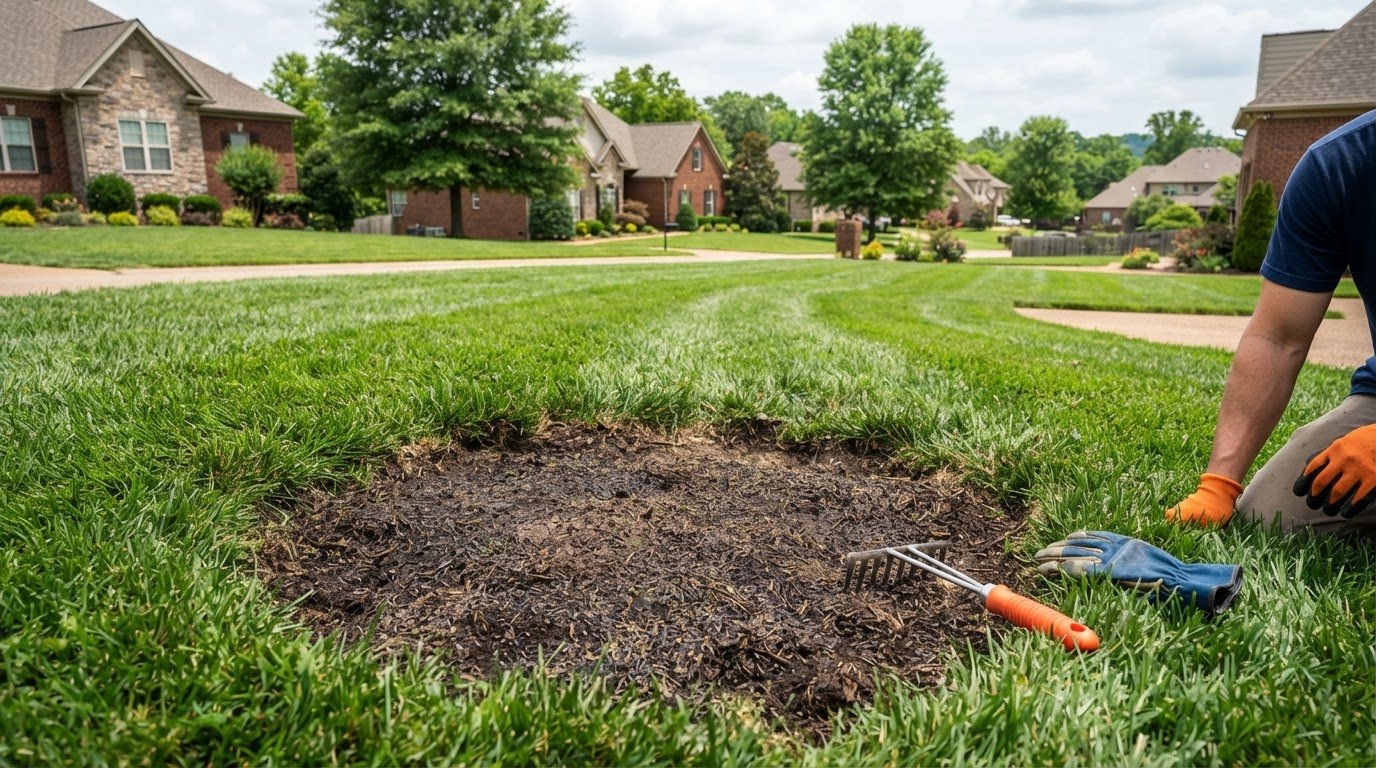
Sometimes nutrients are part of the answer, but fertilizer alone won’t fix every thin or patchy area. Shade, foot traffic, soil compaction, disease, pests, or poor establishment may also contribute. Note whether the bare area is expanding, repeatedly appears in the same spot, or follows a property feature such as a walkway. That pattern can help identify whether fertilization or another lawn-care response is more appropriate.