

A bare patch can look like a simple seed-and-water fix, but the cause may be shade, compacted soil, foot traffic, or poor drainage. Effective lawn seeding for bare spots starts by identifying why the grass disappeared, so new growth isn’t set up to fail for the same reason. Seed can wash away, dry out, or fail to sprout, especially when Middle Tennessee weather shifts quickly.
This guide covers how to diagnose a patch, prepare the soil, choose seed, and care for new grass as it establishes. For many local lawns, turf-type tall fescue is a practical choice, and late summer to early fall, from late August through mid-October, is generally the best seeding window. You’ll also learn why spring repairs can be more challenging, how to keep seed moist without washing it out, and when recurring or widespread bare areas may call for broader care, such as professional aeration and overseeding.
Lawn seeding for bare spots starts with finding the cause
A bare area doesn’t automatically mean the lawn needs more seed. Foot traffic, shade, compacted soil, moisture problems, and weak establishment can all leave turf thin. The right repair depends on what’s happening at that spot. A small, isolated patch may be manageable as a DIY project. Repeated or widespread thinning calls for a closer look before you invest in lawn seeding for bare spots.
Notice where the damage occurs and whether it changes over time. Is it along a path, beneath a tree, or in a low area that stays damp? These patterns can offer clues, but appearance alone can’t confirm the cause. General lawn care practices support turf health, but a lasting repair needs to account for the specific site.
For a visual overview of the repair process, watch this video:
What can cause bare patches in a Middle Tennessee lawn?
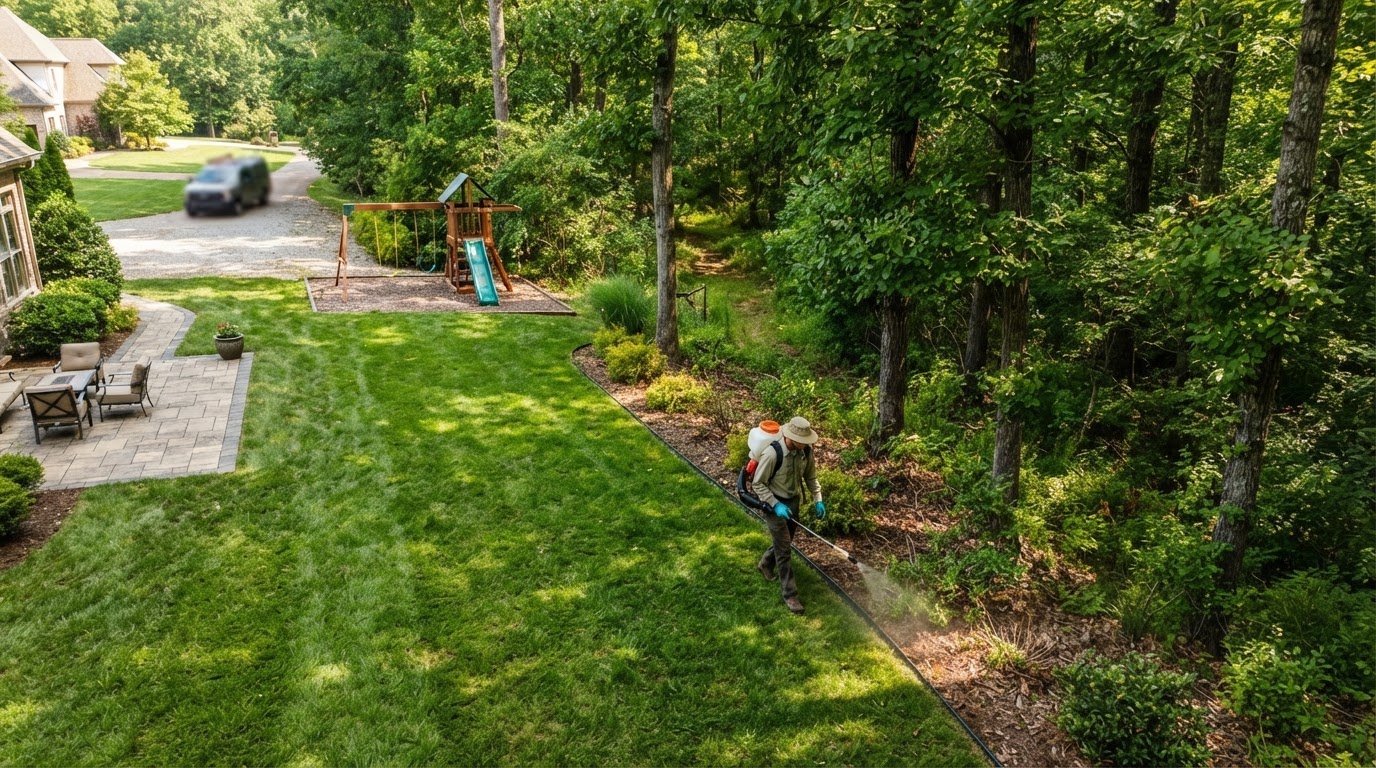
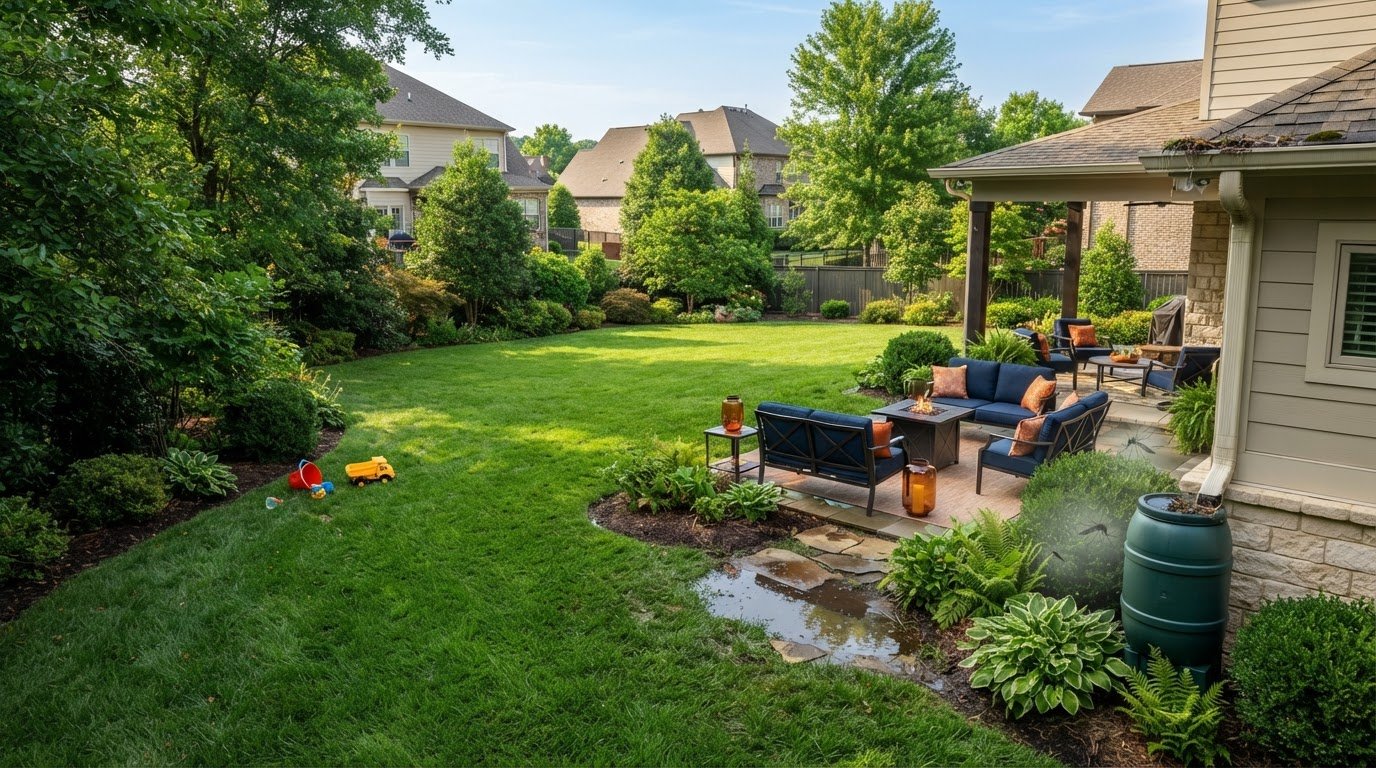
Repeated walking or play can wear grass down and compact the soil, making it harder for water, air, and new roots to move through. Shade may limit turf growth, while soil that stays soggy or dries quickly can also stress grass. Nearby, more vigorous turf may crowd a weaker area. If patches expand, have unusual edges, or show other signs of damage, disease or pests are possible causes, but those signs don’t confirm a diagnosis. Identify the issue before choosing a treatment.
Look for patterns rather than relying on one clue. A worn strip may point to traffic, while thinning beneath a dense canopy may relate to limited light. When persistent shade prevents turf from thriving, arborist care such as selective limb pruning or the professional tree removal Minneapolis specialists perform can be an essential step to restore needed sunlight. If the cause isn’t clear, avoid treating the lawn based on guesswork.
When is reseeding alone unlikely to solve the problem?
Seed can’t correct a site condition that keeps harming grass. If foot traffic continues, soil remains compacted, or shade and moisture conditions don’t suit the turf, a new patch may struggle just like the old one. A bare spot that returns in the same place deserves closer assessment. Widespread thinning may benefit from a broader plan, including professional aeration and overseeding from Performance Lawns, INC, rather than repeated spot repairs.
In a fescue lawn, Bermuda grass spreading into the turf is a special case. It can be extremely difficult to eliminate completely from established fescue. Management generally focuses on limiting its spread and helping the desired fescue stay healthy and competitive, not promising total removal. Diagnose the cause first, then match the repair to the problem.
Choose the right seed and season for Middle Tennessee bare spots
The best seed for a repair is usually the seed that matches the healthy grass already growing around it. A close match helps the patch blend in as it fills, while a different grass type may stand out in color, texture, or growth habit. Before buying seed, identify the lawn’s existing turf and consider whether the bare spot gets the same sun and moisture as the rest of the yard. For lawn seeding for bare spots, matching the site matters as much as choosing a locally suitable grass.
How should you match seed to existing grass?
Turf-type tall fescue is a common choice for Middle Tennessee home lawns, but it’s appropriate only when it fits the existing lawn. Warm-season grasses such as Bermuda and zoysia have different growth patterns, so seeding them into a fescue lawn can create a patch that looks and behaves differently. If the yard contains mixed turf, decide which grass you want to maintain before selecting seed. Bermuda grass that has spread into established fescue can be extremely difficult to eliminate completely; management focuses on limiting its spread and supporting healthy fescue.
Check the seed label for the intended use, planting instructions, and recommended application rate. Don’t assume one seed blend or quantity suits every bare area. Use the label to guide how much seed to apply and how to plant it.
When should you seed a bare spot in Middle Tennessee?
For cool-season lawns such as tall fescue, late summer to early fall is generally the best window in Middle Tennessee. Aim for late August through mid-October, with September often considered ideal. This gives new grass time to establish before winter. Spring seeding is possible, typically from late February to early April, but it’s less favorable because seedlings have less time to mature before summer heat and weed competition increase.
Warm-season grasses follow a different calendar. Bermuda and zoysia are generally planted in late spring to early summer, between May 1 and June 30. These windows are guides, not a substitute for considering the ground and forecast. Seed needs consistent moisture to establish, so postpone if conditions are likely to leave it too dry or wash it away. Follow the package directions for watering and application rather than relying on a universal schedule.
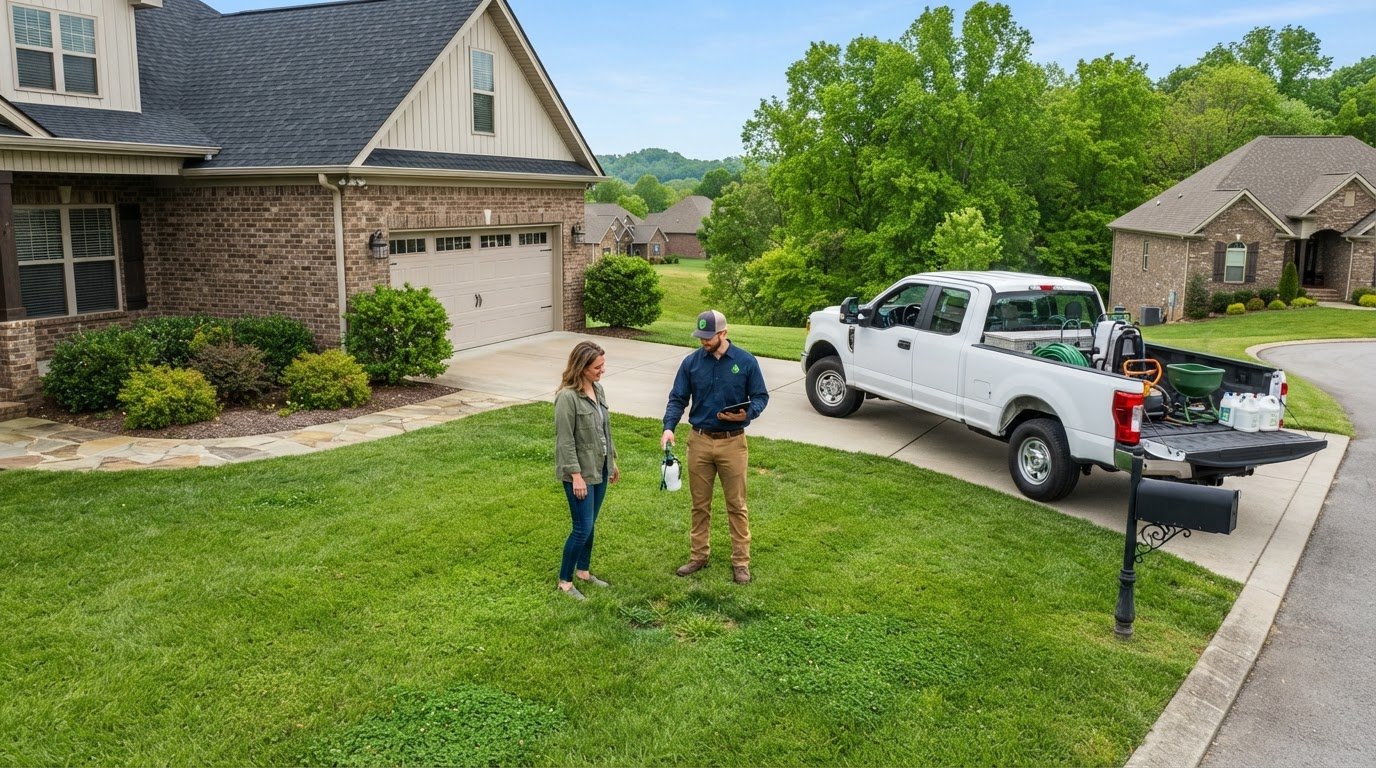
Spring repairs also require care around crabgrass prevention: pre-emergent herbicides can interfere with grass seed germination. If timing, turf type, or repair area is uncertain, talk with Performance Lawns, INC about a lawn-care approach suited to your yard.
Prepare the bare area so seed can reach the soil
Good preparation gives seed a better chance to stay in place and make contact with soil. For lawn seeding for bare spots, the goal isn’t to dig up the whole yard. Clear the patch, loosen its surface, spread seed according to the label, and water gently enough to avoid washing it away.
How do you prepare a small bare patch?
Start by removing leaves, loose debris, and dead grass. If thatch or matted material covers the soil, clear it from the patch. Seed sitting on that layer may struggle to reach the soil and establish. Use a rake or hand tool to loosen the surface, taking care not to disturb healthy grass around the edges unnecessarily.
Then follow the seed package’s directions for application and any covering. Products can have different instructions, so don’t assume a universal rate or planting depth. The aim is to distribute seed evenly and position it against the soil, rather than leaving it on debris or exposed to runoff.
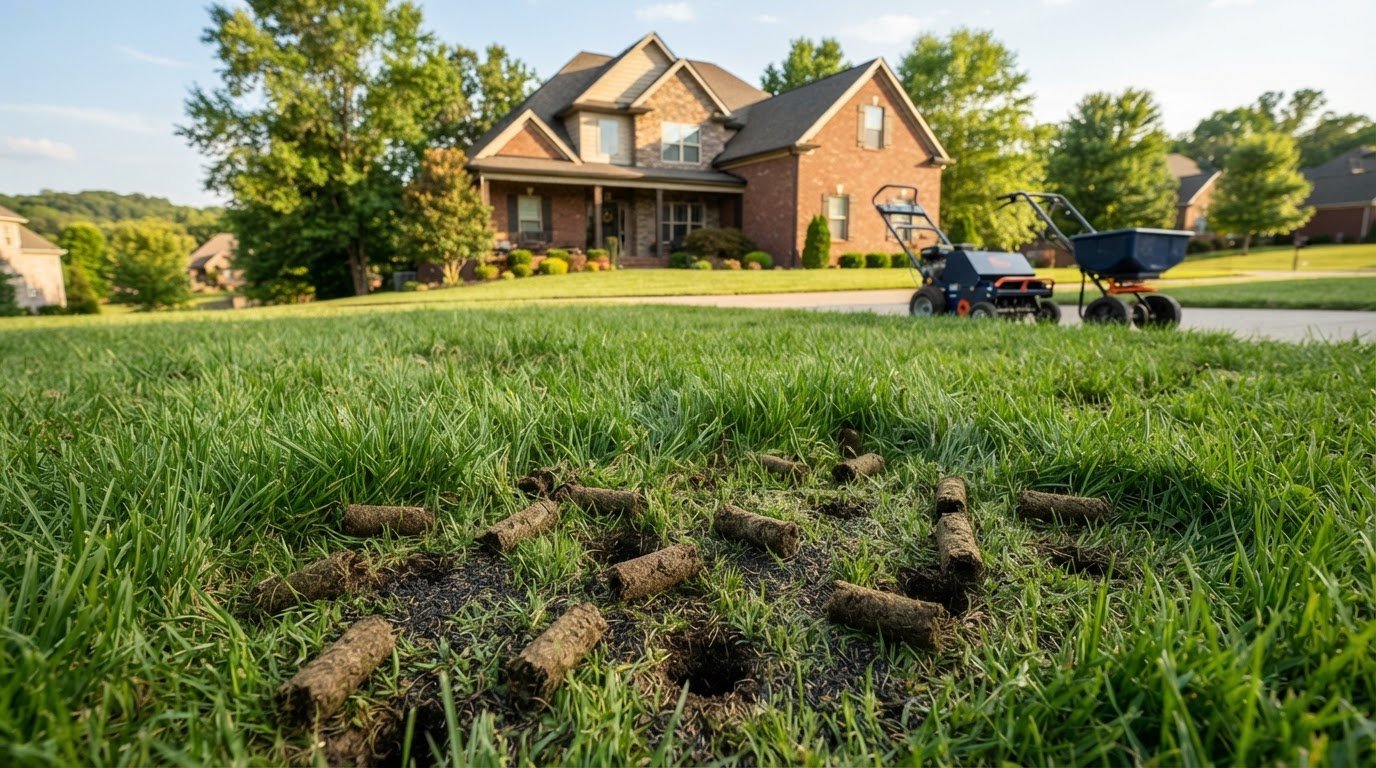
For a small, isolated area, light surface preparation may be enough. If compaction affects a larger section or the lawn is thinning across broad areas, core aeration can be part of a wider lawn-improvement approach. It creates openings in the soil that can support air, water, and seed movement. Learn more about residential aeration and overseeding as an option for broader lawn care, rather than treating every small patch as an aeration project.
How can you keep new seed in place?
Water with a gentle spray so the seeded surface becomes moist without creating puddles or moving seed downhill. Strong streams can displace seed, especially on slopes or where water naturally runs across the lawn. Check the spot as you water. If seed is collecting at the bottom edge, reduce the force and apply water more carefully.
Runoff-prone areas may need extra attention to surface preparation and to any covering recommended on the seed label. Don’t add a heavy layer that could block seed from reaching the soil. Keep the patch from being disturbed while it establishes, and adjust care to the weather and how quickly the surface dries.
No method guarantees establishment. Seed type, soil contact, site conditions, and steady moisture all play a role. If a patch keeps washing out or the same area repeatedly fails, discuss the lawn repair concern with Performance Lawns, INC.
After seeding, protect new growth and set realistic expectations
New grass needs steady care, but the seedbed shouldn’t stay soggy. Rainfall, temperature, soil type, seed variety, and the product’s directions all affect how often a patch needs water. Check the area rather than relying on a fixed schedule. The goal is to keep the soil around the seed appropriately moist without creating puddles or runoff. Follow the seed-label instructions and adjust for recent rain and drying conditions.
How often should you water newly seeded bare spots?
There isn’t one schedule that suits every yard. A sunny patch may dry faster than a shaded one, while heavy rain can leave a low spot saturated. Use a gentle spray and check the seedbed between watering. If the surface is drying, water carefully. If it’s wet or pooling, hold off. Too little moisture can interrupt establishment, while excess water can move seed or leave the soil waterlogged.
Keep people and pets off the seeded area as much as practical while new grass is getting established. Repeated steps can disturb seed and tender growth, particularly in a small repair where each section matters. Expect progress to vary. Grass type, seed quality, weather, soil contact, and site conditions all influence how quickly and evenly the patch fills, so avoid judging the result by a fixed timetable.
What if the bare spot does not fill in?
Before adding more seed, review the conditions that may have held the first attempt back:
- Seed contact: Did seed reach the soil, or sit on dead grass or thatch?
- Moisture: Did the patch dry out, stay saturated, or lose seed to runoff?
- Site conditions: Are shade, compaction, or regular foot traffic limiting growth?
- Original cause: Has the issue that made the area bare been addressed?
In a fescue lawn, Bermuda grass in the patch calls for different expectations. Established Bermuda can be extremely difficult to eliminate completely. Management generally focuses on limiting its spread and helping fescue remain healthy and competitive. Ongoing fertilization and weed control can support overall turf health, but results depend on the lawn and the specific issue. Learn about fertilization and weed control as part of a broader care approach.
If a seeded area repeatedly fails or the lawn is thinning in several places, contact Performance Lawns, INC about your lawn’s next steps.
When professional aeration and overseeding can help a thin Middle Tennessee lawn
A single bare patch with a clear, fixable cause may suit a targeted repair. But recurring bare spots, thinning across several sections, or soil that feels compacted can point to a broader lawn issue. In those cases, repeating lawn seeding for bare spots one patch at a time may not address what’s holding the turf back.
When should you consider broader lawn treatment?
Consider a wider lawn assessment if bare areas keep returning, large sections look thin, or compaction affects more than one spot. The right response depends on the lawn’s condition and the reason for thinning. Aeration and overseeding may suit some lawns, while other concerns may require attention to the underlying site or turf conditions. A broader review helps match the approach to the problem instead of applying the same repair everywhere.
Professional residential aeration and overseeding can support lawn improvement by addressing compacted soil and introducing seed across thinning turf. It’s a broader option, not a requirement for every small, isolated patch. Outcomes depend on factors such as grass type, site conditions, weather, and how new grass establishes, so no approach should be treated as an instant fix.
How can Performance Lawns support a thicker lawn?
Performance Lawns provides residential aeration and overseeding in Mt. Juliet and Middle Tennessee. With more than 15 years of experience, the team helps homeowners choose a lawn-care approach based on turf condition and the areas that need attention. Performance Lawns also backs its services with a no-risk guarantee.
Healthy, denser turf takes appropriate care and time for new grass to establish. If your lawn has widespread thinning or patches that keep coming back, a conversation can help you understand practical next steps for your property.
Contact Performance Lawns to discuss your lawn concerns and whether broader aeration and overseeding may be a suitable option.
Give your lawn a stronger start
A successful repair begins with the cause, not the seed. Check why the patch is bare, choose grass that matches the surrounding lawn, and prepare the soil so seed can make contact. Then protect the area with careful watering and patience while new growth establishes. These steps give lawn seeding for bare spots a sound foundation, though results still depend on the seed, site, and conditions.
If bare areas keep returning or thinning extends across the yard, a broader approach may be more useful than repeating small repairs. Performance Lawns offers residential aeration and overseeding, backed by more than 15 years of experience and a no-risk guarantee. This service can be a relevant option for homeowners considering wider lawn improvement.
Discuss your lawn’s bare spots with Performance Lawns to explore a practical next step for your property. With the right diagnosis and steady care, you can help your lawn move toward healthier, more even growth.
Frequently Asked Questions
Is fall the best time to seed bare spots in Middle Tennessee?
Yes, fall is generally the preferred season for seeding cool-season lawns such as tall fescue in Middle Tennessee. A commonly recommended window is late August through mid-October, with September often considered ideal. Local weather and soil conditions still matter, so avoid seeding if you can’t maintain suitable moisture or conditions are unfavorable for establishment. Follow the directions for your chosen seed.
Can I just throw grass seed on a bare spot?
You can scatter seed, but it may not establish well if it lands on debris, thatch, or hard soil instead of contacting the soil. Clear loose material, lightly loosen the surface, and spread seed according to its label. Water gently so the seedbed becomes moist without washing seed away. If the same patch repeatedly fails, investigate shade, traffic, compaction, or other ongoing conditions before reseeding.
How do I prepare a bare spot before seeding?
Remove loose dead grass and debris to expose a workable soil surface, taking care not to damage healthy surrounding turf. Lightly loosen the patch, then apply seed according to the package directions and make sure it reaches the soil rather than sitting on thatch. Water gently to keep the seedbed appropriately moist. In Mt. Juliet, Lebanon, Gallatin, and Hendersonville, adjust care to the site’s shade, drainage, and soil condition.
How often should I water grass seed in a bare spot?
Water often enough to keep the seedbed appropriately moist, but not saturated. There’s no single schedule that suits every yard: rainfall, temperature, soil, shade, and seed type all affect how quickly the surface dries. Follow the seed-label guidance and check the patch regularly, especially during dry or unusually warm weather. Use a gentle spray, and ease off if water begins pooling or running across the soil.
Why does the same bare spot keep coming back?
A patch that returns may have an unresolved cause, so adding seed alone may not solve it. Compacted soil, shade, frequent foot traffic, unsuitable moisture, or competition from nearby turf can all make establishment difficult. Look for patterns and changes in site conditions before trying again. If bare spots recur across the lawn or the cause is unclear, a broader lawn assessment can help guide a more suitable repair plan.
Can I seed bare spots in an established fescue lawn with Bermuda grass?
You can seed, but new fescue alone won’t resolve Bermuda grass competing in an established fescue lawn. Bermuda grass can be extremely difficult to eliminate completely once it has spread into fescue. Management generally focuses on limiting its spread and helping the desired fescue remain healthy and competitive. Additional or ongoing strategies may be needed, depending on the lawn’s condition and how extensively the Bermuda grass has spread.
Should I aerate before seeding a bare spot?
Not necessarily. A small, isolated patch may only need suitable surface preparation, while core aeration may be useful when compaction or thinning affects a broader part of the lawn. Consider how extensive the problem is and whether the soil is compacted before choosing an approach. Residential aeration and overseeding can support broader lawn improvement, but aeration isn’t a required step for every spot repair.