More nitrogen isn’t always the answer to a struggling lawn. The right nitrogen lawn fertilizer treatments depend on your grass type, whether it’s actively growing, and what’s causing the problem. It’s understandable to want a quick way to restore color and thicker turf, but applying fertilizer without a clear need can waste product and stress your lawn.
In Middle Tennessee’s transition zone, cool-season fescue and warm-season grasses such as Bermuda and zoysia have different growth cycles and fertilization needs. Nitrogen supports turf growth, but it won’t solve every bare patch or weed problem. This guide explains nitrogen’s role, why treatment approaches vary by grass type, and how timing and careful application can support healthier lawns. You’ll also learn how to distinguish a possible nutrient need from weed pressure or another lawn issue before choosing a treatment.
What Nitrogen Lawn Fertilizer Treatments Do for Your Grass
Nitrogen lawn fertilizer treatments supply a nutrient grass uses to grow leaves and maintain its green color. They can support turf growth when nitrogen is needed, but they’re not a fix for every thin, pale, or stressed area. The response depends on the grass’s condition and growing environment, so applying more fertilizer doesn’t automatically mean better results.
For a general overview of fertilizer and its role in plant growth, watch this video:
What nitrogen contributes to lawn growth
Nitrogen is a macronutrient that turf uses to produce leafy growth. When grass has access to needed nitrogen and conditions support active growth, it may develop greener leaves and more growth. The response varies with grass type, existing turf health, weather, and other growing conditions.
Think of nitrogen as one part of lawn care, not a repair for every visible issue. Thin turf can have causes fertilizer won’t address, and stressed or damaged grass may not respond as expected. A nutrient treatment supports grass; it doesn’t directly treat weeds. Dallisgrass and Johnsongrass, for example, are invasive grassy weeds that can be harder to manage than common broadleaf weeds and may need a separate or targeted treatment approach.
A nitrogen treatment is a nutrient application intended to support grass growth; a complete lawn-care program addresses broader turf needs, which may include fertilization and weed control. Performance Lawns, INC provides fertilization and weed control as related but distinct parts of lawn treatment. Fertilizer can support turf, while weed control helps manage unwanted plants. Each treatment has a different purpose.
What fertilizer labels tell you
The three numbers on a fertilizer label are the N-P-K ratio, listed in the order nitrogen, phosphorus, and potassium. They indicate the product’s nutrient percentages by weight. Nitrogen appears first: on a hypothetical 10-0-5 label, the first number means 10% nitrogen. The middle and final numbers represent phosphorus and potassium, respectively. For more background, see this overview of nitrogen fertilizers and fertilizer use.
A label describes what’s in the bag, but it can’t determine what a particular lawn needs. Grass type, turf condition, and site conditions still matter. Use the label to understand a product’s nutrient composition, then consider the lawn’s needs rather than choosing by the first number or a promise of quick color.
How Nitrogen Treatments Work: Release Speed, Grass Type, and Conditions
Nitrogen products differ in how quickly their nutrients become available to turf. Release speed matters, but it isn’t a stand-alone guide to what a lawn needs. Nitrogen lawn fertilizer treatments work best as part of a plan that accounts for grass species, active growth, and site conditions, rather than a choice based only on a product label.
Fast-acting and slow-release nitrogen compared
Fast-acting nitrogen becomes available to grass relatively quickly, while slow-release forms supply nitrogen over a longer period. This can affect how soon a lawn responds and how growth is distributed over time. A Turfco product description, for example, presents slow-release nitrogen as a way to feed established grass over an extended period. That’s an example, not a universal recommendation for every lawn.
Release characteristics alone don’t settle the decision. Grass type and condition, the treatment’s purpose, and product directions all matter. Follow the label for the product being used, including its application guidance. A product designed for gradual availability isn’t automatically appropriate for every lawn, just as a fast-acting option isn’t inherently better.
| General feature | Fast-acting nitrogen | Slow-release nitrogen |
|---|---|---|
| Availability | Becomes available to turf more quickly | Becomes available over a longer period |
| General response pattern | Can support a quicker response when grass is actively growing | Can provide a more gradual supply of nitrogen |
| What to keep in mind | Suitability depends on lawn needs and label directions | Gradual release doesn’t make it right for every lawn |
This comparison is general, not a substitute for product directions or an assessment of the lawn. The grass’s growth stage and site conditions can affect how turf uses available nutrients. A treatment chosen without considering those factors may not produce the expected response.
Why grass type changes the treatment conversation
Fescue is a cool-season grass, while warm-season turf follows a different growth pattern. Nitrogen decisions should account for the grass’s active growth, rather than treating every lawn alike. Middle Tennessee’s mix of turf types makes identifying the grass an important first step. Timing and treatment choices should reflect guidance for the species and local conditions.
Bermuda grass that has spread into an established fescue lawn can be extremely difficult to eliminate completely. Management generally focuses on limiting its spread, reducing its presence, and helping fescue remain healthy and competitive. Nitrogen can support turf growth, but it won’t resolve that grass-to-grass competition on its own.
Nitrogen response depends on grass type and growing conditions. If you’re uncertain which turf you have or how its condition should shape a treatment plan, talk with Performance Lawns, INC about your lawn’s needs.
How to Compare Nitrogen Lawn Fertilizer Treatments Without Guesswork
A useful comparison starts with the lawn, not the fertilizer bag. Nitrogen lawn fertilizer treatments should match the turf’s species, current condition, and treatment objective. A product’s nitrogen percentage or promise of quick greening can’t tell you whether nitrogen is the main thing your lawn needs.
Match treatment decisions to the lawn’s actual needs
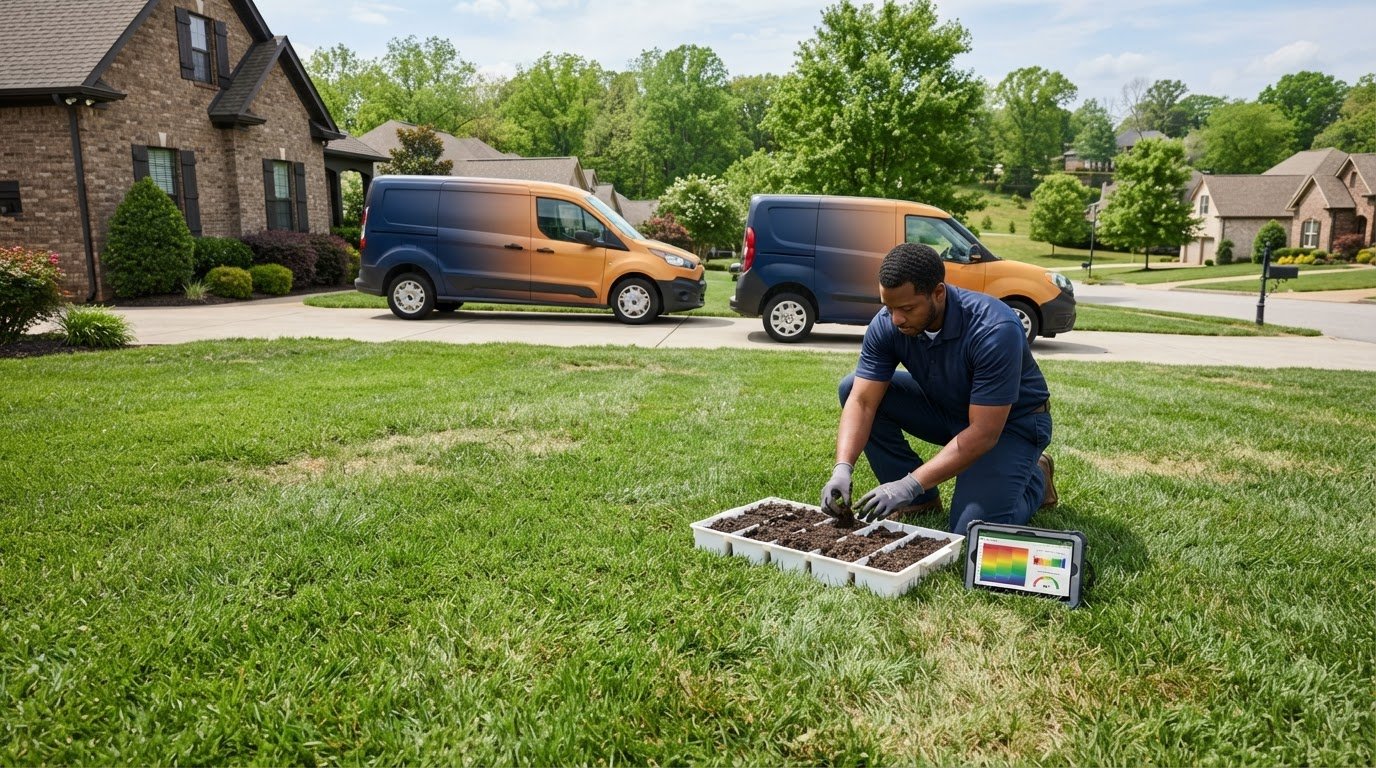
Before weighing products, identify the grass type and observe its current growth. Note where turf is thin or discolored, whether the pattern is uniform or patchy, and whether the lawn appears actively growing. These clues help frame the question, but they don’t diagnose every cause. Nutrient needs, weed competition, disease, and other stressors can produce overlapping symptoms.
A soil test can add context by assessing soil pH and nutrient levels. That information can help distinguish a potential nutrient need from a problem requiring a different response. Avoid adding nutrients simply because a product advertises a greener lawn. Compare options against these factors:
- Grass type: Is the lawn cool-season fescue, warm-season turf, or a mixture? Different grasses don’t necessarily share the same treatment needs.
- Lawn condition: Is the turf growing, dormant, thin, damaged, or showing a distinct pattern of discoloration?
- Label directions: What nutrients does the product contain, and what application instructions and precautions does its label provide?
- Treatment objective: Are you addressing a likely nutrient need, supporting established turf, or trying to solve a weed or disease problem?
Compare options against those findings, not a single headline claim. For instance, evenly pale turf presents a different question from isolated bare patches or distinct weed growth. Record where symptoms occur and how they change. Those details help guide a focused assessment. A thoughtful fertilization and weed control program considers the lawn’s needs and treats nutrient support and weed management as related but separate goals.
Separate nutrient needs from weed-control needs
Fertilizer provides nutrients; it isn’t a weed treatment. If unwanted plants are the concern, adding nitrogen won’t automatically control them. Identify the issue before choosing a response, especially when symptoms overlap or the affected area is spreading. A change in color alone doesn’t establish whether the cause is nutritional, weed-related, or something else.
Dallisgrass and Johnsongrass may require a targeted approach. Bermuda grass in established fescue also calls for careful management rather than treating fertilizer as a solution. In each case, identify the concern and keep nutrient decisions separate from weed-control decisions.
The same care applies when turf appears damaged: compare affected areas, note changes over time, and avoid using fertilizer as a catch-all response. Matching the treatment to the concern helps prevent wasted product and keeps lawn-care decisions focused on what the property needs.
How to Apply Nitrogen Treatments Responsibly in Middle Tennessee
Responsible application starts before the spreader comes out. In Middle Tennessee, lawns may contain different turf types, and recent or expected conditions can affect whether treatment makes sense. Use this practical sequence to make nitrogen lawn fertilizer treatments deliberate, not automatic.
- Identify the turf. Determine whether the lawn is fescue, warm-season grass, or a mix. If you’re unsure, pause before selecting a treatment. Grass type helps guide the decision.
- Assess the lawn. Note whether the grass is actively growing and look for patterns of thinning, discoloration, or damage. Consider whether a nutrient need is plausible or another issue may be responsible.
- Read the exact product label. Follow its application directions, stated limitations, and instructions about watering. Products can differ, so don’t assume directions for one fertilizer apply to another.
- Plan for conditions. Consider recent and expected weather and the lawn’s current condition. Use local recommendations appropriate to the grass type rather than relying on a fixed calendar or universal schedule.
A practical pre-application check
Before applying, make sure you know the grass type, have assessed current growth, and have read the product directions from start to finish. A soil or lawn assessment can help clarify whether nutrients are relevant, but the assessment should fit the question being investigated. If the cause of poor turf is uncertain, don’t treat a guess as a diagnosis.
Application directions vary by fertilizer and lawn conditions, so the product label and the needs of the turf should guide each treatment. Watering instructions are product-specific, too. Don’t copy a watering step from another product description or assume every fertilizer should be handled the same way.
Avoid common nitrogen treatment mistakes
More is not a shortcut. Exceeding label directions or applying on a schedule that ignores grass type and condition can waste product and stress turf. Avoid trying to correct visible damage by repeatedly adding nitrogen; a pale or thin area doesn’t, by itself, identify the cause. Seasonal recommendations differ by grass species, so timing guidance for one lawn may not suit another.
Keep nutrient decisions distinct from other lawn concerns. Fertilizer doesn’t replace weed control, lawn disease management, or addressing soil compaction. If you notice Dallisgrass, Johnsongrass, or Bermuda grass in a fescue lawn, treat that as a separate management concern rather than expecting nitrogen to resolve it. A clear diagnosis helps keep each response focused on the problem it’s meant to address.
Performance Lawns, INC builds fertilization and weed control into lawn-treatment programs tailored to the property. For help planning treatment around your lawn’s grass type and condition, contact Performance Lawns, INC about your lawn.
Professional Nitrogen Lawn Fertilizer Treatments in Middle Tennessee
Choosing nitrogen lawn fertilizer treatments is only one part of caring for a property. Performance Lawns, INC provides residential and commercial fertilization and weed control in Middle Tennessee. The grass type, current condition, and treatment goals help shape the program. The aim is thoughtful turf care, not applying the same product or schedule to every property.
Professional input can be useful when a lawn’s symptoms aren’t straightforward. Pale or thin turf might reflect a nutrient concern, but weeds, disease, compaction, and other stresses can also affect its appearance. Fertilizer supports grass when appropriate; it doesn’t diagnose or resolve every lawn problem. Separating these concerns helps make treatment decisions more informed and avoids expecting one application to do several different jobs.
What a professional lawn-treatment perspective adds
A lawn-treatment perspective considers the grass type, visible turf condition, and the result the property owner wants to support. Performance Lawns, INC brings more than 15 years of experience to residential and commercial lawn care, with fertilization and weed control as parts of a considered program. Experience informs the approach, but turf response still depends on the lawn and its growing conditions.
For example, a homeowner concerned about uneven color may need a different assessment than a property manager focused on maintaining consistent turf across a commercial site. In either case, it helps to describe what has changed, where it appears, and what care has already been applied. Those observations give the treatment discussion a useful starting point.
The fertilization and weed control service connects nutrient support with ongoing weed control while recognizing that they address different needs. A program can help support healthier turf and manage common weeds, but it doesn’t promise weed-free grass or guaranteed results. Some issues may call for a separate treatment approach, and results can vary with the problem, timing, and conditions.
A practical next step for local homeowners
Homeowners in Mt. Juliet, Lebanon, Gallatin, and Hendersonville can start by noting their grass type, the areas of concern, and their goals for the lawn. Whether the concern is weak-looking turf, uneven growth, or unwanted weeds, sharing those details helps focus the discussion on the property’s needs instead of relying on a one-size-fits-all fertilizer choice.
Performance Lawns, INC provides residential lawn treatments and fertilization and weed control for local properties. A clear discussion is a practical first step toward an approach that respects the turf and avoids unnecessary applications. For more about professional lawn treatments in Mt. Juliet , focus on matching care to the property’s conditions and goals.
Contact Performance Lawns, INC to discuss your lawn’s needs and the results you’d like your treatment program to support.
Make Your Next Lawn-Care Decision With Confidence
Think of fertilizer decisions as an ongoing conversation with your lawn. Before the next treatment, note what you hope to improve and what changes over time. A simple record of where the turf looks different and when those changes appear can help distinguish a developing pattern from a one-time concern. It also gives a lawn-care professional more useful context than color alone.
That steady attention helps keep nitrogen lawn fertilizer treatments focused on the grass’s needs, rather than turning each disappointing patch into a reason to apply more. If the cause isn’t clear, pause before treating. A thoughtful assessment can help direct the next step, whether that means considering nutrition or addressing a different lawn-care concern.
Performance Lawns, INC brings local experience to residential and commercial lawn treatment, with care centered on each property rather than a one-size-fits-all promise. Talk with Performance Lawns, INC about your lawn treatment needs and take a practical next step toward turf care that fits your goals. A healthier lawn starts with informed decisions, one treatment at a time.
Frequently Asked Questions
What does nitrogen do for a lawn?
Nitrogen supports leafy grass growth and helps turf maintain its green color. It isn’t a complete measure of lawn health: a green area can still be thin, and discoloration can have causes other than a nutrient need. Before considering nitrogen lawn fertilizer treatments, notice whether the change affects the whole lawn or just certain areas. That pattern can help clarify whether nutrition is the likely concern or whether another issue needs attention.
Is straight nitrogen fertilizer safe for grass?
Straight nitrogen fertilizer can be appropriate when nitrogen is needed and the product is used according to its label, but “straight” doesn’t mean automatically safe for every lawn. Check that the fertilizer is intended for turf and follow its specific application and watering directions. Applying too much or using it when conditions don’t suit the grass can cause stress. If the cause of a lawn problem is unclear, avoid treating based on appearance alone.
Can too much nitrogen damage a lawn?
Yes. Excess nitrogen or poorly timed application can stress grass rather than help it. Misapplication may injure turf, while unnecessary growth can mean wasted product and extra lawn stress. Keep track of treatments already applied, follow the product label, and don’t add more simply because the lawn hasn’t changed color right away. If damage appears after fertilizing, pause before applying anything else and consider whether another factor could explain the symptoms.
How much nitrogen fertilizer does a lawn need?
UT Extension’s 2026 annual guidance recommends 3 to 4 pounds of nitrogen per 1,000 square feet for fescue, 4 to 6 for Bermuda grass, and 2 to 3 for zoysia. These are annual totals, not amounts for one application. UT Extension also advises that a single application generally stay at or below 1 pound of fast-release nitrogen or 1.5 pounds of slow-release nitrogen per 1,000 square feet.
When should you apply nitrogen fertilizer to a lawn in Middle Tennessee?
Timing depends on grass type and active growth. UT Extension guidance for Middle Tennessee fescue favors applying most annual nitrogen in fall, with lighter spring applications and none in summer. Bermuda and zoysia are generally fertilized during active growth after spring green-up and through late summer, not in fall. These seasonal patterns apply across local communities such as Mt. Juliet, Lebanon, Gallatin, and Hendersonville, but the lawn’s condition and product directions still matter.
What happens if you fertilize weeds instead of treating them?
Fertilizer supplies nutrients; it isn’t a weed treatment. Applying it won’t directly control weeds, and weeds may remain even as nearby grass responds to available nutrients. Identify the unwanted plant and choose an appropriate weed-control approach rather than treating fertilizer as a substitute. Grassy weeds can require different management from broadleaf weeds, so identifying what’s growing is a useful first step before selecting treatment.
Can nitrogen fertilizer eliminate Dallisgrass or Bermuda grass?
No. Nitrogen fertilizer isn’t designed to eliminate either grass. Dallisgrass, like Johnsongrass, can be more challenging to manage than common broadleaf weeds and may need a separate, targeted treatment. Bermuda grass that has spread into an established fescue lawn can be extremely difficult to eliminate completely. Management generally aims to limit its spread, reduce its presence, and help the desired fescue stay as healthy and competitive as possible.