

A greener lawn doesn’t always need more fertilizer. In Middle Tennessee, thin or discolored turf can have several causes, and improving lawn density and color starts with identifying what’s holding the grass back. Weeds, compacted soil, seasonal stress, and nutrient needs can all affect a lawn’s appearance, but they call for different responses.
If you’ve heard conflicting advice about watering, fertilizing, aeration, or overseeding, start by looking for clues: where the turf is thinning, when the color changed, and what type of grass is growing. Middle Tennessee’s transition-zone climate matters, too. Tall fescue and warm-season grasses such as Bermuda follow different growth patterns and care schedules.
This guide explains how to recognize common lawn problems and choose practical next steps, from soil testing and appropriate fertilization to weed control and seasonal care. You’ll also learn when residential aeration and overseeding may help a fescue lawn fill in, and how professional lawn treatments can support healthier turf by addressing likely causes instead of just visible symptoms.
Why Lawn Density and Color Change in Middle Tennessee
Lawn density describes how continuously healthy turf covers the soil, while lawn color describes the grass’s visible green tone. The two can change together, but they aren’t the same clue. A lawn may stay green while developing thin, exposed patches, or look pale across otherwise dense turf. Improving lawn density and color starts with assessing each condition separately rather than applying a popular fix by default.
Soil conditions affect root growth and nutrient availability. Heat, shade, and foot traffic can stress grass, while weeds compete for growing space. Disease may also affect color or cause localized thinning. These factors can overlap, so one symptom rarely identifies the cause on its own.
- Soil conditions: Compaction or unsuitable soil pH can make it harder for roots to access what they need.
- Turf stress: Heat, shade, and repeated traffic may leave certain areas less vigorous than others.
- Weeds: Unwanted plants can compete with desirable turf and make the lawn look patchy.
- Nutrition: Pale grass may be related to nutrient availability, but color alone doesn’t show which nutrient, if any, is lacking.
- Disease symptoms: Discoloration or thinning can have disease-related causes, though appearance alone may not identify the problem.
Grass type matters, too. The broad Turfgrass category includes species with different growth habits and seasonal patterns. Across Mt. Juliet, Lebanon, Gallatin, and Hendersonville, cool-season tall fescue and warm-season Bermuda or Zoysia respond differently to the seasons. Knowing the grass type helps put changes in color or coverage in context. Fertilization and weed control can support healthy turf and help reduce weed pressure, but treatments are most useful when they match the condition being addressed. Performance Lawns’ fertilization and weed control supports this approach to lawn care.
What Thin Turf and Pale Grass Can Tell You
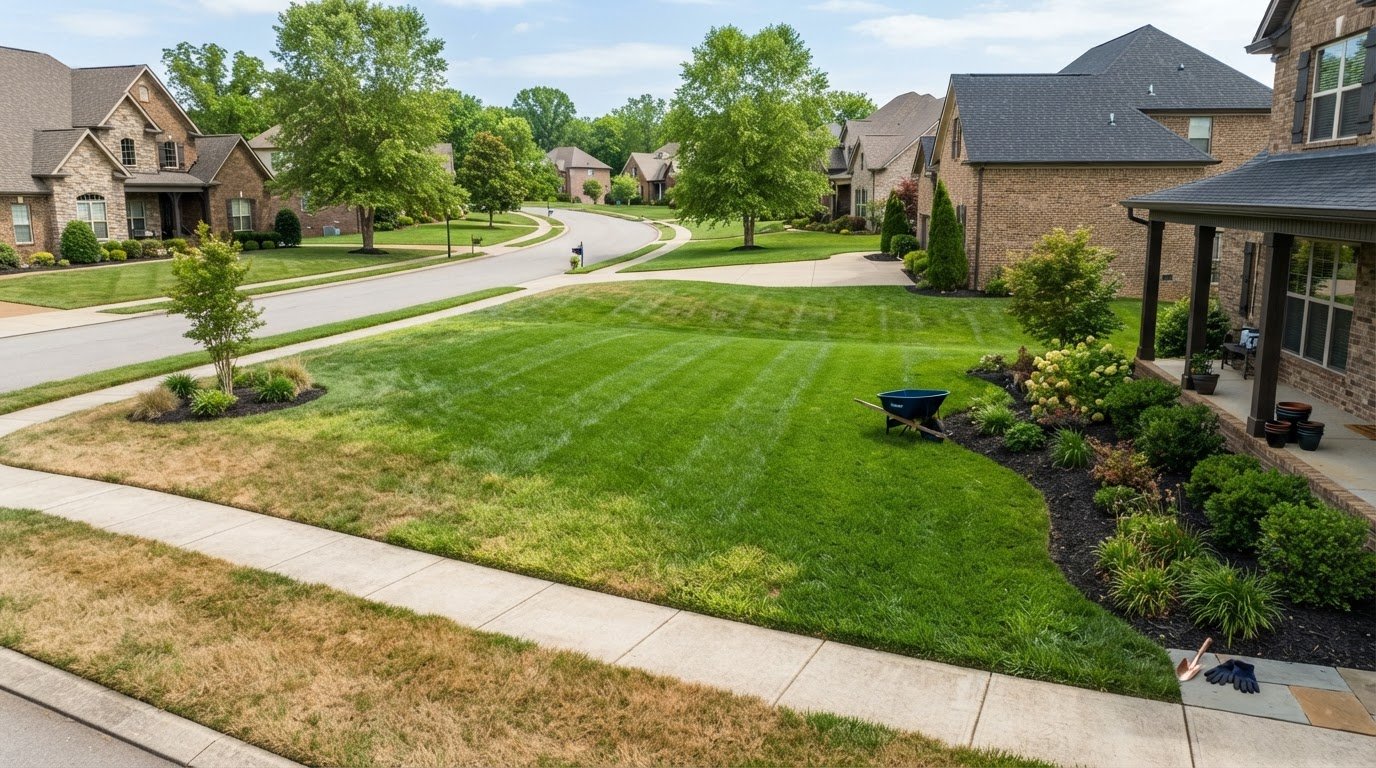
Start by checking the pattern. Bare or sparse patches expose soil or have fewer grass blades, while an overall loss of green may appear across otherwise continuous turf. Note whether thinning follows a walkway, occurs beneath shade, or appears in scattered spots. Record when the change began and whether the affected area is spreading. These observations can help distinguish a localized issue from a broader change.
Similar symptoms can have different causes. Sparse grass may reflect stress, soil limitations, competition, or a combination of factors. Pale blades may relate to nutrition, weather, or other conditions. Treat these signs as clues, not a diagnosis. Location, timing, and pattern help determine what to investigate before choosing a treatment.
Why Middle Tennessee Conditions Matter
Middle Tennessee’s seasonal swings affect when different grasses grow actively and how they look. Tall fescue generally grows most actively during cooler parts of the year, while Bermuda and Zoysia are warm-season grasses that thrive in summer. In this transition-zone climate, a seasonal color change can mean different things depending on the grass type.
Summer heat and humidity can stress turf and create conditions favorable to some lawn problems, but weather alone doesn’t establish the cause. Compare affected areas with the rest of the lawn, taking grass type, recent conditions, and symptom progression into account. That context helps guide the next step, whether it’s further investigation, adjusted care, or treatment suited to the likely issue.
The Soil, Turf, and Nutrient Factors Behind Thicker Green Grass
A lawn’s color and coverage depend on more than fertilizer. Roots need suitable soil conditions, and grass needs care that fits its species and stage of growth. If you’re improving lawn density and color, checking these underlying factors can help you avoid treating only the visible symptom.
How Soil Conditions Affect Lawn Density
Healthy turf starts below the surface. Soil structure affects root growth and how air, water, and nutrients move through the root zone. In compacted soil, that movement can be restricted, making it harder for roots to establish and grass to withstand stress. Repeated foot traffic or heavy use can contribute to compaction, but thinning alone doesn’t confirm that compaction is the cause.
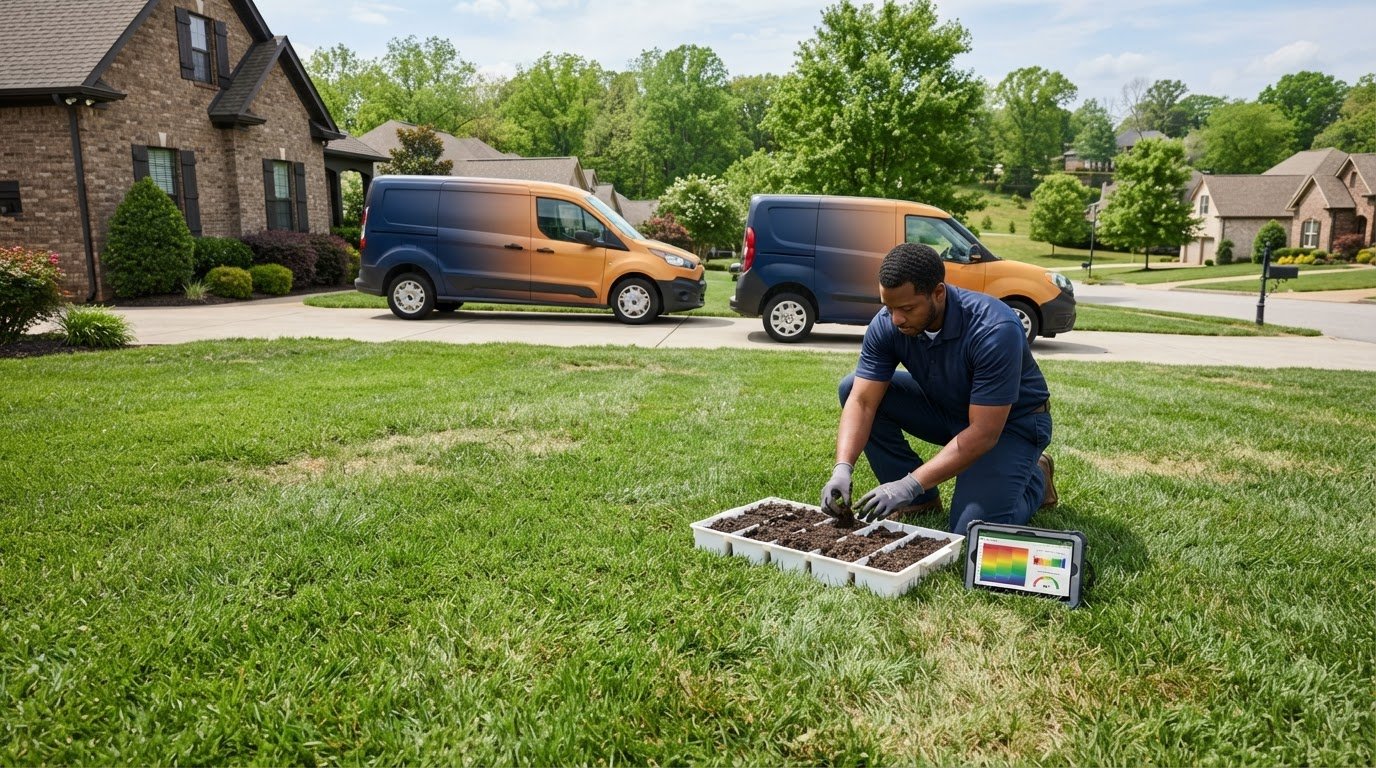
A soil test can help guide decisions about pH and nutrient needs. Its results can inform whether an amendment or fertilizer is appropriate, but a test doesn’t diagnose every lawn problem or guarantee a particular result. Soil pH can vary by property in Middle Tennessee, so test results are more useful than applying lime or nutrients based on guesswork.
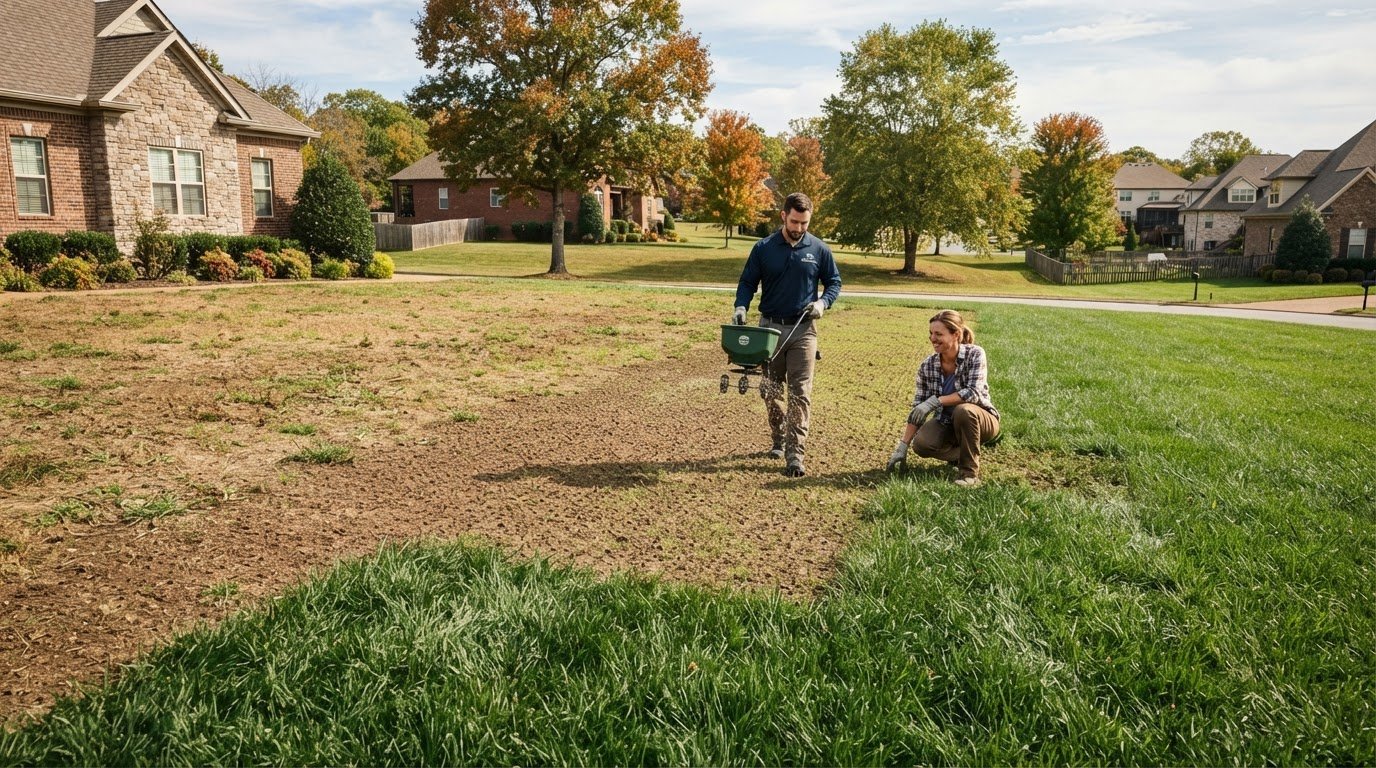
Core aeration may help relieve compaction by creating openings in the soil, but it isn’t a universal fix for thin turf. Its usefulness depends on the lawn’s condition and why growth is limited. If the soil isn’t compacted, another factor may need attention. Residential aeration can be part of a broader plan when conditions warrant, often alongside overseeding for suitable lawns.
How Turf Type and Nutrients Influence Color
Different grasses have different growth patterns and seasonal responses. Tall fescue, common in Middle Tennessee lawns, is a cool-season grass, while Bermuda and Zoysia are warm-season types. A change in color or growth can mean different things depending on the turf and time of year. Bermuda grass that has spread into an established fescue lawn can be extremely difficult to eliminate completely. Management generally focuses on limiting its spread and helping the desired fescue remain healthy and competitive.
Fertilizer supports growth when nutrients are limiting, but it won’t correct compaction, disease, unsuitable growing conditions, or every cause of discoloration. Soil tests can inform nutrient choices, while grass type and season help guide timing. For local nutrient decisions, use soil-test results to determine whether fertilization is appropriate and consider how it fits with weed control and other lawn care.
That distinction matters for grassy weeds, too. Dallisgrass and Johnsongrass can be more challenging to manage than common broadleaf weeds and may need a separate or targeted treatment approach. Don’t assume a standard fertilization and weed control program will eliminate them. The National Association of Landscape Professionals offers broader industry resources; a lawn-specific plan still needs to reflect the turf and conditions on the property. If soil or nutrient decisions feel unclear, learn more about lawn treatment options.
How to Distinguish Weeds, Turf Stress, and Lawn Disease Symptoms
Look at the pattern before choosing a treatment. Weeds usually appear as identifiable plants within the grass, while broad thinning means the desirable turf has lost coverage. Discoloration may affect individual patches or a larger area. These clues can help narrow down what to investigate, but symptoms alone can’t confirm whether the cause is weeds, pests, disease, soil conditions, or environmental stress.
Scattered plants among otherwise healthy grass: Weeds may be competing with turf. Look for distinct leaf shapes or growth habits, and note whether the plants are spreading.
Thin coverage in a specific path or use area: Traffic or another localized stress may be contributing. Check whether the pattern follows a walkway, play area, or other repeatedly used space.
Broad areas of pale or dull grass: Seasonal stress, nutrient limitations, or other growing conditions may be involved. Compare the affected area with nearby turf of the same type.
Irregular discolored patches that change over time: Disease is one possibility, but weather, soil conditions, and other stressors can look similar. Track whether the patches are expanding and nearby grass is changing.
Before acting, make a simple record: note where symptoms occur, when you first noticed them, and whether they’re stable or spreading. A photo taken from the same spot over several days can make changes easier to compare. This is useful because more than one cause can affect a lawn at once. Improving lawn density and color depends on matching the response to the likely limiting factor.
Clues That Weeds May Be Contributing to Thin Turf
Weeds can take up growing space and compete with desirable turf, leaving a lawn less uniform. Broadleaf weeds and invasive grassy weeds don’t necessarily respond to the same treatments. Dallisgrass and Johnsongrass may need targeted approaches, while Bermuda grass in established fescue can be extremely difficult to eliminate completely. Identify the weeds before choosing a control approach.
When Discoloration May Point to Disease or Stress
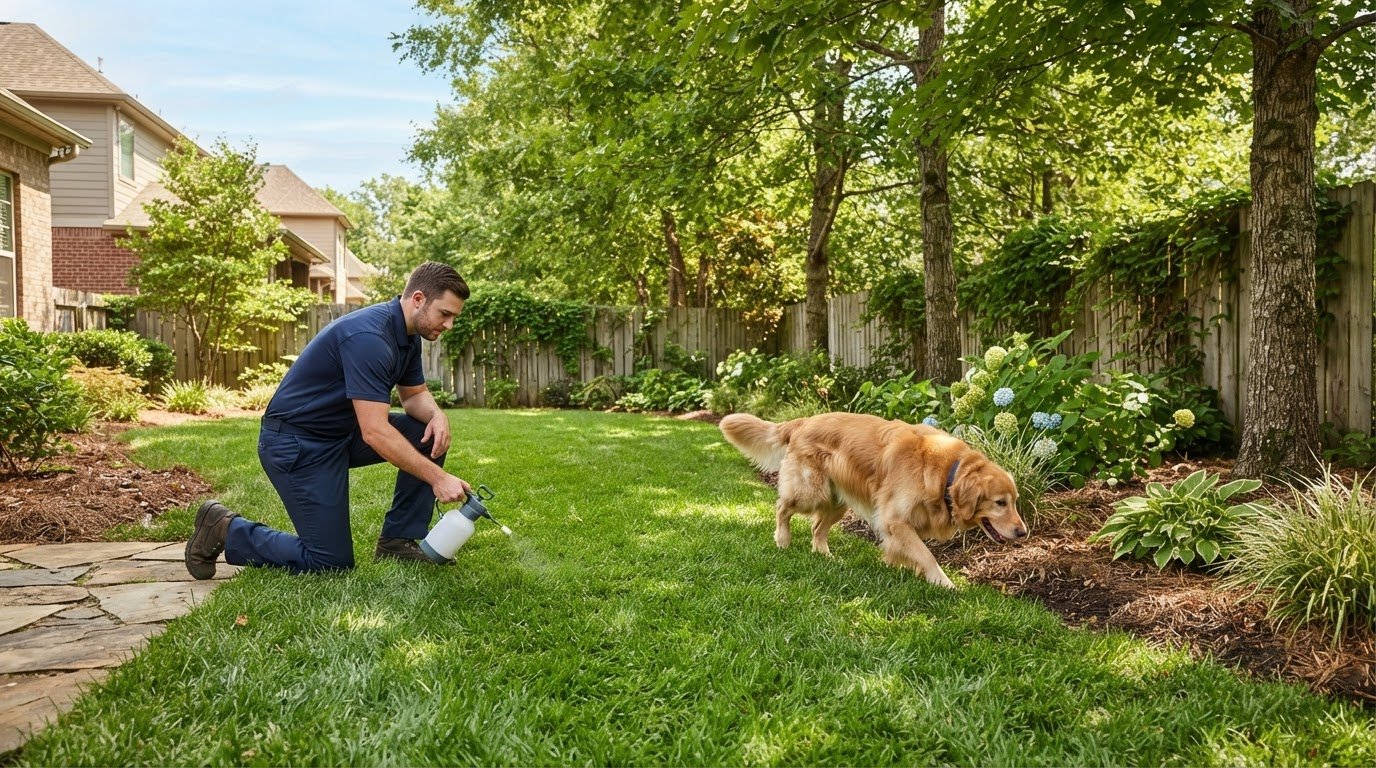
Brown patch and dollar spot can typically be managed through a lawn disease program. Pythium can develop and spread rapidly, making it considerably harder to manage. Treatment effectiveness depends on the specific disease, weather conditions, severity, and how early the problem is identified. A changing patch is a reason to investigate promptly, not proof of a particular disease.
Heat and humidity can contribute to stressful conditions, but they don’t establish a diagnosis by themselves. If discoloration is irregular or spreading, don’t assume extra fertilizer or weed treatment will address it. Accurate identification helps determine whether lawn disease treatment, weed control, or another adjustment is appropriate. Disease management can help address certain problems, but outcomes depend on the cause and conditions, not color alone.
A Practical Middle Tennessee Plan to Improve Lawn Density and Color
A sound plan follows the evidence in the lawn, not a checklist applied the same way everywhere. Document what has changed, then narrow down likely causes before choosing care. This measured approach to improving lawn density and color helps avoid adding fertilizer, seed, or treatment that doesn’t address the actual limitation.
Choose the Next Step Based on the Lawn’s Condition
Before making a change, record the affected areas, recent weather, and how symptoms evolve. A quick sketch or photo from the same viewpoint can show whether thinning is localized or spreading. Note the grass type if known, and whether the change followed a hot, humid period or heavy use. These details provide a clearer starting point for deciding what to do next.
- Observe the pattern. Separate sparse coverage from pale color, scattered weeds, and irregular patches. Note whether the affected turf is near shade, a walkway, or another distinct site condition.
- Check likely limits. If compaction or soil pH is a concern, use a soil test to inform next steps. If unwanted plants are prominent, identify them before selecting weed control, since different weeds may need different approaches.
- Match the response to the cause. Fertilization may support turf when nutrients are limiting, while aeration may be appropriate when compaction restricts growth. Neither is the answer for every thin or discolored lawn.
- Reassess after care. Track whether the affected area stabilizes, improves, or continues to spread. Persistent or worsening symptoms may call for a closer assessment rather than another guessed-at treatment.
Timing matters, but the right window depends on grass type, current conditions, and the work being considered. In Middle Tennessee, fall is generally the key season for tall fescue aeration and overseeding, while warm-season grasses follow a different growth cycle. Local weather and turf condition still matter, so use seasonal guidance as a starting point, not a rigid calendar.
Coordinate Aeration, Overseeding, and Ongoing Care
Aeration and overseeding serve different, complementary purposes. Aeration can help address compaction when it restricts movement through the root zone. Overseeding adds grass seed to improve coverage where a suitable lawn has become thin. When those conditions fit, residential aeration and overseeding can form part of a broader density plan. Seeding alone won’t correct every cause of thinning.
After seeding, follow appropriate watering guidance to keep the soil around the seed suitable for establishment, while avoiding conditions that leave the area overly wet. Routine mowing should also suit the grass type and avoid stressing new growth. These practices support the plan, but they don’t replace identifying weeds, soil limitations, or other persistent symptoms. Detailed seed choices and procedures are best handled separately from this decision-making overview.
For guidance on lawn care and treatment options, see how Performance Lawns can help with your lawn’s condition.
Professional Lawn Treatments for Healthier-Looking Middle Tennessee Yards
Professional care can help when a lawn needs more than a one-time adjustment, especially if weed pressure or uneven growth keeps returning. Fertilization and weed control have specific roles: nutrient applications support turf when nutrients are limiting, while weed treatments help manage unwanted plants. Neither corrects every cause of thinning or guarantees perfect color. A useful plan starts with the lawn’s condition and realistic expectations about what each treatment can address.
What a Lawn Treatment Program Can Address
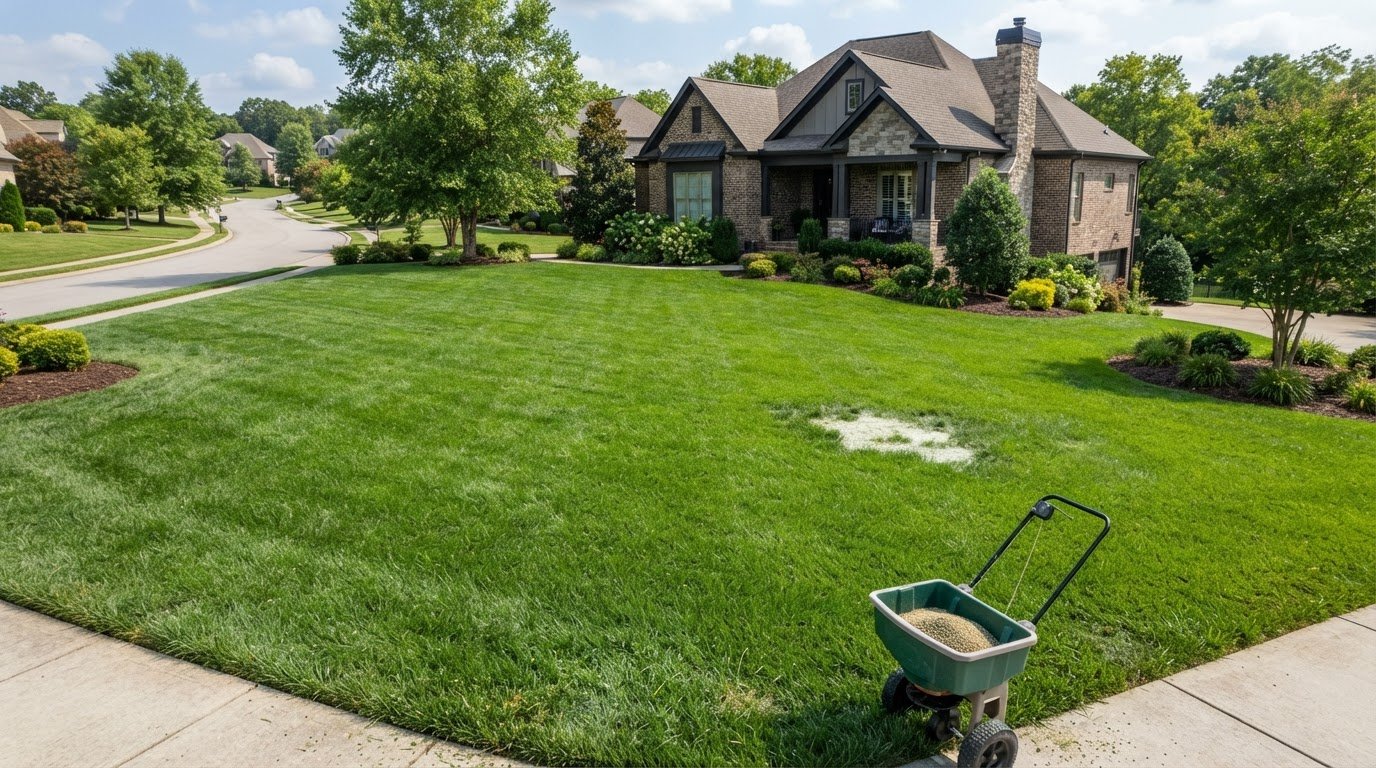
Fertilization supports healthy turf when the grass needs nutrients, and weed control can help reduce competition from common lawn weeds. These treatments work best as parts of broader lawn care, guided by grass type, visible conditions, and appropriate timing. Performance Lawns provides fertilization and weed control for residential and commercial lawns to support turf health and manage weed pressure over time.
Different lawn conditions call for different treatment decisions. A weed control program can help manage common weeds, while nutrient application is relevant when the lawn needs those nutrients. Neither is a cure-all for bare patches, soil limitations, or other causes of weak growth. Identifying the main concern helps determine which part of an ongoing care plan is appropriate and what expectations are realistic.
For a lawn with thin coverage, residential aeration and overseeding may be appropriate when the site and turf condition support those practices. Aeration can help address compaction where it limits growth, while overseeding adds grass seed to help build coverage. These aren’t universal solutions, and they don’t replace identifying why the turf has weakened. The goal is to choose care that fits the need, not apply every available treatment at once.
When Local Professional Support Can Help
Persistent or spreading symptoms can be frustrating, particularly when the cause isn’t clear or several conditions may be contributing. A lawn-specific approach considers visible symptoms alongside turf type, soil or nutrient concerns, and weed pressure before recommending relevant care. Performance Lawns brings over 15 years of lawn-care experience to properties in Mt. Juliet, Lebanon, Gallatin, Hendersonville, and across Middle Tennessee. That local perspective keeps treatment decisions grounded in the lawn’s needs rather than assuming one program fits every yard.
Improving lawn density and color is a gradual process, not a promised result from a single application. Professional treatments can support healthier turf and help manage weeds, while the right next steps depend on the underlying conditions and how the lawn responds. If you’ve noticed persistent thinning, changing color, or weeds that are difficult to manage, contact Performance Lawns to discuss your lawn and treatment options.
Take the Next Step Toward a Stronger Lawn
Healthy turf comes from informed decisions and steady care, not a single quick fix. As your lawn changes through the seasons, keep observing its coverage and color so you can respond to concerns before they become harder to address. A clear picture of what’s happening gives you a more useful starting point for improving lawn density and color.
Performance Lawns provides lawn treatments, fertilization and weed control, and residential aeration and overseeding for properties in Mt. Juliet, Lebanon, Gallatin, and Hendersonville. Contact Performance Lawns to discuss the right next step for your lawn.
Frequently Asked Questions
Is yellow grass always a sign that the lawn needs fertilizer?
No. Yellowing can result from nutrient limitations, but it may also follow heat, poor drainage, root stress, disease, or other conditions. Check whether the color change affects the whole lawn or isolated areas, and whether blades are yellowing evenly or showing spots. A soil test can help determine whether nutrients or pH need attention. Avoid fertilizing based on color alone, since the treatment may not address the cause.
Can a lawn regain its green color after summer stress?
Yes, turf that’s stressed but still alive may recover as conditions become more favorable, though the timing and degree of recovery depend on grass type and the cause of stress. Look for new growth rather than judging only by older discolored blades. If areas remain bare or continue to worsen after weather changes, the grass may need more than time. Check for other contributing issues before choosing a treatment.
How long does overseeding take to make a lawn look thicker?
Overseeding takes time. New seed must germinate, establish, and grow enough to blend with existing turf, so it won’t make a lawn look thicker immediately. Progress depends on grass type, season, soil conditions, and whether the seed receives suitable care. Expect gradual change and look for consistent establishment. If seedlings emerge unevenly, conditions or the underlying cause of thin turf may be limiting growth.
Can dog urine cause brown spots in a lawn?
Yes, dog urine can contribute to localized brown or damaged spots, often where a dog repeatedly urinates. But a brown patch alone doesn’t confirm the cause; disease, heat stress, and other issues can look similar. Note whether spots appear near regular pet-use areas and whether their pattern changes. If damage continues beyond those locations or spreads, consider other possible causes before treating the whole lawn.
Why does my lawn look different in sunny and shaded areas?
Sun and shade create different growing conditions. Grass in a shaded area may receive less light and grow less densely, while sunny sections are more exposed to heat and drying. The same grass type can therefore look and respond differently across one yard. Compare the affected areas at similar times and consider how much direct light each receives. Persistent thinness in shade may reflect a site limitation, not simply a need for more fertilizer.
Can too much fertilizer make a lawn look worse?
Yes. Applying more fertilizer than the lawn needs can stress turf and may contribute to discoloration or damage rather than healthier growth. Excess nutrients also don’t fix unrelated problems such as compaction, shade, or disease. Follow product directions and base nutrient decisions on the lawn’s needs, ideally informed by soil-test results. If grass looks worse after an application, avoid adding more and assess the pattern and timing of the damage.