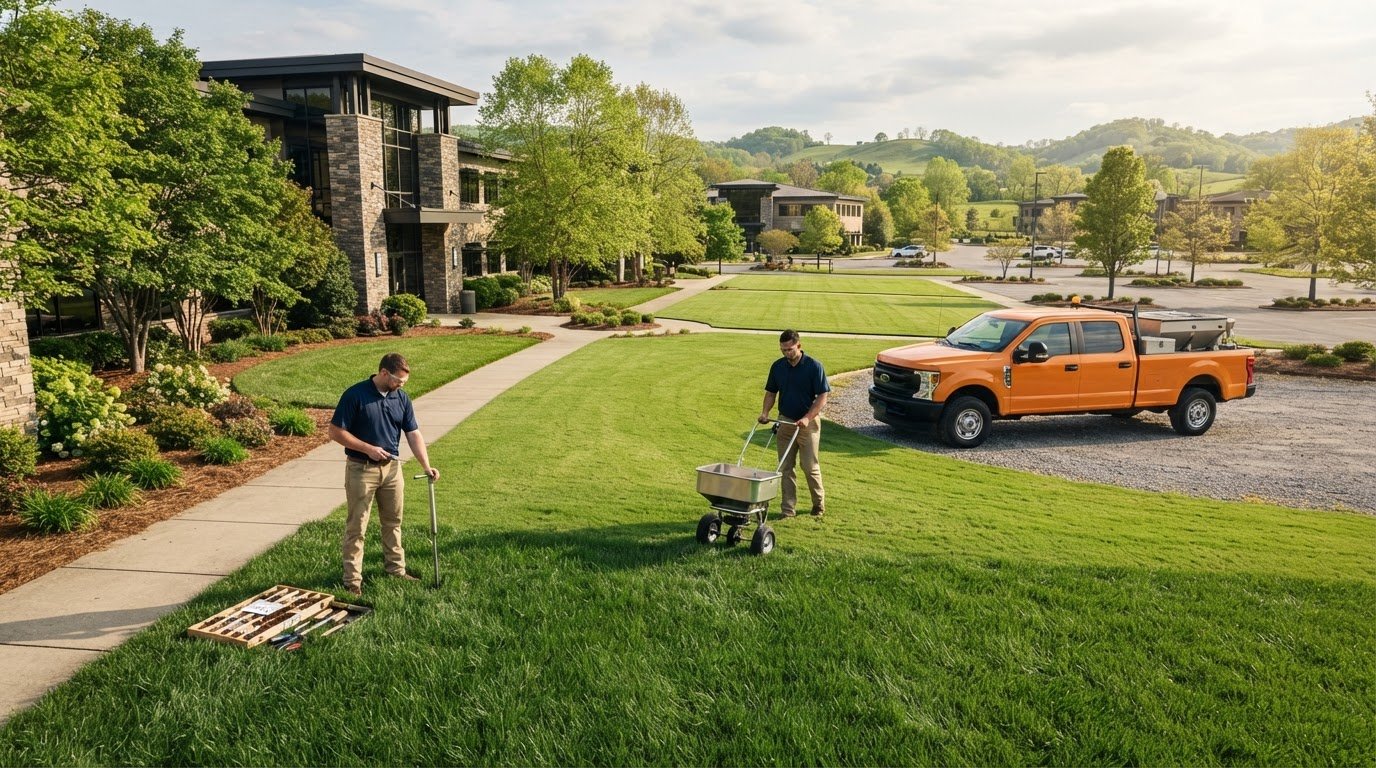


Spring timing matters more than a fixed date: for pre-emergent weed control in Lebanon TN, applications are typically made from late February to mid-March, before soil temperatures reach 55°F. Applying before summer annual weeds such as crabgrass germinate gives the treatment a chance to form a barrier in the soil. Pre-emergent products target seeds, not weeds that are already established.
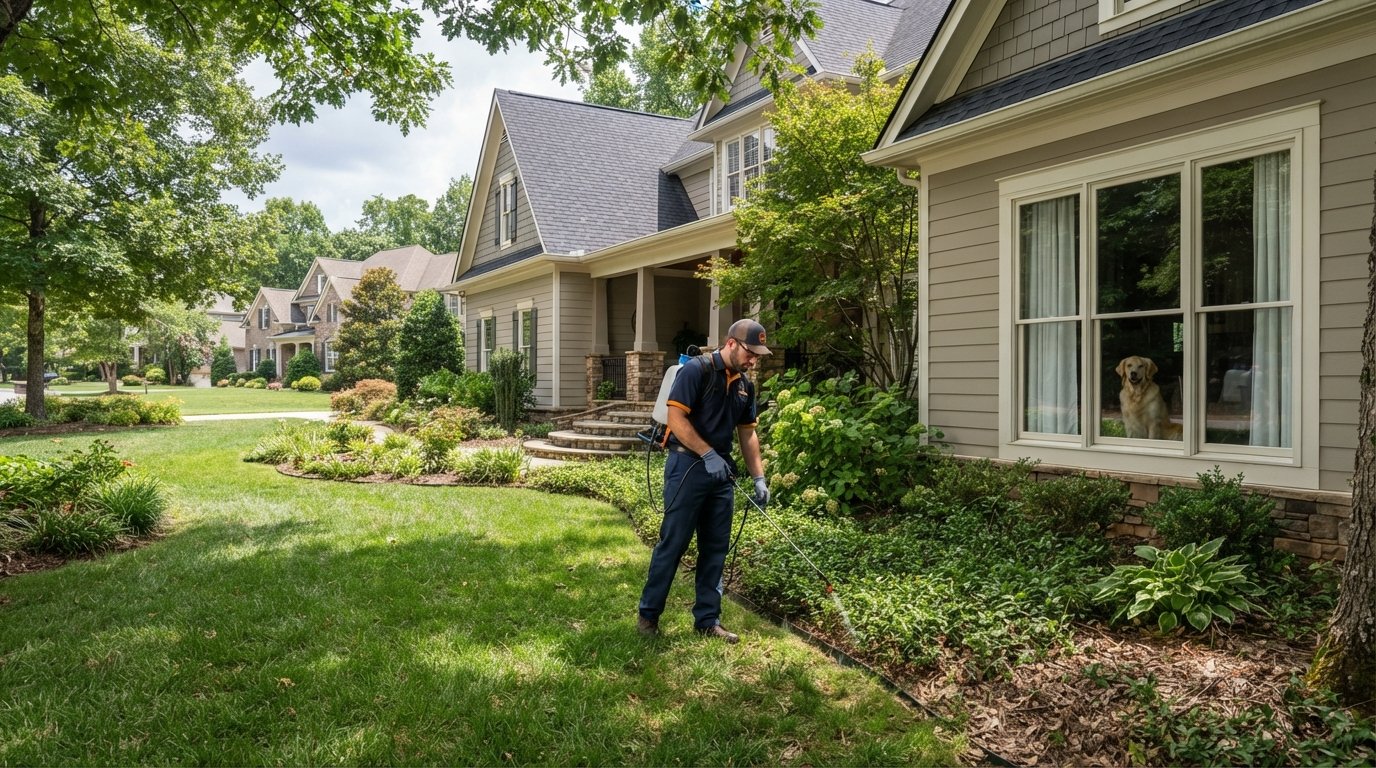
It’s sensible to consider children and pets before any lawn treatment, not just the weeds you want to control. Follow the product label, including its application instructions and guidance on when people and pets can return to treated areas.
This article explains how spring timing works in Lebanon and Wilson County, how often pre-emergent and other weed control treatments may be applied, and which Tennessee weeds are common to watch for. You’ll also learn how pre-emergent differs from post-emergent treatment and what to consider when planning lawn care around family and pets.
How often should weed control treatments be applied?
Weed control follows the seasons, not a fixed calendar interval. In Tennessee, pre-emergent herbicides are generally applied in early spring and fall. Post-emergent treatments may be used during the growing season as needed. The schedule depends on the target weeds, the product label, and whether conditions call for another application.
For residential pre-emergent herbicide use in Tennessee, follow the product label for approved sites, application rate, timing, and precautions. Directions vary by product, so the label provides the specific instructions for each treatment.
Spring pre-emergent applications target summer annual weeds such as crabgrass. In Middle Tennessee, crabgrass may germinate as early as late February, and applications are typically recommended from late February to mid-March, before soil temperatures reach 55°F. Timing matters because pre-emergent creates a soil barrier before seeds germinate; it won’t control crabgrass that’s already established. A smaller spring application may be split into two applications eight weeks apart, rather than applied all at once.
Fall treatments target winter annual weeds, including annual bluegrass, also called Poa annua, and henbit. Tennessee’s fall application window can begin August 25 and extend through September 15, when nighttime temperatures fall below 60 degrees. The broader prevention window for winter weeds in Middle Tennessee is August through October. Local temperature shifts can affect the precise timing, so calendar dates work best alongside seasonal conditions.
Follow-up depends on the treatment and weed pressure. Some recommendations call for additional weed control applications at 6-8 week intervals during April and May. Professional monitoring helps identify whether weeds are emerging, established, or returning as a barrier loses effectiveness. A lawn care plan can then distinguish between a new pre-emergent application and post-emergent treatment for visible weeds. Neither approach promises a completely weed-free lawn; both can help reduce weed pressure and support healthy turf.
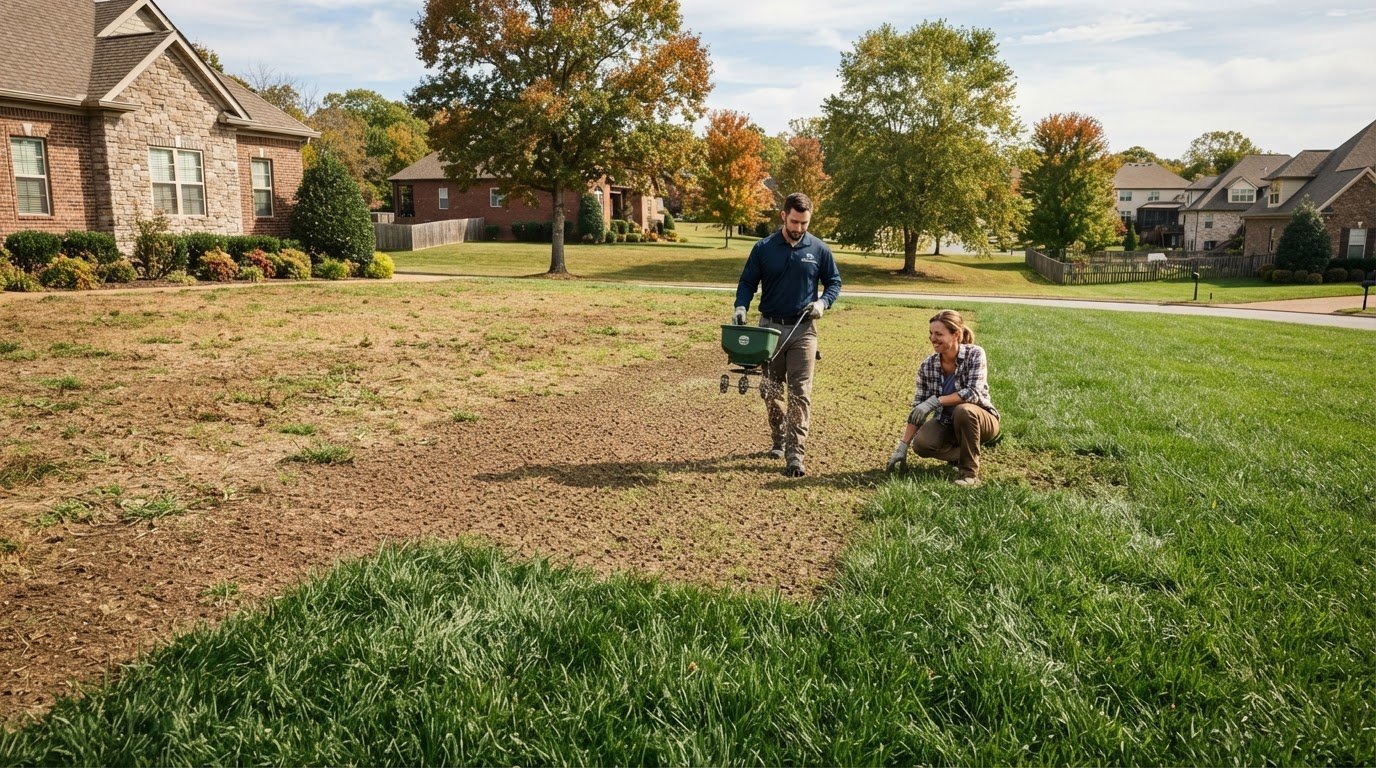
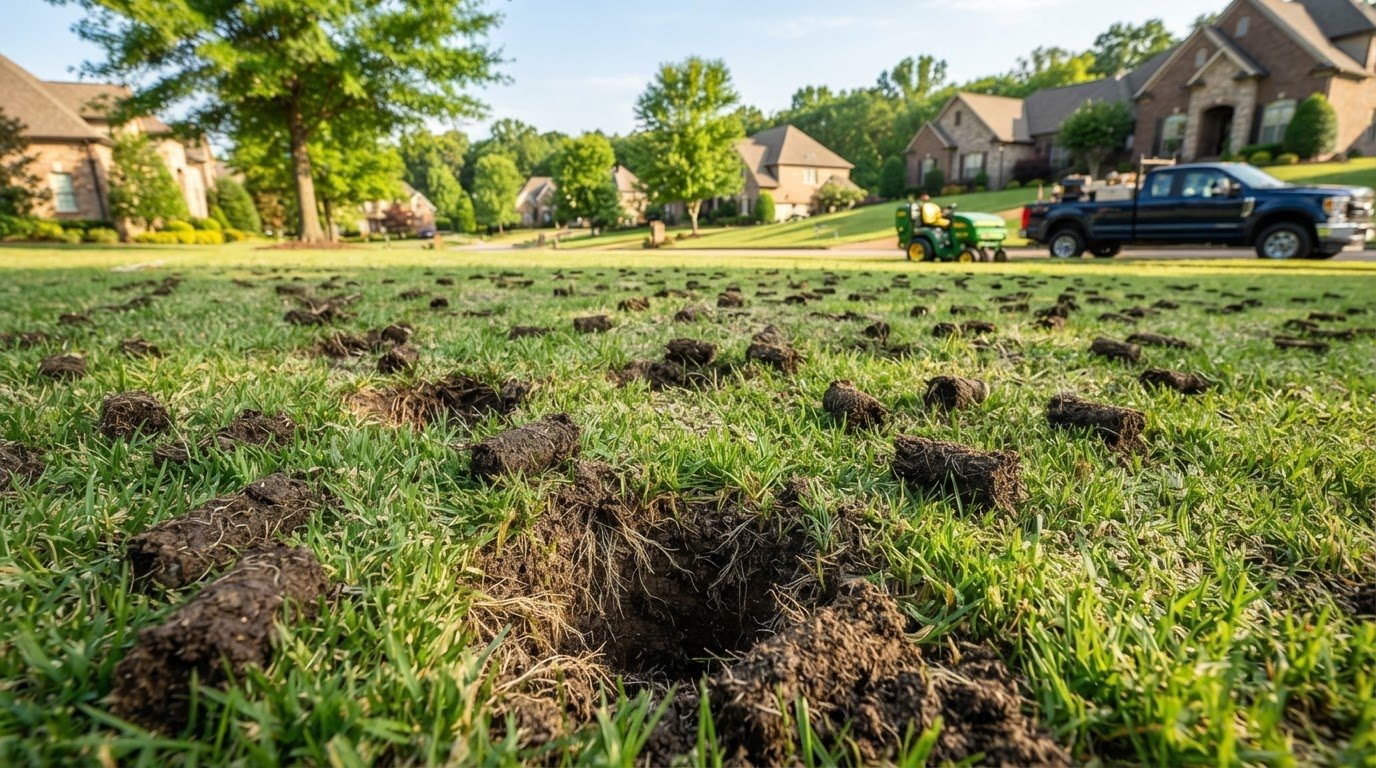
Prepare the lawn before applying pre-emergent. Aerate or dethatch first, because disturbing the soil afterward can break the herbicide barrier. For a new lawn, consider whether the grass is established before applying pre-emergent. This helps avoid disrupting young turf as it becomes established.
For a Lebanon lawn, seasonal weed control planning can coordinate spring and fall applications with fertilization needs. The fertilization and weed control approach also accounts for monitoring between treatments, rather than relying on one application to manage every weed throughout the year.
Common Tennessee weeds, including crabgrass, dandelions, and clover
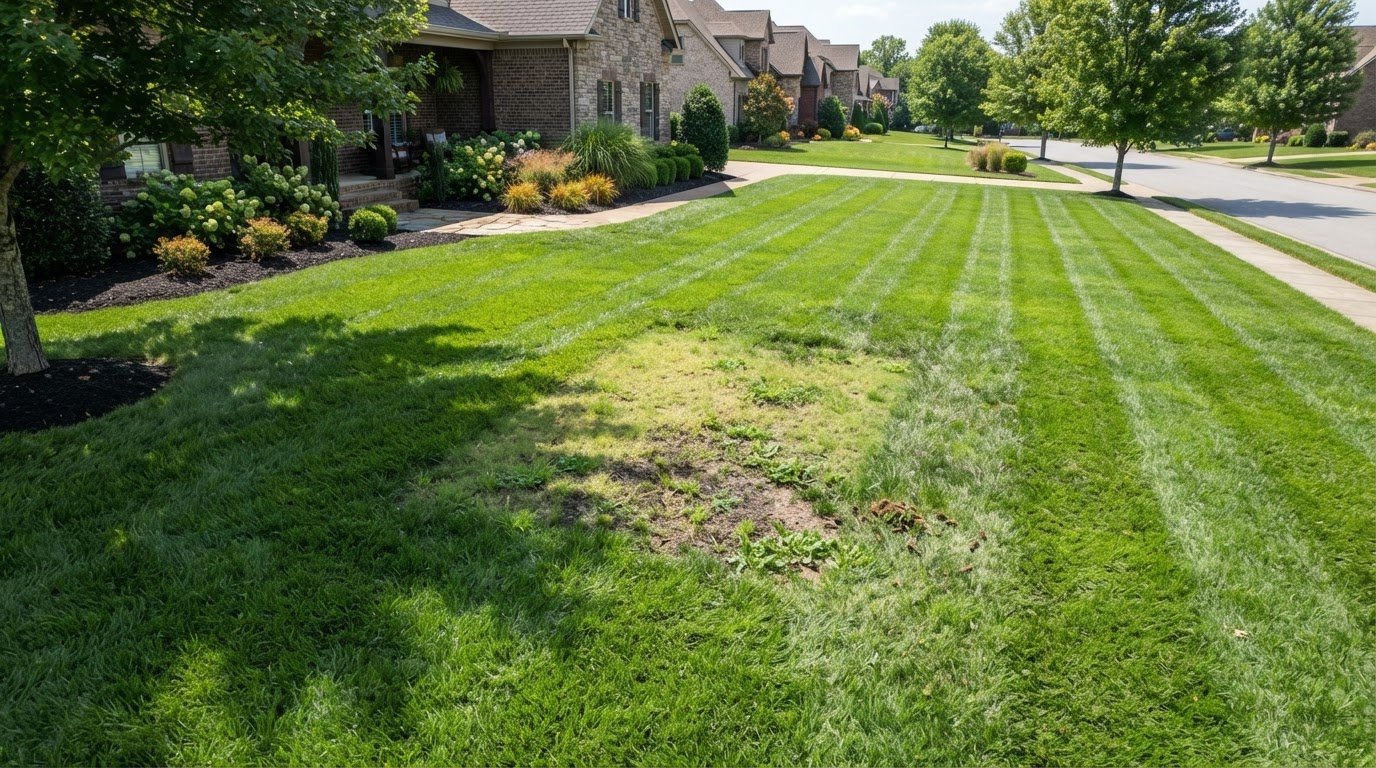
Lebanon lawns commonly face crabgrass, dandelions, clover, henbit, chickweed, and annual bluegrass, also called Poa annua. Pre-emergent products can prevent targeted annual weeds from germinating, but they won’t control plants already growing. Choose a treatment based on the weed species, turfgrass, and product label.
Crabgrass is a summer annual, so prevention must happen before its seeds sprout. One crabgrass plant can produce up to 150,000 seeds, making early control useful for limiting future seed spread. A pre-emergent treatment forms a barrier in the soil that interferes with germination. It won’t remove established crabgrass or other visible plants. Those need a suitable post-emergent approach, selected for the weed and the lawn.
Other weeds grow differently, so identifying the target matters:
- Dandelions are broadleaf weeds that may already be established when their flowers appear.
- Clover can spread through a lawn and is treated differently from grassy weeds.
- Henbit and chickweed are winter annuals; fall prevention targets their seeds before growth begins.
- Annual bluegrass , or Poa annua, is another winter annual that may require seasonal prevention.
- Dallisgrass and Johnsongrass are invasive grassy weeds that can be more challenging to manage than common broadleaf weeds. They may need a targeted approach separate from typical broadleaf treatments.
Match the herbicide’s labeled weeds to the lawn’s grass type. A product intended for one turfgrass may not suit another, and a treatment for annual grasses won’t necessarily control dandelions or clover. Read the label for target weeds, permitted turf types, application rate, and timing. The Department of Plant Sciences at The University of Tennessee Institute of Agriculture says applying a lower herbicide rate twice can extend residual control of summer annuals.
Monitor treated areas for seedlings and returning weeds. A pre-emergent barrier can weaken over time, and new seeds may arrive from nearby lawns or bare soil. Follow the label when considering retreatment, and account for the weed’s growth stage rather than assuming a second application is suitable. Post-emergent treatments can start reducing clover, henbit, and chickweed over two to four weeks. Bermuda grass spreading into established fescue is extremely difficult to eliminate completely; management focuses on limiting spread and supporting healthy fescue.
Accurate identification helps match the treatment to the plant instead of applying a broad approach to every patch. For help thinking through weed control for a Lebanon lawn, discuss your lawn’s weed concerns.
Spring pre-emergent timing for summer annual weeds
Pre-emergent timing follows each weed’s germination cycle, not just the calendar. In Lebanon, soil temperatures and seasonal patterns help indicate when summer and winter annuals may sprout.
Seasonal Timing for Annual Weeds
Apply pre-emergent before annual weed seeds germinate. Spring treatments target summer annuals such as crabgrass, while fall treatments target winter annuals such as henbit and annual bluegrass, or Poa annua. One seasonal application won’t address every weed cycle. Match the treatment to the target weeds to create a barrier before their seeds sprout.
Crabgrass germination can begin early in the season in Middle Tennessee. Winter annual weeds typically germinate as soil temperatures fall below 70 degrees in fall. These separate windows explain why lawns may need seasonal treatments rather than one application intended to last all year.
Regional Differences in Tennessee Timing
Tennessee’s geography affects seasonal timing: spring applications are generally earlier in western Tennessee and later in eastern Tennessee. Lebanon is in Middle Tennessee, where changing soil temperatures help guide the local window. Statewide dates can be useful references, but regional conditions matter when summer annual seeds are nearing germination.
For Lebanon lawns, consider yard conditions as well as the broader region. A warm stretch can bring crabgrass emergence closer, while cooler soil can delay it. Watch local seasonal patterns to time treatment for the target weeds instead of treating every Tennessee lawn on the same day.
Soil Temperatures and Treatment Timing
Soil temperature is a practical signal because annual weeds respond to warming or cooling ground. Soil temperature can help guide spring pre-emergent timing, which should be planned before crabgrass begins to germinate. This timing gives the treatment a chance to establish its barrier before crabgrass seeds begin to sprout.
For winter annuals, the direction reverses: falling soil temperatures below 70 degrees signal the fall germination period. Tracking soil temperatures alongside seasonal forecasts makes timing more responsive than relying on a date alone. The goal is to treat before the target weed’s germination window, not after visible plants have appeared.
Pre-emergent applications work on seeds before they emerge; they don’t control established weeds. If crabgrass is already growing, prevention timing has passed for those plants, and a suitable post-emergent approach may be needed. Match the treatment to the lawn and target weeds, and follow the product label.
Spring and fall treatments address different annual weeds, while summer monitoring can reveal escapes or new growth. For example, a Lebanon lawn may need spring prevention for crabgrass, followed by fall prevention for henbit or Poa annua. Separate these goals rather than assuming one treatment covers every weed through Tennessee’s changing growing conditions.
Child and pet precautions for herbicide treatments
Children and pets use lawns differently from adults, so plan herbicide treatments around household routines. Before applying pre-emergent or post-emergent herbicide, read the product label and follow its instructions for application, access, and precautions. Directions vary by product, so don’t assume every treatment is the same.
Prepare the treatment area before work begins. Move toys, pet bowls, and outdoor items away from the lawn, then keep children and animals out of the application area as the label directs. If the product specifies a re-entry condition or waiting period, follow that instruction exactly. Don’t substitute a general rule for product-specific guidance.
Application conditions matter, too. The provided guidance recommends applying pre-emergent to dry foliage, rather than grass wet from rain or dew, then watering after application to help activate the herbicide and settle it into the soil. Check the label before watering, because product directions govern how to handle each treatment. Keep children and pets away during application and follow the label afterward.
A season-long weed plan may combine pre-emergent prevention with post-emergent treatment. Pre-emergent herbicides target seeds before they sprout; post-emergent treatments address weeds already growing. Use post-emergent applications during the growing season as needed for visible weeds. For example, a spring inspection may reveal established clover or dandelions that a seed-prevention treatment won’t control.
Use the seasonal calendar to anticipate treatment periods, not to override product directions:
- Late February to mid-March: Spring pre-emergent timing in Middle Tennessee targets summer annuals such as crabgrass.
- August through October: The winter-weed prevention window in Middle Tennessee includes targets such as henbit and annual bluegrass.
- During the growing season: Monitor for established weeds and use post-emergent treatment when appropriate for the target plant and turf.
A second treatment isn’t automatic. Whether to apply again depends on the target weeds, product directions, and signs of new growth. Follow product guidance if the lawn is newly seeded or planned for reseeding, since pre-emergent can interfere with grass seed germination. Before scheduling lawn work, consider children’s play times, pet routines, and any label instructions that affect access.
For Lebanon households, a practical routine is to identify the target weeds, read the label, prepare the lawn, and plan access around treatment. This keeps seasonal weed control and family routines organized without assuming every herbicide works the same way.
Weed control service in Lebanon and Wilson County
Lebanon lawns share Middle Tennessee’s seasonal weed pressures, but every property has its own conditions. Sun exposure, turf type, drainage, and landscape edges can affect where weeds take hold. Start a local plan by noting where plants appear, such as chickweed along a shaded edge or crabgrass in thin turf. These observations connect treatment decisions to the lawn’s actual conditions.
Across Wilson County, spring and fall bring different weed activity. A calendar is a starting point, while a lawn assessment can account for weed species, turf condition, and recent disturbance. Bare soil near a walkway, for example, may have a different weed pattern from dense turf farther into the yard. Track these differences to focus lawn care on the property rather than relying on a one-size-fits-all schedule.
Before treatment, note whether weeds are newly appearing or established. Record where they grow and whether they look grassy or broadleaf, then match the response to the weed and turf. Chickweed, crabgrass, clover, and dandelions differ in appearance and growth habits. Identifying them carefully can distinguish a seasonal pattern from a persistent patch that needs a different approach.
Property work also affects timing. Aeration or dethatching can disturb soil, so complete that work before applying pre-emergent. If aeration and overseeding are planned, coordinate them with weed treatment because pre-emergent can interfere with grass seed germination. A treatment schedule should account for planned turf work, not just weeds currently visible.
For a Lebanon lawn, keep a simple record of weed locations, treatment dates, and turf changes. Returning plants may indicate new growth, a missed target, or a need to reassess the plan. Seasonal monitoring can distinguish isolated growth from a broader pattern and show where thin turf or disturbed ground needs attention. The goal is to reduce weed pressure and support stronger turf, not promise a completely weed-free lawn.
Local lawn care works best when identification, timing, and follow-up fit the property. If you’re planning weed control around aeration, overseeding, or seasonal growth in Lebanon or Wilson County, contact the local team about your lawn’s needs.
Performance Lawns: Lawn Treatments
Performance Lawns, INC helps homeowners manage common lawn weeds with lawn treatments, including weed control and fertilization. If seasonal applications, visible weeds, or changing turf conditions make lawn care difficult to coordinate, professional treatment can support healthier, more attractive turf without promising a weed-free lawn.
For lawns that also need attention to soil health or thin turf, residential aeration and overseeding can complement a broader care plan. Coordinate these steps with pre-emergent timing, since disturbing treated soil or introducing grass seed can affect the plan. The right next step depends on what’s growing and what the lawn needs.
For help planning lawn treatments in Lebanon, contact Performance Lawns, INC.
Plan the next season with confidence
Treat your lawn’s changing needs as a seasonal plan, not a one-time decision. Track new weed growth, thin areas, and planned seeding so each treatment fits the turf work around it. A simple record can make future conversations more focused and help align lawn care with how your household uses the yard.
For homeowners planning pre-emergent weed control in Lebanon, TN, Performance Lawns can coordinate treatment timing with the lawn’s condition and goals. Services include lawn treatments, weed control and fertilization, and residential aeration and overseeding, supporting a coordinated approach to turf care.
Contact Performance Lawns to discuss your lawn care needs, and take the next step toward a healthier, more attractive yard.
Frequently Asked Questions
Are the weed control products safe for my children and pets?
Use each product according to its label, including instructions for people and pets. There’s no single access rule for every herbicide, so don’t assume a treated lawn is immediately ready for play. Before treatment, move toys, bowls, and other items from the application area. Follow the product’s specific directions for keeping children and animals away during and after application.
What if weeds come back between visits?
Identify the returning weed before deciding what to do next. A few new plants may need a different response than a spreading patch, and pre-emergent treatments won’t control weeds already growing. Note where weeds appear and whether they’re grassy or broadleaf, then choose a treatment labeled for that plant and turf type. Don’t repeat an application unless the product directions allow it.
What types of weeds will be targeted?
The right treatment depends on the weeds present. Seasonal plans may target annual grasses such as crabgrass, winter annuals such as henbit and Poa annua, or broadleaf weeds such as clover and dandelions. Invasive grassy weeds, including Dallisgrass and Johnsongrass, may require a separate approach. Identify the plant first to distinguish weeds a pre-emergent can prevent from established weeds that need another treatment.
Why should I hire a professional for weed control?
A professional can match treatment timing and product choice to the weed, turfgrass, and lawn condition. This matters when a lawn has mixed issues, such as crabgrass seedlings alongside established broadleaf weeds. For homeowners in Lebanon, Mt. Juliet, Gallatin, and Hendersonville, professional lawn treatments can coordinate weed control with fertilization and planned aeration or overseeding, helping avoid conflicting lawn-care steps.
Will the treatments hurt my grass, kids, or pets?
Grass tolerance and access precautions depend on the specific herbicide and its label. Choose products labeled for the lawn’s turf type and target weeds, and follow the application directions. For children and pets, use the label’s guidance for access to treated areas rather than assuming all products have the same precautions. If the lawn includes different turfgrasses, account for each area before choosing a treatment.
When should pre-emergent herbicide be applied in Lebanon, Tennessee?
For pre-emergent weed control in Lebanon, Tennessee, spring treatment is typically timed from late February to mid-March, before summer annual weeds germinate. Fall applications target winter annuals, with Middle Tennessee’s prevention window running August through October. Seasonal weather can shift when weeds approach germination, so consider local conditions alongside calendar timing and the product label’s directions.
What soil temperature triggers crabgrass pre-emergent application in Middle Tennessee?
Crabgrass typically germinates when soil temperatures reach 50-55°F in Middle Tennessee. Apply pre-emergent before soil temperatures consistently reach 55°F, so the treatment is in place before seeds begin germinating. A lawn’s seasonal timing should reflect local soil conditions, not just a date on the calendar. The label provides the application directions for the specific product being used.
Which pre-emergent herbicides are safe for common lawn grasses in Tennessee?
No single herbicide suits every turfgrass and target weed. Choose a product whose label lists the lawn’s grass type and the weeds you want to prevent, then follow its application directions. This matters especially where a yard has different turf areas or new grass. Pre-emergent can interfere with grass seed germination, so coordinate treatment with planned overseeding.