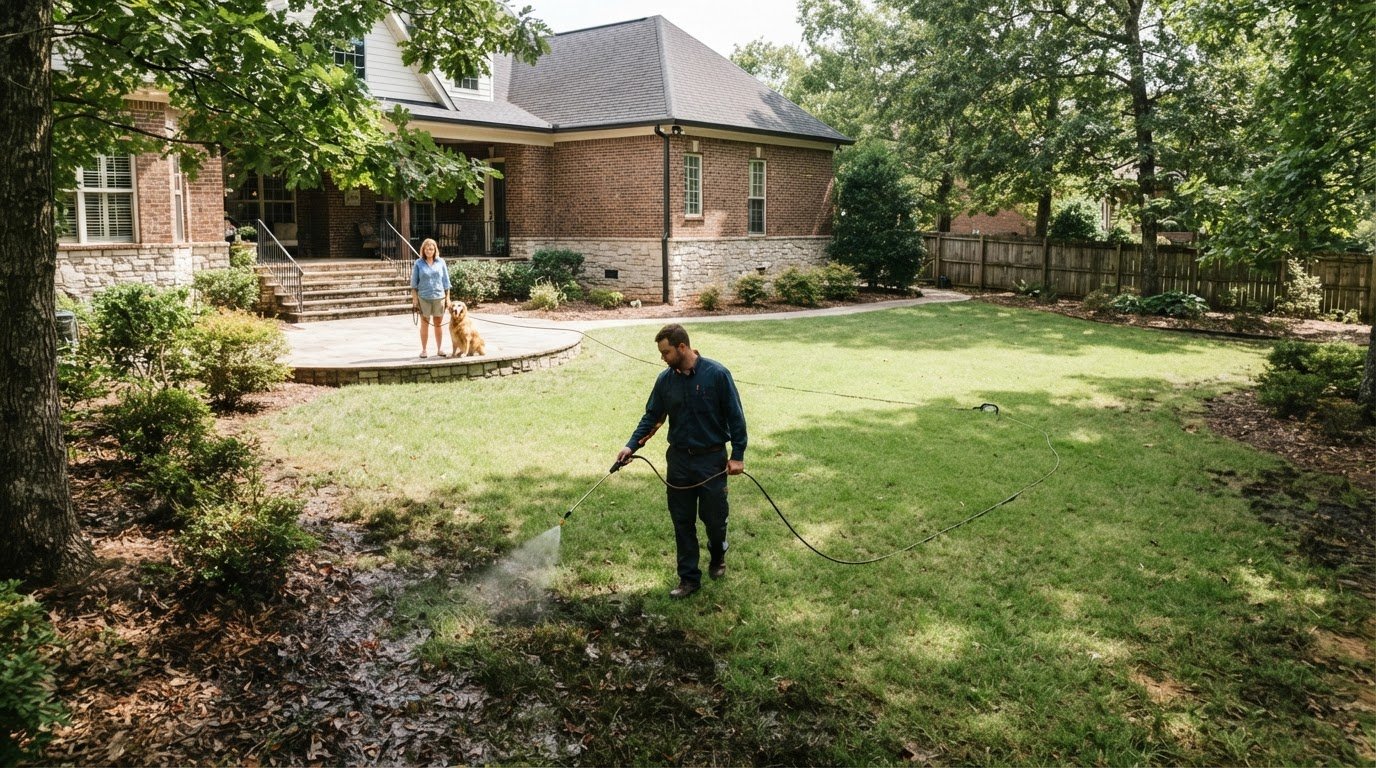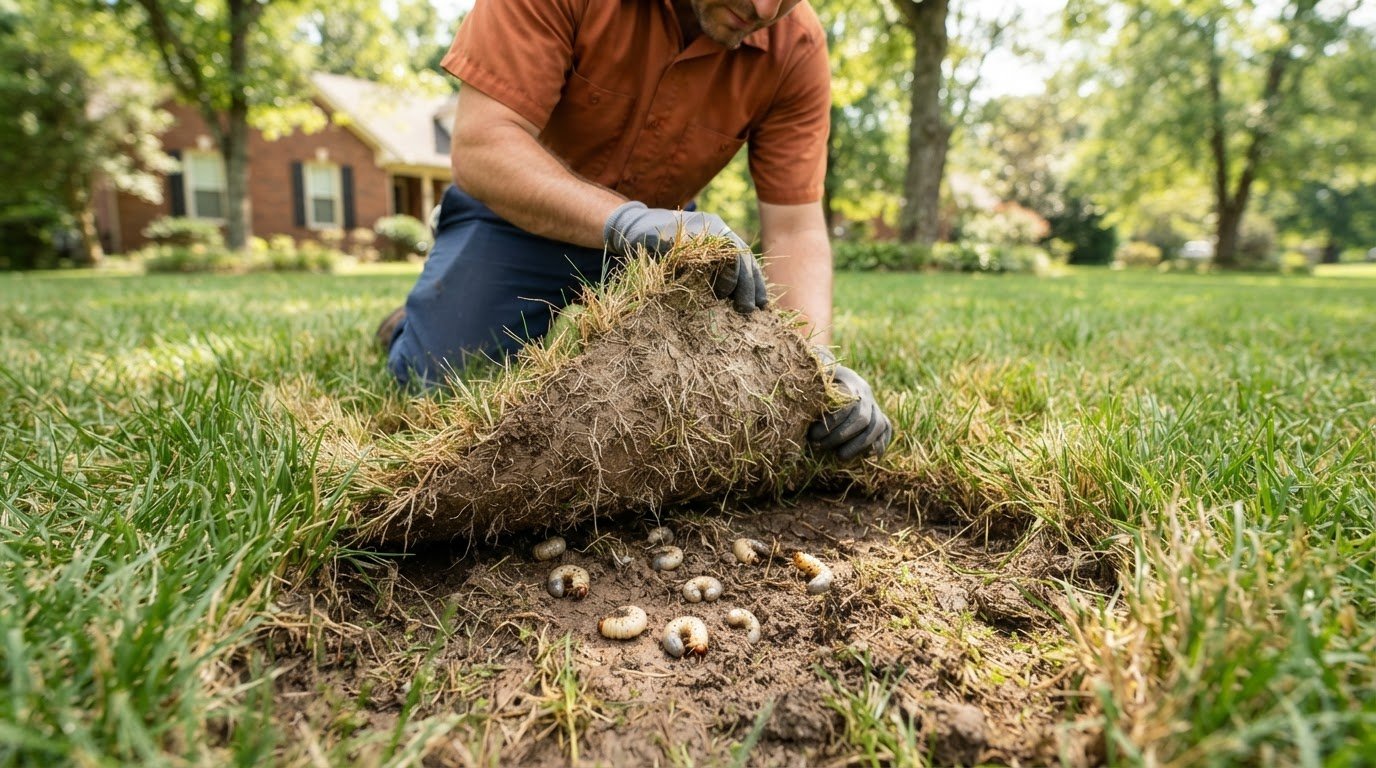


Compacted clay makes a lawn work harder to access air, water, and nutrients. Core lawn aeration services in Gallatin remove small plugs of soil, opening pathways through the ground so water can infiltrate and nutrients can reach grass roots. The plugs, roughly the size of a pointer finger, are left on the lawn to break down.
If the soil feels hard or water sits on the surface, you may wonder whether aeration could help. For homeowners considering core lawn aeration services in Gallatin, the main benefit is better access to air, water, and nutrients around grass roots. Aeration works best as part of a considered lawn-care plan, not as a stand-alone fix.
Learn how core lawn aeration services in Gallatin improve soil access, why timing depends on grass type, and what to expect from the process. You’ll also see how aeration fits into local lawn care and can help compacted clay lawns make better use of fertilizer.
What Is Lawn Aeration?
Core aeration removes small soil plugs, opening channels through compacted clay for water, air, and nutrients. In Gallatin, these pathways can help grass roots access moisture and fertilizer.
Aeration and Overseeding Basics
Core aeration uses hollow tines to pull soil plugs from the lawn rather than simply poking holes. The plugs are roughly the size of a person’s pointer finger and can stay on the grass as they break down. Overseeding adds grass seed to existing turf; after aeration, seed can reach the soil through the openings.
For Gallatin lawns, aeration and overseeding address different needs: aeration relieves compaction, while grass seed can help fill thin areas. A customized approach considers the existing grass, bare patches, and whether the soil feels dense. The residential aeration and overseeding service brings those treatments together when the lawn’s condition calls for both.
When Aeration and Overseeding Are Needed
Hard soil, slow grass growth, faded or yellow patches, and water that does not seep into the lawn can indicate compaction. Invasive weeds may also appear where turf is thin. These signs can help distinguish a lawn that may benefit from aeration from one that primarily needs seed or another type of care.
Timing depends on the grass type. Cool-season grasses such as Kentucky bluegrass and tall fescue are best aerated in fall, ahead of their prime growing period. Warm-season grasses such as zoysiagrass and bermudagrass are best aerated in late spring or early summer. Overseeding is useful when thin turf needs more grass seed, but it is not necessary with every aeration.
Core and Liquid Aeration Options
Core aeration physically removes plugs from compacted soil, creating visible openings and leaving plugs on the lawn. Liquid aeration uses an applied product instead of extracting soil cores, so the methods treat the ground differently. In compacted clay, core aeration creates pathways that can improve water infiltration.
For a Gallatin property, planning takes practical details into account, including equipment access, lawn layout, and marked underground utility routes. Timing also depends on grass type and soil condition. These factors help shape a service plan without assuming every lawn needs the same coverage.
Core Aeration Service Inclusions
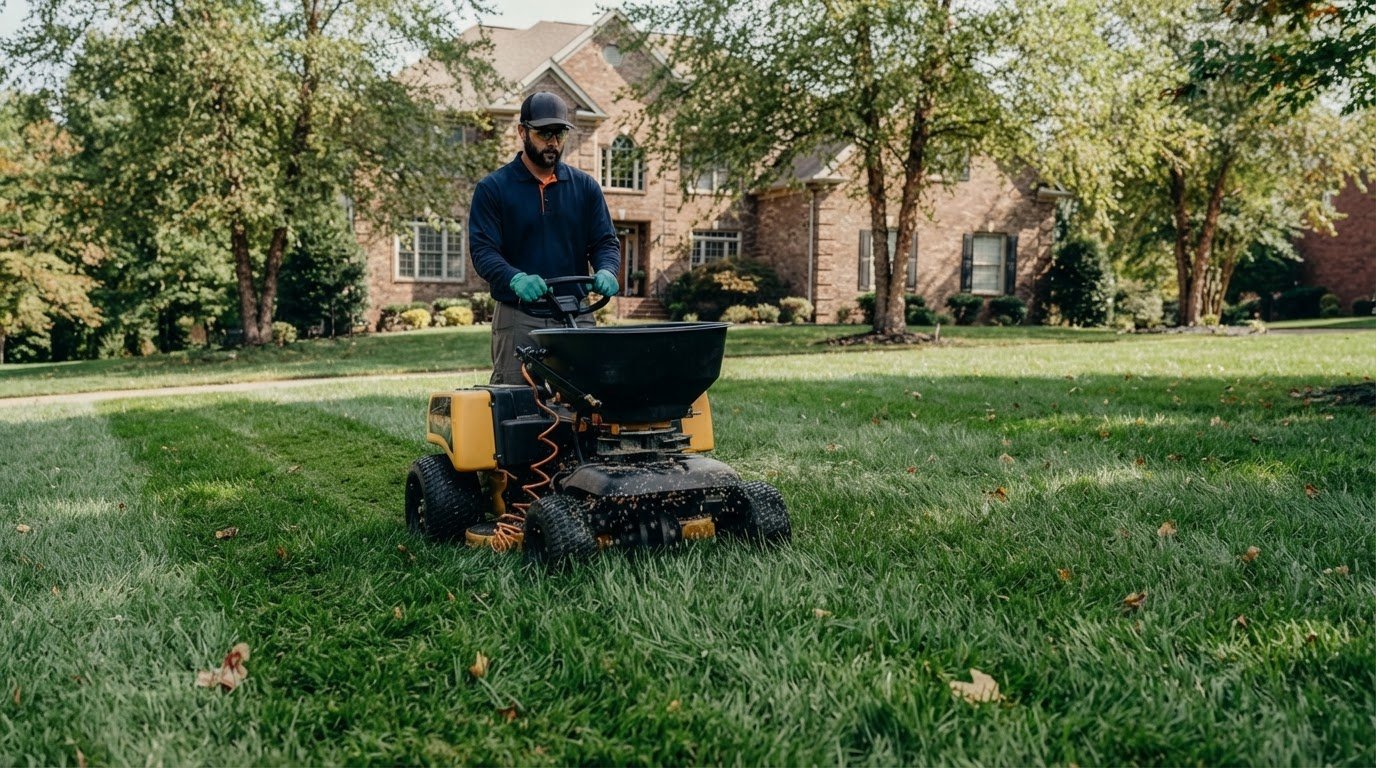
Core lawn aeration involves passing equipment over the lawn to extract soil plugs. The pattern and coverage should account for compacted areas, lawn shape, and access. If overseeding is included, grass seed is distributed over the turf after aeration, matching the work to the lawn’s condition.
Before service, move toys, hoses, and other loose items off the grass, and keep pets away from the work area. Point out marked underground lines and obstacles before equipment begins. These steps clear the lawn for consistent coverage and help protect property features as the soil is opened.
Soil air, water, and nutrient circulation
Compacted clay can restrict movement beneath the grass, even when the surface looks damp. Core openings give air, water, and dissolved nutrients pathways into the root zone, where growing turf can use them.
Air and Water Penetration
Grass roots need air in the soil as well as water at the surface. In compacted clay, closely packed particles can limit the spaces where air and moisture move. Core aeration opens the dense layer, helping air reach below the surface and water move toward roots.
Observe how the lawn responds after rainfall or irrigation. Water that stays on the surface, or soil that dries unevenly, can signal restricted movement. For example, a patch that stays dry beside a damp area may have different access to moisture. These observations can reveal where compaction may be affecting roots.
Drainage and Water Infiltration
Aeration can create pathways for water to infiltrate compacted clay. This matters when rainfall collects in low spots instead of soaking into the lawn. Openings can help water enter the soil, where roots can access available moisture.
Better infiltration supports drainage, but it does not reshape the yard or correct every low area. Observe whether water soaks in around patches that previously drained slowly. Persistent pooling may involve grading or other site conditions beyond soil compaction.
Water and nutrients work together in the root zone. As water moves through the soil, it can carry dissolved nutrients closer to grass roots instead of leaving them concentrated near the surface. Aeration can improve fertilizer efficiency by opening pathways toward roots. This supports nutrient uptake, while appropriate fertilizer selection and application remain important.
After seeding, steady moisture helps grass seed establish. Water gently to keep the seed and topsoil moist without washing seed into piles or bare edges. Check seeded areas regularly, especially where sun or runoff dries the surface faster. Adjust watering to the lawn’s condition rather than allowing the soil to stay saturated.
New seedlings also need time to develop before mowing. Wait until new grass is established enough to withstand the mower, then use sharp blades and avoid pulling young plants from the soil. Keep equipment off soft, saturated ground, where wheels can press the soil together again and damage emerging turf.
For compacted clay, connect aeration, seeding, watering, and mowing in that order. Openings improve soil access, moisture supports germination, and careful mowing protects developing grass. If slow infiltration continues across the lawn, discuss your lawn’s aeration needs and soil conditions.
Benefits of aeration for compacted clay soil
Compacted clay can limit root growth by restricting the spaces that air and water move through. Core aeration opens channels in dense soil, supporting healthier turf and better access to moisture and nutrients.
Core Aeration for Compacted Soil
Hollow tines remove small soil cores, creating openings in compacted ground. These channels can help roots grow into soil that was difficult to penetrate. In a Gallatin lawn, look for hard ground, slow infiltration, or turf that struggles in heavily used areas. These signs can help identify where compaction may be limiting growth.
The benefit is improved access, not an instant change to every soil condition. Aeration can help water and nutrients move toward roots, while the extracted plugs gradually break down at the surface. Areas with repeated foot traffic may need attention because pressure can compact soil again.
Reducing Soil Compaction
Compaction occurs when soil particles press closer together, reducing the open spaces between them. Foot traffic, equipment, and activity on wet soil can contribute. Core aeration removes plugs rather than merely puncturing the surface, leaving channels that improve movement through dense clay.
Compare high-traffic paths with less-used turf as you assess the lawn. A worn route between a driveway and patio, for example, may have harder soil than nearby grass. Identifying these differences helps focus treatment where the turf needs better soil access.
Aeration can also support other lawn-care steps. Fertilizer nutrients may move toward roots through the openings, improving access for the turf. This does not replace appropriate fertilizer selection or application; it addresses one barrier created by compaction.
Season matters, too. Cool-season grasses such as tall fescue are best aerated in fall, while warm-season grasses such as bermudagrass are best aerated in late spring or early summer. Scheduling around the grass’s prime growing period gives it a better opportunity to recover and use the newly opened pathways.
After treatment, limit unnecessary traffic while the lawn recovers, especially when the ground is wet. Repeated pressure on saturated clay can close openings and compact the soil again. Where thin areas also need new grass, overseeding can be paired with aeration to support denser turf, though the seed should suit the existing grass.
Core aeration is one part of managing compacted soil, not a permanent barrier against future pressure. If you’re weighing the right approach for your lawn’s condition, talk through your lawn care needs and the areas showing the clearest signs of compaction.
Root growth and fertilizer efficiency
Healthy roots anchor turf and take up water and nutrients from the soil. In compacted clay, dense ground can restrict that access. Core aeration opens pathways for air and water around roots, helping grass use the soil more effectively.
These openings also give nutrients a pathway toward the root zone. When soil is compacted, fertilizer near the surface may not reach roots as readily. Aeration can improve fertilizer efficiency by directing nutrients toward grass roots. Results also depend on sound fertilization and good soil access.
Consider a thin patch beside a frequently used walkway. Foot traffic can compact the soil, making root development harder and turf less able to recover. Aerating compacted areas creates channels for roots to grow into surrounding soil. It addresses the physical barrier, while suitable fertilizer supplies nutrients for grass growth.
For turf care, the sequence matters. First, identify compacted areas and consider the grass type and current condition. Then time aeration to the grass’s growing season so roots and turf can recover during active growth. Fertilization should complement that timing and the lawn’s needs, rather than follow a one-size-fits-all calendar.
In Gallatin, cool-season grasses such as tall fescue are best aerated in fall. Warm-season grasses such as bermudagrass are best aerated in late spring or early summer. Matching the work to the grass type helps support recovery and root development during its prime growing period.
Fertilizer supports growth, but it cannot correct compacted soil by itself. If water struggles to enter the ground, roots may have limited access to moisture and applied nutrients. Aeration targets the soil condition; fertilization supplies nutrients. Together, these practices address separate needs that influence turf health and appearance.
After aeration, look for gradual changes rather than an instant transformation. New roots and stronger turf develop as grass uses available moisture and nutrients. Continue mowing at a height suited to the existing turf, and avoid stressing areas with thin growth. These steps help maintain conditions that support grass growth.
When turf looks pale or grows unevenly, consider both soil access and nutrient supply before changing fertilizer practices. Aeration can improve root access, while a fertilization and weed control program addresses ongoing turf-care needs. Evaluating both factors helps target the cause rather than treating appearance alone.
Performance Lawns, INC identifies slow grass growth, faded or yellowed patches, water that does not seep into the lawn, invasive weeds, and hard soil as signs that a lawn may need aeration. Checking for these signs can help homeowners decide whether to consider core lawn aeration services in Gallatin as part of lawn care.
Lawn care services in Gallatin
In Gallatin, homeowners can arrange core aeration through companies that provide residential aeration. A useful service plan considers grass type, soil compaction, and whether overseeding suits the lawn’s condition.
Local lawn care works best when treatment matches the property’s needs rather than a fixed calendar. A clay lawn with water lingering on the surface has different needs from thin turf that requires more grass seed. Identifying the main issue helps determine whether aeration, overseeding, or both belong in the plan.
Timing is an important decision. Cool-season grass, including tall fescue, is best aerated in fall, ahead of its prime growing period. Warm-season grass, such as bermudagrass, is best aerated in late spring or early summer. These seasonal windows align treatment with the grass’s active growth.
Gallatin lawns can vary even within the same property. A path between a driveway and patio may receive more foot traffic than the backyard, leaving a compacted strip beside healthier turf. An assessment can identify where soil access is most restricted and whether the lawn needs broader coverage.
An aeration service should account for lawn layout, access, and visible conditions. Core aeration removes soil plugs, while overseeding distributes grass seed over turf that needs more coverage. The steps serve different purposes: one opens compacted soil, and the other introduces seed to support denser growth.
Seasonal planning should account for the grass already growing in the yard. Tall fescue and bermudagrass, for example, have different preferred aeration timing. A lawn with thin or bare patches may also need overseeding, while established, dense areas may need aeration without added seed.
Good lawn care continues after the equipment leaves. After aeration and seeding, water enough to keep the seedbed moist without washing seed away. Wait to mow until new grass can withstand the mower. These steps help protect the work and support the lawn’s development.
Gallatin homeowners evaluating core aeration should consider the grass type, compacted areas, and intended outcome together. The right scope follows those conditions, rather than assuming every lawn needs the same treatment. If your property has compacted clay or thin turf, request help planning lawn aeration for its specific needs.
Lawn Pride says lawn aeration is best performed in spring, fall, or both, depending on the lawn’s care requirements. That flexibility reinforces the value of choosing timing based on the property rather than assuming one season suits every yard. Describe where soil is compacted, where water lingers, and whether thin areas need seed, then discuss how those conditions shape the service plan. The choice of season should reflect the lawn’s needs, not simply a preferred appointment date.
That discussion can also clarify whether the work should focus on opening the soil or include seed for thinner coverage. Keeping the desired outcome in view makes seasonal timing part of a broader plan for the existing turf. Ask how the proposed timing relates to the lawn-care needs identified during assessment. This keeps the decision grounded in the property’s condition instead of assuming one schedule suits every area.
Performance Lawns: Lawn Treatments
Performance Lawns, INC provides residential aeration and overseeding for lawns that need better soil access or thicker turf. Core aeration can help relieve compaction, while overseeding adds grass seed where coverage is thin. Together, these services offer a practical plan for Gallatin lawns with compacted clay or uneven growth.
Consider this service when hard soil, poor water infiltration, or bare patches point to a need for aeration, overseeding, or both. The right approach depends on the lawn’s grass type, condition, and seasonal timing. Aeration can also complement ongoing lawn treatments, including weed control and fertilization, as part of attentive turf care.
For help deciding on aeration and overseeding for your lawn, contact Performance Lawns, INC.
Plan a Stronger Lawn for the Seasons Ahead
A healthier lawn starts with decisions that suit its changing conditions. As you plan future care, note which areas stay thin, feel firm underfoot, or respond differently after rain. These observations can help shape a considered plan instead of treating every part of the yard alike.
Choosing core lawn aeration services in Gallatin is a practical step when compacted soil is holding back your lawn’s development. Next, discuss your property’s needs and decide how aeration fits into its ongoing care. A thoughtful plan can support stronger turf and help you care for your outdoor space with confidence.
Start a conversation with Performance Lawns, INC about your lawn’s needs. A well-planned next step can help you cultivate a yard you’re proud to enjoy.
Frequently Asked Questions
What core lawn aeration services are available in Gallatin, Tennessee?
Performance Lawns offers residential core aeration and overseeding in Gallatin, Tennessee. Core aeration removes small soil plugs, while overseeding adds grass seed to existing turf where coverage needs filling. This work may suit lawns with compacted areas, thin growth, or both. A treatment plan considers the lawn’s condition and grass type, matching aeration and seeding to the property’s needs.
When is the best time to core aerate lawns in Gallatin, Tennessee?
The best timing depends on the lawn’s grass type. Aerate cool-season grasses, such as tall fescue, in fall, before their prime growing period. For warm-season grasses, such as bermudagrass, late spring or early summer is preferred. If a Gallatin lawn contains different grass types, identify the dominant turf and its growth pattern before scheduling work. Timing around active growth supports recovery after treatment.
How often should lawns in Gallatin be core aerated?
There is no single aeration schedule for every Gallatin lawn. The need depends on soil compaction, how heavily the grass is used, and how well water enters the ground. For example, a frequently crossed path may compact sooner than an area with little foot traffic. Reassess the lawn over time and base repeat aeration on its condition, not an automatic annual routine.
What should I do after core aeration to help my lawn recover?
Care for the lawn gently after aeration, especially where grass is thin or newly seeded. Water seeded areas carefully so moisture reaches the soil without washing seed into piles. Leave the soil plugs on the surface to break down naturally, and avoid driving equipment over soft ground. Delay mowing until new grass is established enough to handle the mower, then use sharp blades to avoid tearing turf.
What lawn conditions indicate a need for core aeration?
Hard soil, slow growth, faded patches, and water lingering after rainfall can point to compaction. One practical clue is uneven growth across the same yard: grass beside a well-used gate may struggle while a nearby, lightly walked section grows normally. Check several areas rather than judging from one bare spot. Thin turf may also need overseeding, since aeration alone does not add grass seed.