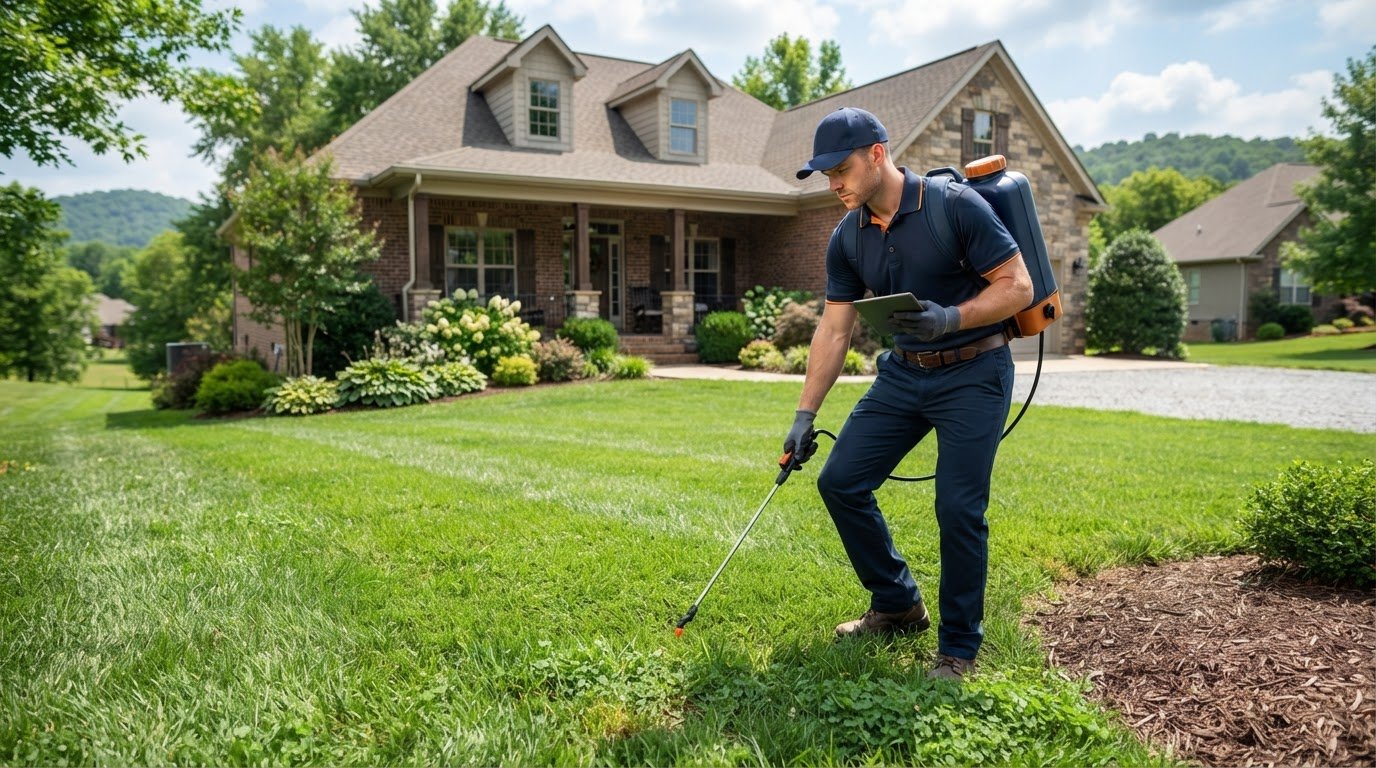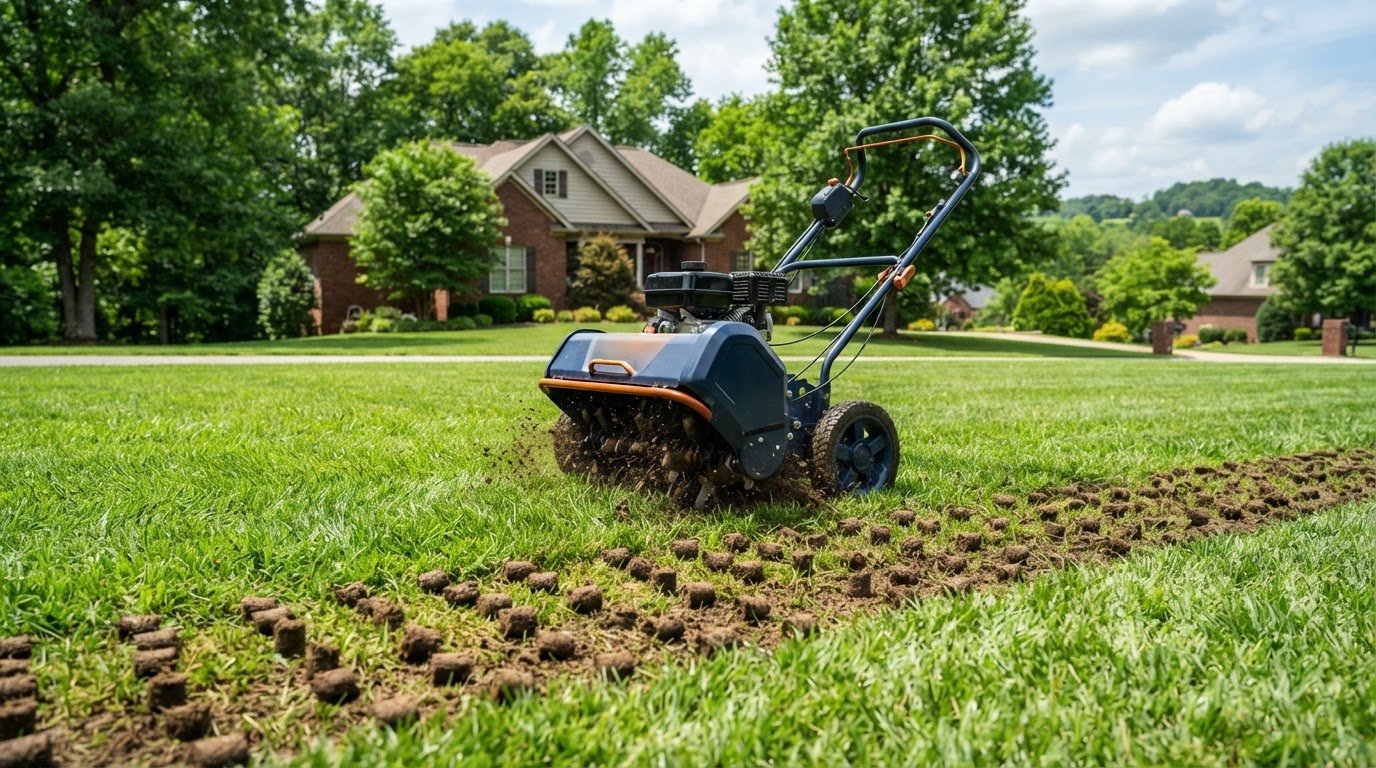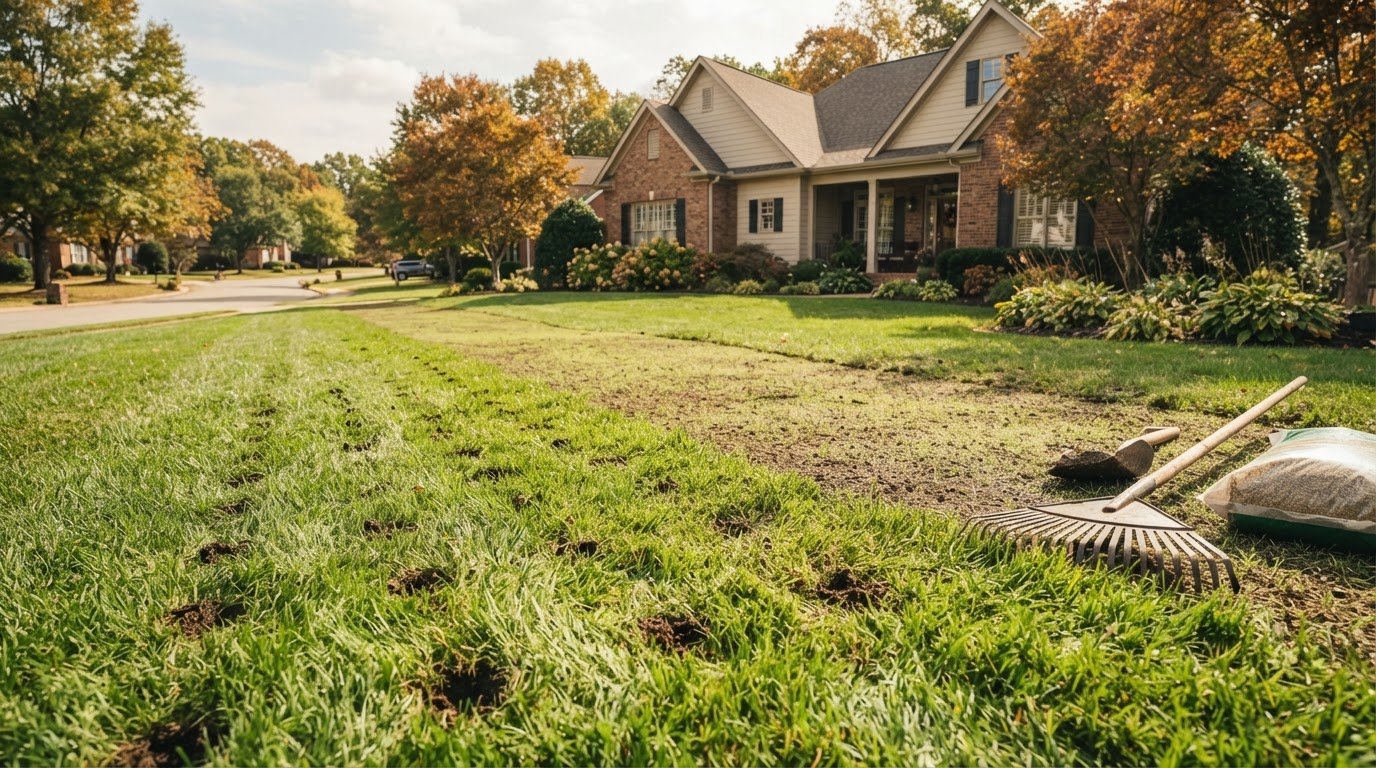


Winter doesn’t reliably kill lawn grubs. As temperatures fall, grubs burrow deeper into the soil, where it helps insulate them from extreme cold. That means turf pest management in Lebanon, TN may still be needed when spring arrives.
It’s understandable to hope a hard winter will solve the problem, especially when the lawn looks quiet and dormant. But bare or thinning patches can signal grubs beneath the surface. Checking early helps you respond at the right time.
This guide explains how winter affects grubs, how to lift suspected turf and inspect the soil, and what signs can point to grub or fire ant activity. You’ll also learn how integrated pest management brings together observation, treatment timing, and lawn care practices to reduce pest pressure while supporting healthier grass.
Beetle and grub lifecycle
Japanese beetles typically emerge from May to July, though timing varies by location and climate. Adults are visible aboveground, but the damaging grub stage lives beneath the turf. Seeing beetles doesn’t confirm how many grubs are present, and a quiet lawn doesn’t prove the soil is clear.
Grubs are the immature stage of beetles. They feed below the surface, so their presence may show up as thinning or weakened grass rather than visible insects. Start by inspecting a suspect patch: lift or roll back the turf like a carpet, then examine the soil and roots. Finding one grub makes it highly likely that more are nearby. Check more than one affected area before deciding how broadly to respond.
As temperatures fall, grubs move deeper underground, where the soil helps insulate them from extreme cold. Winter can reduce visible signs without eliminating grubs from the lawn. In spring, monitor the same thin or damaged areas as the turf resumes growth. Note where symptoms appear and whether they spread. Comparing observations over time is more useful than relying on a single inspection.
Treatment timing depends on the pest’s life stage and your goal. Preventative grub treatments are typically most effective from April to July in the areas covered by this guidance. Curative treatments are typically most successful toward the end of summer. Japanese beetle adults typically emerge from May to July, overlapping with part of the preventative window. These are separate timing cues, not one date that suits every lawn.
For residential lawn pesticide applications in Tennessee, requirements depend on the product and who applies it. Follow the product label and applicable state requirements, including directions for the treatment site and target pest. The label and state rules determine whether an applicator requirement applies. Don’t assume every product or application follows the same process.
What is the best season to treat common turf pests in Lebanon, TN? For grubs, preventative treatment is typically timed from April to July, while curative treatment is typically most successful toward the end of summer. Fire ants are a separate pest, so a grub calendar alone doesn’t establish the right timing for fire ant management.
- May to July: Japanese beetle adults typically surface, with local timing affected by climate and location.
- April to July: Preventative grub treatments are typically most effective.
- Fall and winter: Grubs burrow deeper as temperatures fall, so surface activity may not reveal their presence.
- End of summer: Curative grub treatments are typically most successful.
Good lawn care combines seasonal observation with targeted inspection. Checking beneath damaged turf can help determine whether the symptoms fit a grub problem before you decide on treatment. Neither winter cold nor beetle sightings alone reveal what’s under the grass. Inspect affected areas and consider the pest’s life stage when choosing your next step.
Fire ant reduction
Fire ant management starts with identification, not treatment. Effective turf pest management in Lebanon, TN begins by noting each mound’s location, shape, and activity. A soil mound alone doesn’t confirm the ant species, since other ants can nest in lawns too. Observe worker activity from a distance, then note whether the mound is near a walkway, play space, garden, or lawn edge.
A simple map can help distinguish an isolated nest from a recurring yard problem. Mark active mounds on a property sketch, including those beside fences, patios, and planting beds. Revisit the marked spots during a later inspection. New mounds in separate areas may indicate that one visible nest isn’t the whole picture. Avoid raking or flattening a mound before identification, since disturbing it can make activity harder to assess.
Integrated management relies on observation, targeted treatment, and follow-up rather than a single pass. A treatment chosen for one mound, for example, may not address colonies elsewhere in the lawn. Bait products and direct mound treatments work differently, so the choice depends on the product label, target pest, and treatment area. Baits rely on worker ants collecting the material; direct treatments focus on a specific mound. Don’t combine approaches or apply more than directed.
- Identify: Note worker activity and photograph the mound from a safe distance.
- Map: Mark the mound and nearby paths, entrances, or outdoor-use areas.
- Choose: Match the treatment method to the identified pest and label directions.
- Reinspect: Return to marked locations and note whether activity remains or new mounds appear.
Timing and placement matter. A bait intended for foraging insects needs worker activity, while a mound treatment targets a specific nest. Check the product directions for suitable conditions and placement before applying it. Keep treatments away from areas where they don’t belong, such as edible plants, unless the label allows that use. Careful inspection also helps avoid treating harmless insects or the wrong nest.
In Tennessee, turf pest management should distinguish fire ants from grubs and other lawn insects. Grubs are found beneath turf; fire ant activity appears around soil mounds and active workers. Treating one pest won’t automatically address the other. An inspection-led approach to turf pest management in Lebanon, TN considers the pest, its location, and the treatment area. Keep a log of mound locations and follow-up observations.
If mounds return across the yard or appear beside frequently used outdoor areas, a focused assessment can clarify the next step. Use the contact page to discuss recurring lawn pest concerns and practical control options.
Identifying grubs beneath turf
Start with the lawn’s damage pattern, not a treatment decision. Grub damage may appear as thinning or weakened turf, but those symptoms alone don’t identify the cause. Compare affected grass with nearby healthy turf, then note whether the damage forms one patch or several. Dryness, disease, and other stress can also affect turf, so inspecting beneath the grass provides a more useful clue.
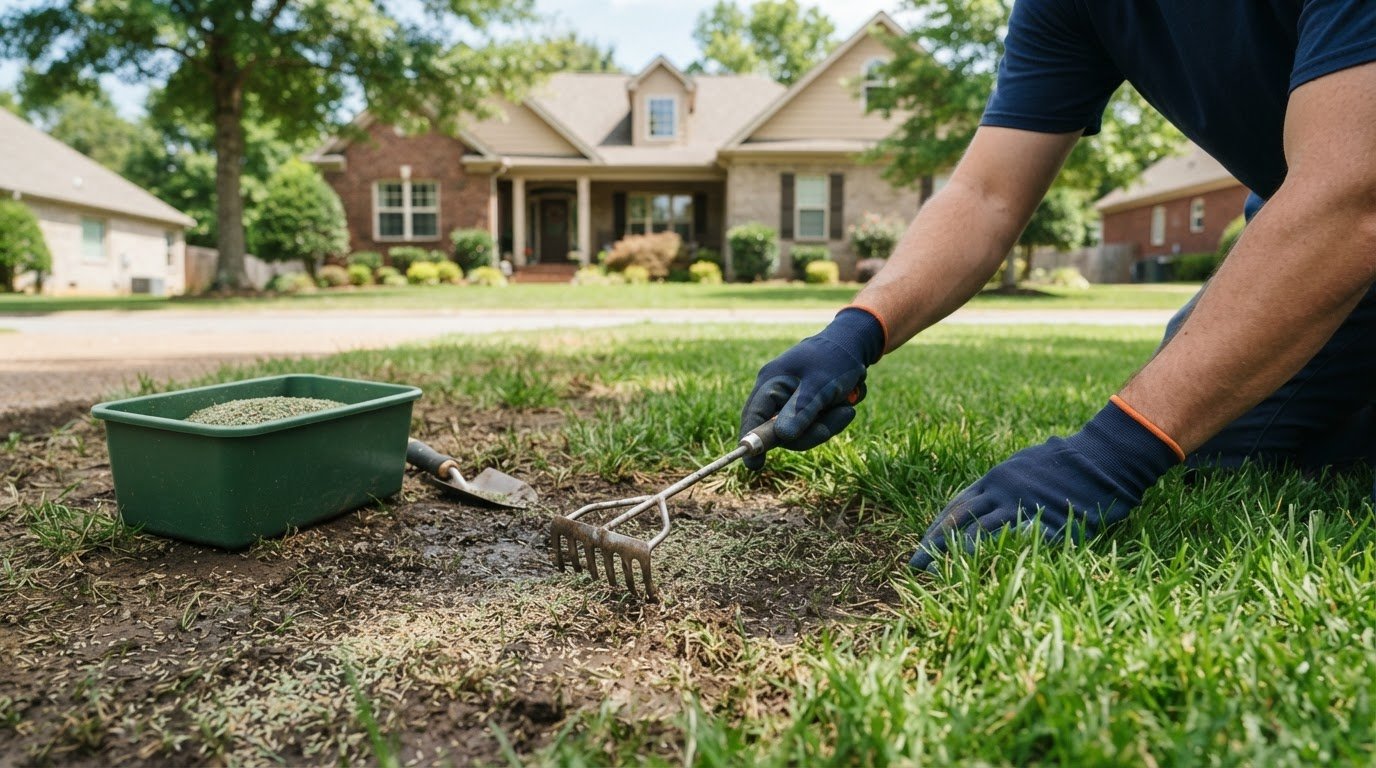
Choose a patch where the grass looks loose or damaged. Lift or roll back the turf like a carpet, then inspect the soil and roots underneath. Look for pale, soft-bodied grubs among the soil particles. Finding one makes it highly likely that more are present, but a single sample doesn’t show how widely they’re distributed. Check another affected spot and compare your findings.
Use a consistent inspection routine so your observations are easier to interpret. Begin at the edge of a damaged patch, where healthy and stressed grass meet. Gently lift the sod and examine the root zone. Return the turf to its place, then repeat elsewhere. Comparing these areas can help you distinguish a localized problem from damage spread across the lawn.
- Choose a sample area: Select thinning turf or a patch that lifts unusually easily.
- Expose the soil: Roll back the grass without tearing a large section.
- Inspect closely: Look through the soil for grubs near the roots.
- Compare locations: Check another affected area and record where grubs appear.
Keep a brief record of each inspection. Note the location, turf condition, and whether you found grubs in the soil. For example, write “front lawn, near the sidewalk, thinning patch, grubs found.” Add a separate entry for a backyard area. These notes show whether findings repeat across the property, rather than relying on one lifted section of sod.
Don’t diagnose the entire lawn from a single clue. A loose patch without grubs calls for a broader look at its condition and surroundings. Finding grubs beneath one area makes further inspection worthwhile, especially where similar symptoms appear. A healthy-looking section may also merit comparison if nearby areas are declining. Careful observation helps direct attention without treating every patch alike.
Inspection also informs treatment timing. Grubs can move deeper as temperatures fall, so a surface check in cold weather may not reveal their location. Consider the lawn’s condition and the season together when interpreting a sample. If you find grubs, mark the spot and compare other affected areas before choosing a response. Accurate identification is the first step toward protecting healthy turf.
For a clearer assessment, keep each sample focused and return the turf after inspection. A small, careful check can provide better evidence than pulling up several large sections at random. Record what you find, including areas with no grubs. That comparison gives you a more reliable picture of the lawn and helps guide your next decision.
Integrated Pest Management
Integrated Pest Management combines identification, monitoring, prevention, and targeted treatment. For a Lebanon lawn, that means distinguishing grubs beneath turf from fire ant mounds before choosing pest control. It also means tracking damaged areas, checking for changes in activity, and selecting a response that fits the pest. A treatment aimed at one insect may not address another.
How can I compare professional lawn pest control plans and guarantees in Lebanon, TN? Compare which pests each plan addresses, how inspections guide treatment, and whether follow-up is included. Read guarantee terms carefully, including the outcomes they cover and any conditions or exclusions.
Effective DIY treatment starts with identifying the pest and following the product label. Inspect suspected grub damage beneath the turf, or map active fire ant mounds before choosing a labeled treatment for that pest. Avoid applying products broadly when the target is uncertain, and record treated locations for follow-up.
Lawn pesticides can expose pets, children, pollinators, or waterways if products drift, are contacted, or move beyond the treatment area. Read and follow label directions for application, access, and placement. Consider nearby flowering plants, drains, and water before treating, and prevent products from reaching areas not listed on the label.
How can proper mowing, watering, and fertilization prevent turf pests in Middle Tennessee? Consistent lawn care supports vigorous grass that can better tolerate stress and compete with damage. Mow without scalping, water to support the turf rather than leaving soil continually saturated, and fertilize according to the lawn’s needs. These practices support turf health, but they don’t replace pest identification or treatment when insects are present.
- Identify: Match the evidence to a pest, such as grubs beneath turf or fire ant mounds.
- Monitor: Record affected locations and observe changes after treatment.
- Prevent: Maintain mowing, watering, and fertilization practices suited to the lawn.
- Treat selectively: Use a pest-specific product according to its label.
Seasonal observation matters, too. Brown patch is prevalent on Tennessee lawns in early summer, and fungicide may be necessary to manage it. Because brown patch is a lawn disease, not an insect, insect control won’t address it. Identify the cause of discolored grass before selecting pest control or another treatment.
How can I identify lawn grubs, armyworms, chinch bugs, and mole crickets in Middle Tennessee?
Start by matching the damage pattern to where each insect feeds. Grubs live below the soil surface, armyworms chew grass blades, chinch bugs feed near the grass base, and mole crickets disturb soil as they tunnel. These clues can narrow the possibilities, but close inspection helps prevent treating the wrong pest.
Grubs: Look for turf that thins, weakens, or lifts easily, then inspect the soil and roots beneath it. Grubs are pale, curved larvae found below the grass, not on its blades. Compare damaged turf with nearby grass and note where you find them. A grub sighting supports further inspection, but the damaged patch alone doesn’t establish the cause.
Armyworms: Check grass blades for chewing and ragged edges, especially where damage seems to be spreading. Look among the grass near affected areas for caterpillar-like larvae. A sudden change in appearance calls for prompt inspection, since armyworms feed aboveground. Record the location and extent of the damage before choosing a treatment.
Chinch bugs: Inspect the base of yellowing or thinning grass, particularly where damage borders healthier turf. These small insects can be difficult to spot, so look closely among the stems and thatch rather than scanning only the lawn surface. Compare affected and unaffected areas. A dry-looking patch can have other causes, so confirm insect activity before treating.
Mole crickets: Watch for raised trails, loosened soil, or turf that seems disturbed from below. These signs can indicate tunneling, but other soil activity may look similar. Examine the affected ground and nearby grass for insects. Note whether the disturbance follows a line or appears in isolated spots, then compare that pattern with other lawn symptoms.
- Check the feeding zone: Look beneath turf for grubs and around blades for armyworms.
- Inspect the grass base: Search stems and thatch for chinch bugs.
- Read the soil pattern: Look for loosened ground or trails that may indicate mole crickets.
- Record evidence: Photograph damage and note where insects or signs appear.
In Middle Tennessee, one patch of brown or thin grass can have several possible causes. Compare the insects, feeding location, and damage pattern before selecting pest control. Avoid applying a product simply because a lawn looks stressed; choose one labeled for the identified pest and follow its directions. If signs remain unclear or damage continues, contact the team about lawn pest concerns and describe the symptoms you observed.
If grubs remain a possibility, homeowners can lift or roll suspected grass back like a carpet and inspect the soil. For help interpreting what turns up, pest control companies listed for Lebanon, Tennessee, have ratings from 4.7 to 5.0 across 785 reviews. Professionalism is praised in 92% of reviews, quality in 84%, and punctuality in 78%. The longest experience reported among the listed companies is 80 years. These figures can help when comparing local providers, while the insect signs in the lawn remain important to identifying the pest and choosing a suitable response.
Performance Lawns: Lawn Treatments
Performance Lawns helps homeowners support lawn health with professional lawn treatments and ongoing care. Fertilization and weed control address common lawn needs, while Dallisgrass and Johnsongrass can be more challenging to manage than many broadleaf weeds. These grassy weeds may require a separate or targeted approach.
Residential aeration and overseeding can support denser turf when those practices suit the lawn. These services help improve overall turf condition, while grassy weeds may call for a distinct management strategy.
For guidance on lawn care options for your property, contact Performance Lawns.
Take the Next Step Toward a Stronger Lawn
A thoughtful approach to turf pest management in Lebanon, TN starts with choosing a next step that fits your lawn’s condition. Once you’ve assessed pest concerns, Performance Lawns offers Lawn Treatments, Weed Control and Fertilization, and Residential Aeration & Overseeding. Each supports turf health in a different way, from managing weeds and nourishing grass to encouraging denser growth.
Keep observing changes in your lawn and share the specific areas of concern when seeking guidance. Details about where turf is thinning, what you’ve noticed, and whether the problem is spreading make the conversation more useful. This gives you a practical starting point for deciding which lawn care steps may fit your property.
For help planning your next lawn care step, contact Performance Lawns. A healthier, more resilient lawn begins with attentive care and a plan suited to its needs.
Frequently Asked Questions
Can Winter Kill the Grubs in My Lawn?
No. Winter shouldn’t be relied on to kill lawn grubs. As temperatures fall, grubs burrow deeper into the soil, where it helps insulate them from extreme cold. A dormant-looking lawn doesn’t show whether grubs remain. Reassess the turf when it resumes active growth, and inspect beneath affected grass before deciding whether treatment is appropriate.
What Are Grubs?
Grubs are the immature, larval stage of beetles, including Japanese beetles. They live beneath the soil surface, not on grass blades, so homeowners usually find them by examining soil below damaged turf. Their presence may be associated with thinning or weakened grass. An adult beetle aboveground and a grub belowground are different life stages, and seeing one doesn’t establish how many grubs are in the lawn.
What turf pests are common in Lebanon, Tennessee?
Homeowners should watch for grubs, fire ants, armyworms, chinch bugs, and mole crickets. Japanese beetles are another seasonal lawn insect. Note whether evidence appears in the soil, on grass blades, near the grass base, or around a mound. Identifying the insect matters because a product or approach intended for one pest may not address another.
Which lawn pest control companies serve Lebanon, TN, and what services do they offer?
Performance Lawns, INC serves Lebanon, Mt. Juliet, Gallatin, and Hendersonville. Its lawn care offerings include Lawn Treatments, Weed Control and Fertilization, Residential Aeration & Overseeding, and Lawn Care. The company also provides Residential Mosquito, Tick & Flea Control for those named outdoor pests. For lawn concerns, its lawn treatments and care services are the relevant offerings to explore.
What Tennessee rules apply to applying pesticides on residential lawns?
Follow the product label and applicable Tennessee requirements, including directions for the treatment site and target pest. The label and state rules determine whether an applicator requirement applies.