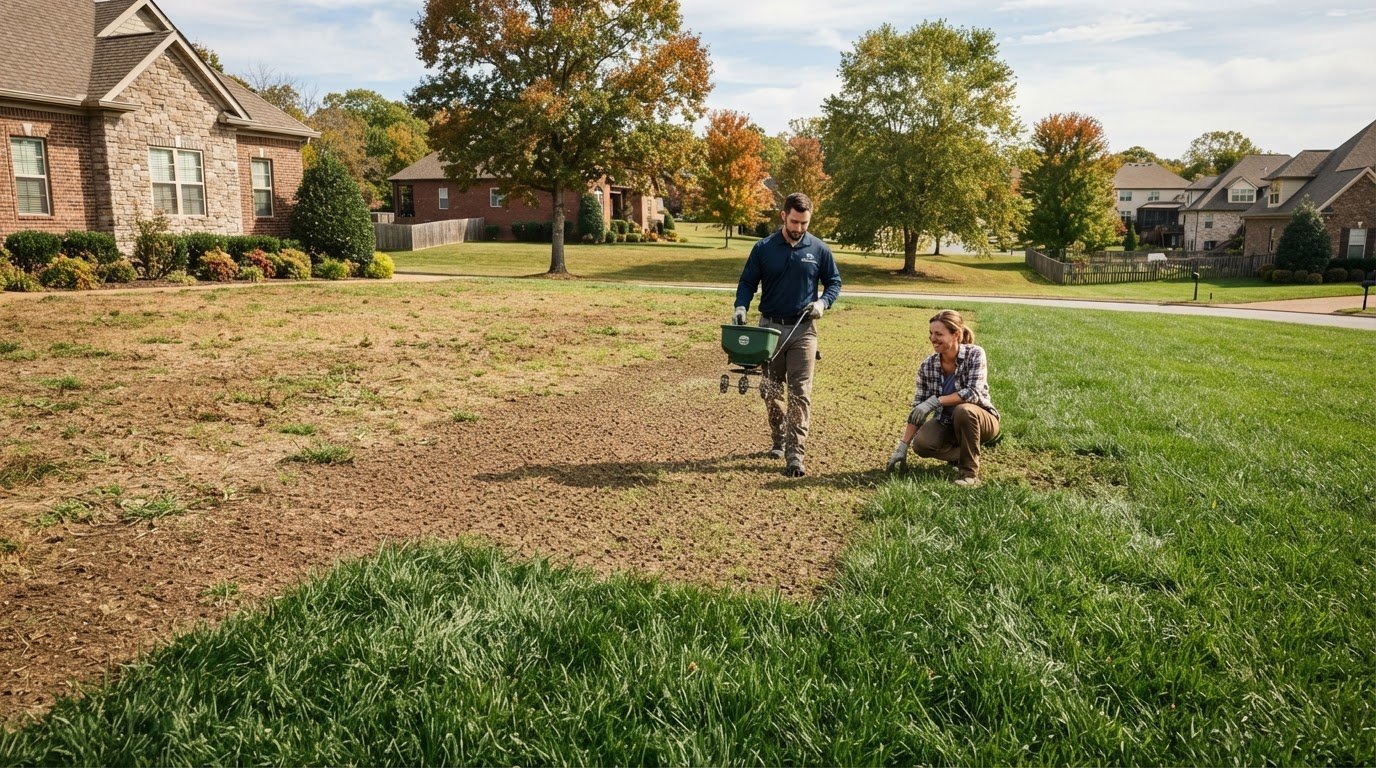


Aeration isn’t always required before overseeding thin lawns in Mt. Juliet. You can spread seed without aerating, but it needs good contact with the soil to establish. Lightly rake it into the top ¼ inch of soil rather than leaving it on the grass.
If your lawn is patchy, you may wonder whether moss, compacted soil, or a recent weed treatment will affect overseeding. Proper preparation and timing matter, and new grass can gradually fill thin areas as it grows.
This guide explains how to prepare a lawn for overseeding, when aeration can help, and what to do if moss or weed killer is part of the picture. You’ll also learn why broadleaf weed killer calls for a wait of about 4 weeks before overseeding, while crabgrass pre-emergent calls for roughly 4 months. With practical steps for seed contact, watering, and young-grass care, you can make a more confident plan for a thicker, healthier-looking lawn.
How long after applying weed killer can I overseed?
First identify the weed killer, since the waiting period depends on the product type. Then choose seed suited to your existing turf, sunlight, and Mt. Juliet’s growing conditions.
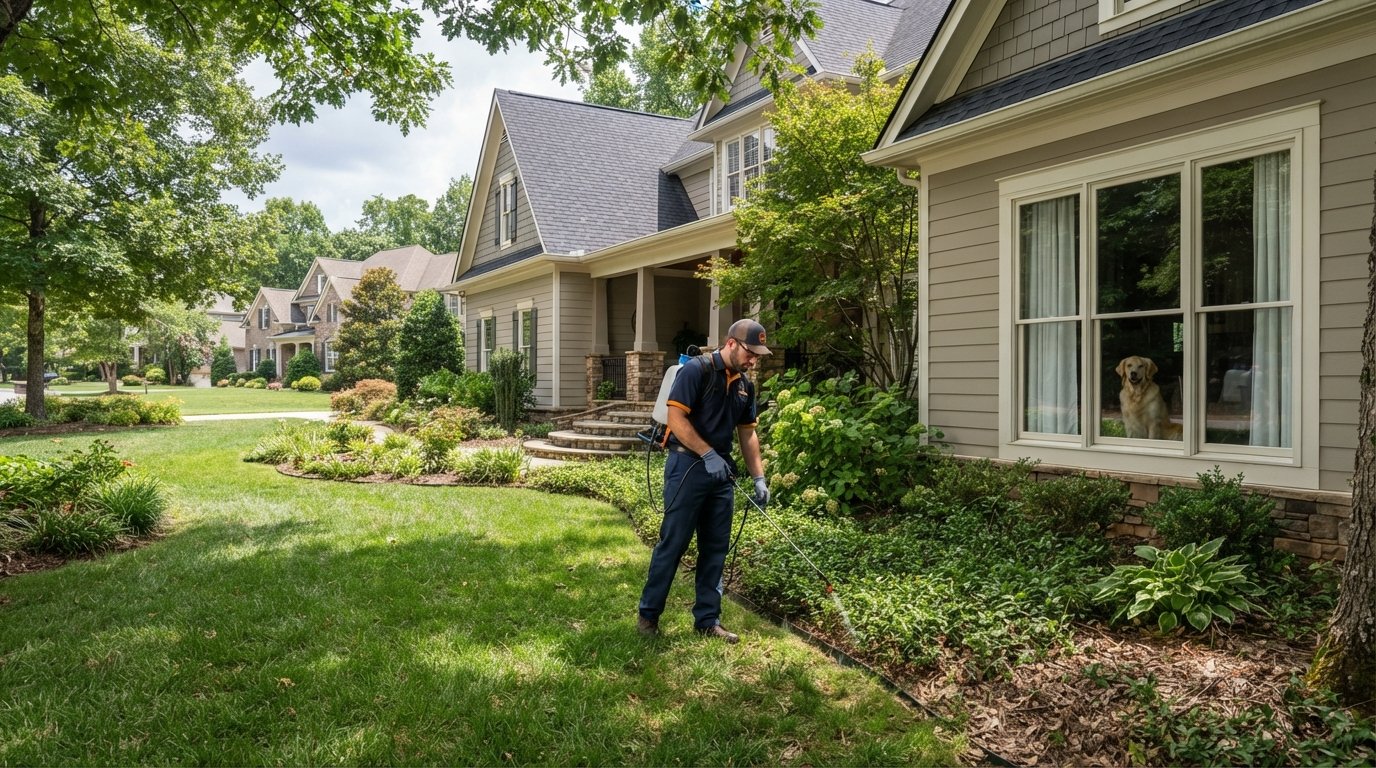
- Identify the treatment and wait the right amount of time. After applying a broadleaf weed killer, wait about 4 weeks before overseeding. After applying a crabgrass pre-emergent, wait roughly 4 months. These treatments affect new grass seed differently, so identify which type you used before planning the seeding date. If you’re unsure which treatment was applied, find its name before proceeding.
- Match the seed to the grass already growing. Look at healthy areas of the lawn and identify whether they contain cool-season grass, such as tall fescue, or warm-season grass, such as Bermudagrass. Choose compatible grass seed so new seedlings can blend with the existing lawn’s color, texture, and growth pattern. Avoid scattering a different grass type across the whole yard without considering how it will look beside established turf.
- Choose a blend for each light condition. For sunny areas, select a mix containing at least 2 or 3 Kentucky bluegrass cultivars. Partially shaded areas suit a blend of Kentucky bluegrass, perennial ryegrass, and fine-leaf fescues. In deeper shade, fine-leaf fescues such as creeping red fescue, hard fescue, and Chewings fescue are suitable choices. Separate sunny and shaded sections when buying and spreading seed.
- Account for the existing grass type. For a cool-season lawn, choose seed that complements the established grasses rather than introducing a contrasting type. A fescue lawn overseeded with suitable fescue seed can maintain a consistent appearance. Bermuda grass that has spread into an established fescue lawn is extremely difficult to eliminate completely. Focus management on limiting its spread, reducing its presence, and keeping the desired fescue healthy and competitive.
- Time seeding for the grass and local season. Warm-season grasses need warmer soil; the recommended overseeding period for Southern lawns is late spring through mid-summer. Cool-season grass is generally overseeded in fall, preferably early September. If that window passes, early spring, ideally March and April, is another option. Choose the season based on the grass you are establishing, not just a convenient weekend.
- Spread seed for contact and establishment. Mow and clear loose debris so grass seed can reach soil instead of resting on leaves or thick clippings. Distribute seed evenly, then lightly rake it into the top ¼ inch of soil. Apply new-seeding fertilizer after spreading the seed. Keep the seedbed consistently moist with light watering while seedlings establish.
Can I overseed a lawn that has moss in it?
Yes, you can overseed a lawn with moss, but clear the surface first. Grass seed needs contact with soil, and moss, thatch, and dead clippings can block it.
- Mow low and collect the clippings. Before seeding, mow shorter than usual, around 1-2 inches, then bag the clippings. Shorter grass lets more light reach the soil and makes it easier to see mossy patches. Avoid leaving a thick layer of cut grass across the seedbed, where it could interfere with seed reaching bare soil.
- Rake moss and loose debris from thin areas. Use a rake to loosen the surface and remove dead grass, moss, and thatch that would cover the soil. Work carefully so you expose the ground without tearing up healthy turf unnecessarily. If moss remains in dense patches, clear those spots before spreading seed instead of scattering seed over the moss.
- Choose dethatching or vertical mowing for the surface. A vertical mower cuts through thatch and enters the upper ¼ to ½ inch of soil. For overseeding preparation, one or two passes should be sufficient. This creates openings for seed to reach soil. Avoid excessive passes, which can disturb existing grass more than needed.
- Consider slit seeding where the lawn is especially dense. Slit seeding places seed into narrow cuts, helping it reach soil when surface debris or thick turf makes broadcasting less effective. A vertical mower can also open the surface, but use it to prepare a seedbed rather than repeatedly cutting through the lawn. Follow with even seed distribution across the cleared areas.
- Protect seedlings after seeding. Keep foot traffic off the lawn during the first two weeks, while seed establishes. Frequent, light watering keeps the seedbed moist as seedlings emerge. Don’t let the surface dry out between waterings, and avoid heavy watering that could move seed from bare patches into low spots.
- Wait for new grass before the first mow. Let seedlings reach 3 to 4 inches before mowing for the first time. Then set the mower deck to about 3 inches. Sharp blades help avoid pulling young grass from the soil. Keep turning and foot traffic gentle, especially across newly seeded mossy spots.
Moss can return if the lawn conditions that favor it remain, so note where it grows and whether those areas stay shaded or damp. For a mossy lawn that needs careful seedbed preparation, discuss an overseeding plan suited to its thin and bare areas.
Can You Overseed Without Aerating?
Yes. Aeration can help, but seed can establish without it if you create soil contact, spread it evenly, and keep it moist. Follow these four steps when overseeding thin lawns in Mt. Juliet.
-
Set the Seed Rate
Measure the lawn area, then match the rate to the grass type and season. Cool-season grass generally uses about 1 to 2 pounds of seed per 1,000 square feet. For warm-season Bermudagrass, use around 1 pound per 1,000 square feet. Check the seed label for its recommended rate, and avoid applying extra seed to compensate for poor soil contact.
-
Aerate for Seed-to-Soil Contact
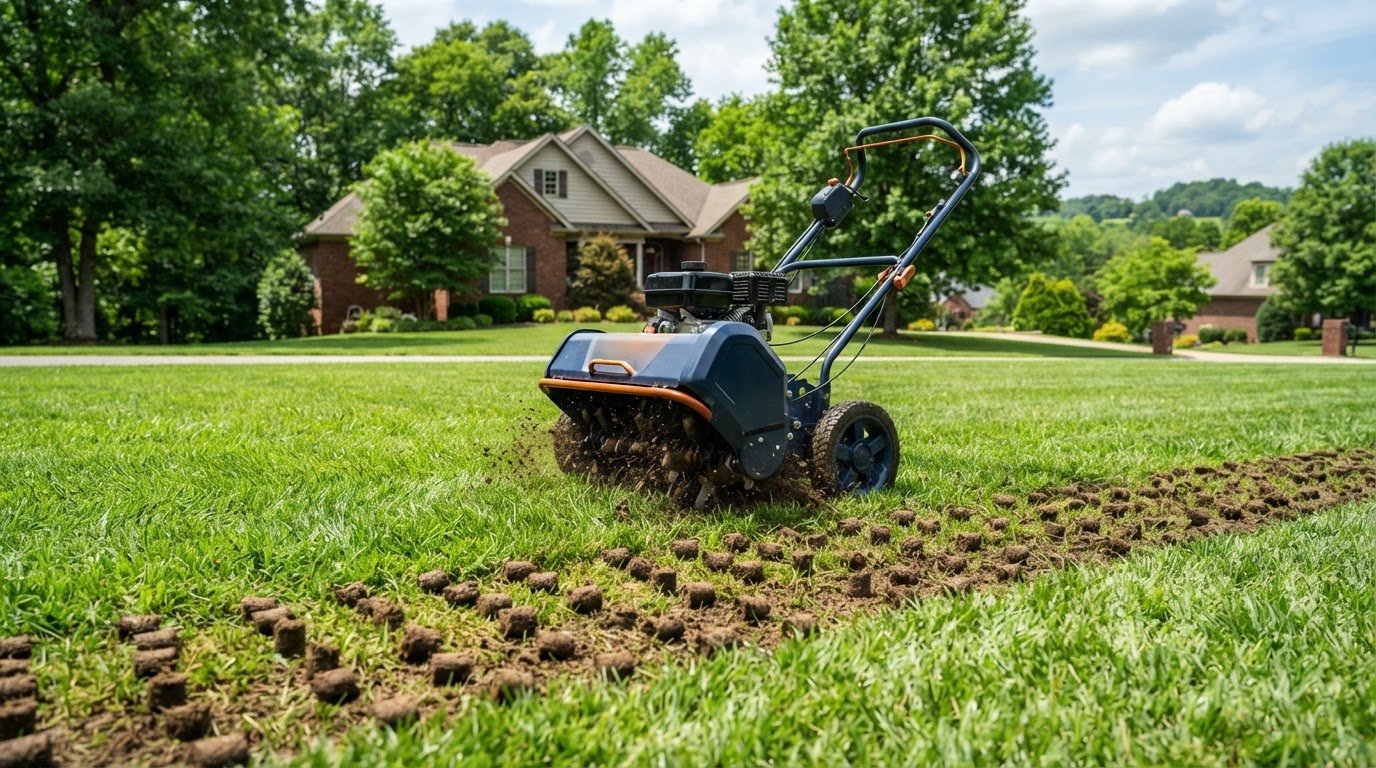
Use core aeration if compacted ground or dense turf makes it difficult for grass seed to reach soil. The aerator removes small soil plugs, leaving openings where seed can settle. For overseeding preparation, go over the lawn 3 or 4 times; after core aeration, aim for 20 to 40 holes per square foot. Skip aeration when the surface is already open and seed can reach soil.
-
Spread and Lightly Cover Seed
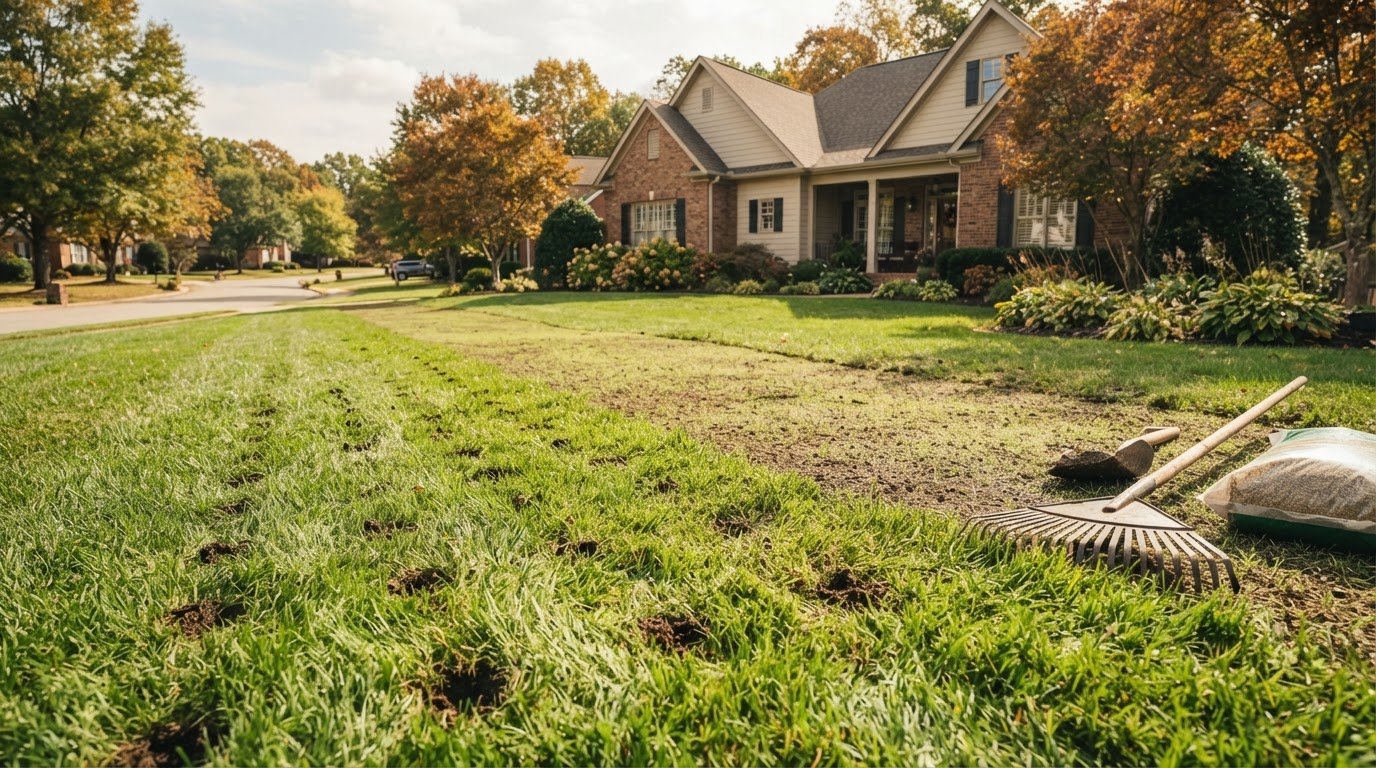
Spread seed evenly over the prepared lawn, paying special attention to thin patches without leaving dense piles. Lightly rake it into the top ¼ inch of soil to improve contact. A thin layer of straw or compost can help hold seed in place, but keep it no thicker than a quarter inch. A deeper layer can block light and make it harder for seedlings to emerge.
-
Keep Seed Moist During Germination
Water lightly once or twice a day after seeding to keep the seedbed consistently moist while the grass germinates. During the first few weeks, new seedlings can benefit from light watering twice daily for 10 to 15 minutes each time. Adjust watering if the surface dries between cycles, and avoid soaking the ground enough to wash seed out of bare areas.
After seedlings emerge, keep checking the soil surface rather than following a fixed watering schedule. Aim for steady moisture during germination, not puddles or runoff. If you skip aeration, check that seed rests against exposed soil, not on leaves, thatch, or a thick mulch layer. Good soil contact and consistent watering give seeds a better chance to establish.
A gentle rake can settle seed into the top ¼ inch of soil, bringing it into contact with the ground instead of leaving it on the surface.
Water lightly once or twice a day to maintain consistent moisture until seedlings reach the height of the rest of the lawn. Here in the Mt. Juliet area, newly seeded lawns should be watered lightly two or three times a day while seeds germinate to ensure the best possible results with Performance Lawns, INC.
Why young grass helps maintain a thick lawn
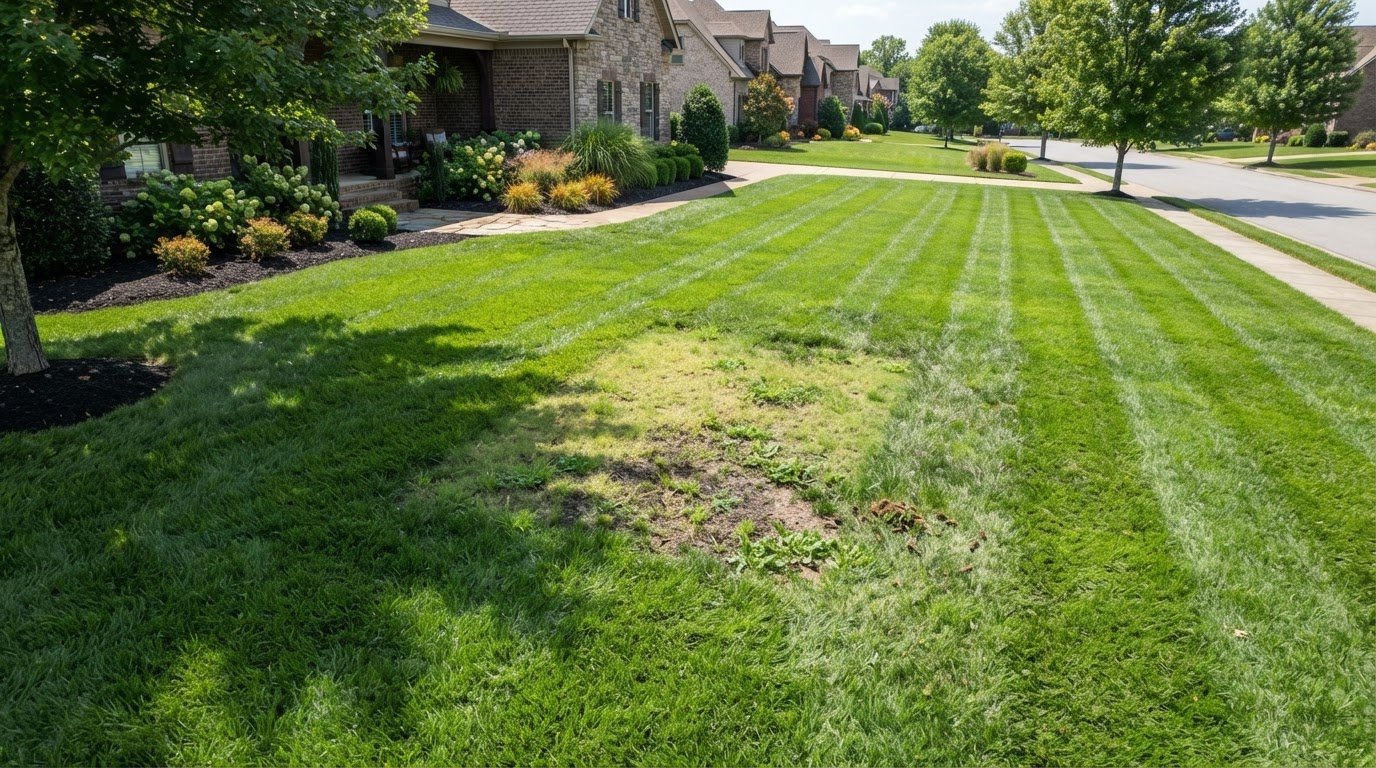
Hot, dry weather can dry out the seedbed before new grass establishes, leading to uneven emergence and weak coverage. In Mt. Juliet, time seeding to the grass type and available moisture, then prepare thin areas so seedlings can take root.
- Decide whether to overseed or renovate. Check how much healthy grass remains before choosing a plan. A lawn with more than half its area in good grass is a suitable overseeding candidate. New seed can fill gaps among established turf without replacing the whole lawn. If large areas are bare or the existing grass is in poor condition, assess whether broader renovation is more practical than adding seed over the entire yard.
- Use young grass to renew thin coverage. Overseeding adds new seedlings among older grass, helping thin areas gain density as the young plants grow. For example, new fescue can fill small openings in a fescue lawn when seed, soil contact, and watering support establishment. More even turf can also leave less exposed soil between grass plants, helping the lawn look fuller and compete with unwanted weeds.
- Choose the seeding window for the grass type. Warm-season grasses need warmer soil, so Southern lawns are generally overseeded from late spring through mid-summer. For cool-season grass, fall is preferred, with early September a recommended target; early spring, ideally March and April, is another option if fall passes. Use the season that fits the grass already growing, rather than applying one calendar date to every lawn.
- Prepare the surface before spreading seed. Check soil pH and compaction before seeding, since both can affect how well grass establishes. Mow established grass to 1½ to 2 inches to reduce competition and open sunlight toward the ground. Remove loose clippings and debris from thin patches, then make sure seed can reach soil instead of landing on a layer of leaves or thatch.
- Plan follow-up care around seedling growth. Newly seeded areas need consistent moisture during germination, especially when Mt. Juliet weather is hot or dry. Keep the seedbed moist with light watering, then shift to deeper, less frequent watering after seedlings emerge. Limit disturbance while young grass establishes, and avoid treating initial green shoots as proof that every thin spot has filled in.
For homeowners overseeding thin lawns in Mt. Juliet, start by deciding whether to fill gaps in a mostly healthy lawn or undertake a wider renovation for extensive bare ground. If a total yard redesign is on the table, examining ideas from specialists such as Handy Landscapes can offer valuable perspective on broader outdoor makeovers. Young grass can gradually strengthen coverage, while the season, preparation, and follow-up care affect how evenly it establishes.
Benefits of overseeding thin or bare lawns
Overseeding adds grass seed to existing turf, helping fill sparse areas without starting over across the whole yard. Its value is practical: more even coverage, new growth among established grass, and a lawn that can better compete for space.
- Use overseeding to preserve healthy turf. If more than half the lawn is good grass, adding seed can address thin patches while keeping established turf in place. For example, reseed bare strips between healthy sections rather than removing the entire lawn. This approach builds on what’s already growing and avoids disturbing sound areas unnecessarily.
- Increase coverage where soil shows through. New seedlings can fill openings between existing grass plants, creating a denser look as they mature. A bare spot beside a walkway, for instance, can receive targeted seed instead of requiring a full-yard renovation. More complete turf cover also leaves less exposed soil for weeds to occupy, though it doesn’t guarantee weed control.
- Plan for different germination speeds. Grass types emerge on different schedules, so a mixed seed blend may not appear evenly at first. Perennial ryegrass typically germinates in 5 to 7 days, tall fescue in 7 to 12 days, and Kentucky bluegrass in 14 to 21 days. Allow the slower grasses time to emerge before judging coverage or reseeding thin sections.
- Choose a season that supports establishment. Late summer and fall give cool-season seed warm soil for germination, while fall conditions encourage turf growth. Weed competition is also lower during this period because fewer weed seeds germinate. For a cool-season lawn, this timing can help new grass establish before the next growing season.
- Prepare thin areas so seedlings can take hold. Before reseeding, check soil pH and compaction, then clear debris that blocks seed from reaching soil. Mowing established grass to 1½ to 2 inches opens sunlight toward the ground and reduces competition. These steps make the seedbed more accessible without treating every thin lawn as a full renovation project.
- Judge progress by coverage, not the first flush of green. Perennial ryegrass can emerge before Kentucky bluegrass, so a lawn may look uneven while slower seedlings develop. Keep track of bare patches and grass type, then assess the whole area after the expected germination windows. For help planning overseeding for thin lawn areas, use the condition of the existing turf to guide the next step.
Performance Lawns: Lawn Treatments
Performance Lawns, INC can help turn an overseeding plan into practical care for a thin lawn. Its Residential Aeration & Overseeding service supports seed establishment, while Lawn Treatments and Weed Control and Fertilization address other parts of ongoing turf care.
Consider professional help if compacted soil, widespread thin spots, or weed-treatment timing makes preparation difficult to manage. Aeration creates openings for seed, and a well-timed overseeding plan can strengthen existing turf without treating every lawn as a full renovation.
For a healthier, more even lawn in Mt. Juliet, contact Performance Lawns, INC to discuss your lawn care needs.
Make your next lawn-care decision with confidence
Give your lawn a clear starting point. Mark the areas that stay thin, note where shade or foot traffic affects growth, and watch whether the same patches return. This simple record can help tailor future care to your property’s conditions instead of treating every bare spot alike.
A thoughtful plan for overseeding thin lawns in Mt. Juliet supports steady turf development, not an overnight fix. As the lawn changes, use what you observe to guide future care and move your outdoor space toward the look and function you want.
For guidance tailored to your lawn, contact Performance Lawns, INC. A practical next step can make caring for your yard feel more manageable.
Frequently Asked Questions
Can I overseed in the spring instead of the fall?
Yes, spring overseeding can work, especially for cool-season grass if fall seeding was missed. Early spring, ideally March and April, is a suitable window for cool-season lawns. For warm-season grasses, the recommended Southern seeding period is late spring through mid-summer, when the soil is warmer. Match the season to your existing grass type, since cool-season and warm-season grasses establish under different conditions.
How long before the lawn looks thick again?
A thicker appearance takes longer than seed germination because seedlings need time to grow and fill spaces between established grass. Perennial ryegrass typically germinates in 5 to 7 days, tall fescue in 7 to 12 days, and Kentucky bluegrass in 14 to 21 days. If your seed blend contains different grasses, expect emergence to be staggered. Keep watering consistent while seedlings establish and assess coverage as they mature.
How soon can I mow after overseeding?
Wait until new grass reaches 3 to 4 inches tall before its first mowing. Set the mower deck to about 3 inches for that first cut, and avoid sharp turns that could disturb seedlings. For example, mow straight passes across a newly seeded fescue area rather than pivoting over it. Keep foot traffic off the lawn during the first two weeks after overseeding while seed establishes.
Why overseed lawns?
Overseeding adds new grass to existing turf, helping thin areas gain coverage without replacing healthy sections. It can work well when a lawn has substantial healthy grass but small bare spots or uneven density. For example, seedlings can fill openings near a walkway while established turf remains in place. As grass grows, denser coverage also leaves less exposed soil and creates a more uniform appearance.
Will overseeding get rid of weeds?
No. Grass seed does not remove existing weeds, so overseeding isn’t a weed-control method. As new grass establishes, it can occupy open soil and reduce space for weeds to spread. If weeds are present, identify the treatment used before seeding, since broadleaf weed killer and crabgrass pre-emergent have different waiting periods before overseeding.
When is the best time to overseed a thin lawn in Mt. Juliet, Tennessee?
For cool-season lawns in Mt. Juliet, fall is the preferred overseeding season, with early September a recommended target. If fall passes, early spring, ideally March and April, is another option. Warm-season grass has a different window: Southern lawns are generally overseeded from late spring through mid-summer. Base timing on the grass already growing, rather than using one date for every lawn.
Which grass seed types grow best in Mt. Juliet and Middle Tennessee?
Choose seed that matches the established grass and the light each area receives. Sunny areas suit mixes containing at least 2 or 3 Kentucky bluegrass cultivars. For partial shade, use a blend of Kentucky bluegrass, perennial ryegrass, and fine-leaf fescues. Shadier spots can suit creeping red fescue, hard fescue, or Chewings fescue. Separate sunny and shaded sections when choosing seed for a mixed-light yard.
How do I prepare a thin lawn for overseeding?
Start by identifying areas that need seed and checking for compacted soil. Before spreading seed, mow the lawn shorter, bag the clippings, and rake away loose debris that could keep seed from reaching the soil. Core aeration can help where compaction limits soil contact. After seeding, water lightly to keep the seedbed moist and limit foot traffic while seedlings establish.