

A strong lawn starts beneath the surface. Heavy-duty lawn aeration in Hendersonville, TN relieves compacted soil by opening small channels that help air, water, and nutrients reach grass roots. Timing depends on grass type, but aeration is generally most effective during active growth, often in early spring or fall.
Thin or stressed grass is easy to notice, but compacted soil may be limiting what roots can access. Foot traffic, pets, and equipment can all press soil particles together. Aeration helps improve root access and supports a lawn’s ability to withstand stress.
Learn how aeration works, which signs may point to compacted soil, and how to care for your lawn afterward. You’ll also see how overseeding and fertilization can support recovery, helping you make informed decisions for your Hendersonville lawn.
Air, water, and nutrient movement to grass roots
In Hendersonville, foot traffic, pets, and heavy equipment can compact soil, narrowing the pathways that carry air, water, and nutrients to grass roots. Core aeration removes small plugs of soil and leaves openings for those resources to reach the root zone. Compacted ground may shed rain or hold puddles rather than absorb water evenly. Fertilizer also needs access to the soil, where roots can take up nutrients.
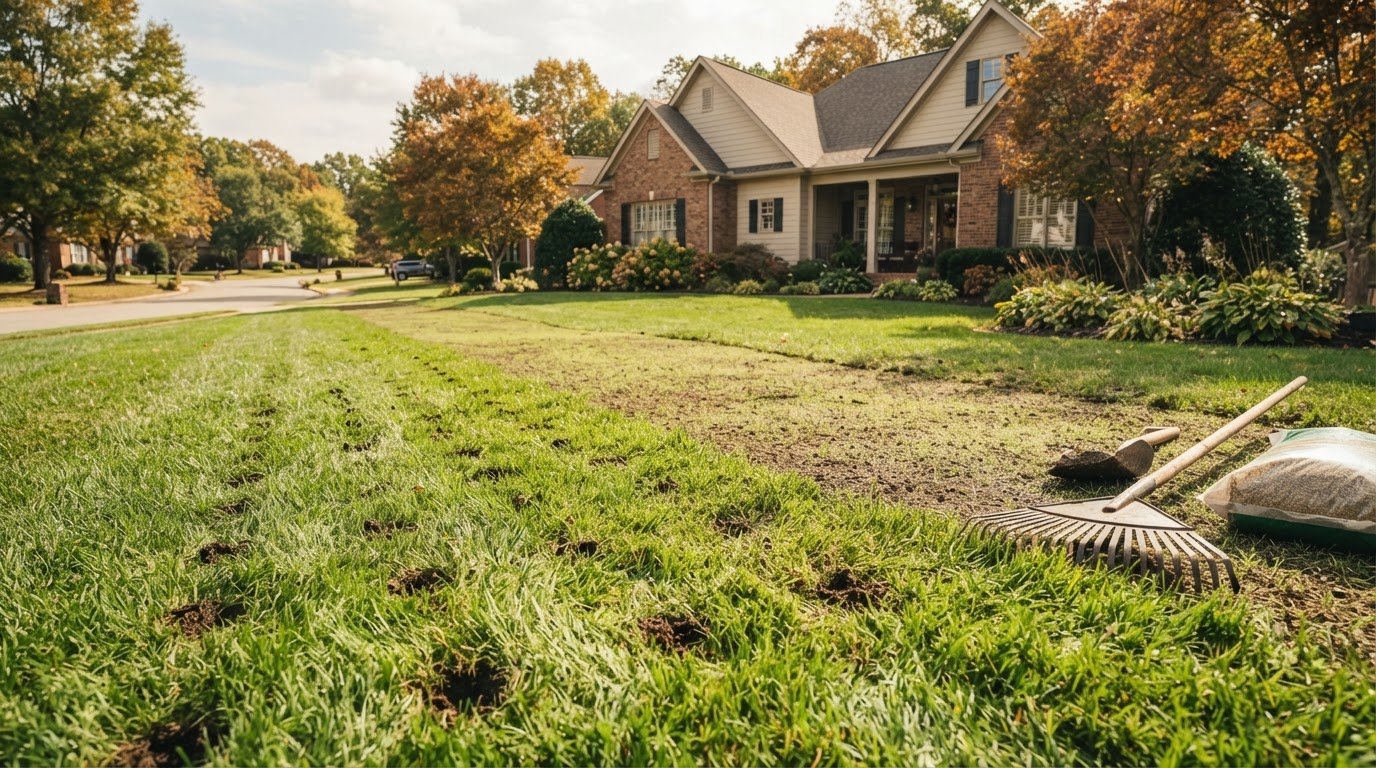
Look for clues across several parts of the lawn, not just one bare patch. The U.S. Department of Agriculture Forest Service identifies platy soil structure, puddling, and surface impressions or ruts as signs of compaction. For example, repeated footprints that remain visible, or water collecting in the same area after rain, can point to restricted movement through the soil. These observations help distinguish compaction from thin turf caused by shade or other growing conditions.
Grass type determines when to aerate in Middle Tennessee. Aim for the grass’s active growing period, generally early spring or fall, depending on the type. Warm-season grass can recover as it grows after aeration during active growth. Core aeration can also complement spring or fall seeding, when openings help seed contact the soil. Base timing on the lawn’s growth, not the calendar alone.
Improved soil access supports root growth and helps turf handle environmental stress. Deeper roots can reach more water and help a lawn cope with dry conditions. A well-aerated lawn can also better withstand stress from extreme temperatures, pests, and diseases. Aeration supports these processes, but it doesn’t replace suitable watering, fertilization, or other care matched to the grass.
Can aeration damage turf, irrigation lines, or shallow roots? Poorly planned passes can injure turf or strike shallow irrigation lines and roots. Mark irrigation routes and avoid visible surface roots before work begins. Core aeration should relieve compaction while protecting healthy turf.
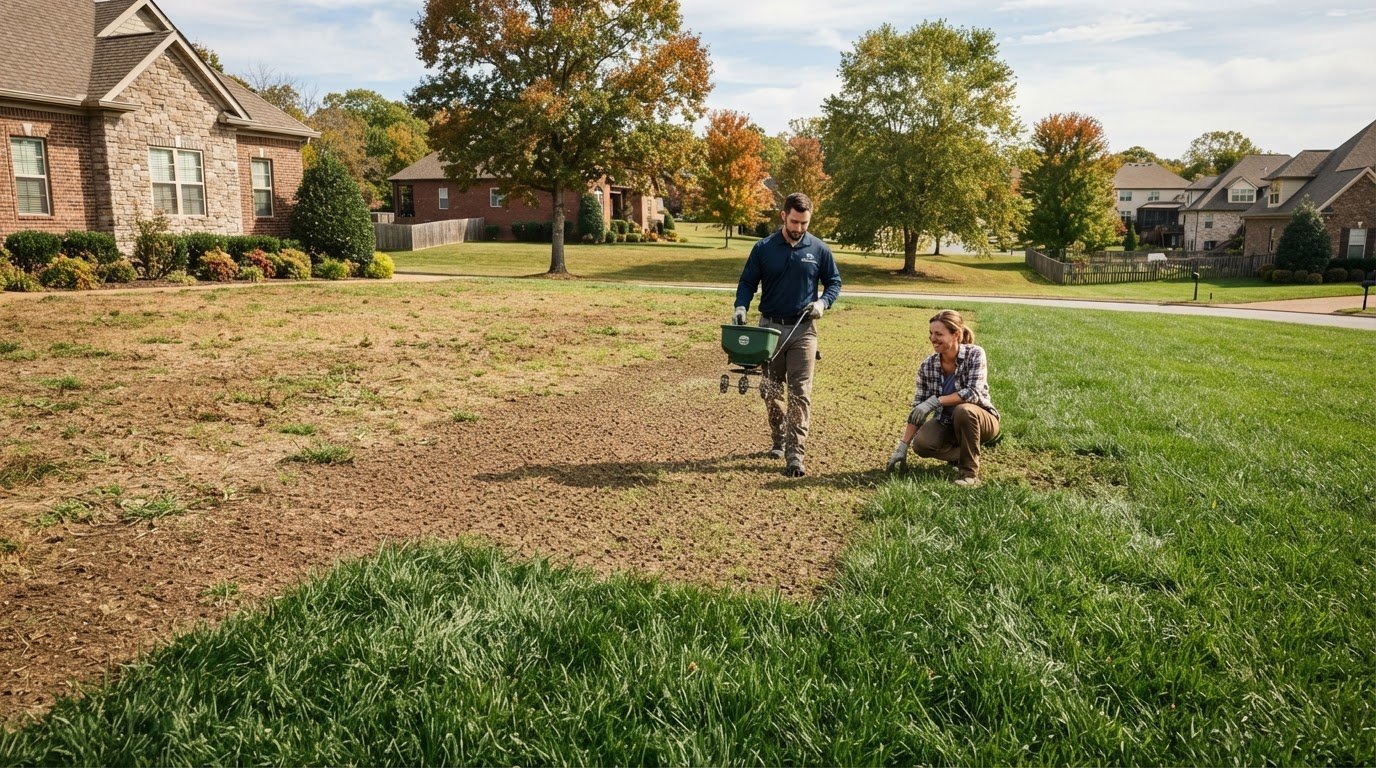
After aeration, keep people and equipment off the lawn for approximately two to four weeks. A Hendersonville lawn generally takes three to four weeks to recover fully, so minimizing traffic protects the openings while turf grows back. Leave soil plugs where they fall; rain or mowing helps them break down naturally. Watering supports grass growth during recovery, while overseeding and fertilization can make use of the channels. A lawn with recurring puddles or compacted soil may benefit from residential aeration and overseeding as part of its care plan.
Why is lawn aeration important?
Aeration can help when compacted soil restricts root growth and water movement. In Hendersonville, soil moisture and timing are important factors in effective core aeration.
Reducing Soil Compaction with Core Aeration
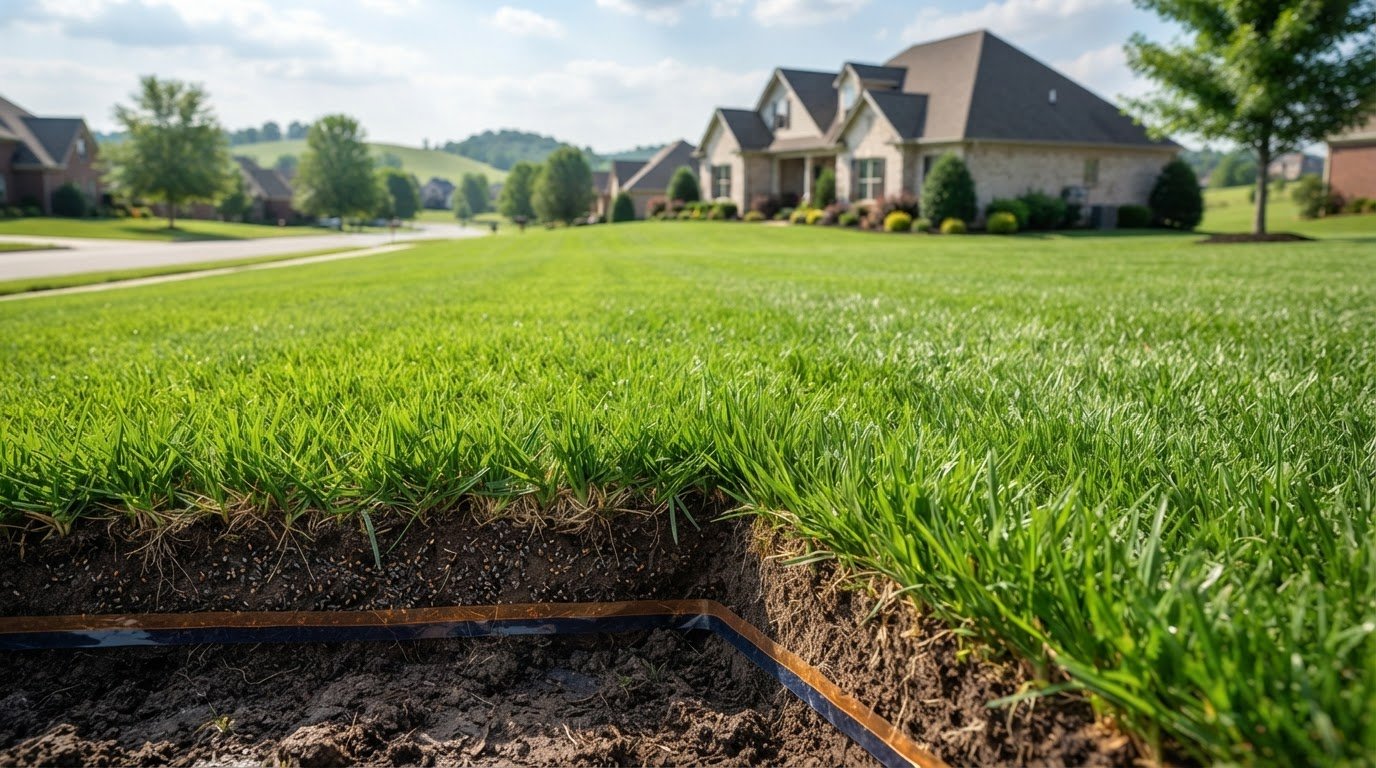
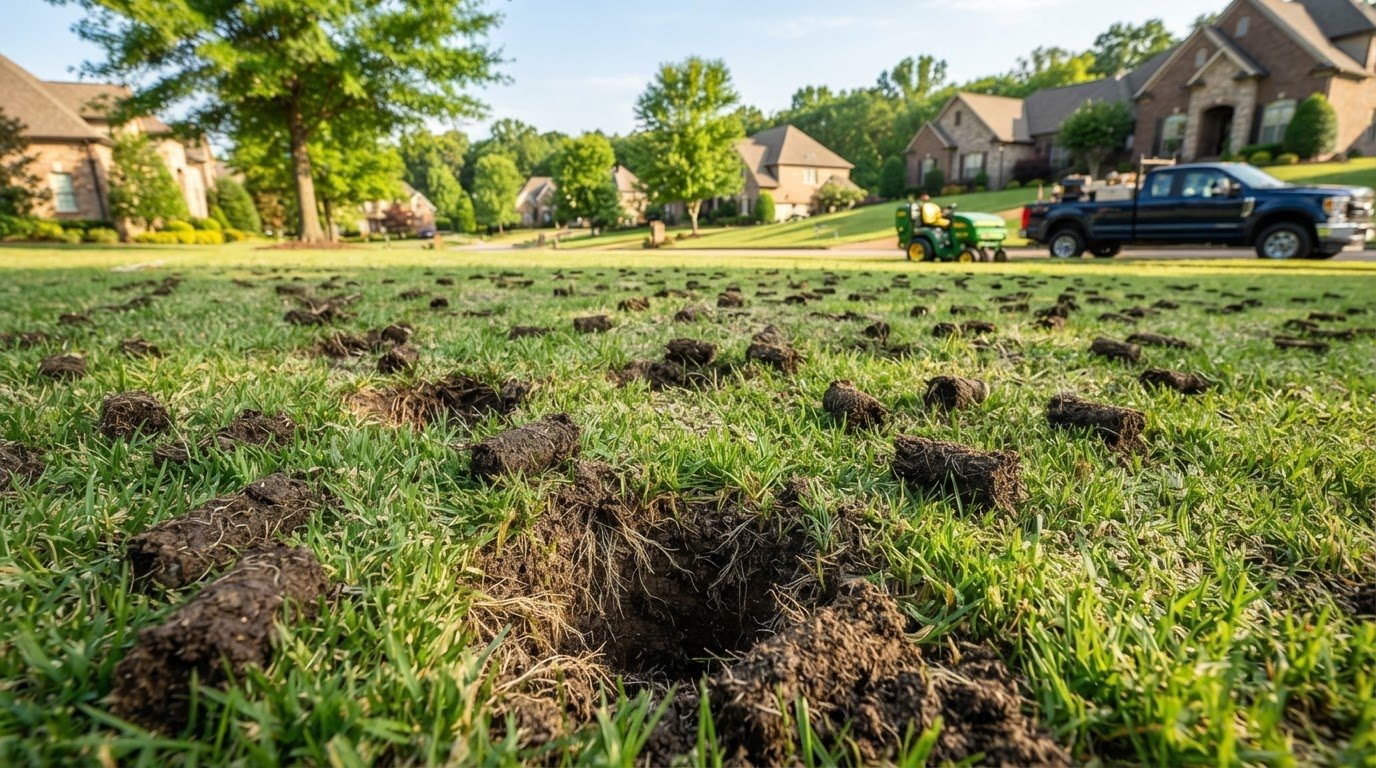
Core aeration removes small plugs from compacted ground, leaving channels through dense soil. These openings make space for air, water, and roots. Spike aeration punctures the ground but leaves soil in place, so it may be less effective at relieving compaction. For a compacted lawn, look for core aeration that removes plugs across the affected area.
Changes to Soil Structure
Removing soil cores interrupts compacted ground and opens pathways between the surface and root zone. Water can enter more readily, and roots gain room to grow into less compacted areas. These changes improve access to soil resources, but they won’t transform every part of a lawn overnight. Soil condition and treatment coverage both affect how evenly the lawn responds.
Signs of Heavy Compaction
Notice whether water repeatedly puddles after rain or ordinary foot traffic leaves persistent impressions. The U.S. Department of Agriculture, Forest Service identifies puddling as a sign of soil compaction. In Hendersonville, recurring symptoms in high-use areas may indicate that compacted soil is limiting turf growth. Compare affected spots with nearby areas that see less traffic to identify where aeration may be most useful.
Both the season and soil condition matter. Aerate during the grass’s active growing period, generally early spring or fall depending on grass type. Soil should be moist, not saturated. In Hendersonville, aeration about one day after rainfall can work well once the ground has drained enough. Very wet soil is difficult to work, while dry, hard ground may resist penetration.
For a heavily compacted lawn, general guidance recommends aerating once a year, typically in spring or fall. A healthy Hendersonville lawn can generally be aerated every two to three years, so assess soil condition rather than applying the same schedule to every property. If puddling and hard ground return, adjust care to address recurring traffic and compaction. A discussion about lawn aeration needs can help you plan a suitable next step.
Spring and fall seeding periods can also be useful times to consider core aeration. Removing plugs reduces compaction and creates openings in the soil. Seeding timing helps frame when to plan the work, while signs of compacted ground explain why it may be needed. Core aeration removes material to create space, rather than relying on surface punctures alone.
Aeration can alleviate soil compaction and create space for airflow, encouraging root growth. Those benefits connect the soil condition with what happens below the turf: less compaction leaves space for airflow and encourages roots to grow. When weighing whether to aerate, keep the purpose specific, relieving compacted soil and giving roots more space to grow. This helps distinguish an aeration decision based on soil condition from treating it as a routine task without regard to what the lawn shows.
Deeper root growth and lawn health
Root development links soil conditions to how Hendersonville turf responds to heat, dry weather, and regular use. Aeration supports root growth by opening pathways in the soil.
Root Growth and Drought Tolerance
Deeper roots can reach moisture below the surface, helping grass cope when topsoil dries. That can matter during Hendersonville dry spells, when shallow-rooted turf may show stress sooner. Aeration gives roots more space to grow into less compacted soil. It can support drought resilience, but doesn’t replace watering when grass needs moisture.
Root Growth and Nutrient Uptake
Roots absorb nutrients from the surrounding soil. Aeration openings help water and fertilizer move into the root zone, where roots can access them. Applying fertilizer after aeration, for example, can help it reach the soil through those channels. Healthy roots still depend on suitable care, including watering that avoids leaving soil dry or saturated.
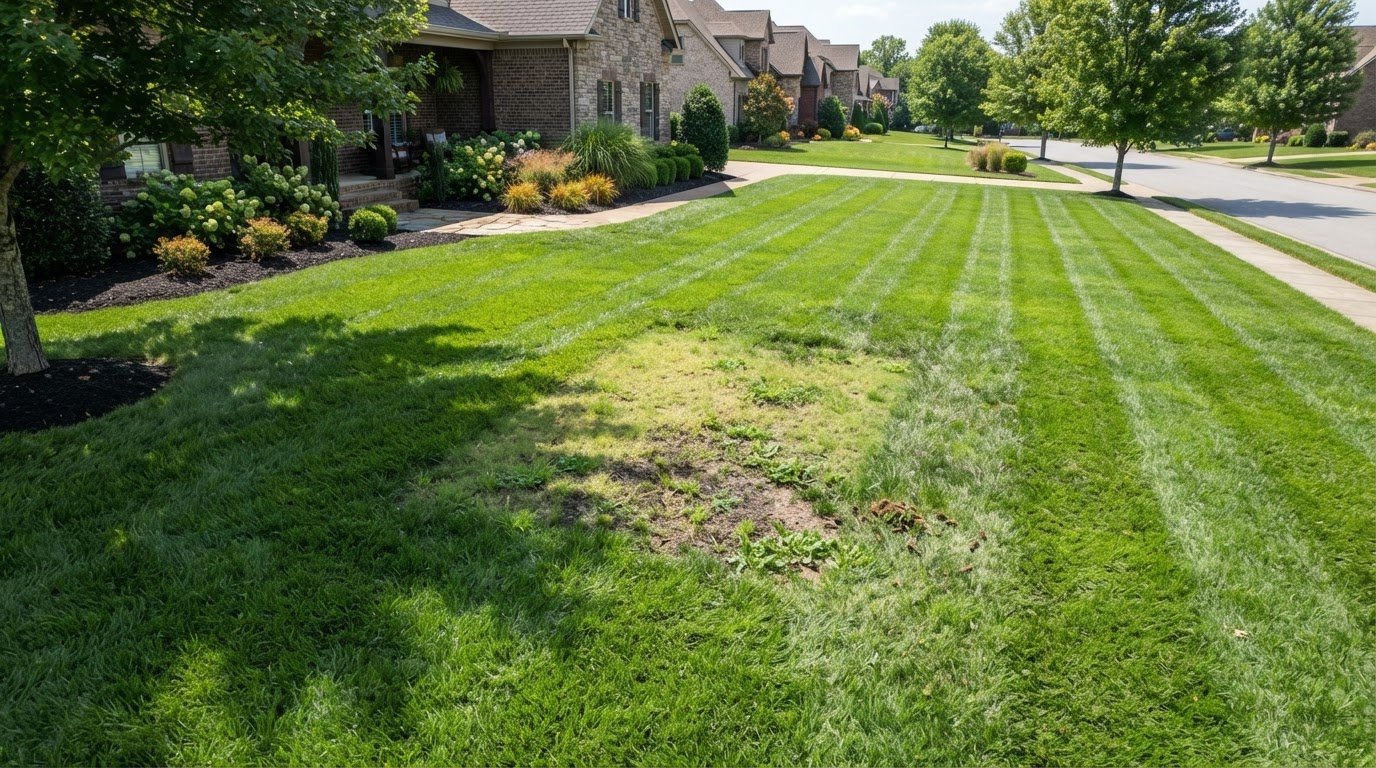
A lawn’s appearance can offer clues about root health. If Hendersonville turf thins in areas exposed to heat or repeated use, compare those spots with nearby grass growing under different conditions. Note where growth is weak and consider whether compacted soil may be limiting root development. Aeration improves the soil environment, but it won’t address every cause of thin turf, including shade or unsuitable care.
Root growth takes time. A Hendersonville lawn generally needs three to four weeks to recover fully after aeration. During recovery, limit foot traffic and equipment so turf can establish without added pressure. Leave grass plugs on the surface to break down naturally, and water to support new growth. These steps help roots make use of improved access to the soil.
Healthy roots help turf respond to environmental stress. A well-aerated lawn can better handle stress from extreme temperatures, pests, and diseases. Aeration doesn’t prevent every lawn problem; it improves conditions that support grass growth. For example, roots that can reach soil moisture help a lawn cope with summer heat, while balanced nutrients support steady growth.
Treat aeration as one part of lawn care, not a substitute for observing the turf. After service, watch for new growth and compare compacted areas with less-traveled sections. If thin spots persist, consider watering, sunlight, nutrient needs, and soil condition together. This helps match ongoing care to the lawn’s actual growing conditions.
Does Anything Need to Be Done After Aeration?
Yes. Watering, traffic management, and follow-up treatments all contribute to recovery after aeration. For Hendersonville lawns, tailor each step to the grass’s condition and the treatment applied.
Watering supports grass growth after aeration. Keep soil moist enough for recovery, but not saturated. Check the area after watering: if water pools, reduce the amount or frequency. Weather and lawn conditions affect how quickly soil dries, so observe the surface rather than following a fixed schedule.
Leave soil and grass plugs where they fall. Rain and mowing help them break down naturally and return soil to the surface. Don’t rake them away immediately after service. Keep people and equipment off the lawn for approximately two to four weeks to protect recovering turf and newly opened soil channels.
Fertilization can support recovery by supplying nutrients, and aeration holes help fertilizer reach the soil. That’s why overseeding and fertilization are often paired with aeration. Choose treatments according to the lawn’s needs rather than assuming every lawn requires the same combination. A thin area with suitable growing conditions may benefit from seed, while an established lawn may need a different follow-up plan.
Weed control also calls for a considered approach. Some lawn care professionals apply weed killer after aeration, but the treatment and timing should suit the turf and weeds present. Dallisgrass and Johnsongrass are invasive grassy weeds that can be harder to manage than common broadleaf weeds. They may require separate or targeted treatment because products used for typical lawn weeds may not control them.
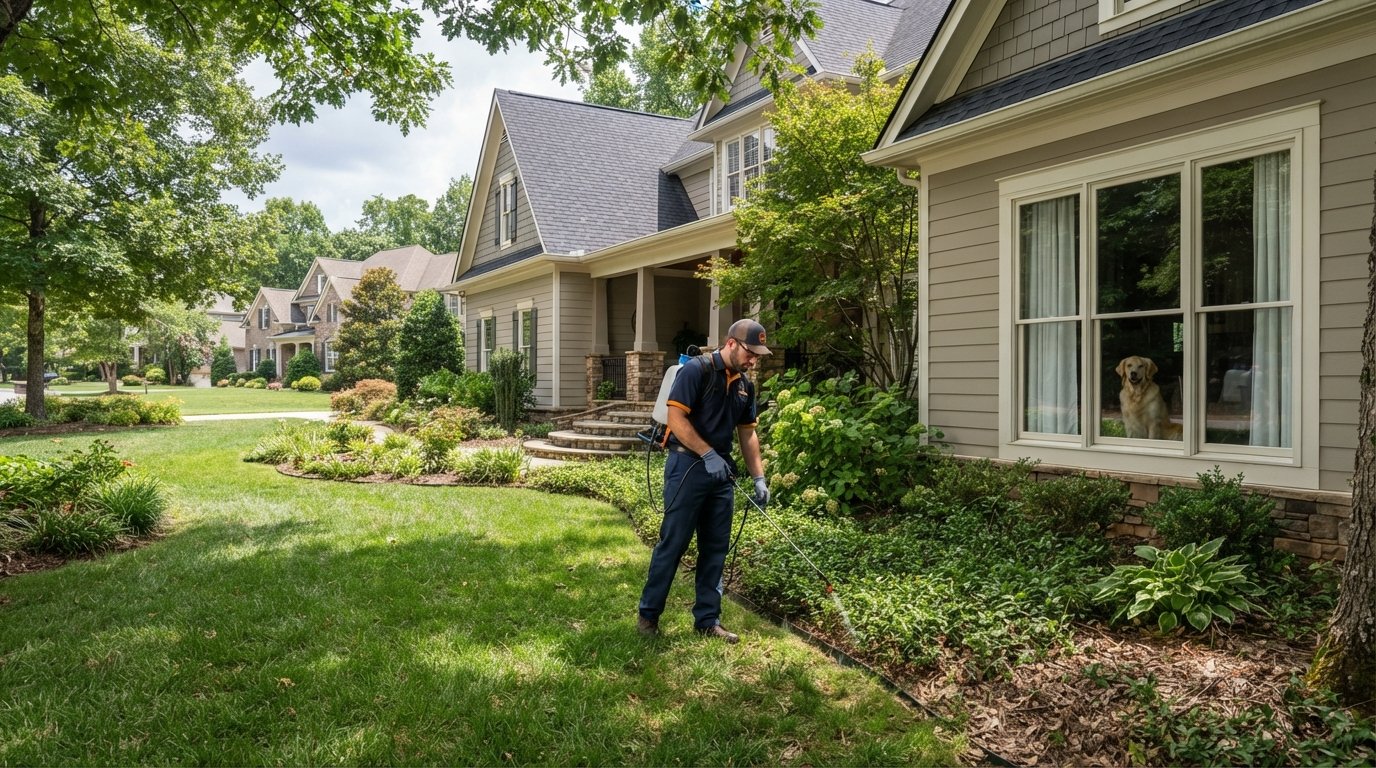
Aeration doesn’t control mosquitoes, ticks, or fleas. These pests can affect how comfortable outdoor spaces feel, especially near patios and play areas. Treat pest management as a separate part of lawn care, not as a replacement for watering, fertilization, or weed control.
As the lawn recovers, watch how the surface responds to rain and routine care. Note whether water still collects in the same spots or thin areas begin filling in. These observations can guide future watering, fertilization, and weed control decisions while helping protect the recovering lawn.
Think of post-aeration care as a coordinated recovery period. Fertilization and suitable watering support turf, while overseeding can take advantage of openings that bring seed into contact with soil. Leave plugs undisturbed so rain or mowing can break them down naturally, and keep people and equipment off an aerated Hendersonville, Tennessee, lawn for approximately two to four weeks.
Professional lawn aeration services in Hendersonville
Effective professional aeration takes equipment, soil condition, lawn layout, and grass type into account. In Hendersonville, the aim is to relieve compaction while giving turf the conditions it needs to recover.
Core aeration removes small plugs instead of simply puncturing the soil. That matters when foot traffic, pets, or equipment have compacted high-use areas. A professional service can assess where compaction is most pronounced and plan coverage accordingly. For example, a narrow, frequently crossed strip may need attention alongside a broad area that puddles after rain.
Equipment affects how the work is carried out. In Hendersonville, stand-on electric aerators generally take 15 to 30 minutes to aerate an average-size lawn. Rolling aerators generally take 30 minutes to an hour, while tow-behind aerators generally take 20 to 30 minutes. These figures describe aerating time, not a guaranteed total service duration; lawn size and layout affect the work involved.
A useful service plan considers the turf and soil, not just the equipment. Aeration is generally timed for the grass’s active growing period, often early spring or fall depending on grass type. Soil should be moist but not saturated so equipment can penetrate and remove cores effectively. A lawn with compacted patches may need a different schedule from one with few signs of compaction.
Thatch is another reason to assess the lawn as a whole. Aeration can help manage thatch by breaking down dead-grass buildup that can suffocate turf. For dedicated approaches to these turf challenges, specialized providers such as Aerating Thatching Co. emphasize combining core aeration and dethatching to rejuvenate struggling grass. A professional assessment can distinguish that buildup from compaction and identify areas that may benefit from core aeration. The right treatment depends on the lawn’s condition, not on repeating the same procedure by default.
Before service, ask what the work covers, how the lawn’s condition guides equipment selection, where aeration will take place, and what recovery steps to follow. Knowing these details helps you prepare your outdoor space. Afterward, leave soil plugs in place and keep traffic off the lawn during recovery so the cores can break down and grass has room to grow.
For a healthy Hendersonville lawn, aeration is generally needed every two to three years; recurring compaction can call for more frequent attention. The takeaway is simple: match the service to visible soil conditions, grass growth, and site layout. Discuss your lawn aeration needs and plan a practical next step for your property.
Performance Lawns: Lawn Treatments
Performance Lawns, INC helps Hendersonville homeowners address compacted soil with Residential Aeration & Overseeding. It’s a practical option when your lawn shows recurring compaction, struggles to absorb water, or needs support for thicker turf. Aeration opens channels for seed and nutrients to reach the soil, while overseeding supports new grass growth. Suitable fertilization can also support lawn health, based on the lawn’s condition and needs.
If you’re weighing aeration for your property, contact Performance Lawns, INC to discuss the next step for your lawn.
Give Your Lawn a Stronger Starting Point
Plan aeration around your lawn’s condition, grass type, and growing season, and include recovery in the plan. That turns heavy-duty lawn aeration in Hendersonville, TN into a considered step toward healthier turf, rather than a one-time fix. Also consider how you use the outdoor space: repeated foot traffic can reveal where soil is compacting and where future treatment may help.
Performance Lawns offers Lawn Treatments, Weed Control and Fertilization, and Residential Aeration & Overseeding to support different lawn needs. If you’re ready to talk through aeration for your property, contact Performance Lawns to discuss aeration. A thoughtful plan can help your lawn move toward stronger growth, season by season.
Frequently Asked Questions
How long does it take to see results?
A Hendersonville lawn generally takes three to four weeks to recover fully after aeration. Watch for fresh grass growth and more even coverage in previously stressed areas. If you also overseeded, look for seedlings emerging and establishing rather than judging progress by the appearance of soil plugs alone. Grass type, growing conditions, and follow-up care all influence recovery.
When Can You Use Your Landscape After Aeration?
Limit foot traffic and equipment on the aerated lawn for approximately two to four weeks. You can still use hard surfaces such as a patio or walkway while keeping activity off treated turf. If someone needs to cross the lawn, choose a route that avoids newly aerated areas. This is especially helpful at Hendersonville homes where a well-used path crosses the yard.
What does heavy-duty lawn aeration include?
Core aeration removes plugs of soil and grass, opening channels through compacted ground. Treatment coverage depends on soil condition and where compaction appears. Residential aeration can be paired with overseeding, placing seed where it can contact the soil. Fertilization can also follow aeration, allowing nutrients to reach the soil through the openings.
Which companies offer heavy-duty lawn aeration in Hendersonville, TN?
Performance Lawns, INC provides Residential Aeration & Overseeding for homeowners in Hendersonville, including professional core aeration for residential properties. It’s a relevant option when your lawn needs compaction relief and support for new grass growth. The service is designed for homeowners planning aeration on their residential lawn.
When is the best time to aerate cool-season lawns in Hendersonville, TN?
For a cool-season lawn in Hendersonville, early fall is generally the best aeration window, with early spring as another option. Choose a time when the grass is actively growing so it can recover after treatment. Soil should be moist but not saturated. Aeration about one day after rainfall can be suitable once the ground has drained; avoid scheduling when the lawn is waterlogged.
What should homeowners do before and after lawn aeration?
Before service, identify irrigation routes and visible shallow roots so the treatment area can be planned carefully. After aeration, water to support grass growth, leave soil plugs in place, and keep traffic off the turf during recovery. If overseeding, coordinate the seed and watering plan. For example, don’t rake away plugs where seed needs contact with exposed soil.
Are there local soil or lawn conditions in Hendersonville that affect aeration?
Yes. Foot traffic, pets, and equipment can compact Hendersonville soil, and repeated puddling after rain may reveal problem areas. The U.S. Department of Agriculture, Forest Service also identifies platy soil structure, surface impressions, and ruts as signs of compaction. Soil moisture matters: saturated ground isn’t ideal for aeration, so allow excess water to drain after rain.