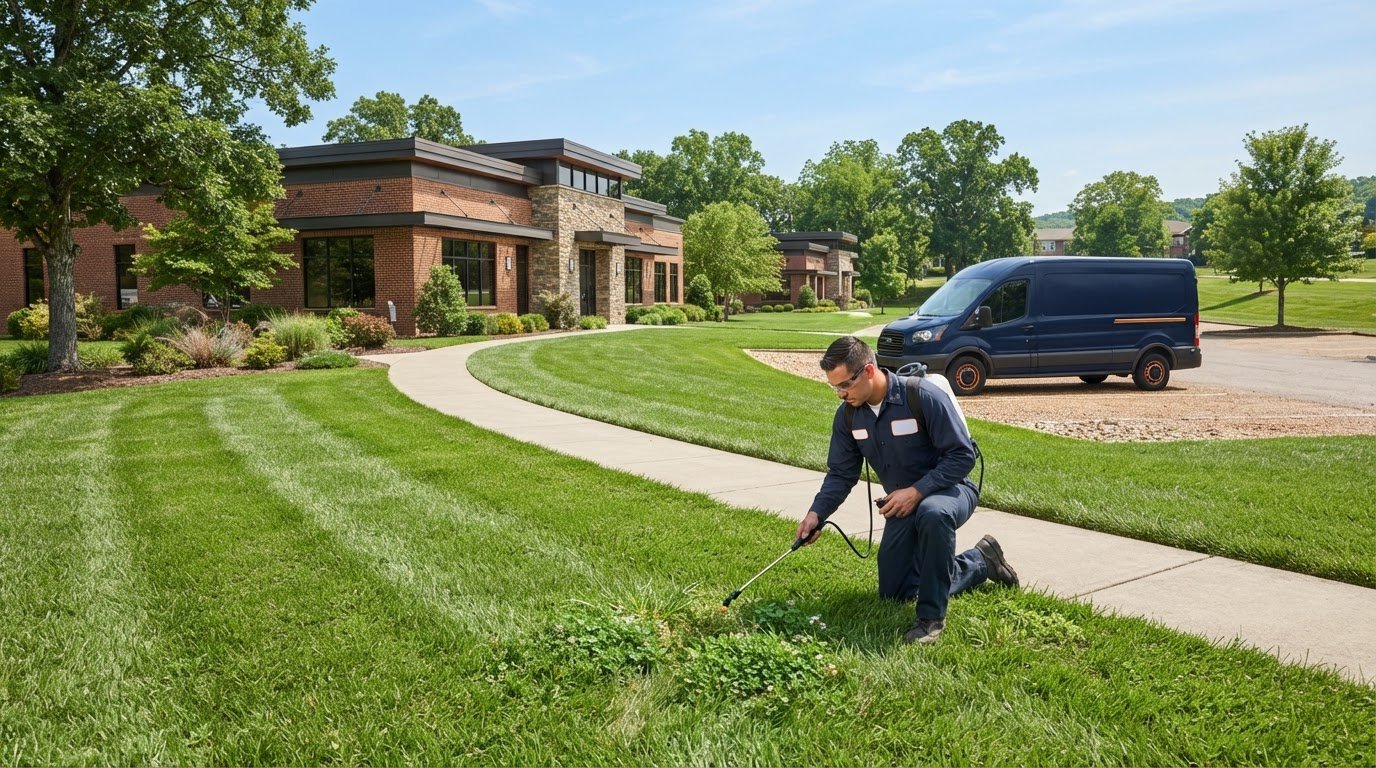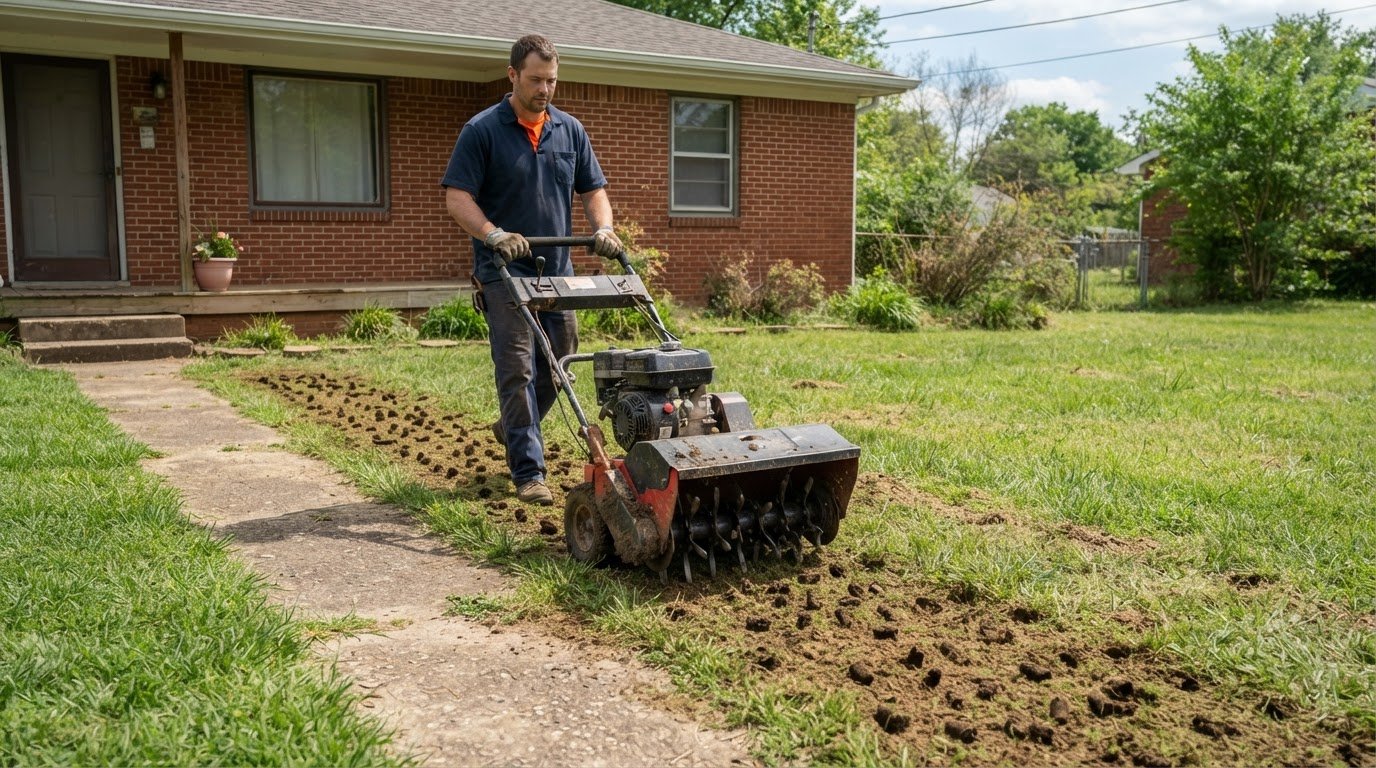


For fescue lawn aeration and seeding in Gallatin, don’t turn off irrigation as soon as seed is down. Keep watering through October and possibly into November, aiming to keep the soil consistently moist but not waterlogged. A common schedule is 20-30 minutes of watering per day for the first 3 weeks, then gradually reduce how often you water.
It’s understandable to wonder whether fall rain is enough or whether the irrigation system can finally rest. New fescue needs steady moisture as it establishes, and a dry seedbed can interrupt that process. The goal isn’t to leave the lawn soggy, but to keep it consistently moist while the grass gets started.
This guide explains when to aerate and seed in Gallatin, how the work can help thin or compacted turf, and how to care for new grass with watering, mowing, and sensible limits on foot traffic.
Watering and mowing during seed establishment
New fescue needs steady moisture while its roots develop. After seeding, keep the soil consistently moist, not waterlogged. In Middle Tennessee, a common starting schedule is 20-30 minutes of watering daily for 3 weeks. Water deeply and consistently rather than relying on frequent, light sprinkling. If you have irrigation, plan to keep it running through October and possibly into November. Rainfall and soil moisture still matter, so avoid saturating the seedbed.
After the initial 3 weeks, gradually reduce how often you water. The aim shifts from keeping the surface moist to encouraging deeper root growth. Watch seeded areas closely during dry stretches, especially where sun or wind dries the soil faster. On sloped ground, shorter watering cycles can help limit runoff while maintaining moisture.
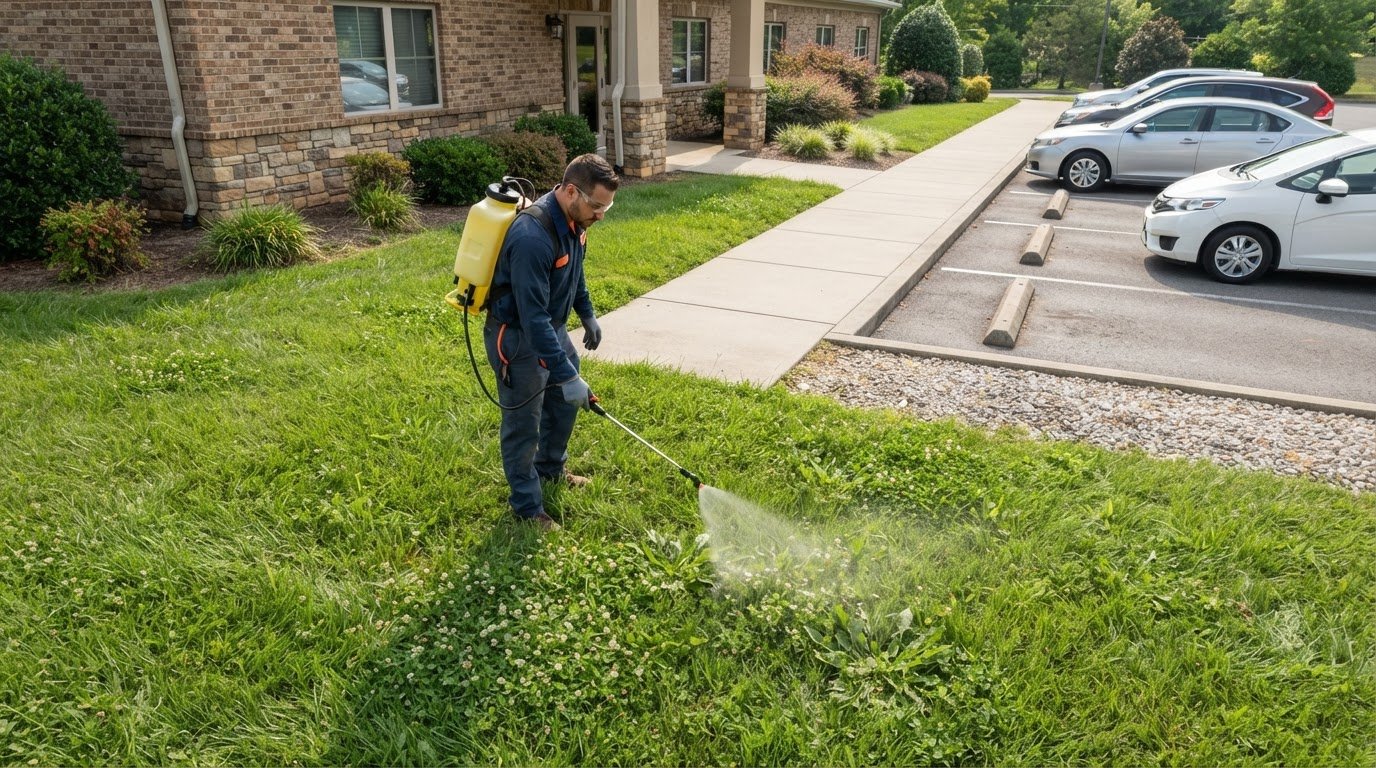
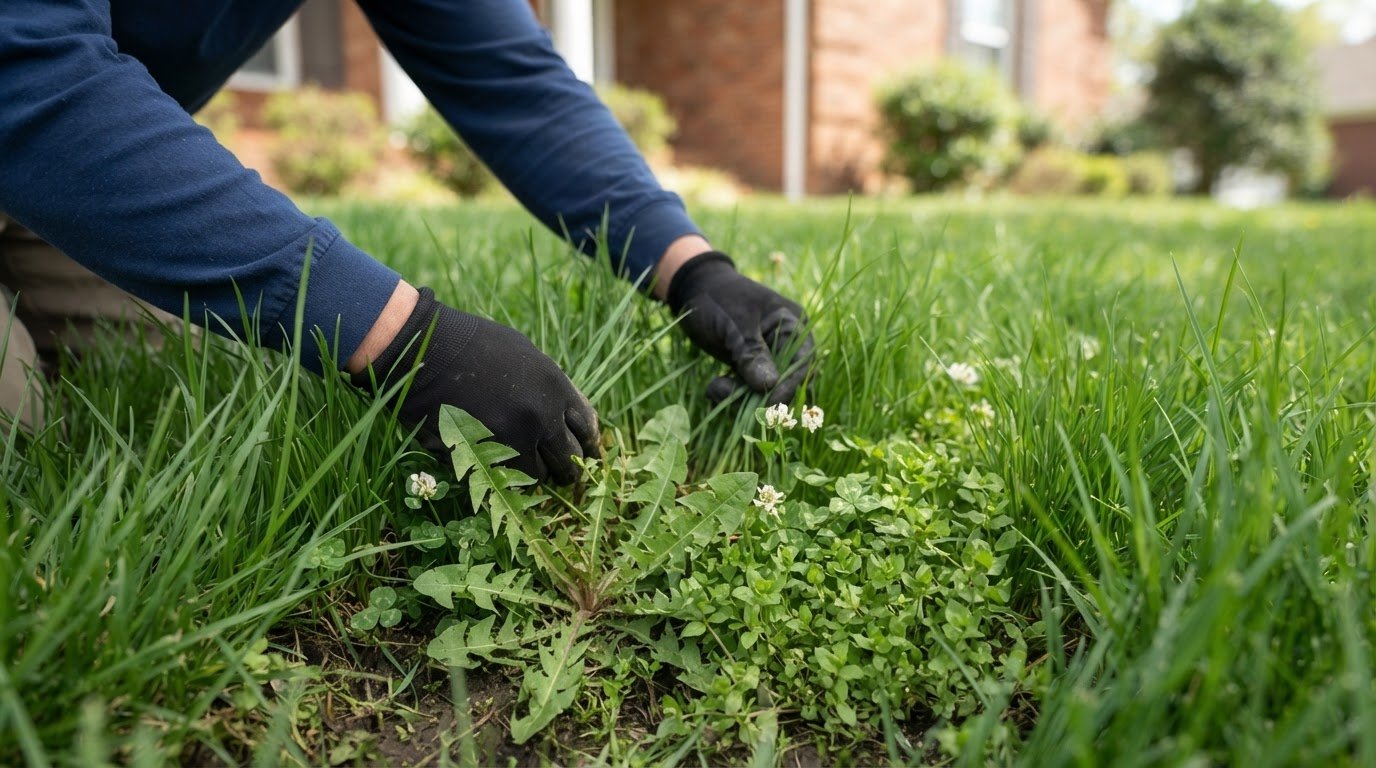
Fertilizer and weed control need careful timing around new seed. Fertilization can support fescue establishment, but herbicides may affect germination or young seedlings. Dallisgrass and Johnsongrass, for example, can be harder to manage than common broadleaf weeds and may require targeted treatment. Follow product-label directions around newly seeded turf.
In Gallatin, tall fescue seed typically germinates within 7-14 days under proper conditions. Germination means the seed has sprouted, not that the lawn is ready for mowing. Keep the seedbed consistently moist during that window. Cooler weather, dry soil, or uneven watering can affect how quickly seedlings appear.
Wait about 3 weeks after seeding before mowing, and let new grass reach about 3 inches first. Then remove no more than one-third of the blade length in a single cut. For an established fescue lawn, aim for a mowing height of 3.5-4 inches. A sharp mower blade helps avoid pulling or tearing young grass.
Before aeration and overseeding, non-maintenance clients are asked to have grass cut from about 3.5 inches down to 2.5 inches. This shorter starting height helps the work reach the soil and gives new seedlings room. Performance Lawns, INC’s aeration and overseeding service is designed around that preparation and seed-establishment process.
Limit heavy foot traffic on newly seeded areas for the first 4-6 weeks. Repeated walking can disturb seedlings before roots take hold. Bermuda grass that has spread into established fescue can be extremely difficult to eliminate completely. Management focuses on limiting its spread, reducing its presence, and helping the desired fescue remain healthy and competitive.
Aeration and overseeding services in Gallatin, Tennessee
Fall timing matters because fescue needs time to establish before conditions become less favorable for growth. Early October is suitable for overseeding non-irrigated Middle Tennessee lawns: air temperatures are cooling, while the soil can remain warm enough for germination. For Gallatin homeowners, this seasonal balance makes early fall a useful time to plan, rather than waiting until the lawn is already thin going into winter.
Tall fescue doesn’t spread through runners or rhizomes, so bare spots won’t fill in through lateral growth. Overseeding adds plants where turf has thinned from traffic, wear, or other damage. Annual aeration and seeding can help maintain coverage in fescue lawns.
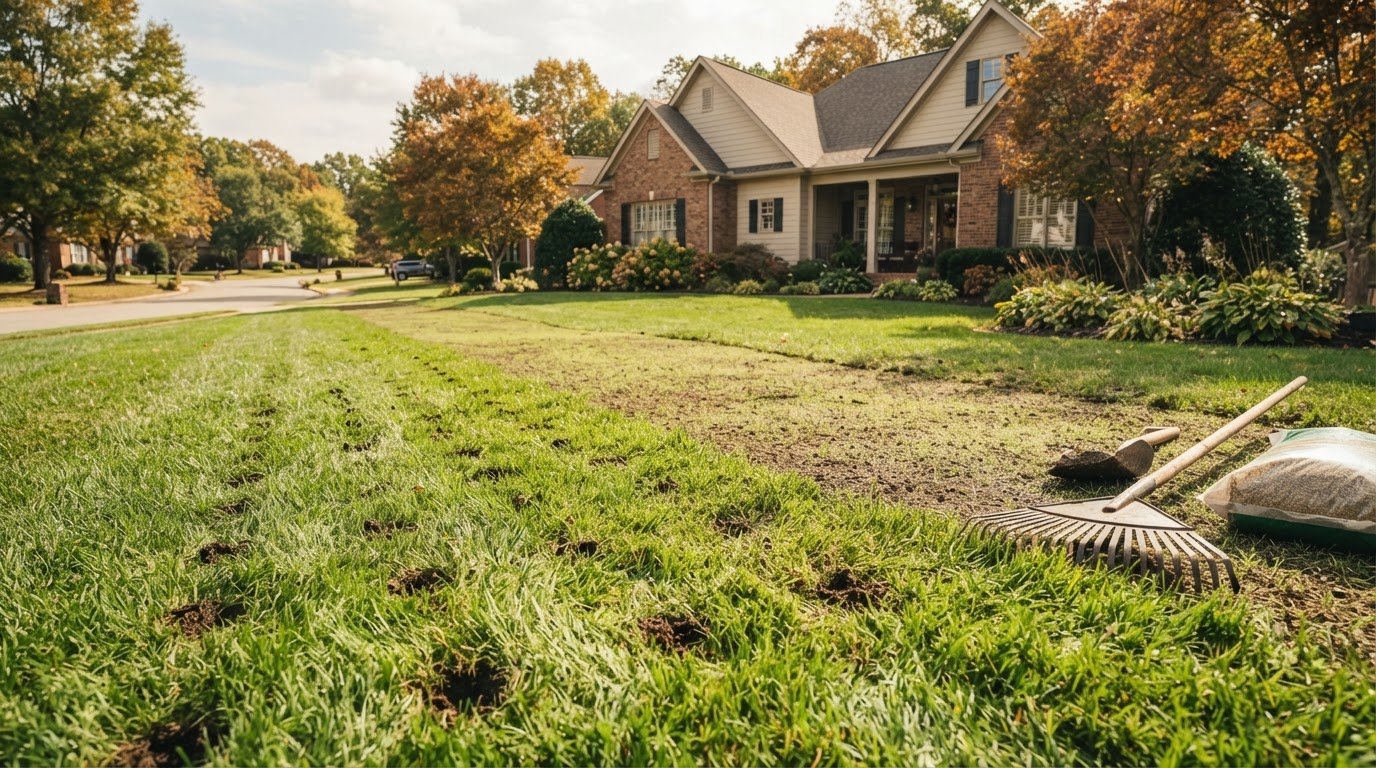
Aeration prepares compacted soil for new growth by creating small openings that let air, water, and nutrients reach the root zone more readily. Core aeration removes small plugs of soil rather than simply poking holes. The openings loosen the soil surface and give seed places to settle and germinate.
The sequence matters: aeration opens the soil, then overseeding distributes fresh fescue seed across the lawn. Seed can settle into the aeration holes, improving contact with soil compared with seed resting only on dense turf or thatch. The combination is especially useful when an established lawn looks sparse but still has enough healthy grass to support new seedlings.
Watering restrictions in Gallatin depend on any active local direction. Follow applicable municipal guidance while keeping the seedbed moist, and remember that a seed-watering schedule does not override a current restriction. Planning around local conditions helps balance establishment needs with responsible water use.
Before aeration and overseeding, preparation can help the equipment and seed reach the lawn surface. For non-maintenance clients, grass is cut from about 3.5 inches down to 2.5 inches before the service. This shorter starting height helps reduce excess leaf cover during the work. After seeding, minimize heavy traffic for the first 4-6 weeks while roots establish.
For a lawn with thin patches or compacted ground, residential aeration and overseeding brings these steps together in one seasonal service. If you’re planning fall work in Gallatin, get in touch about your lawn and its current condition.
Tall fescue in Middle Tennessee doesn’t spread through runners or rhizomes, so overseeding helps thicken the lawn by adding plants where existing turf hasn’t filled in. Aeration supports that effort by creating small openings in the soil. These openings relieve compaction and improve access to air, water, and nutrients, preparing the soil for new growth.
Together, aeration and overseeding address two barriers to fuller coverage: fescue’s growth habit and compacted soil. Fresh seed can reach the soil while the root zone gains better access to air, water, and nutrients. For an established lawn that has lost coverage, assessing both conditions can help determine whether this work suits the turf. The aim is to add plants, not to expect existing fescue to spread into bare areas.
Benefits of aeration and overseeding
Aeration and overseeding address two different lawn needs in one coordinated process. Aeration opens compacted soil, while overseeding adds new fescue plants. Together, they support root access and help rebuild thin areas. Results depend on how well the seed establishes after the work.
Compacted soil can restrict air, water, and nutrient movement around grass roots. Core aeration removes small plugs, creating openings through the turf and into the soil. These holes allow air, light, and water to reach roots more readily, which is useful where regular foot traffic has pressed the ground firm.
Looser topsoil can also create better conditions for new root development. As fescue roots grow into the soil, they can access moisture and nutrients below the surface. Aeration may also reduce thatch, the layer of dead grass and organic material between green blades and soil. Managing that layer helps keep the soil surface accessible.
Overseeding puts the aeration openings to use for more than air and water: they give new seed places to settle and germinate. Seed spread across a thin lawn can also help fill areas damaged by traffic or other wear. For example, a worn path between a patio and driveway may benefit from new seed and improved soil access.
New fescue can improve coverage where existing turf has become sparse. Because tall fescue doesn’t spread through runners or rhizomes, adding seed introduces plants into open spaces instead of waiting for nearby grass to creep across a bare patch. Coverage builds as seedlings establish and join the existing turf.
Thicker turf can compete with weeds by occupying open ground, leaving fewer bare spaces for unwanted plants to take hold. Aeration and overseeding can support that competition, but they don’t guarantee a weed-free lawn. Weed pressure also depends on existing weeds, growing conditions, and ongoing lawn care.
Expect gradual progress, not an instant transformation. Aeration improves soil access during the service, but new grass needs time to germinate and establish. Thin sections may fill in at a different pace from healthier areas, especially where soil conditions vary. Consistent follow-up care helps protect seedlings as they grow.
For a Gallatin fescue lawn, aeration and overseeding are particularly useful when compacted soil and thinning turf occur together. This paired work addresses both the soil and the grass, creating better conditions for roots, new seedlings, and fuller coverage.
Fall aeration and seeding timing in Gallatin
Early October is suitable for overseeding non-irrigated lawns in Middle Tennessee. In Gallatin, cooling air and soil that remains warm enough for germination create a useful seasonal balance. When planning fescue lawn aeration and seeding in Gallatin, also consider the lawn’s condition. Dry soil, lingering heat, and changing weather can affect how well new seed establishes.
Work that starts too early can expose seed and seedlings to lingering heat and faster soil drying. Work that starts too late leaves less favorable growing weather for establishment. Either can lead to uneven or weak coverage, especially if seedbeds dry out or seedlings have less time to develop. Aeration alone can’t make up for poor timing or inadequate moisture.
Use early October as a planning reference, then assess the lawn’s conditions. A non-irrigated lawn depends more on rainfall and natural soil moisture. Irrigation gives you more control over watering, but the seedbed still needs consistent moisture. Slopes, sunny sections, and exposed areas may dry sooner than shaded, level ground.
Local weather shifts from one fall to another. A warm, dry stretch may mean a newly seeded lawn needs closer attention, while cooler weather slows growth and steady moisture supports germination. Plan fescue lawn aeration and seeding in Gallatin around actual conditions rather than treating a calendar date as a guarantee. Uneven soil contact can also lead to patchy emergence.
Before scheduling, identify the areas that need seed and note their exposure. A sunny front slope, for example, may need closer moisture attention than a shaded side yard. Consider whether irrigation can support establishment during dry periods. These details help determine whether early October suits the whole lawn or only selected sections.
Fall timing also affects care after seeding. New grass needs time to germinate and grow before regular use resumes. Limit traffic on newly seeded areas while roots develop, and plan around outdoor activities and routine access. A walkway crossing a thin section, for instance, may need a temporary alternate route during establishment.
Aerating and seeding fescue at the wrong time can lead to poor emergence and weaker establishment. Early work may meet drying heat, while late work gives seedlings less time in favorable growing conditions. A suitable window for fescue lawn aeration and seeding in Gallatin aligns early-fall weather with soil moisture and the lawn’s exposure to support more even coverage.
What is the recommended fescue seed rate per 1,000 square feet for overseeding?
There isn’t one suitable seed rate for every 1,000-square-foot fescue lawn. The amount depends on the seed product’s overseeding directions and how much established grass remains. A sparse lawn needs a different approach from turf with only a few thin patches. Use the label’s overseeding rate, not a rate intended for starting a completely bare lawn.
Start by identifying the seed type and assessing the lawn. Tall fescue blends and individual products can have different label directions, and existing turf density affects how much open soil needs coverage. A lawn with small worn areas needs seed distributed across those spots, while broader thinning calls for coverage across a larger area.
Measure the section you plan to overseed before calculating the amount. For a lawn area matching the 1,000-square-foot label basis, use the listed rate directly. For a smaller or larger section, multiply the label rate by the measured area, then divide by 1,000. This keeps the application proportional instead of guessing from the bag size.
For a rectangular section, multiply its length by its width to calculate the area. Add separate sections together if the lawn has irregular edges or isolated thin patches. Keep the total in square feet, then use the calculation on the seed label. Accurate measurement helps prevent running short in one area and applying too much in another.
Even coverage matters as much as the total amount. Divide the calculated seed into two portions and spread them in crossing directions: make one pass along the lawn’s length, then another across it. This pattern distributes seed more evenly than applying the entire amount in one pass.
Don’t compensate for poor seed contact by adding extra seed. Too much seed can crowd seedlings, while thin distribution leaves gaps. Aeration holes give seed places to settle, but the product directions determine the application rate. Prepare the surface and distribute seed consistently across the target area.
Check the label for the overseeding rate and instructions for that seed. The stated rate, measured lawn area, and remaining turf density guide the calculation. If the label gives separate directions for overseeding and new lawns, use the overseeding rate for established grass.
For a measured Gallatin lawn, a professional assessment can help match seed quantity to the area and turf condition. Contact us to discuss your fescue overseeding needs and plan an application suited to your lawn.
Performance Lawns: Residential Aeration & Overseeding
Performance Lawns, INC provides residential aeration and overseeding for homeowners looking to improve compacted soil and thin fescue coverage. The service combines core aeration with overseeding, creating openings where seed can reach the soil and establish among existing turf.
The service is a practical next step when a lawn has bare or worn areas, or soil compaction is limiting healthy growth. After seeding, consistent moisture and limited foot traffic help support establishment. Performance Lawns, INC can coordinate the work with your lawn’s condition and seasonal timing, focusing on the areas that need attention.
For guidance on residential aeration and overseeding for your lawn, contact Performance Lawns, INC.
Plan your next step for a stronger fescue lawn
Let your lawn’s condition guide your next decision. Note where coverage has changed, where soil feels compacted, and which areas see regular activity. A clear picture of your yard helps shape a plan suited to its needs instead of relying on a one-size-fits-all approach.
With a thoughtful plan, you can enter the next growing season with practical expectations and a clear sense of what your fescue needs.
Contact Performance Lawns, INC to discuss your lawn and consider the next step toward healthier, fuller fescue.
Frequently Asked Questions
Can I turn off my irrigation after seeding?
No, don’t turn off irrigation just because seeding is finished. Keep it available while seedlings establish, adjusting watering when rainfall has already moistened the soil. A controller that runs unchanged after rain can leave some areas saturated. Check sunny and shaded parts separately because they can dry at different rates. Aim for even moisture, not puddles or runoff.
Do I Need to Do This Every Year?
Aeration and seeding can be useful for fescue lawns, depending on their condition. The amount of seed needed varies with the lawn’s condition, so distinguish broad thinning from a few isolated worn spots. A yearly assessment also helps identify where traffic or changing coverage has affected the turf. Annual service doesn’t mean every section needs the same attention or seed quantity.
How many passes of aeration are done?
There isn’t one pass count that applies to every lawn. The work should account for soil compaction and provide useful coverage across the areas being treated. A compacted section may need different attention from a less affected one. The number of passes depends on the site and equipment approach, so a single figure wouldn’t accurately describe every property.
When is the best time to aerate and overseed in Tennessee?
For Middle Tennessee fescue, early October is a suitable target, particularly for a lawn without irrigation. Use local soil and weather conditions to guide scheduling, since a dry spell affects how much moisture new seed receives. Tennessee has varied growing conditions, so a date suited to Middle Tennessee shouldn’t automatically be applied statewide.
When is the best time to aerate and overseed a fescue lawn in Gallatin, Tennessee?
Early October is a suitable target for a Gallatin fescue lawn, especially without irrigation. Consider the property’s exposure and recent weather before choosing a service date. A sunny, open lawn may have different moisture conditions from a shaded yard. These local differences help determine whether the timing suits the whole lawn or selected areas.
Which Gallatin lawn care companies offer core aeration and fescue seeding?
Performance Lawns, INC offers residential core aeration and overseeding in Gallatin. The service is intended for residential lawns and suits homeowners seeking core aeration paired with fescue seeding. When describing your lawn, note whether thinning is widespread or concentrated in specific areas. That context helps connect the service to the condition you want to address.
How should a fescue lawn be prepared before aeration and overseeding?
For non-maintenance clients, grass is cut from about 3.5 inches down to 2.5 inches before the service. Also make the treatment areas accessible by moving items that obstruct the lawn. Identify thin sections and places with regular foot traffic, so those concerns are clear during planning. Avoid applying weed treatments near seeding unless the product label permits use around new seed.
How often should a newly seeded fescue lawn be watered in Middle Tennessee?
Water daily during establishment, using 20-30 minutes per day for 3 weeks after aeration and seeding as a common schedule. Then gradually reduce watering frequency. Rainfall and how quickly the soil dries affect the need for irrigation, so don’t rely on a fixed timer after wet weather. Check for standing water as well as dry patches to avoid overwatering.