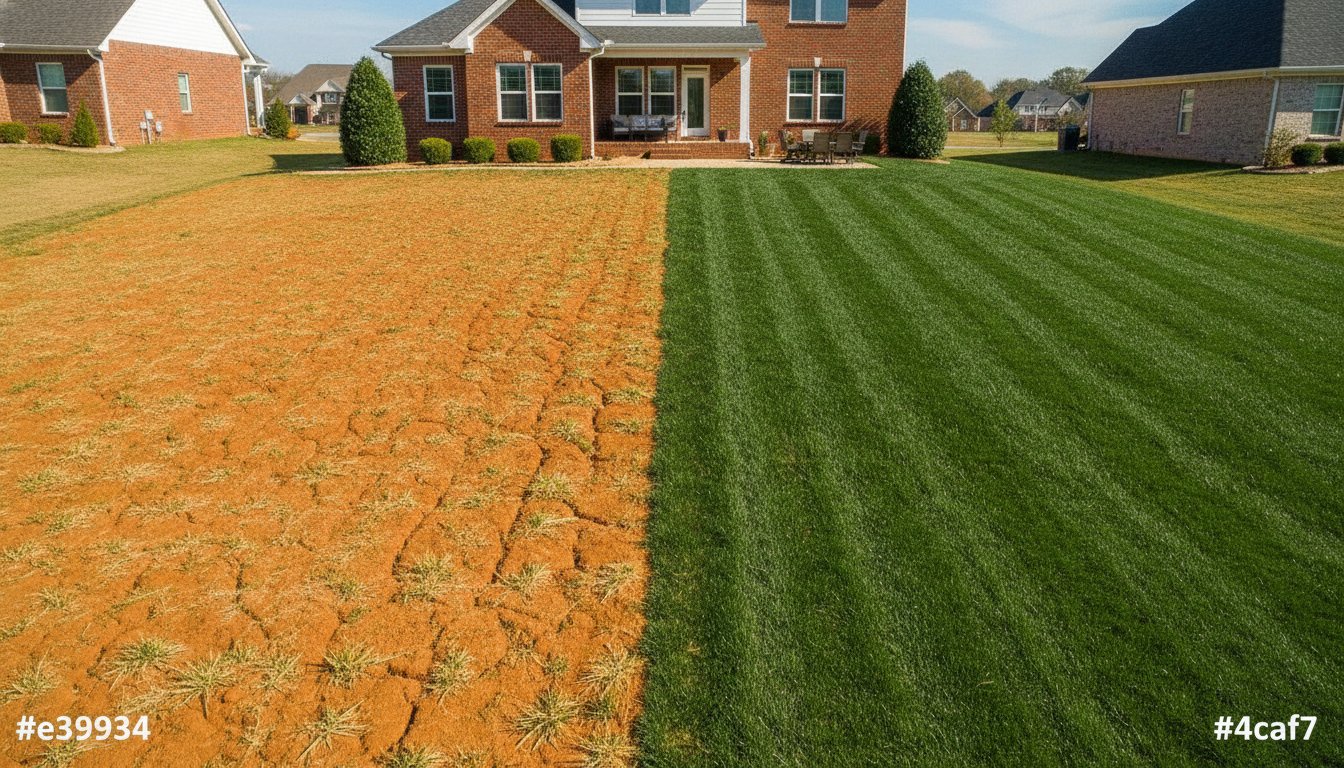


What if the primary obstacle to a lush lawn isn't a lack of fertilizer, but the very ground beneath your feet? In Middle Tennessee, our dense red clay often behaves more like a brick than a seedbed, leaving many homeowners searching for how to fix compacted soil as their fescue thins and rainwater simply sheets off the surface. It's frustrating to watch your hard work result in turf that feels rock-hard, looks sparse, and struggles to survive the summer heat.
We believe that a healthy lawn is the foundation of a beautiful home and a thriving community. This guide offers the professional insights you need to diagnose compaction and restore the vibrant, deep-rooted vitality your landscape deserves. You will discover the mechanical "reset button" of core aeration, the unique challenges of our local limestone-based soils, and the strategic steps required to cultivate a lawn that breathes, absorbs, and endures. By understanding these proven methods, you can transform your outdoor space into a resilient, green sanctuary that rewards your stewardship for years to come.
Understanding Soil Compaction in Middle Tennessee
Soil is the silent foundation of every vibrant lawn. Compaction occurs when individual soil particles are squeezed together, which eliminates the vital pore space needed for oxygen, water, and nutrients. Without these open channels, your turf essentially suffocates. Understanding soil aeration processes is critical because it highlights how gas exchange keeps roots alive. In Middle Tennessee, this isn't just a theory; it's a daily battle against our region's dense geological makeup that demands consistent stewardship, technical precision, and local expertise.
To better understand how these physical changes impact your yard and learn the basics of how to fix compacted soil, watch this helpful video:
Our local landscape features heavy silty clay and red clay loams sitting atop shallow limestone bedrock. Research shows that root growth is severely restricted when soil bulk density reaches 1.55 to 1.65 g/cm³, a common state for high-traffic Tennessee yards. When clay is compressed, it forms a physical barrier that prevents deep root establishment, leads to water runoff, and starves the plant of essential resources. Learning how to fix compacted soil is the first step toward long-term lawn health, ensuring your investment in seed and fertilizer doesn't simply wash away during the next Nashville downpour.
The Role of Heavy Clay Soil
Clay particles are microscopically small and flat, allowing them to stack tightly like sheets of paper. This structure makes clay far more prone to compaction than sandy or loamy soils found in other parts of the country. During our hot, dry summer months, this material bakes into a substance that feels more like concrete than garden earth. This density prevents the "breathing" necessary for a resilient fescue lawn. You can learn more about managing these unique conditions in our guide on lawn care for clay soil. This isn't just about aesthetics; it's about the physical biology of your property.
Common Causes of Compaction in Residential Yards
Residential compaction is rarely the result of a single event. It's an accumulation of daily life. Backyard play, pet paths, and the recurring weight of mowing equipment all press the soil down over time. In newer developments across Mt. Juliet, construction equipment often leaves subsoils severely compromised long before the first sod is laid. Natural factors like heavy rainfall followed by rapid drying also contribute to the settling of our native clay. Identifying these stressors early is vital to prevent total turf failure, thinning fescue, and increased pressure from invasive weeds that thrive in poor conditions.
How to Tell if Your Soil is Compacted: 4 Warning Signs
Your lawn is a living ecosystem, a reflection of your stewardship, and a vital part of our Middle Tennessee community. Before you can determine how to fix compacted soil, you must learn to read the signals your turf is sending. When soil particles are pressed too tightly, the effects of soil compaction on root systems become evident through visible distress. You might notice water pooling in low spots, running off sloped areas, or simply sitting on the surface rather than soaking into the earth. This lack of absorption leaves your fescue thirsty and vulnerable, regardless of how much you water.
Thinning or yellowing turf is another primary indicator of distress. When the ground is too hard, grass roots cannot access the oxygen and nutrients they need to maintain a deep green hue. You may also see tree roots creeping across the surface of your yard. This happens because the subsoil is too dense for the roots to penetrate downward, forcing them to stay where they can still find air. If you're seeing these signs, it's time for a closer look at your soil's physical condition.
Performing the Screwdriver Test
The screwdriver test is a simple, effective way to gauge the density of your yard without specialized equipment. To perform this test, take a standard flathead screwdriver and attempt to push it into your lawn when the soil is slightly moist. Test several areas, including high-traffic paths, pet areas, and spots where the grass looks thin. If the tool meets significant resistance or stops after only an inch or two, your soil is likely compacted. Healthy fescue thrives when a tool can penetrate at least six inches into the soil profile with only moderate hand pressure.
Identifying Secondary Symptoms
Compaction often invites secondary problems that complicate your maintenance routine. As fescue thins out due to restricted root growth, you'll likely see increased weed pressure. Invasive grassy weeds like Dallisgrass and Johnsongrass are particularly opportunistic; they often take hold in these stressed areas and are significantly more challenging to manage than common broadleaf weeds. Because these specific weeds may not respond to standard treatments, a separate or targeted treatment approach is often recommended to help your lawn remain competitive.
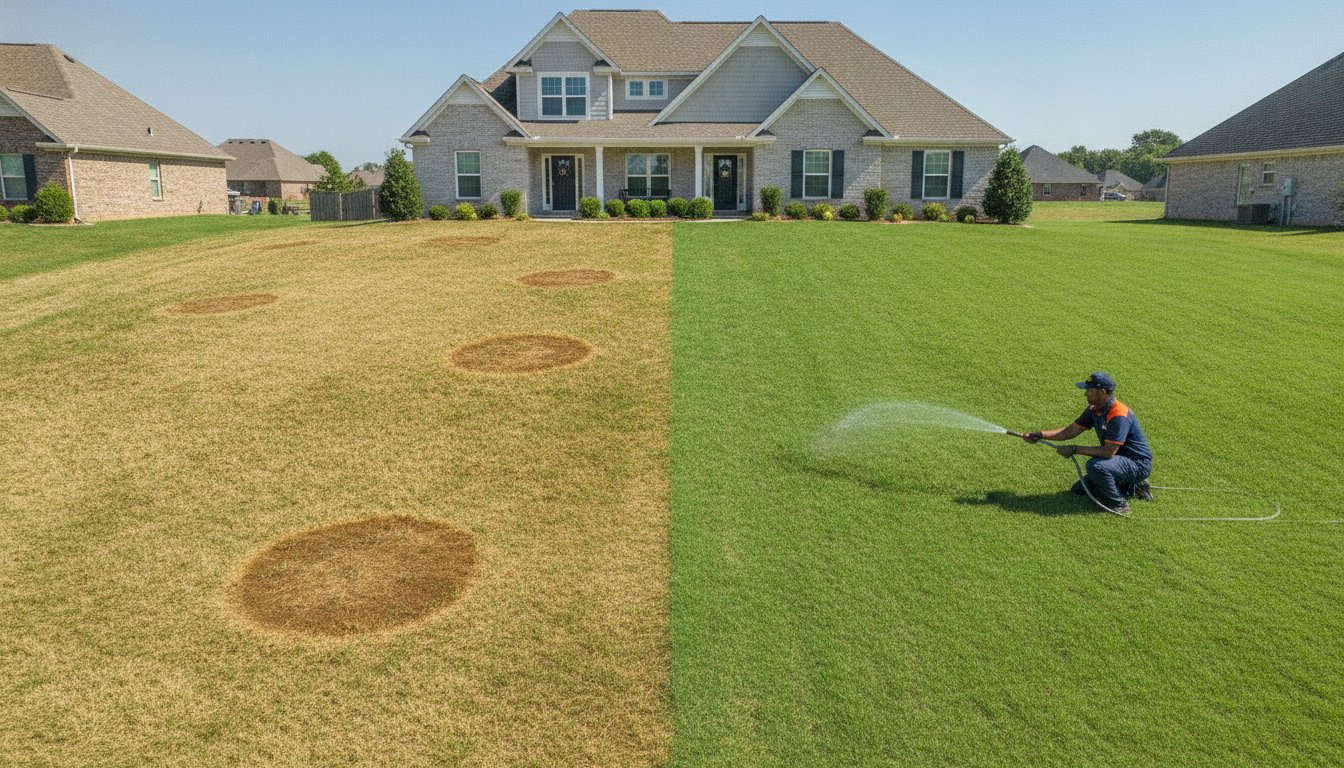
Poor drainage also creates a breeding ground for fungal pathogens. There is a direct connection between soil saturation and the need for brown patch treatment for lawns in our humid climate. While professional disease management can help manage common issues like brown patch or dollar spot, addressing the underlying compaction is the only way to improve the soil's natural resilience. If your lawn seems to stop responding to fertilization or shows stunted growth despite regular care, we invite you to reach out for a professional soil evaluation to get your landscape back on track.
Comparing Solutions: DIY vs. Professional Soil Remediation
Choosing the right method for your yard is an investment in your property's long-term health and your personal peace of mind. When homeowners research how to fix compacted soil, they often encounter a confusing array of options, from liquid sprays to manual spikes. However, mechanical core aeration remains the industry gold standard for a reason. Unlike spike aerators, which simply push soil aside and increase lateral pressure, core aeration physically removes small plugs of earth. This process creates immediate space for air, water, and nutrients to reach the root zone, effectively acting as a "reset button" for your landscape.
Liquid soil conditioners, while popular in recent years, have significant limitations on our heavy Tennessee clay. These products often act as wetting agents rather than mass displacers. They can't physically break up the dense limestone-based subsoil that restricts fescue roots. For genuine remediation, you need the mechanical force of a professional-grade aerator that can penetrate 2.0 to 3.5 inches deep. This depth is essential for establishing the resilient root systems that define a high-standard lawn. By focusing on physical decompaction, you ensure your soil breathes, absorbs, and thrives.
Why Core Aeration is the Best Choice
The science behind core aeration is straightforward yet transformative. By pulling a hollow plug, you create a void that allows the surrounding soil to expand and relax. This mechanical intervention facilitates the direct delivery of oxygen and fertilizers to the root zone, supporting the cultivation of thick, competitive turf. According to Clemson Extension's lawn aeration guidelines, this process is the most effective way to improve drainage and root penetration. For homeowners in Mt. Juliet and the surrounding areas, our professional aeration services provide the specialized equipment and local expertise needed to handle these tasks with precision and care.
The Pitfalls of DIY Aeration
Renting a machine might seem like a cost-saving measure, but the physical reality of DIY aeration is often overwhelming. Commercial aerators typically weigh between 250 and 300 lbs, requiring a ramp-equipped truck or trailer for transportation. Maneuvering these heavy units on the sloped terrain common in Middle Tennessee is physically demanding and requires significant strength. Homeowners often struggle with timing, aerating when the soil is too dry—which prevents tine penetration—or too wet, which can damage the turf structure. When you calculate the rental fees, fuel costs, and the loss of your weekend, the value of a professional partnership becomes clear. We take personal responsibility for the result, removing the burden of labor while delivering the high-end results your property deserves.
Step-by-Step: How to Fix Compacted Soil with Core Aeration
Timing is the most critical factor when planning how to fix compacted soil in our region. For the cool-season tall fescue lawns common in Mt. Juliet and Middle Tennessee, the primary window for restoration opens in late August and extends through October. This period aligns with peak germination and root establishment. By aerating during these months, you take advantage of the natural growth cycle, allowing your lawn to recover and thicken before the winter dormant season arrives. It's a strategic intervention that transforms a struggling yard into a resilient landscape. For warm-season grasses like Bermuda or Zoysia, this process should occur between late May and July when the grass is actively growing.
During the process, the goal is to achieve a density of 20 to 40 holes per square foot. This is typically accomplished on compacted clay via two crosswise passes with a professional hollow-tine aerator. The resulting clay plugs, which should be 2.0 to 3.5 inches deep, are left on the surface to decompose. These plugs naturally crumble within 7 to 14 days under regular rainfall and mowing, returning vital minerals and beneficial microbes back to the turf surface. This cycle of extraction and redistribution is essential for long-term health and is a proven method for how to fix compacted soil effectively.
Preparing Your Lawn for Aeration
A successful aeration service begins with careful preparation. You should mark all underground obstacles, including irrigation heads, invisible pet fences, and shallow utility lines, to prevent equipment damage. Achieving the right soil moisture is equally important; we call this the "Goldilocks" zone. If the ground is too dry, the tines won't penetrate our dense clay; if it's too wet, the machine can cause surface damage. A deep watering two days before the service usually provides the perfect consistency. Additionally, mowing your grass to a height of approximately two inches allows the specialized equipment to reach the soil surface more effectively, ensuring deeper tine penetration.
Overseeding and Fertilizing After Aeration
The open holes created by core aeration provide a unique opportunity for lawn renovation. This is the ideal time for overseeding, as the holes ensure excellent seed-to-soil contact, which is the secret to a thick, lush lawn. We recommend using high-quality, turf-type tall fescue blends specifically selected for the Middle Tennessee climate. While a healthy lawn helps control common lawn weeds, remember that invasive grassy weeds like Dallisgrass and Johnsongrass are more challenging to manage than common broadleaf weeds. Because they may not respond to standard treatments, a separate or targeted approach might be necessary. To ensure your new seed thrives, maintain a consistent watering schedule until the grass is established. If you're ready to revitalize your landscape, contact our team today to schedule your professional aeration and overseeding service.
Long-Term Management: Keeping Soil Healthy Year-Round
Stewardship of your land involves more than a single afternoon of labor. Maintaining open soil structure is an ongoing commitment to the long-term health, aesthetic beauty, and functional resilience of your property. Returning grass clippings to the turf is a simple way to recycle nutrients and integrate organic matter back into the local ecosystem. However, in the dense clay of Middle Tennessee, natural processes alone aren't enough to prevent re-compaction from foot traffic, heavy rainfall, and natural settling. This is why annual aeration is a fundamental necessity for those seeking how to fix compacted soil for good. It ensures your lawn remains a breathable, welcoming environment for deep root growth throughout the changing seasons.
Integrating Soil Health with Weed and Disease Management
A professional weed control program builds upon the physical foundation created by aeration. While relieving compaction supports healthy turf, it won't automatically eliminate specialized threats. For instance, Dallisgrass and Johnsongrass are invasive grassy weeds that can be more challenging to manage than common broadleaf weeds. Because they may not respond to the same treatments used for typical lawn weeds, a separate or targeted treatment approach may be recommended. Similarly, Bermuda grass that has spread into an established fescue lawn can be extremely difficult to eliminate completely. Management efforts focus on limiting its spread, reducing its presence, and helping your fescue remain as healthy and competitive as possible.
Soil health also dictates how your lawn handles moisture and heat. Proper drainage reduces the environmental stress that triggers fungal outbreaks. Lawn disease treatments can help manage common diseases such as brown patch and dollar spot. However, some diseases, including Pythium, can develop and spread very quickly, making them considerably more difficult to manage. Effectiveness depends on the specific disease, weather conditions, severity, and how early the problem is identified. By maintaining open soil through annual mechanical intervention, you remove the stagnant conditions where these pathogens often thrive, providing a sense of relief for the homeowner.
The Performance Lawns Approach
At Performance Lawns, we view aeration as the "reset button" that makes all other care more effective. Our comprehensive lawn treatments are designed to maximize the benefits of an aerated soil profile. This ensures your investment in fertilization, weed management, and seeding delivers the highest possible value for your home. We bring 15 years of local experience to every property we serve. We act as dedicated stewards for our neighbors in Mt. Juliet, providing results that are disciplined, hardworking, and transparent. We invite you to contact Performance Lawns, INC for a professional soil assessment and an aeration quote today. Let us help you cultivate a landscape that reflects your pride and enhances your outdoor lifestyle.
Cultivate a Resilient and Vibrant Tennessee Landscape
Restoring a struggling lawn starts with understanding the ground beneath your feet. By identifying the warning signs of density and choosing mechanical core aeration, you provide your turf with the "reset button" it needs to overcome our region's heavy clay. This process is the definitive answer for how to fix compacted soil , ensuring your fescue has the oxygen, water, and space to develop deep, healthy roots. Annual maintenance isn't just a chore; it's a strategic investment in the long-term beauty, health, and value of your home.
Performance Lawns is here to act as your principled expert and dedicated local steward. With 15 years of Middle Tennessee lawn expertise and a no-risk guarantee on all treatments, we deliver high-end results through a partnership that's disciplined, hardworking, and transparent. We are locally owned and operated in Mt. Juliet, providing the peace of mind and reliability you deserve for your outdoor space. We invite you to reclaim your yard with professional aeration from Performance Lawns. Your path to a thicker, greener lawn is just a conversation away; let's grow something beautiful together.
Frequently Asked Questions
How often should I aerate my lawn in Middle Tennessee?
You should aerate your lawn annually in Middle Tennessee to maintain optimal soil health. Our native heavy clay loams are uniquely prone to severe compaction from recurring foot traffic and natural settling. By making aeration a yearly ritual, you ensure that fescue roots have consistent access to oxygen and nutrients. This disciplined approach prevents the soil from returning to a concrete-like state, protecting your long-term investment in your property's aesthetic and functional vitality.
Can I fix compacted soil without a machine?
While some products claim to provide chemical relief, mechanical core aeration is the most effective method for how to fix compacted soil in our region. Liquid soil conditioners often act as wetting agents but don't physically displace the dense clay mass. True remediation requires pulling hollow plugs to create immediate physical space. This mechanical "reset button" allows the ground to relax, facilitating the deep root penetration necessary for a resilient, high-standard landscape.
Is it better to aerate in the spring or fall?
For the tall fescue lawns common in Mt. Juliet, fall is the essential window for aeration and overseeding. Performing this service between late August and October aligns with the natural growth cycle, allowing new seedlings to establish before winter. If you have warm-season turf like Bermudagrass, aeration should occur during active summer growth, typically between late May and July. Proper timing ensures your grass has the strength to recover and thrive through the seasons.
Will aeration kill the weeds in my lawn?
Aeration doesn't directly kill weeds, but it's a vital component of professional weed control. By relieving compaction, you help the desired fescue remain as healthy and competitive as possible against invasive pressure. It's important to understand that while healthy turf reduces weed pressure, invasive grassy weeds like Dallisgrass and Johnsongrass are more challenging to manage than broadleaf varieties. These often require a separate or targeted treatment approach to limit their spread effectively.
How much does professional core aeration cost in Mt. Juliet?
The cost of professional aeration in Mt. Juliet depends on several factors, including your total lot size, property accessibility, and the presence of obstacles like irrigation heads. While DIY rental machines involve significant transport fees and physical labor, many homeowners find professional service more valuable. We focus on providing a transparent, high-end experience that removes the burden of complex tasks from your weekend while delivering the high-standard results your landscape deserves.
Can I aerate my lawn if I have Bermuda grass?
Yes, you can aerate a Bermuda lawn, provided you do so during its peak summer growing season. However, if Bermuda grass has spread into an established fescue lawn, it can be extremely difficult to eliminate completely. In these transition-zone yards, our management efforts focus on limiting the Bermuda's spread and helping the primary fescue stay vigorous. Aeration helps maintain the soil structure needed for whichever turf variety you are choosing to cultivate as a local steward.
What should I do with the soil plugs left on the lawn?
You should leave the soil plugs on your lawn to decompose naturally. These extracted clay cores typically crumble within 7 to 14 days under regular rainfall, dew, and mowing. As they break down, they return vital native minerals and beneficial soil microbes back to the surface. This process of redistribution is an essential part of soil stewardship, acting as a natural topdressing that improves the overall biological health and nutrient profile of your landscape.
How long does it take to see results after fixing compacted soil?
You will notice improved water drainage almost immediately after fixing compacted soil with core aeration. Visual improvements in the turf typically appear within two to three weeks as new grass seed germinates in the open holes and established roots begin to expand. Over a full season, the results manifest as a thicker, more resilient lawn that handles environmental stress more effectively. Consistent annual care is the secret to enduring quality and personal pride in your yard.