What if the heavy red clay beneath your feet isn't the enemy, but actually the secret to the most resilient lawn on the block? Many Tennessee homeowners view our local soil as a stubborn obstacle that's nearly impossible to manage. You've likely spent your summer watching water pool on the surface while your grass thins out under the heat. It’s frustrating to see your hard work wash away or bake into a hard brick that breaks your tools and kills your roots. We're here to show you that effective lawn care for clay soil doesn't require replacing your dirt or investing in expensive drainage systems.
Once you understand how to unlock its potential, this ground becomes a nutrient-rich foundation for a thick, green fescue lawn that survives the local summer. This process is about stewardship, investment, and enduring quality. We'll debunk five common myths about Middle Tennessee soil and reveal the professional aeration and overseeding strategies that turn compacted ground into a landscape of health, beauty, and pride. Working with nature rather than against it allows you to enjoy a simplified and improved outdoor experience.
Understanding the Clay Soil Challenge in Middle Tennessee
Middle Tennessee isn't just a place; it's a specific geological environment. Our famous red dirt is a badge of local identity, but it's also a notorious challenge for anyone trying to maintain a lush yard. This soil consists of microscopic, flat particles that pack together with incredible density. When these particles compress, they squeeze out the air pockets that grass roots need to breathe. Effective lawn care for clay soil starts with recognizing that this isn't a defect. It's actually a high-performance growing medium that's currently locked tight.
The Anatomy of Tennessee Clay
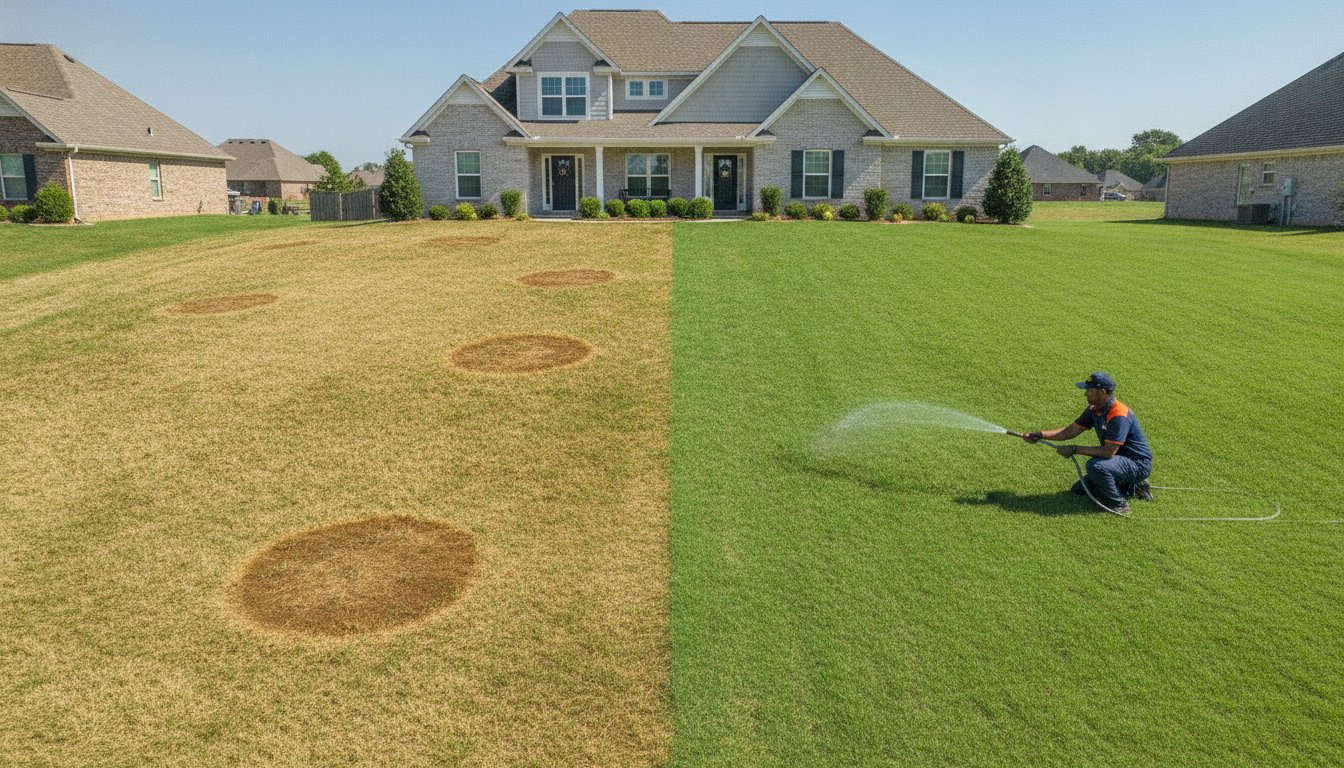
The vibrant orange and red hues of our soil come from high concentrations of iron and aluminum oxides. While these minerals provide a rich foundation, the physical structure of the soil creates a mechanical barrier. Because the particles are so small, they're prone to heavy compaction from foot traffic, lawn equipment, and even heavy rainfall. This density prevents professional fertilization from reaching the root zone. Instead of feeding the turf, expensive nutrients often sit on the surface or wash away during the next storm. For homeowners, this feels like an uphill battle where the soil refuses to cooperate with your investment.
The seasonal cycle in Lebanon and Mt. Juliet adds another layer of difficulty. In the winter, the clay holds onto moisture like a heavy sponge, turning your yard into a swampy mess. Once the Tennessee summer heat arrives, that same soil bakes into a substance resembling concrete. For a fescue lawn, this is a crisis. Fescue requires deep, cool roots to survive our July humidity. It simply can't penetrate a brick-like surface without help. This is why many lawns look great in April but disappear by August.
Common Signs Your Soil is Overly Compacted
You don't need a laboratory test to know your soil is struggling. Proper lawn care for clay soil begins with observation. Look for these clear indicators that your ground has become too dense for healthy growth:
- Surface Runoff: Water pools in low spots or runs off sloped areas immediately after a light rain instead of soaking in.
- Stunted Growth: Your grass remains thin or develops bare patches despite consistent watering and seeding efforts.
- Hard Surface: The ground is so firm that it's difficult to push a screwdriver more than an inch into the dirt.
- Opportunistic Weeds: You notice an increase in weeds that specifically thrive in low-oxygen, high-density environments where grass fails.
Recognizing these signs is the first step toward true stewardship of your property. By understanding the unique mechanics of our local earth, we can move beyond mere maintenance toward a more holistic concept of property value. Our goal is to unlock the nutrients already present in your soil, allowing your lawn to finally reach its full potential.
Myth #1: Clay Soil is Nutrient-Poor and "Bad" for Grass
Many homeowners in Lebanon and Mt. Juliet look at the stubborn red clay in their yards and assume it's "dead" dirt. They see it as a barren obstacle that prevents a lush lawn from ever taking hold. The reality is actually quite the opposite. Clay is a nutrient powerhouse, acting much like a high-security vault. The essential minerals are all there, but the tight compaction acts as a locked door that prevents your grass roots from reaching the combination. When you master lawn care for clay soil, you aren't trying to fix "bad" dirt; you're simply learning how to unlock a wealthy resource.
In the world of soil science, we measure this potential through Cation Exchange Capacity. Cation Exchange Capacity (CEC) is the soil’s ability to hold onto essential plant food. Because clay particles have a negative electrical charge, they attract and hold onto positively charged nutrients like calcium, magnesium, and potassium. While sandy soils allow these nutrients to wash away during heavy rains, clay grips them tightly. This means that once your soil is properly managed, it often requires less frequent fertilization than the thinner, black soils found in other regions.
The Hidden Strengths of Heavy Soil
Heavy clay offers several natural advantages that other soil types lack. Its superior water retention is a lifesaver during dry Tennessee spells, providing a reservoir of moisture that keeps fescue alive when the heat turns up. The high iron content, which gives our soil its famous red color, supports the deep, vibrant green turf that signifies a healthy property. Furthermore, the density of clay provides incredible physical stability for root systems. Once you relieve the surface compaction, those roots can anchor themselves deeply, creating a lawn that is resilient against both foot traffic and environmental stress.
Managing Nutrients in Clay
Unlocking these benefits requires a strategic approach to nutrition. We have found that liquid fertilization often performs better on local clay because it can penetrate the tiny pores of the soil more effectively than heavy granules. We also place a high priority on pH balancing. If your soil is too acidic, the nutrients remain chemically locked away, regardless of how much fertilizer you apply. A professional soil assessment is the best way to determine exactly what your specific yard needs to move from a state of survival to one of thriving growth. By focusing on the unique chemistry of Middle Tennessee, we help you cultivate a lawn that reflects your pride in your home and your community.
Myth #2: Adding Sand is the Best Way to Fix Clay Drainage
One of the most persistent and damaging pieces of advice you'll hear in Middle Tennessee is to "just add sand" to your yard. It sounds logical on the surface. Sand drains well, so mixing it with heavy clay should improve the situation, right? Unfortunately, this DIY approach is a recipe for disaster. When you mix sand into our local red clay, the small clay particles fill the gaps between the larger sand grains. Instead of creating drainage, you're essentially creating a homemade version of concrete. This "concrete trap" makes the ground even harder for roots to penetrate and can lead to expensive repair costs down the road.
Effective lawn care for clay soil requires a shift in thinking. Rather than trying to change the texture of the earth by force, we focus on improving its structure. Adding sand top-dressing rarely solves deep drainage issues because it only affects the top half-inch of the surface. Below that layer, the water still hits a wall of compacted clay. This creates a soggy "sandwich" effect that can rot fescue roots during a wet spring. In Mt. Juliet, where our clay is particularly dense, the financial cost of correcting a botched sand application can be significant.
The Science of Soil Texture
To understand why this fails, look at the particle sizes. Clay is microscopic and flat, while sand is large and angular. When they interlock, they create a dense matrix with zero air space. This is why professional aeration services are the superior alternative. Instead of adding more material to an already crowded space, aeration removes small cores of soil. This physically creates the room that roots and water need to move downward. It's a mechanical "unlocking" that respects the existing soil while providing immediate relief from compaction. It is the most reliable way to restore the aesthetic and functional health of your property.
When to Use Organic Matter Instead
If you want to improve the soil's composition over time, the answer is organic matter, not sand. Top-dressing with high-quality compost introduces beneficial microbes and fungi that work as tiny engineers. These organisms produce natural glues that bind clay particles into larger clumps called aggregates. This process breaks the tight clay bonds and creates permanent channels for air and water. This is a journey of stewardship rather than a quick fix. Patience and a consistent process will always beat a shortcut that risks turning your yard into a parking lot. By investing in the biological health of your soil, you're ensuring the long-term resilience of your lawn.
The Proven Strategy for Managing Clay: Aeration and Targeted Nutrition
Transforming a stubborn yard into a lush landscape requires more than just hope; it demands a disciplined, seasonal strategy. Successful lawn care for clay soil isn't achieved through a single application or a "quick fix" product. It's a journey of consistent stewardship that works with the unique chemistry of Middle Tennessee. By following a professional four-step cycle, you can move your property from a state of constant struggle to one of enduring health and pride. This process removes the burden of complex tasks while delivering the high-end results your home deserves.
Mechanical Relief: Why Core Aeration is Non-Negotiable
In our region, annual core aeration is a non-negotiable part of maintaining a healthy yard. Removing thousands of small soil "plugs" provides immediate relief from the intense physical pressure of compacted red dirt. This mechanical "unlocking" allows oxygen and water to bypass the hard surface and reach the root zone directly. The best timing for this in Middle Tennessee is late summer or early fall. This window provides the ideal conditions for soil recovery and prepares the ground for the cooling temperatures ahead. For a deeper look at how timing impacts your lawn's health, see our 2026 Middle Tennessee Guide.
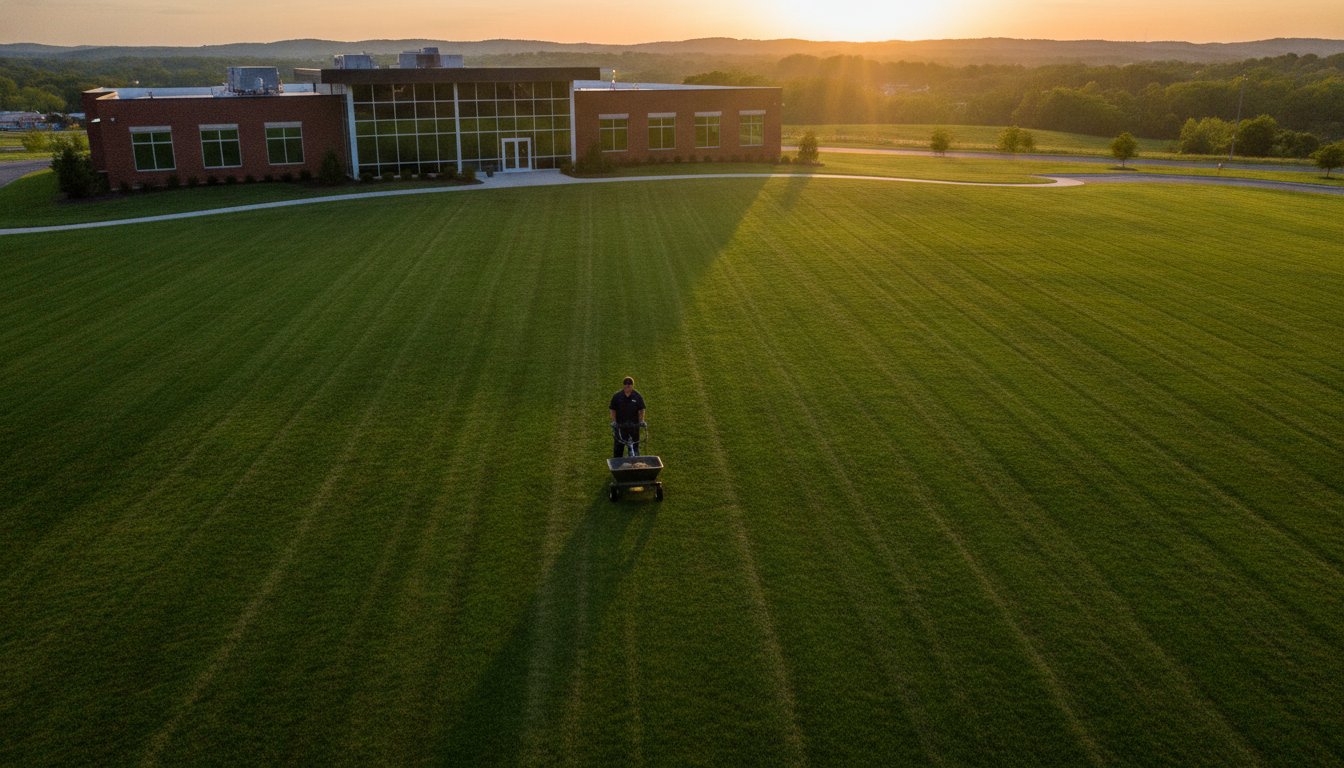
Once the ground is open, we introduce high-quality fescue through residential aeration and overseeding. This creates a dense, competitive canopy that shades the soil and reduces surface evaporation during dry spells. Because clay possesses such high holding power, we follow this with strategic fertilization. This ensures your turf has the specific nutrients needed to establish deep, resilient roots that can survive the transition into the next summer heat wave.
Managing Invasive Species in Clay Lawns
A thick fescue lawn is your best defense against unwanted growth, but certain invaders require a more specialized approach. Dallisgrass and Johnsongrass are invasive grassy weeds that can be more challenging to manage than common broadleaf weeds. Because they may not respond to the same treatments used for typical lawn weeds, a separate or targeted treatment approach may be recommended. These hardy species often thrive in the very conditions that stress your grass, making professional oversight essential.
We also frequently encounter issues with creeping summer grasses. Bermuda grass that has spread into an established fescue lawn can be extremely difficult to eliminate completely. Management efforts generally focus on limiting its spread, reducing its presence, and helping the desired fescue remain as healthy and competitive as possible. By focusing on the health of your primary turf, we create an environment where fescue can truly thrive. If you're ready to unlock the potential of your property, contact us today for a professional assessment.
Professional Clay Soil Management with Performance Lawns, INC
Navigating the complexities of Middle Tennessee soil requires more than standard maintenance; it demands a principled expertise born from years in the field. At Performance Lawns, INC, we've spent over 15 years studying the unique behavior of Mt. Juliet's red clay. We understand that your property is an investment, a sanctuary, and a point of personal pride. Our mission is to provide the specialized lawn care for clay soil that traditional mowing services simply can't offer. By focusing exclusively on the science of turf health, we ensure your lawn receives the disciplined attention it needs to thrive in our challenging climate.
Our approach is built on a foundation of reliability and integrity. We don't just apply products; we craft customized plans that respect the specific limitations and potential of your land. This commitment to quality is backed by the Performance Lawns, INC No-Risk Guarantee, providing you with peace of mind as we work to transform your outdoor space. We see ourselves as a dedicated local steward, acting as your partner in the long-term cultivation of a resilient, beautiful lawn.
A Holistic Approach to Soil Health
Achieving a lush fescue lawn in Tennessee requires a balanced strategy that combines professional fertilization, strategic weed control, and mechanical aeration. These elements work in harmony to improve the aesthetic and functional health of your community. Because our local clay often holds moisture on the surface, it can create an environment where fungal issues arise. Lawn disease treatments can help manage common diseases such as brown patch and dollar spot. However, some diseases, including Pythium, can develop and spread very quickly, making them considerably more difficult to manage. Treatment effectiveness can depend on the specific disease, weather conditions, severity, and how early the problem is identified.
Start Your Lawn Transformation Today
The journey toward a thick, green lawn begins with a comprehensive health assessment. When you partner with us, you'll receive a clear and professional evaluation of your soil's current state and its future potential. We remove the burden of complex tasks like pH balancing and deep-core aeration, allowing you to enjoy the results of a simplified and improved outdoor experience. Our team is disciplined, hardworking, and transparent, ensuring you're always informed about the progress of your lawn's development. If you're ready to move beyond mere maintenance toward true property excellence, contact Performance Lawns, INC for a free quote today. Let’s work together to unlock the hidden assets within your soil.
Cultivate a Lawn That Stands the Test of Time
Your Middle Tennessee yard doesn't have to be a source of constant frustration. By moving past common myths, you can transform that stubborn red dirt into a high-performance growing medium. Remember that clay is a nutrient-rich vault that simply requires the right mechanical key to unlock. Avoid the "concrete trap" of adding sand and instead focus on the proven power of annual core aeration. This approach ensures your fescue has the oxygen, water, and space it needs to build a resilient root system. Professional lawn care for clay soil is a journey of stewardship, investment, and pride.
Performance Lawns, INC brings 15 years of local expertise to every property we serve. Our specialized clay soil aeration programs are tailored to the unique geological challenges of Lebanon and Mt. Juliet. We stand behind our work with a no-risk guarantee, acting as a principled partner in your success. You deserve an outdoor space that reflects your dedication to your home and community. Take the first step toward a lush, resilient landscape today. Request Your Free Lawn Assessment in Mt. Juliet and let’s begin the transformation together.
Frequently Asked Questions
Can I grow a healthy lawn in heavy clay soil?
Yes, you can cultivate a beautiful lawn in heavy clay by focusing on soil structure rather than just the grass itself. Clay is naturally rich in minerals and holds moisture effectively during dry spells. By implementing consistent lawn care for clay soil, such as annual aeration, you unlock the nutrients already present. This turns a compacted yard into a resilient, deep-rooted landscape that thrives, survives, and prospers in our local climate.
Is it better to aerate clay soil in the spring or fall in Tennessee?
Late summer and early fall are the ideal times for aeration in Middle Tennessee. This window allows the soil to recover while providing the perfect environment for fescue overseeding. Fall aeration ensures that new roots have months to establish themselves before the intense heat of the following summer. While spring aeration provides some relief, the autumn timing aligns better with the natural growth cycle and health of our regional turf.
How often should I water a lawn with clay soil?
Watering should be deep and infrequent to encourage roots to grow downward through the clay layers. Aim for about one inch of water per week, delivered in one or two sessions rather than daily light misting. Daily watering often leads to surface pooling and shallow root systems that can't survive a Tennessee July. Monitoring your lawn's absorption ensures you're investing moisture where it counts most for long-term health.
Will adding gypsum fix my clay soil drainage issues?
Adding gypsum is rarely an effective solution for the specific red clay found in Lebanon and Mt. Juliet. Gypsum is typically used to displace salt in sodic soils, which isn't the primary issue in our region. Our soil's density comes from particle size and mineral compaction. Mechanical core aeration remains the most reliable, principled method for improving drainage, allowing your lawn to breathe, and supporting long-term property health.
What are the best grass types for Middle Tennessee clay?
Turf-type tall fescue is the premier choice for residential lawns in Middle Tennessee because of its deep root potential. It handles our clay well if the ground isn't overly compacted. You'll also find Bermuda grass in many local yards, though Bermuda grass that has spread into an established fescue lawn can be extremely difficult to eliminate completely. Management efforts generally focus on limiting its spread, reducing its presence, and helping the desired fescue remain healthy.
How long does it take to see results from core aeration on clay?
You'll notice improved water absorption almost immediately after a core aeration service. However, the full transformation of your turf usually takes a full growing season to become visible. As the new fescue fills in and the soil structure loosens, your lawn will appear thicker, greener, and more resilient. This is a long-term investment in your property's value, your home's curb appeal, and your personal pride.
What happens if I don’t aerate my clay-based lawn?
Neglecting aeration leads to a cycle of decline where the soil becomes increasingly brick-like and impenetrable. Compacted ground prevents oxygen, water, and nutrients from reaching the root zone, causing your grass to thin out and become susceptible to environmental stress. Over time, this creates bare patches where opportunistic weeds can easily take hold. Regular aeration acts as a dedicated steward for your lawn's health, beauty, and functional resilience.
Can professional fertilization help if my soil is hard and compacted?
Professional fertilization provides necessary nutrients, but its effectiveness is limited if the soil is hard and compacted. Without aeration, the treatments often sit on the surface or wash away during heavy rainfall instead of reaching the roots. Combining fertilization with core aeration ensures that your investment actually reaches its target. This holistic approach simplifies your outdoor experience while delivering the high-end results you expect for your home, lifestyle, and environment.