Why does your lawn look tired and thin even though you have spent hundreds on premium fertilizers and endless hours watering? It is frustrating to watch water pool on the surface or see your grass struggle while the neighbor’s turf stays vibrant. You aren't alone in this struggle. Many homeowners in Middle Tennessee face the same battle against our dense, stubborn clay. Core aeration for residential yards is the essential structural reset that turns a struggling lawn into a local masterpiece. It provides the breathing room your grass needs to thrive, survive, and excel.
You deserve a lawn that reflects the care, investment, and pride you put into your property. In this guide, we will show you how core aeration transforms compacted soil into a thriving, green sanctuary. We will break down the science of soil health, the benefits of professional-grade equipment, and why this service is the secret to successful residential turf management. By the end, you will have a clear plan for fall lawn care that ensures better drainage, superior nutrient uptake, and a thick, resilient lawn for years to come. This is the path to true stewardship of your outdoor space.
What is Core Aeration and Why Does Your Residential Yard Need It?
A vibrant lawn is more than a visual asset; it's a living investment in your home’s value, your family’s comfort, and our local environment. Core aeration for residential yards is the essential process of using specialized machinery to extract small cylinders of soil and thatch from your turf. This isn't just about surface aesthetics. It's about restoring the fundamental balance of The Science of Soil Health by allowing your lawn to breathe again. When soil becomes too dense, the life-sustaining flow of water, oxygen, and nutrients is choked off at the source.
We see it often in our community: dedicated homeowners do everything right, yet the grass still fails to thrive. It’s frustrating to see your hard work and financial investment yield only thinning patches and water runoff. If your soil feels like concrete underfoot, or if you notice water pooling in low spots after a light rain, your lawn is likely suffocating. These are clear signals that the structure of your soil has collapsed, creating a barrier that even the best fertilizers cannot penetrate.
To better understand this concept, watch this helpful video:
The Difference Between Core and Surface Treatments
Many people ask about liquid aeration or simple spike tools they can find at a big-box store. While these might seem like easy alternatives, they don't address the structural reality of heavy compaction. Core aeration is the mechanical removal of soil "plugs" to facilitate gas exchange and create physical space within the earth. Unlike surface treatments that only penetrate the top layer, removing a physical core provides a lasting channel for roots to expand. This physical removal is the only way to ensure your lawn has the structural integrity to support deep, healthy growth throughout the changing seasons.
Why Residential Yards in Middle Tennessee Struggle
The Science of Soil Health: How Aeration Works Below the Surface
Healthy turf relies on a delicate biological engine fueled by a specific trifecta: oxygen, water, and nutrients. When these elements flow freely, your lawn rewards you with vibrant color, dense growth, and natural resilience. Core aeration for residential yards is the mechanical key that unlocks this flow. It bypasses the thatch layer, a dense mat of organic debris that often acts as a waterproof seal over your soil. By physically removing soil cores, we introduce a surge of oxygen that awakens beneficial soil microbes. These microscopic partners begin to thrive, naturally breaking down thatch and converting it into rich, organic food for your grass.
This biological activity is the foundation of a sustainable landscape. As the soil opens up, grass roots no longer have to struggle against a compressed environment. They begin to colonize the empty voids left by the aeration process, reaching deeper into the earth than ever before. This expansion creates a more robust root system that can withstand the stresses of our local climate. If you're looking for a partner to help manage this complex biological balance, our professional lawn care programs are designed to optimize these natural processes for health, strength, and longevity.
Breaking the Compaction Cycle
In Middle Tennessee, our heavy clay soil is prone to a destructive cycle of compaction. Imagine the tiny pores in your soil as lungs; when they are squashed together by foot traffic or heavy rain, the lawn effectively suffocates. This compaction creates a hard crust that repels water, leading to wasteful runoff and shallow, weak roots. Core aeration breaks this crust and restores the soil's ability to absorb moisture. Having managed Middle Tennessee clay for over 15 years, we understand that this structural improvement is the secret to long-term drought resistance. Because the roots can dive deeper into the cooler, moister layers of the earth, your lawn requires significantly less supplemental watering during the peak of summer.
The Role of the 'Soil Plug'
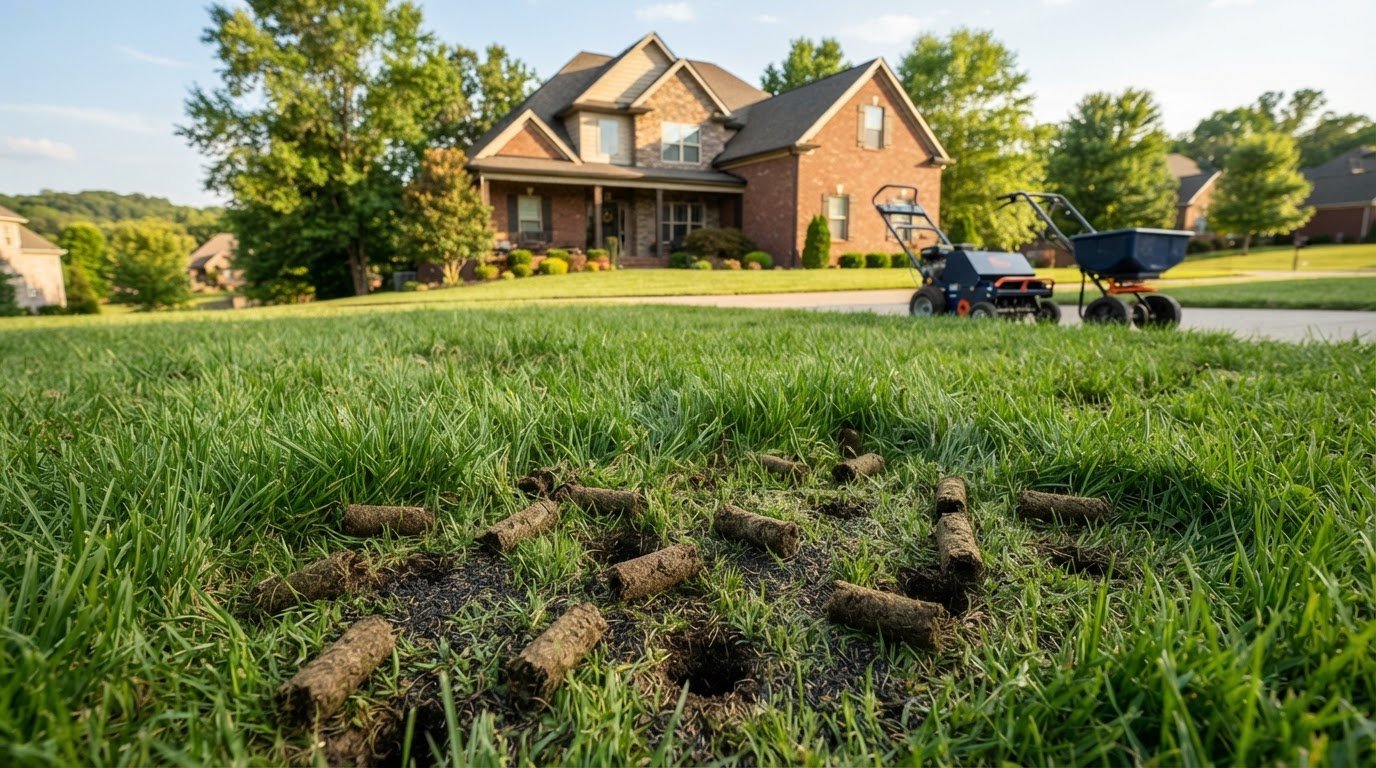
One of the most common questions we hear from homeowners in Mt. Juliet concerns the small cylinders of soil left on the grass after service. While they may look unusual at first, these plugs are actually concentrated packets of nutrient-rich topsoil. We leave them on the surface because they serve as a natural top-dressing. Over the course of one to two weeks, these cores crumble back into the turf during normal rain or irrigation cycles. The breakdown of aeration cores returns vital microorganisms to the soil surface, re-seeding your lawn with the very bacteria needed to keep the soil healthy and porous. It's a closed-loop system that maximizes the value of your investment, stewardship, and property pride without the need for synthetic additives.
Core Aeration vs. Spike Aeration: Choosing the Right Method
One of the most persistent myths we encounter is the idea that any hole in the ground is a good hole. This misunderstanding often leads homeowners to invest time and money into methods that provide little to no long-term benefit. When it comes to maintaining a healthy landscape, the method of intervention matters just as much as the timing. Core aeration for residential yards is the gold standard because it addresses the structural root of soil compaction rather than just treating the surface. It is a choice between a temporary cosmetic fix and a deep, biological reset.
We believe in transparency and education for our neighbors. Understanding the mechanics of how soil reacts to different tools can save you years of frustration and wasted resources. While a spike tool might create a visible opening, it fails to address the underlying density that chokes your turf's root system. True stewardship of your land requires a method that respects the biological needs of the grass while overcoming the physical challenges of our local environment.
The Danger of Spike Aerators
Spike aeration relies on solid tines or "shoes" to poke holes into the turf. While this creates a visible opening, it actually increases soil density through a phenomenon known as the wedge effect. As the spike enters the earth, it doesn't remove anything; instead, it pushes the soil particles sideways and downward to make room for the tine. In the heavy clay common to Mt. Juliet and Lebanon, this creates a ring of even tighter compaction around every single hole. This process often leads to several negative outcomes:
- Glazing: The sides of the hole become smoothed and sealed, creating a barrier that prevents water from soaking into the surrounding soil.
- Surface-level impact: Most DIY tools or spike shoes only penetrate an inch or two, failing to reach the active root zone.
- Wasted effort: Because no soil is removed, the ground quickly settles back into its original, suffocated state.
We consider spike shoes a gimmick that offers zero lasting value for Middle Tennessee lawns. They lack the weight and mechanical force required to penetrate our stubborn clay effectively. Using them is often more of a workout for the homeowner than a benefit for the grass. Without the physical removal of soil, you aren't relieving compaction; you're just rearranging it.
Why Professional Core Aeration Wins
The superiority of core aeration lies in the physical removal of soil "plugs." This creates immediate, high-quality voids that allow the surrounding earth to expand and relax. Our commercial-grade equipment is designed to achieve a consistent depth of 2.5 to 3 inches, ensuring we reach the critical areas where roots grow and nutrients are processed. Professional machines also provide a much higher density of holes per square foot than any manual tool could ever hope to achieve. This level of precision, consistency, and depth is what separates a basic lawn service from true professional lawn care. With over 15 years of local experience, we've seen firsthand how this mechanical advantage transforms struggling turf into a neighborhood showpiece. By choosing core aeration, you're investing in the structural health of your property and ensuring your lawn has the breathing room it needs to flourish.
When and How to Aerate Your Lawn in Middle Tennessee
Timing is the invisible factor that separates a lush, resilient lawn from one that merely survives. In Middle Tennessee, we operate within a specific "Golden Window" that typically runs from late August through early October. This period is critical because it aligns with the natural growth cycle of tall fescue, our region's primary turf choice. During these weeks, the air begins to cool while the soil remains warm. This unique combination reduces heat stress on the grass and encourages rapid root development. Because our local clay is so relentless, core aeration for residential yards is a non-negotiable annual investment. Skipping even a single season allows the ground to return to a compacted, suffocated state that no amount of fertilizer can fix.
Successful aeration requires a partnership between the homeowner and the service provider. We bring the professional-grade equipment and 15 years of local expertise, but your preparation ensures we get the best possible results. If you are ready to give your soil the reset it deserves, our residential aeration and overseeding programs provide the professional touch your property needs to stand out in the neighborhood.
Preparing Your Yard for the Aerator
Preparation begins with your mower. We recommend cutting your grass slightly shorter than usual, around two inches, just before our arrival. Shorter turf allows the aeration tines to make clean, direct contact with the soil surface without being cushioned by long blades. Moisture levels are also vital. You want the soil to be moist but not saturated. A simple way to check is the "screwdriver test": if you can't easily push a standard screwdriver three inches into the ground, the soil is too hard. Homeowners should water their lawn 1-2 days before aeration to ensure the machine can pull deep, clean cores. Finally, please mark all underground obstacles such as invisible pet fences, shallow cables, or irrigation heads to prevent accidental damage during the process.
Post-Aeration Care and Expectations
Once the service is complete, you will see thousands of soil plugs scattered across your lawn. It is tempting to rake these up, but we urge you to leave them exactly where they lie. These plugs will naturally break down and disappear within one to two weeks, returning vital nutrients and microbes to the surface as they decompose. This period represents your greatest "window of opportunity" for further lawn improvement. The open holes provide a direct path to the root zone, making it the perfect time for fertilization and overseeding. By dropping seed and nutrients immediately after aerating, you ensure they reach the soil rather than getting trapped in the thatch layer, leading to the thick, resilient, and vibrant lawn you've been working toward.
Professional Aeration and Overseeding: The Performance Lawns Approach
A thick, healthy lawn is the ultimate reward for proper stewardship. While core aeration for residential yards is a powerful tool on its own, its true potential is unlocked when paired with professional overseeding. Think of aeration as the essential primer for your landscape. It prepares the canvas by removing barriers, creating space, and establishing the ideal environment for new life to take hold. At Performance Lawns, INC, we don't just aim for green grass; we strive for a resilient, sustainable ecosystem that reflects your pride in your home and community.
Our approach is rooted in 15 years of local experience and a deep understanding of our unique regional climate. We know that a successful lawn program requires more than just mechanical precision. It demands a commitment to quality and a heartfelt investment in the results we deliver for our neighbors. This is why we back our work with a no-risk guarantee. We take personal responsibility for the health of your turf, acting as your dedicated partners in creating a lush, inviting outdoor space that your family can enjoy for years to come.
The Power of the 'Seedbed'
The success of any overseeding effort depends entirely on seed-to-soil contact. When seeds are simply broadcast over a compacted lawn, they often become trapped in the thatch layer where they eventually dry out and die. By performing core aeration for residential yards first, we create thousands of protected "seedbeds" across your property. Seeds that fall into these aeration holes have a 50% higher germination rate compared to surface sowing. These voids offer three distinct advantages for your new turf:
- Natural Protection: The deep holes shield vulnerable seeds from hungry birds and foraging pests.
- Consistent Hydration: Moisture naturally collects in the voids, keeping the seeds damp and cool during the critical early stages of growth.
- Erosion Stability: The holes prevent seeds from washing away during heavy Tennessee autumn rainstorms.
We use only premium, locally-certified Turf-Type Tall Fescue blends specifically chosen for the Mt. Juliet and Lebanon climates. These varieties are selected for their deep root potential, heat tolerance, and vibrant color. This ensures your new grass integrates seamlessly with your existing lawn while providing the durability needed to thrive in our heavy clay soils.
Why Hire a Professional Service?
Many homeowners consider renting a machine for a weekend, but the physical toll and mechanical limitations often outweigh the perceived savings. Professional core aeration requires heavy, commercial-grade equipment that provides the consistent depth and hole density necessary for a true structural reset. Our machines are maintained to the highest standards to ensure clean, deep cores every single time. Additionally, our team has access to professional-grade fertilizers and treatments that are simply not available in big-box retail stores. These high-end inputs provide the specific nutrients your soil needs to recover from summer stress and support new growth. Reclaim your yard with Performance Lawns, INC; schedule your Fall Aeration today!
Transform Your Lawn Into a Neighborhood Masterpiece
Your lawn is a reflection of your commitment to your home and our shared community. Investing in core aeration for residential yards is the single most effective way to protect that investment and ensure your grass has the structural support it needs to thrive. By relieving soil compaction, improving nutrient uptake, and creating a perfect seedbed for new growth, you are moving beyond simple maintenance toward true property stewardship. It is the foundation of a healthy, vibrant outdoor experience for your family.
We understand the unique challenges of our Middle Tennessee clay because we live here too. With 15 years of local experience, our team at Performance Lawns, INC provides customized Middle Tennessee lawn programs specifically designed to overcome our region's stubborn soil conditions. We take the burden of complex turf management off your shoulders, delivering high-end results backed by our no-risk guarantee. This creates a sense of peace and relief, knowing your outdoor space is in the hands of principled experts who value your property's long-term health.
Ready to see the difference professional care can make? Get a Free Quote for Professional Aeration and Overseeding today and take the first step toward a thicker, more resilient lawn this fall. Let's work together to cultivate a landscape you can be proud of.
Frequently Asked Questions
Is core aeration really worth the cost for a residential yard?
Yes, it is a high-value investment that prevents the need for expensive total lawn renovations. Core aeration for residential yards maximizes the efficiency of your water, fertilizer, and time. Think of it as essential insurance for your property value and personal pride. It ensures your lawn stays resilient, vibrant, and healthy throughout the changing seasons. This proactive step saves you money and frustration by addressing the root cause of turf failure.
How often should I aerate my lawn in Middle Tennessee?
You should aerate your lawn once every year to combat the natural compaction of our heavy Middle Tennessee clay. Annual service is the professional standard for maintaining soil porosity, root health, and nutrient flow in Mt. Juliet and Lebanon. Regular intervention prevents the ground from returning to a brick-like state that suffocates your grass. This consistent stewardship ensures your turf remains thick, resilient, and ready to face the stresses of our local climate.
What happens if I don't aerate my clay soil?
Your lawn will eventually suffocate as the soil pores collapse and block the flow of oxygen, water, and nutrients. This leads to thinning grass, increased water runoff, and shallow root systems that cannot survive a typical Tennessee summer drought. Without regular mechanical relief, the ground becomes so hard that even premium fertilizers simply sit on the surface. This neglect results in a declining landscape that requires much more expensive repairs in the future.
Can I aerate my lawn myself with a rental machine?
While you can rent equipment, DIY efforts often fall short of the results achieved by professional-grade commercial machinery. Rental units are frequently lighter and less powerful, leading to shallow cores and inconsistent hole density across your property. Professional service provides a deeper, more uniform treatment that effectively resets your soil structure for the long term. It also saves you the physical toll, logistical burden, and potential equipment damage associated with transporting heavy machinery yourself. For other demanding home maintenance tasks that require a professional touch, American Handyman provides the expertise needed to keep your property in peak condition.
No, you should leave the soil plugs on the lawn to decompose naturally over the next seven to fourteen days. These cores are concentrated packets of beneficial microbes and organic matter that serve as a natural top-dressing for your turf. As they break down with rain or irrigation, they return vital nutrients to the root zone. This process re-populates the soil surface with the bacteria needed for a healthy, porous, and thriving ecosystem.
How soon can I mow my lawn after it has been aerated and seeded?
You should wait until your new grass reaches a height of at least three to four inches before its first trim. This typically takes three to four weeks depending on local weather conditions, soil moisture, and your watering schedule. Mowing too early can damage tender new seedlings or pull them out of the ground entirely. Patience during this critical period ensures your investment in professional turf management results in a thick, healthy, and resilient lawn.
Will aeration kill the weeds in my yard?
Aeration is not a direct weed killer, but it is a fundamental part of a successful long-term weed control strategy. By creating a thicker and healthier lawn, you are reducing the available space and resources for opportunistic weeds to take hold. A dense turf naturally chokes out invaders by out-competing them for sunlight, water, and nutrients. It is the most natural way to build a weed-resistant landscape that requires fewer chemical interventions.
What is the best time of year to aerate Fescue grass in TN?
The ideal window for core aeration for residential yards in Middle Tennessee is late August through early October. This specific fall timing aligns with the natural growth cycle of Tall Fescue, allowing new seeds to germinate in cooler air and warm soil. It gives the root system several months to establish itself before the intense heat of next summer arrives. This strategic seasonal rhythm is the secret to enduring lawn quality and community pride.