Your Middle Tennessee lawn isn't failing because you lack a green thumb; it's struggling because it's suffocating in a bed of stubborn, compacted red clay. Most homeowners in Mt. Juliet and Hendersonville share this exact frustration when the July heat turns a promising yard into a patchy, brown landscape. It's exhausting to battle invasive weeds, thinning turf, and soil that feels as hard as a brick. You deserve an outdoor space that reflects your pride in your home and provides a sense of peace for your family.
By mastering the specific science of our region's transition zone, you can invest in the health, beauty, and longevity of your property. This 2026 guide explores the essential nutrient timing and soil correction strategies required for success. We will examine the professional lawn fertilization Middle Tennessee experts use to overcome clay compaction, suppress aggressive weeds, and build a deep root system that survives the harshest summers. You'll gain a clear roadmap for seasonal applications, understanding exactly what your grass needs to stay thick and green all year long.
The Middle Tennessee "Transition Zone" and Your Soil Health
Growing a lush lawn in Mt. Juliet or Lebanon isn't just a weekend hobby; it's a battle against geography. Middle Tennessee is situated in the "Transition Zone," a challenging horticultural region where the sweltering heat of the South meets the freezing winters of the North. This means neither cool-season Fescue nor warm-season Bermuda is perfectly suited for our climate year-round. Achieving a resilient yard requires a deep understanding of professional lawn fertilization Middle Tennessee experts use to navigate these extremes.
The foundation of every local lawn is our infamous red clay. This dense soil type acts as a physical and chemical barrier to growth. Beyond its thickness, the pH balance of local soil is frequently acidic, which effectively "locks" nutrients in place. Even if you apply the highest quality products, your grass cannot absorb them if the pH isn't corrected with lime. A professional soil test, often facilitated through the University of Tennessee Extension for around $15, provides the essential baseline needed to stop guessing and start cultivating with precision.
Why Tennessee Clay Soil Resists Standard Fertilizers
Clay particles possess a high cation exchange capacity, meaning they bind tightly to phosphorus and essential micronutrients. This chemical bond makes it incredibly difficult for grass roots to extract what they need. To break this cycle, core aeration is vital. By pulling physical plugs from the earth, we open direct pathways for nutrients to bypass the surface barrier. Soil compaction leads to nutrient runoff instead of absorption, causing fertilizer to wash away during the first heavy rain rather than feeding your turf.
Climate Factors: Humidity, Heat, and Nutrient Stress
Our local climate adds another layer of complexity. High humidity in Hendersonville and Gallatin creates a perfect environment for fungal diseases. When homeowners over-apply nitrogen during humid spells, they often inadvertently feed pathogens like Brown Patch. It's also important to understand what N-P-K means when timing your applications. For instance, Fescue often enters "summer dormancy" to survive the heat; pushing it with heavy fertilizer during this time can cause permanent damage. Additionally, heavy spring rains can lead to nitrogen leaching, where nutrients are pulled deep into the soil before the roots can catch them. Successful professional lawn fertilization Middle Tennessee programs account for these seasonal shifts to ensure your investment actually reaches the grass.
Decoding N-P-K: What Your Tennessee Lawn Actually Craves
Understanding the three numbers on a fertilizer bag is the first step toward a healthy lawn. These represent Nitrogen (N), Phosphorus (P), and Potassium (K). While many generic products treat these as equal, professional lawn fertilization Middle Tennessee strategies prioritize specific ratios tailored to our transition zone. Our local soils have unique demands; applying the wrong balance doesn't just waste money, it can actively harm the environment or invite disease into your backyard.
Nitrogen acts as the growth engine, but too much at once causes "surge growth" that weakens the grass plant. Phosphorus is often restricted in Tennessee because our clay soil usually has enough to support established grass, and excess runoff harms local waterways. Potassium, however, is the "stress nutrient" that helps your lawn survive the brutal Mt. Juliet heat in July. By adding Iron and Sulfur, we can achieve that deep, emerald green color homeowners love without forcing the grass to grow faster than you can mow. This balanced approach ensures your lawn is resilient, healthy, and vibrant.
Understanding Fertilizer Ratios and Labels
When you see a label like 21-0-0, the middle zero indicates it contains no phosphorus. This is common in Tennessee because state regulations and research suggest limiting phosphorus unless a specific soil test shows a deficiency. Synthetic fertilizers offer high precision and immediate availability, while organic-based options improve long-term soil health by feeding beneficial microbes. It's also vital to monitor the weather; nitrogen-heavy fertilizers can trigger Brown Patch if applied during periods of high humidity. By choosing the right ratio, you're acting as a steward of your land and the community.
Slow-Release vs. Quick-Release Nutrients
Quick-release fertilizers are like a sugar rush for your grass. They cause a sudden green-up but lead to shallow root systems and the need for more frequent mowing. Conversely, professional-grade slow-release products provide a steady, reliable nutrient stream for 6 to 8 weeks. This consistent feeding encourages deep root growth and better overall resilience. For those following the UTIA warm-season grass fertilization guide, precision is everything. Liquid professional lawn fertilization Middle Tennessee programs ensure uniform distribution, making sure every square inch of your turf receives exactly what it needs. If you're ready to stop guessing and start growing, reach out for a professional assessment of your lawn's specific needs.
Fertilization Timing: The 2026 Seasonal Calendar
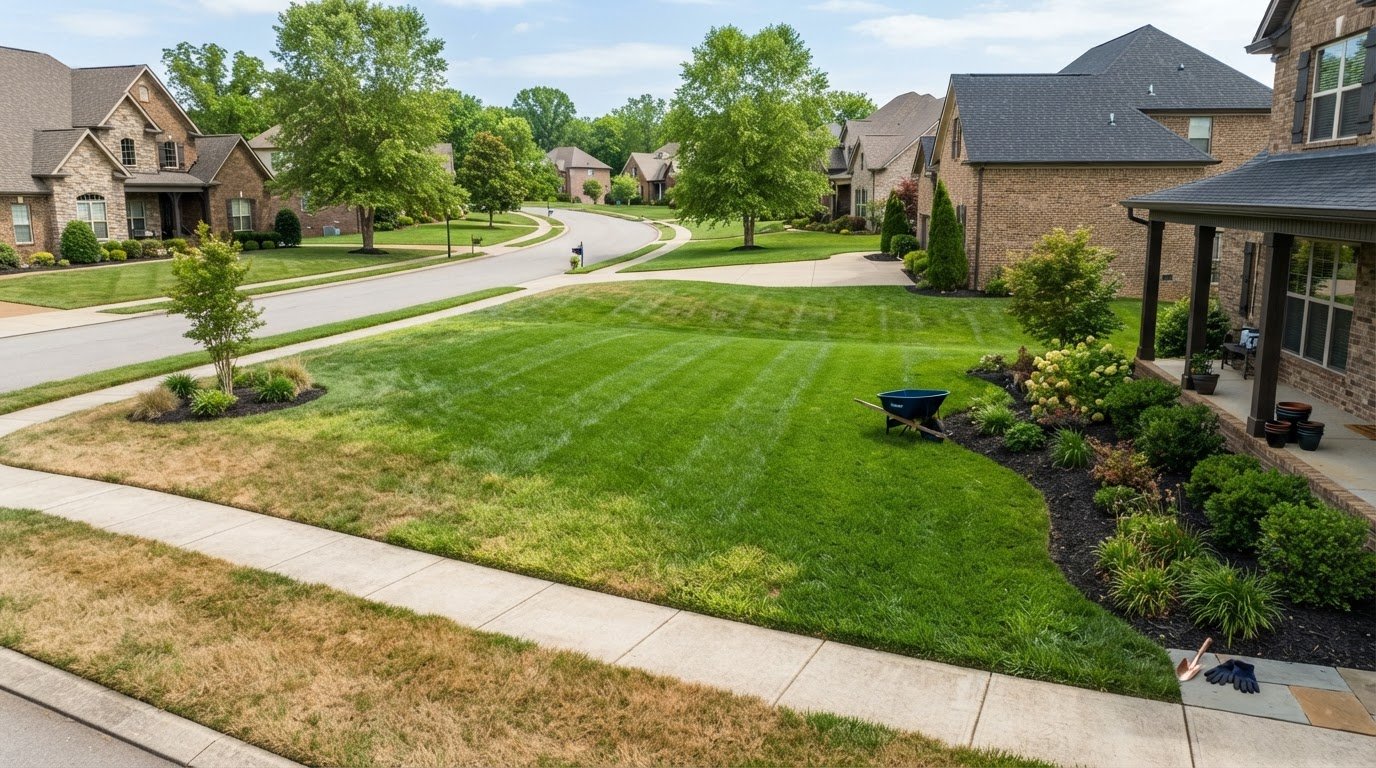
Timing is the invisible ingredient that determines whether your lawn thrives or merely survives. In the Transition Zone, the calendar dictates success far more than the brand of fertilizer you choose. Applying nutrients at the wrong time isn't just a waste of resources; it's a direct threat to your turf’s health. For example, fertilizing Fescue in the middle of a Tennessee July is a recipe for disaster. This ill-timed boost forces the grass to grow when it should be conserving energy, leading to extreme heat stress and increased vulnerability to fungal diseases like Pythium.
Effective professional lawn fertilization Middle Tennessee programs are built around the specific biological needs of your grass type. For cool-season Fescue, we follow a "Fall-Focused" strategy where approximately 75% of the annual nitrogen is applied after Labor Day. Conversely, warm-season grasses like Bermuda and Zoysia require a "Summer-Focused" approach, receiving their heaviest meals when they are most active. By aligning nutrient delivery with natural growth cycles, we ensure your lawn has the fuel it needs for recovery, root strength, and vibrant color.
The Fescue Calendar: Recovering from Tennessee Summers
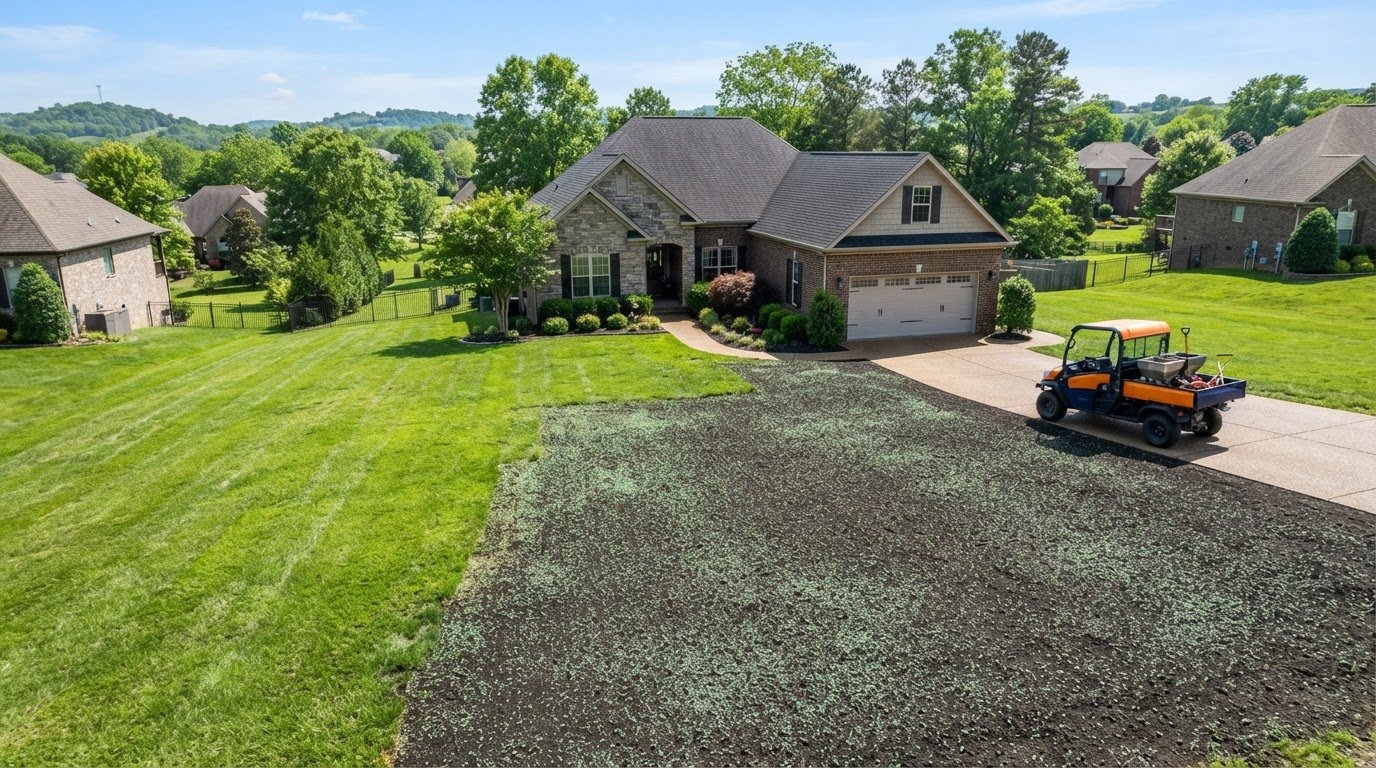
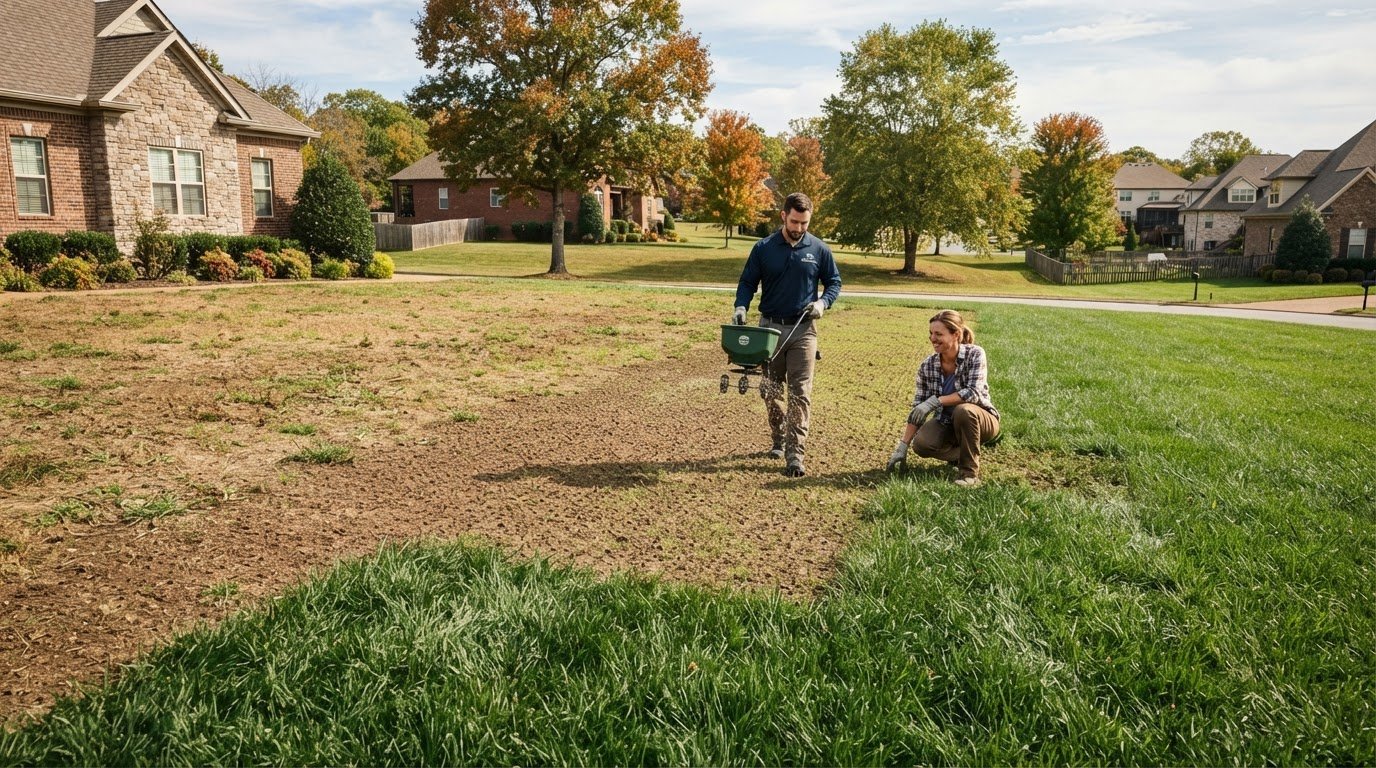
The Fescue year begins in the fall. September and October represent the most critical window for aeration and overseeding, paired with a starter fertilizer to support new root development. In November, we apply a "Winterizer" treatment. This application isn't designed for top growth; instead, it helps the grass build essential carbohydrates to survive the winter and green up quickly in the spring. By February and March, we transition to a pre-emergent barrier paired with a light feeding of nitrogen. Following 2026 UT Extension guidelines, Fescue should receive a total of 3 to 4 pounds of nitrogen per 1,000 square feet annually to maintain optimal density.
The Bermuda and Zoysia Calendar: Feeding the Heat
Warm-season lawns have a different rhythm. We wait until late spring, specifically when soil temperatures consistently hit 65 degrees, before the first application. This ensures the grass is awake and ready to process nutrients. During the peak summer months, regular and balanced feeding supports rapid growth and helps the lawn recover from heavy foot traffic. The 2026 annual nitrogen target for Bermuda is 4 to 6 pounds per 1,000 square feet. As we move into late summer, we taper off nitrogen applications. This allows the lawn to naturally prepare for winter dormancy, protecting the root system from early frost damage. If you want a plan tailored to your specific lot, professional lawn fertilization Middle Tennessee experts can help you navigate these seasonal shifts with precision.
Managing Weeds and Diseases: Realistic Expectations
A thick, vibrant lawn is your property’s first line of defense against unwanted invaders. Through the "Crowding Out" principle, healthy turf leaves no room, sunlight, or nutrients for opportunistic seeds to take hold. When you prioritize professional lawn fertilization Middle Tennessee , you're not just feeding the grass; you're building a biological barrier that helps reduce weed pressure naturally. This proactive approach focuses on cultivation and stewardship, moving beyond reactive treatments to create a resilient ecosystem that survives our intense summers.
Integrity is the cornerstone of our service, which is why when you invest in professional lawn fertilization Middle Tennessee , we offer honest talk instead of empty promises. While we strive for excellence, no professional program can honestly guarantee a 100% weed-free or disease-free lawn. The Middle Tennessee climate is simply too volatile for such claims. Specific challenges like invasive Dallisgrass and Johnsongrass require targeted, specialized treatment rather than broad-spectrum applications. Similarly, managing Bermuda grass in a Fescue lawn is a process of limiting its spread rather than total elimination. We view ourselves as your partner in this effort, providing the technical precision needed to maintain a high aesthetic standard.
Tennessee Lawn Diseases and Nutrient Management
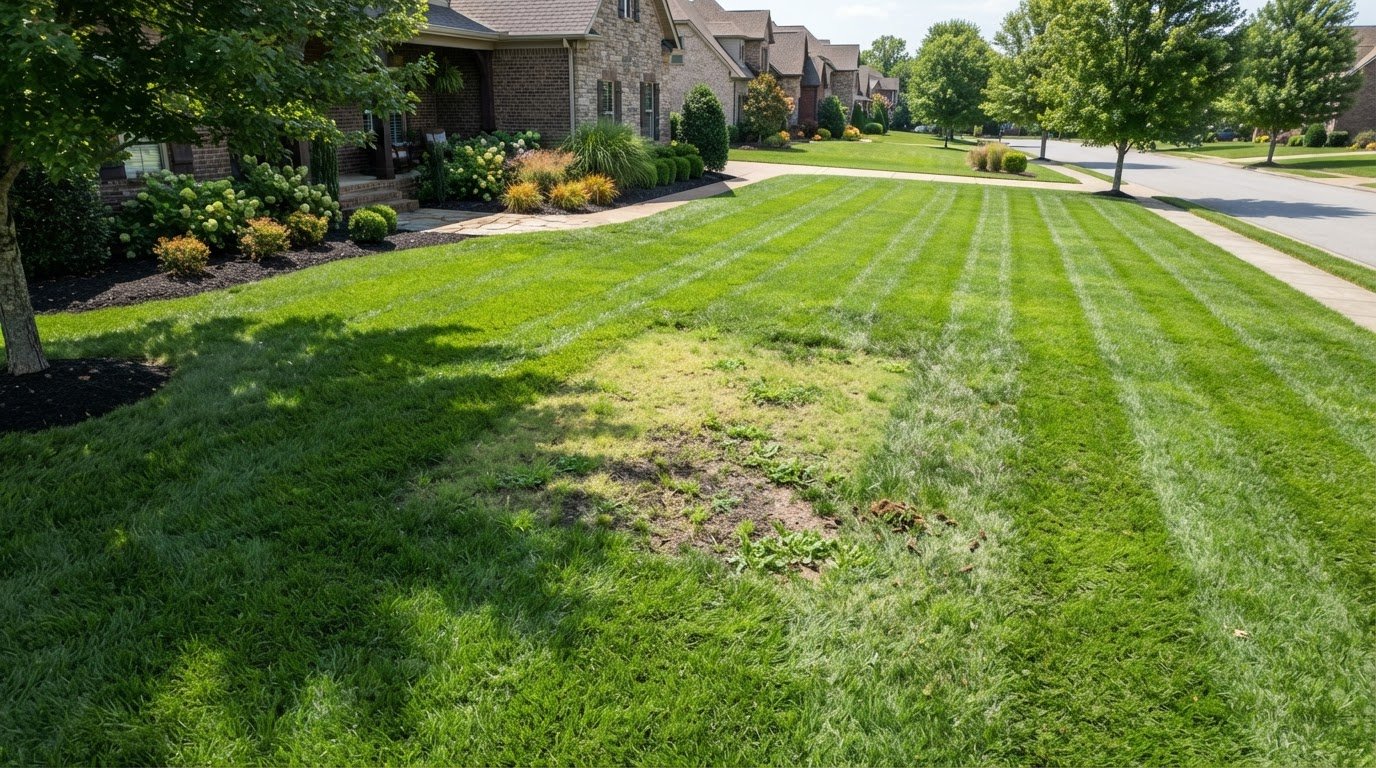
Proper nutrition does more than just green up the yard; it strengthens plant cell walls to resist pathogens. Balanced fertilization helps manage common issues like Brown Patch and Dollar Spot by ensuring the grass isn't over-stressed or over-fed. However, homeowners must be aware of the Pythium warning. This fast-moving disease is significantly harder to manage than common fungus and can devastate a lawn in hours if conditions are right. This is why generic "weed and feed" products often fail; they lack the specific analysis required to address Middle Tennessee’s unique disease pressures effectively.
Invasive Species and Specialized Care
Standard fertilization programs won’t automatically eliminate tough, perennial invaders like Johnsongrass. These species have deep root systems and aggressive growth patterns that require a more disciplined, expert approach. Incorporating professional weed management into your lawn care routine is essential for significantly reducing the population of these invasive species over time. Professional weed control focuses on management and reduction to provide a healthier-looking, more uniform lawn for your family to enjoy. If you're ready to move toward a more resilient outdoor space, schedule a consultation with our local experts today.
Professional Liquid Fertilization vs. DIY Granular
Choosing between a bag of store-bought fertilizer and a professional service involves more than just comparing price tags. Many homeowners encounter the "Granular Gap" when using consumer-grade spreaders. These tools often result in uneven coverage, leading to unsightly "striping" where some patches of turf are overfed while others remain hungry. In our dense Middle Tennessee clay, granular pellets often sit on the surface, vulnerable to runoff during heavy rains before they can ever reach the root zone. This inefficiency wastes your investment and fails to deliver the uniform results you expect.
Professional liquid applications offer a level of precision that granular products simply cannot match. Liquid nutrients provide both foliar and root absorption, ensuring the grass begins processing the feed immediately. This is particularly vital in Mt. Juliet and Lebanon, where compacted soil acts as a physical barrier. Calibration is the hidden science of our work; we ensure the exact amount of nutrient is applied per 1,000 square feet, adhering strictly to current horticultural standards. When you factor in the cost of high-quality products, professional-grade equipment, and your own valuable time, the value of professional lawn fertilization Middle Tennessee experts provide becomes clear.
The Performance Lawns, INC Advantage in Mt. Juliet
We take pride in our custom-blended liquid programs, specifically designed for the unique soil profiles found in Lebanon, Gallatin, and Hendersonville. Our approach isn't a one-size-fits-all solution; it's a commitment to local stewardship. We offer integrated programs that combine fertilization with pest control, creating a safer and more enjoyable outdoor space for your family. With over 15 years of local experience, Performance Lawns, INC stands behind our work with a "No-Risk Guarantee" on service quality. This reflects our dedication to your property value and the aesthetic health of our community.
When to Call a Professional
Sometimes, a lawn requires more than a standard feeding to thrive. If your yard is struggling with severe soil compaction that DIY fertilizers can't penetrate, it's time to seek an expert perspective. You should also reach out when difficult, invasive weeds like Dallisgrass begin to outpace your grass growth, as these require specialized treatments rarely found in big-box stores. Don't let your lawn become a source of frustration; request a professional lawn health assessment from Performance Lawns, INC today to begin your journey toward a resilient, healthy lawn.
Cultivating a Resilient Landscape for Your Family
A thriving lawn in our region is more than just a visual achievement; it's an investment in your home's value, your family's lifestyle, and our local environment. Success in the transition zone requires a disciplined approach to soil health, nutrient timing, and liquid precision. By moving beyond the guesswork of generic granular products, you can build a turf system that withstands the intense heat of a Mt. Juliet summer and the stubborn compaction of our local red clay.
Performance Lawns, INC brings 15+ years of Middle Tennessee lawn care expertise to every property we treat. As a locally owned and operated business in Mt. Juliet, we take personal responsibility for the health and beauty of our community's green spaces. Our programs prioritize precision, reliability, and integrity, all backed by a no-risk guarantee on our professional services. When you choose professional lawn fertilization Middle Tennessee experts, you're choosing a partner dedicated to your long-term success. Get a customized fertilization and weed management plan for your Middle Tennessee lawn today. Let's work together to create an outdoor space that brings you peace and pride throughout every season.
Frequently Asked Questions
What is the best month to fertilize a fescue lawn in Tennessee?
September is the best month to fertilize a fescue lawn in Middle Tennessee. This coincides with the prime window for aeration and overseeding, allowing new roots to establish before winter. Following 2026 UT Extension guidelines, the majority of your annual nitrogen should be applied between September and November. This fall-focused strategy builds a deep root system and carbohydrate reserves, ensuring your turf has the energy needed for a vibrant spring green-up.
Can I achieve a completely weed-free lawn with professional fertilization?
Achieving a completely weed-free lawn is an unrealistic goal that we don't promise. While professional lawn fertilization Middle Tennessee programs significantly reduce weed populations, the region's high humidity and seed bank make total elimination impossible. Our focus remains on the "Crowding Out" principle, where we cultivate thick, healthy grass that naturally outcompetes invaders. We provide realistic management for common weeds while acknowledging that some stubborn perennials require persistent, targeted care over multiple seasons.
Why is my Tennessee lawn still yellow after I applied fertilizer?
Your lawn might remain yellow after fertilization due to acidic soil pH or extreme compaction in our local red clay. If the soil pH is too low, nutrients remain "locked" and inaccessible to the grass roots regardless of how much fertilizer you apply. Additionally, yellowing can be a sign of fungal diseases like Brown Patch or the more aggressive Pythium. A professional soil test is the best way to identify these underlying nutritional or pathological barriers.
Is liquid fertilizer better than granular for Middle TN clay soil?
Liquid fertilizer is generally superior for Middle TN clay soil because it offers better foliar and root absorption. Unlike granular pellets that can sit on the surface or wash away during heavy Hendersonville rains, liquid applications provide uniform coverage and immediate nutrient availability. This precision helps bypass the physical barriers of compacted clay, ensuring that your professional lawn fertilization Middle Tennessee investment actually reaches the plant rather than contributing to nutrient runoff in local waterways.
Do I need to aerate my lawn every time I fertilize?
You don't need to aerate every time you fertilize, but an annual aeration is highly recommended for lawns in Lebanon and Gallatin. Aeration physically opens the soil, allowing fertilizers to penetrate deep into the root zone of our dense clay. While you can apply nutrients to a non-aerated lawn, the results are often diminished by compaction. We typically pair fall fertilization with core aeration to maximize the health and density of your turf.
What happens if I fertilize my lawn during a Tennessee drought?
Fertilizing during a Tennessee drought can cause severe heat stress and chemical "burn" to your grass. When soil moisture is low, the grass cannot properly process nitrogen, leading to a salt buildup that pulls moisture away from the roots. It's better to wait for cooler temperatures and consistent rainfall before applying nutrients. Pushing growth during a drought forces the plant to use limited energy reserves, which often results in thinning or permanent turf loss.
Are professional lawn treatments safe for my pets and family?
Professional lawn treatments are safe for your pets and family when applied correctly and allowed to dry completely. We prioritize the safety and precision of our liquid applications to minimize drift and ensure uniform distribution. Once the treatment has dried on the leaf blade, which typically takes one to two hours depending on humidity, it's safe for children and pets to return to the yard. We take our role as local stewards seriously to protect your loved ones.
How do I manage Dallisgrass in my Mt. Juliet yard?
Managing Dallisgrass in your Mt. Juliet yard requires a specialized, targeted treatment plan rather than a standard fertilization program. Dallisgrass is a stubborn perennial that thrives in our transition zone and often resists general weed control products. We use professional-grade herbicides specifically labeled for this species, often requiring multiple applications to see significant reduction. Maintaining a thick, well-fertilized lawn helps prevent new Dallisgrass clumps from establishing, but existing infestations need expert intervention to manage effectively.