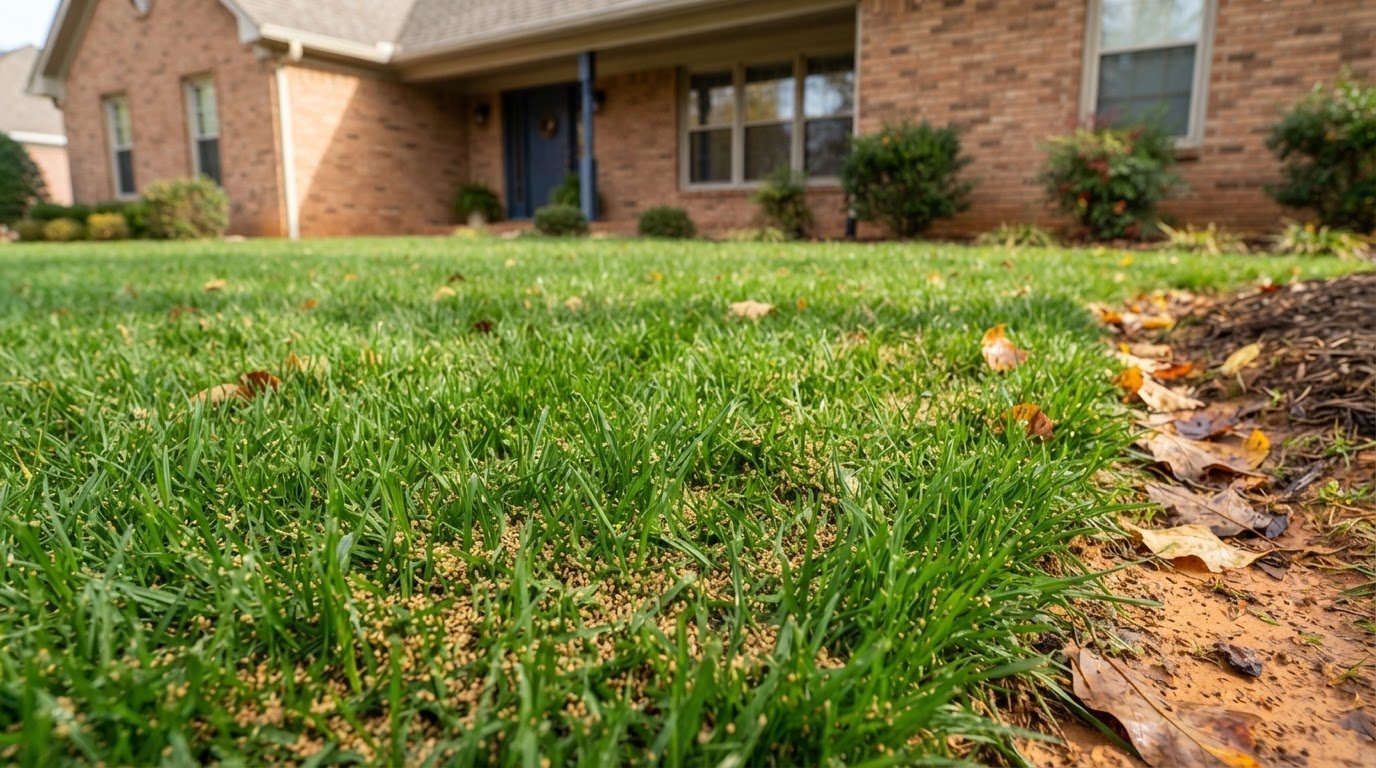


Does tall fescue need overseeding on a fixed yearly schedule? When overseeding tall fescue lawns in Gallatin, base the decision on how dense and healthy the grass is. Tall fescue grows in clumps rather than spreading to fill bare spots, so thin areas and open patches can indicate that new seed may help.
It’s reasonable to wonder whether overseeding belongs on the annual to-do list or is needed only when the lawn looks worn. Fall is generally the best time to overseed fescue in Middle Tennessee. Late August through mid-October is a suitable window, with September often the most reliable month.
This guide explains how to tell whether overseeding could benefit your lawn, why preparation and seed selection matter, and what to expect as new grass establishes. You’ll also learn how professional aeration and overseeding support fuller turf, and why seedlings need consistent care and time to grow. The goal is to identify what your lawn needs, not treat overseeding as an automatic yearly task.
When aeration and overseeding are necessary
In Gallatin, overseeding is most useful when tall fescue has thinned or developed bare patches. Because it grows in clumps rather than spreading aggressively, open spaces may not fill in on their own. Fall is generally the better season, though spring seeding is possible from late February into early April.
For suitable conditions, look for daytime temperatures regularly in the 70s and low 80s °F while the soil remains warm. Early fall usually provides that balance in Middle Tennessee.
-
Assessing the Need for Aeration
Before scheduling aeration or seeding, assess thin turf, bare areas, and compacted soil. Tall fescue’s clump-forming growth means open spaces may persist instead of filling in naturally. If Bermuda grass has spread into an established fescue lawn, eliminating it completely can be extremely difficult. Management focuses on limiting its spread and helping fescue remain healthy and competitive.
-
Timing Overseeding for Tall Fescue
Choose the fall window first: tall fescue in Middle Tennessee is generally best overseeded from late August through mid-October, with September often the most reliable time. Spring seeding can work from late February into early April, but fall is preferable. Plan around daytime temperatures regularly in the 70s and low 80s °F, with warm soil to support germination and growth.
-
Preparing Soil for Seed Contact
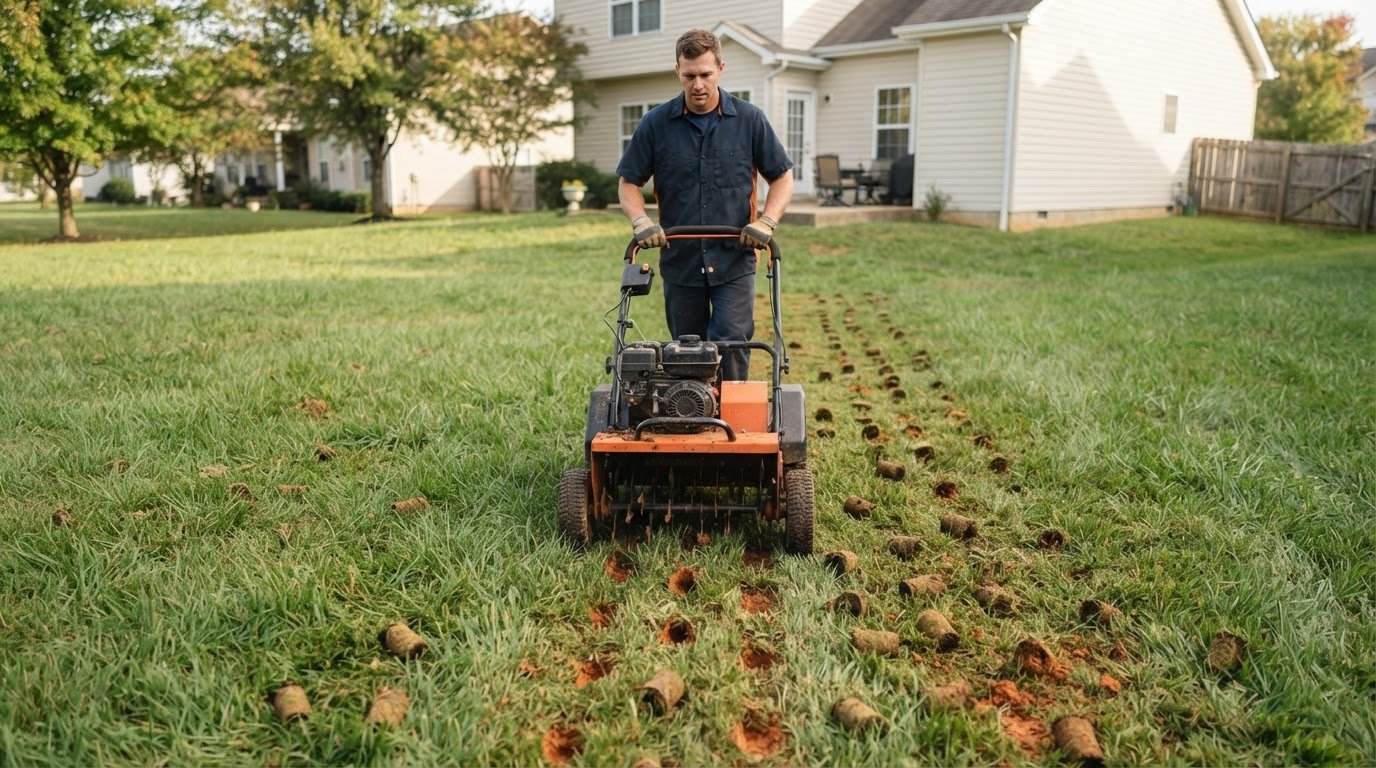
Have the lawn prepared so seed can reach soil rather than sit on dense turf or debris. For larger bare areas, loosen the top quarter-inch of soil before seeding. Core aeration removes plugs 2 to 3 inches long; professionals can make at least two passes across areas being reseeded. If soil is dry and hard, soak it to a depth of 2 inches the evening before aeration.
- Fall core aeration creates openings where seed can settle and improves seed-to-soil contact, which helps seed sprout. For even coverage, aerate in a grid pattern, first north to south and then east to west. On Gallatin properties, this can address thin sections without treating healthy, dense turf as though it needs the same work.
- Base soil amendments on the lawn’s needs rather than applying them automatically. A soil test two weeks before overseeding can identify pH or nutrient concerns; tall fescue grows well in soil with a pH between 6.5 and 7.0. Aeration and overseeding address different needs: aeration opens compacted soil, while added seed can fill thin or bare areas. Together, they support denser turf and give new grass room to establish.
Professional lawn aeration and overseeding can align preparation, timing, and seed placement for a healthier fescue lawn.
Mixing fescue with other seed types
For Gallatin and Middle Tennessee lawns, choose turf-type tall fescue seed, ideally a blend of varieties rather than a single cultivar. Match the amount of seed to the lawn’s condition: a new lawn and a thin existing lawn need different amounts.
-
Choosing Turf-Type Fescue Seed
Have the seed selected for an established fescue lawn, not simply by bag label or price. A suitable choice is turf-type tall fescue with a germination rate of at least 85%. That rate indicates the share of seed expected to germinate under suitable conditions; it doesn’t guarantee every seed will sprout in the lawn. Seed quality, preparation, and even placement all matter.
-
Selecting Fescue Seed Blends
Choose a blend of turf-type tall fescue varieties for the lawn rather than relying on a single variety. One overseeding example used four varieties, illustrating how a blend can bring different fescue selections together. Mixing in another grass type should serve a clear purpose, such as a separate seasonal use, rather than dilute the desired fescue coverage across bare spots.
- Set the seed rate according to whether the area is bare or already has turf. For a new lawn, the listed rate is 8 pounds of turf-type fescue seed per 1,000 square feet. An overseeded lawn generally needs around 3-4 pounds per 1,000 square feet, about half the amount used for an empty site.
Adjust for the amount of grass lost: where a fescue lawn lost about 25% over summer, use 2 pounds per 1,000 square feet. Where it lost about 50%, use about 4 pounds per 1,000 square feet. These examples show why a uniform new-lawn rate can put too much seed into an existing lawn.
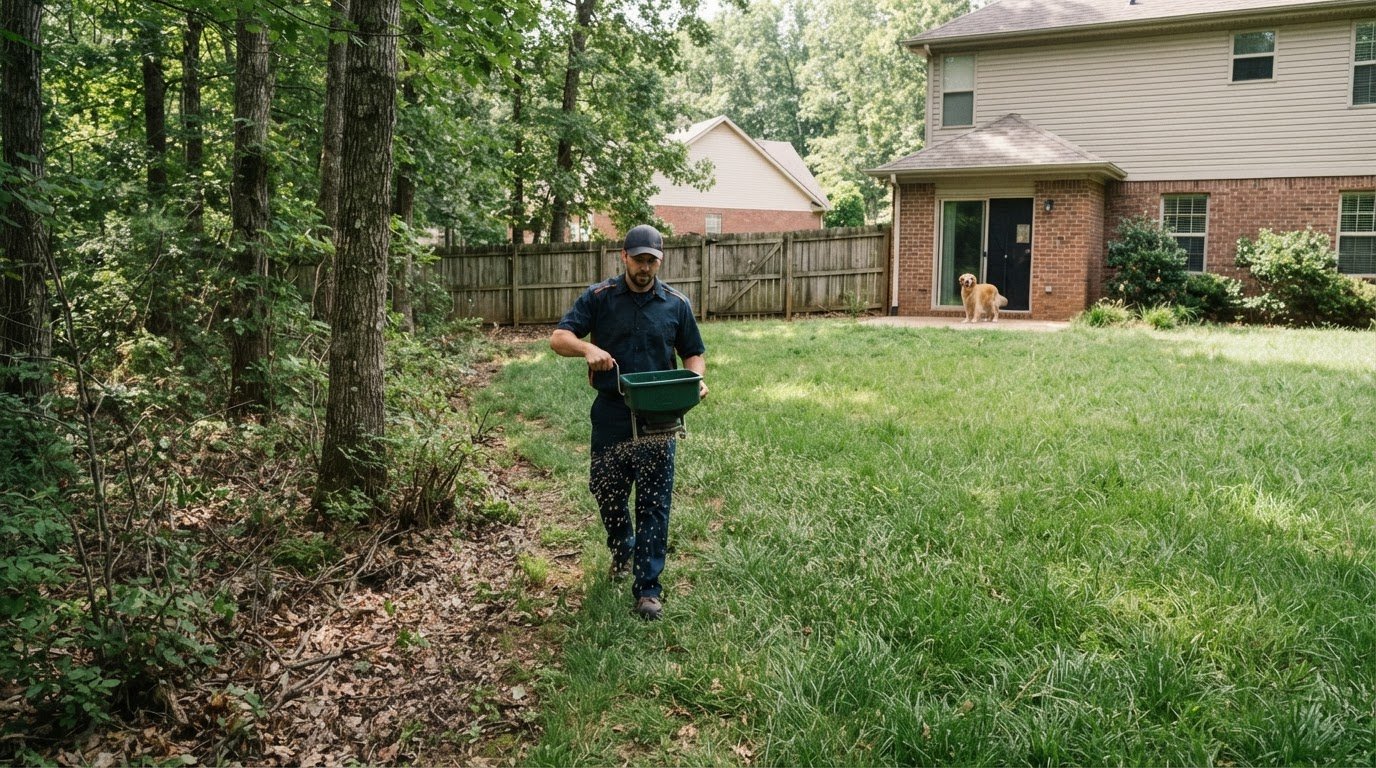
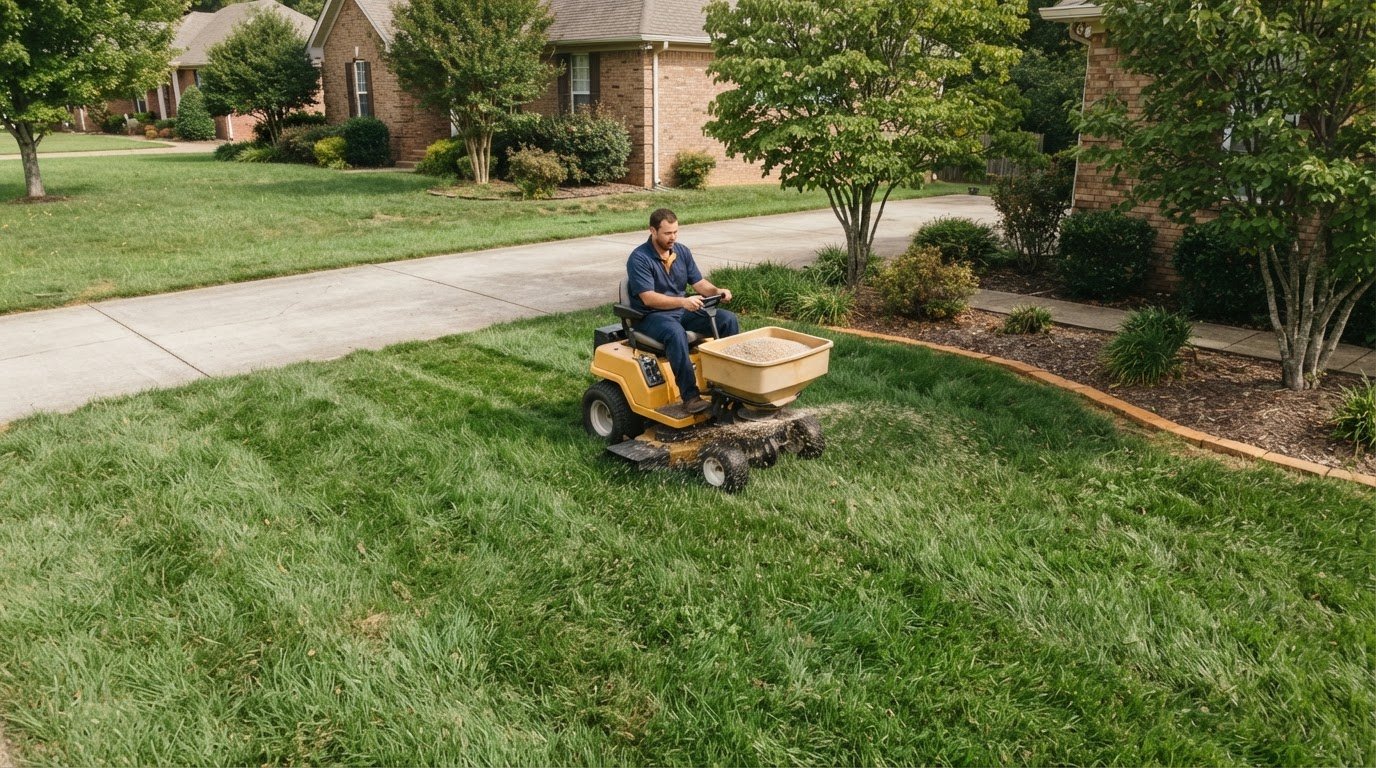
- Spread seed evenly over the prepared area. For consistent coverage, spread half moving north to south and the other half east to west. This cross-pattern helps prevent heavy strips beside thin patches, especially where thatch or existing grass may keep seed from reaching the soil.
- Pair even distribution with seed-to-soil contact. Core-aeration openings can catch seed, while prepared bare spots provide more exposed soil for germination. The goal is contact across the area, not a thick layer of seed sitting above the soil. If the planned work includes aeration and seeding together, discuss the lawn’s seed and coverage needs as part of the plan.
Mowing and dethatching before overseeding
Before overseeding, professionals prepare existing fescue turf so seed can reach the soil. Mowing it to around 2 inches reduces the canopy and gives new seedlings space to emerge.
- Before mowing or dethatching, assess the existing fescue lawn. Look for dense turf, accumulated thatch, and clippings that could block seed from reaching soil. Because thatch can form a barrier between seed and soil, prepare the lawn according to its actual surface condition. A thin lawn with bare spots may need different clearing than healthy, dense turf.
- Mow the existing grass to around 2 inches before overseeding. This shorter height opens the canopy, making it easier for seed to settle rather than lodge among tall blades. Professionals also remove loose clippings after mowing, especially where they collect in rows. A clean surface helps expose soil and reduces material that could cover freshly distributed seed unevenly.
- Assess whether thatch needs to be reduced before seeding. If a thick layer separates the grass canopy from the soil, clearing excess material can give seed a better path to the ground. Avoid disturbing healthy turf unnecessarily. The goal isn’t to strip the fescue lawn bare, but to remove obstacles that interfere with seed placement and soil contact.
- Coordinate mowing with core aeration and overseeding rather than treating them as separate tasks. Once the lawn is cut and cleared, aeration openings and exposed soil give seed more places to settle. In a Gallatin lawn with thin turf and compacted areas, preparation should address both conditions while preserving healthy fescue around bare patches.
- Protect new seedlings after seeding by delaying the first mow until they reach about 5 inches tall. Then make the first cut to approximately 3.5 to 4 inches. Removing no more than one-third of the blade length at a time helps avoid cutting new grass too short. For example, a 5-inch seedling cut to 3.5 inches loses less than one-third.
- Keep mowing height in mind as seedlings continue to grow. Middle Tennessee fescue is generally maintained around 3 to 4 inches, which helps shade soil and conserve moisture. Mow only when new grass has reached the appropriate height, and avoid scalping young areas to match older turf. Careful timing supports a more even transition from seedlings to established lawn.
For preparation, mow the lawn to around 1.5 inches before overseeding. When trimming new grass, remove no more than one-third of the blade length at a time.
Seed spreading rates and watering
Even coverage and steady moisture help tall fescue seed establish after overseeding. Professionals adjust seed placement and post-seeding care to the lawn’s condition and the weather.
-
Spreading Seed at the Right Rate
Set the grass seed rate according to how much existing turf remains. An established fescue lawn generally uses around 3-4 pounds per 1,000 square feet, while an empty site needs about twice as much. A lawn with scattered bare spots needs a different amount than one with widespread thinning, so professionals assess coverage before spreading.
Spread seed in crossing directions for more even coverage: one half north to south, then the rest east to west. This helps limit heavy strips and missed areas. Don’t treat a partly covered lawn like bare soil, since too much seed can crowd seedlings as they emerge.
-
Watering During Establishment
Keep the newly sown seedbed consistently moist until seedlings emerge. Water once to twice daily until germination, adjusting to conditions so the surface stays moist but not waterlogged. Tall fescue seed in Middle Tennessee often begins to sprout in one to two weeks, depending on temperatures and the seed blend.
After germination, water less often but more deeply. Gradually reduce watering to 1-2 inches per week, which encourages roots to grow downward. Newly seeded fescue should receive enough water to moisten soil to a depth of one inch.
- Water thoroughly right after planting to settle the seed against the soil. Moisten the seedbed without washing seed into piles or away from bare spots. On slopes, watch for runoff and adjust watering to keep newly spread seed in place.
- Adjust watering to Gallatin’s weather and the seedbed’s condition. Warm, dry conditions can dry the surface faster, while rain may reduce the need for additional watering. During germination, the key is keeping moisture consistent at the seed surface. Don’t let the seedbed dry out between watering periods.
- As seedlings emerge, shift from frequent, light watering toward deeper, less frequent watering. This encourages roots to grow downward rather than keeping moisture only at the surface. Make the transition gradually after germination instead of stopping regular watering suddenly.
- Protect the newly seeded area while grass establishes. Minimize heavy traffic for the first 4-6 weeks, since walking or play can disturb young seedlings and the damp soil around them. If fall seeding continues into winter, maintain appropriate moisture while conditions allow, and avoid assuming dormant-looking grass has failed before it has had time to emerge.
Why tall fescue lawns need overseeding
Tall fescue grows in clumps and doesn’t spread aggressively to fill spaces when the grass thins. Overseeding adds seed where density has declined, helping maintain a fuller lawn without assuming every Gallatin yard needs the same schedule.
- Assess lawn coverage after summer before deciding whether to overseed. Look for bare soil, scattered gaps, and areas where grass clumps have become isolated. A few thin patches may call for targeted seeding, while widespread thinning may warrant broader overseeding. Match the work to how much turf has been lost and where.
- Consider what changed during the previous season. Summer temperatures, rainfall, foot traffic, and turf health can all affect how much fescue remains. For example, a dry summer may leave gaps between clumps, while a shaded section may thin differently from a sunny one. These patterns help show whether new seed could address the problem or another cause needs attention.
- Use overseeding to replenish turf, not as a substitute for addressing conditions that weaken it. Nutrients, soil conditions, and moisture affect how established grass and new seedlings grow. If the same section repeatedly thins, assess its site conditions before simply reseeding. Adding seed can improve coverage, but it won’t correct an underlying problem by itself.
- Choose a season that gives new fescue time to establish. Fall is generally the best overseeding period for Middle Tennessee; spring seeding is possible from late February into early April. September is often the most reliable fall timing. A lawn with acceptable coverage may not need yearly overseeding, but an annual assessment can reveal when thinning calls for fresh seed.
- Set realistic expectations for what new seed can accomplish. Tall fescue often begins to sprout in one to two weeks, depending on temperatures and the seed blend, but emergence is only the first stage. Seedlings still need suitable moisture and time to grow into the lawn. Maintaining existing healthy turf also supports density as new grass fills open spaces.
- Base the decision on visible coverage and the lawn’s recent performance, not a calendar reminder alone. For instance, if a Gallatin lawn remains dense after summer, immediate overseeding may not be necessary. If recurring bare spots appear between fescue clumps, seasonal overseeding can help restore coverage. Discuss a professional overseeding plan when thinning is widespread or keeps returning.
Performance Lawns: Residential Aeration & Overseeding
Performance Lawns provides residential aeration and overseeding for homeowners whose tall fescue has thinned or developed bare areas. Professional service brings lawn assessment, aeration, and seed placement together, with an approach tailored to the existing turf rather than applied uniformly to every lawn.
Consider professional help when thin coverage is widespread, bare spots keep returning, or preparing and seeding the lawn feels difficult to manage. Timing, seed selection, and care during establishment all affect how new grass takes hold. Overseeding can add fescue where coverage has declined, but it won’t correct every underlying cause of thinning.
For a tailored next step, contact Performance Lawns to discuss residential aeration and overseeding for your lawn.
Plan the next step for your fescue lawn
Let your lawn’s condition guide its care for the next season. Overseeding tall fescue lawns in Gallatin is one part of maintaining the turf you want, alongside care that responds to changing lawn needs. A professional can shape a plan around your lawn’s coverage and condition, without treating overseeding as an automatic yearly task.
Performance Lawns, INC offers Residential Aeration & Overseeding, Lawn Treatments, and Weed Control and Fertilization. These services address different lawn-care needs, from adding seed to supporting established turf. The right next step depends on your lawn’s current condition and how you want to care for it over time.
Take the next step toward a thoughtful lawn care plan. Contact Performance Lawns, INC to discuss your lawn and move forward with a clear approach to its care.
Frequently Asked Questions
Do I Need to Do This Every Year?
Not necessarily. Assess lawn coverage each year instead of overseeding automatically. Tall fescue grows in clumps, so open spaces can persist where the grass has thinned. A dense lawn may not need new seed that season, while recurring bare areas can indicate that overseeding would help. Let the turf’s condition guide the decision rather than treating an annual date as a requirement.
What type of seed?
Choose turf-type tall fescue seed suited to a Middle Tennessee lawn, preferably a blend of varieties with a germination rate of at least 85%. Check that the seed is intended for turf, not a different use. Adding another grass type should have a clear purpose; otherwise, it can make the lawn’s desired fescue coverage less consistent.
When is the best time to overseed tall fescue lawns in Gallatin, Tennessee?
Early fall is generally the best time, with late August through mid-October the usual window and September often the most reliable month. Spring seeding is possible from late February into early April, but fall gives cool-season fescue a more suitable establishment period. Choose a forecast with daytime temperatures regularly in the 70s and low 80s °F while the soil remains warm.
How do professionals determine how much tall fescue seed to use per 1,000 square feet when overseeding?
Professionals base the rate on how much grass remains, rather than applying a new-lawn rate across existing turf. Around 3-4 pounds per 1,000 square feet is a general overseeding rate. For example, a lawn with about 25% grass loss uses 2 pounds per 1,000 square feet, while one with about 50% loss uses about 4 pounds per 1,000 square feet.
How do professionals prepare a tall fescue lawn for overseeding in Gallatin?
Preparation includes assessing turf and soil, mowing the existing grass, and clearing material that could block seed contact. A soil test two weeks before seeding can identify pH or nutrient needs; tall fescue grows well at a pH between 6.5 and 7.0. Pre-emergent herbicide should not be applied before overseeding, because it can prevent seed germination.
Should a professional aerate or dethatch a tall fescue lawn before overseeding?
Core aeration is useful when soil compaction or the need for seed-to-soil contact supports it. Dethatching is a separate decision based on surface conditions. Core aeration removes soil plugs and creates openings where seed can settle. Dethatching doesn’t replace aeration, and a professional can assess whether excess thatch is obstructing seed placement before recommending its removal.
How often and for how long should a newly overseeded tall fescue lawn be watered during establishment?
Water once to twice daily until seeds germinate, keeping the seedbed consistently moist. Tall fescue often sprouts in one to two weeks, depending on temperatures and the seed blend. After emergence, gradually water less often and more deeply, moving toward 1-2 inches per week. This transition encourages roots to grow downward instead of keeping moisture only near the surface.
How soon after professional overseeding can the lawn be mowed or receive fertilizer and weed control?
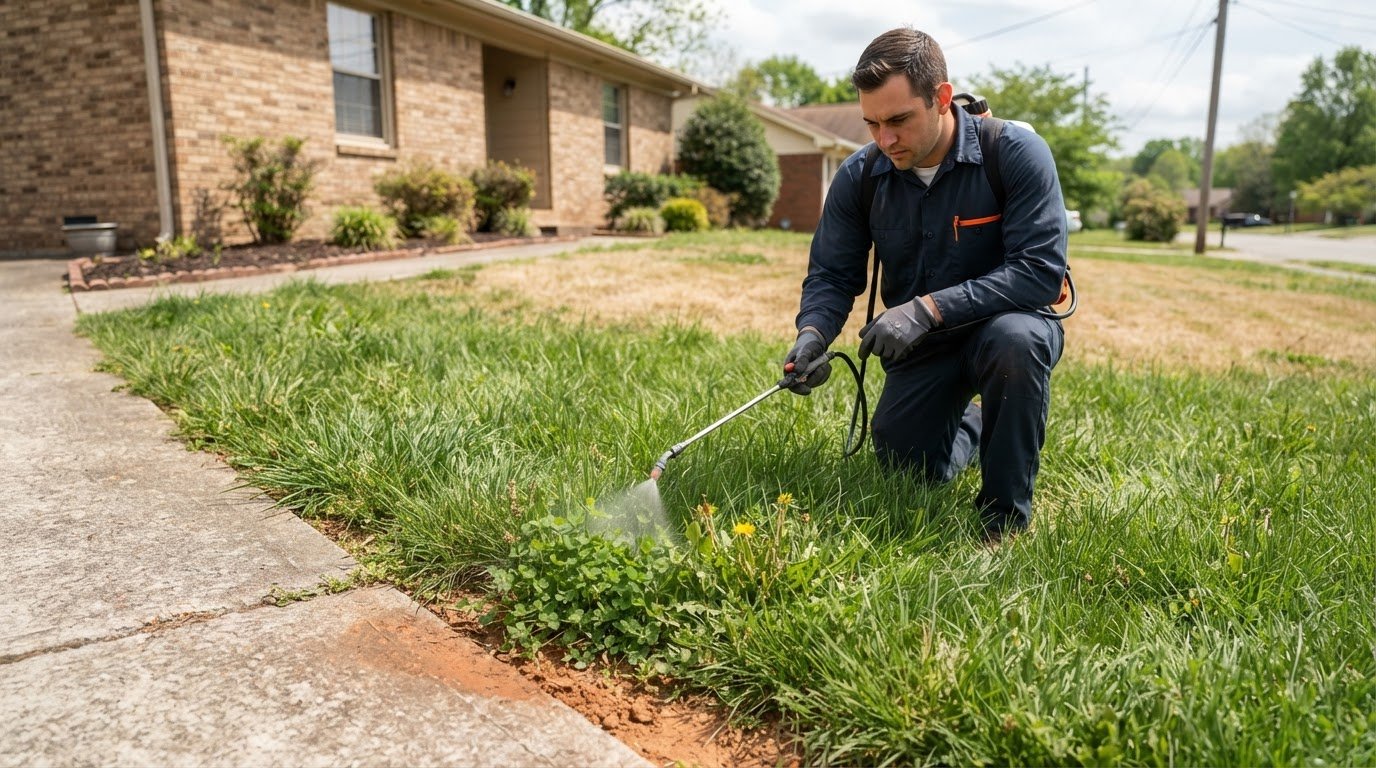
Wait to mow until seedlings reach about 5 inches tall, then cut them to 3.5 to 4 inches. Avoid applying herbicides or chemical weed control until the new grass is established. Dallisgrass and Johnsongrass are invasive grassy weeds that can be harder to manage than common broadleaf weeds and may require a separate or targeted treatment approach. Fertilizer timing should reflect soil-test results, since a starter fertilizer may be useful when a test identifies a need for phosphorus or other nutrients. Apply no pre-emergent before seeding.