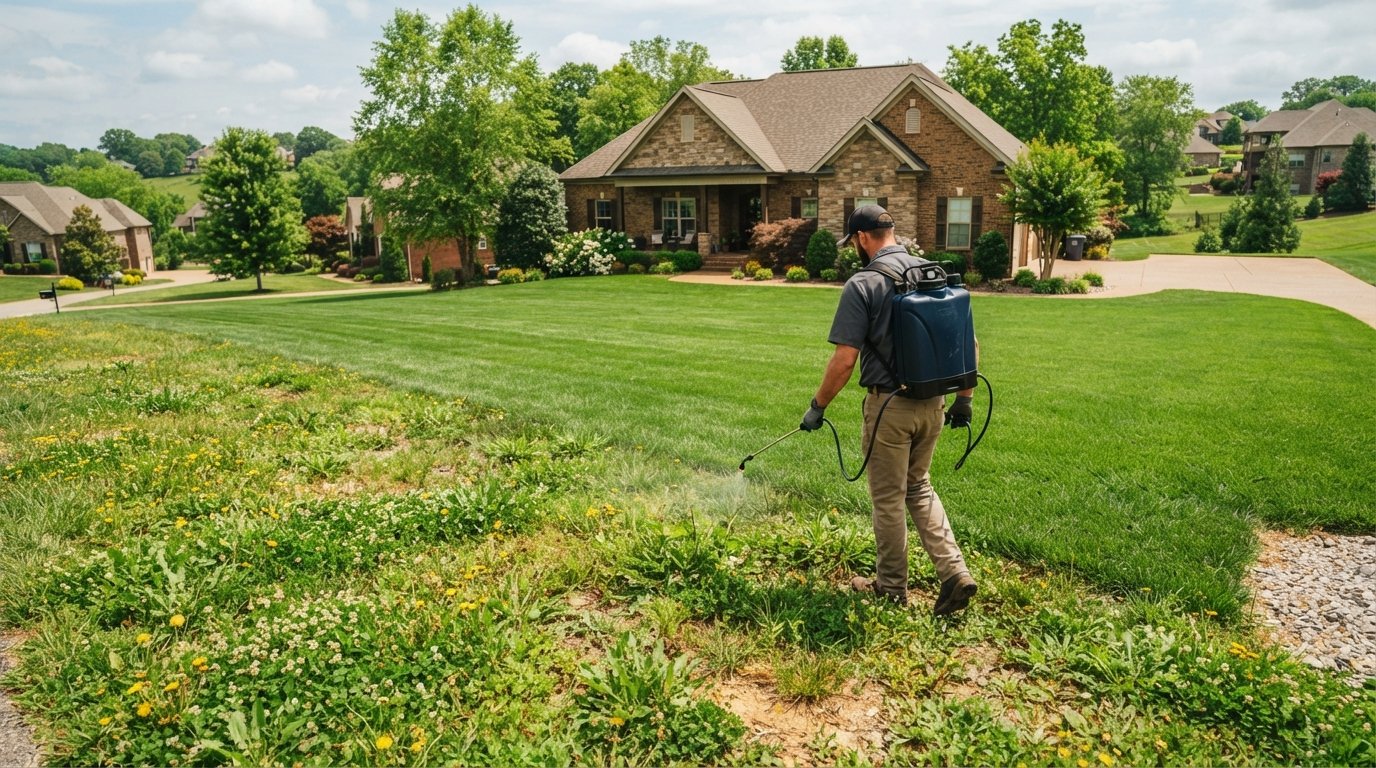
Tacking a basic bag of granular fertilizer onto a standard mowing contract won't protect your business's curb appeal. Wilson County's heavy clay soil compacts quickly under daily foot traffic and repels generic treatments, leaving commercial grounds vulnerable to stress and disease. Investing in specialized commercial lawn fertilization mt juliet enterprises can rely on means approaching soil fertility with deliberate agronomic science rather than treating it as a hurried afterthought.
As a commercial property manager, you already know that thin turf, persistent weed pressure, and missed seasonal treatment windows directly undermine your professional credibility. You shouldn't have to chase down unreliable crews or settle for broad-stroke applications that fail to manage local turf challenges. You will discover how a targeted fertilization strategy defends your exterior appearance, nourishes complex transition zone soils, and simplifies grounds management. This 2026 turf management guide outlines Middle Tennessee's seasonal treatment calendar, essential soil conditioning principles, and the specialized applicator standards required to build lasting turf resilience.
Why Commercial Properties in Mt. Juliet Require Dedicated Turf Fertilization
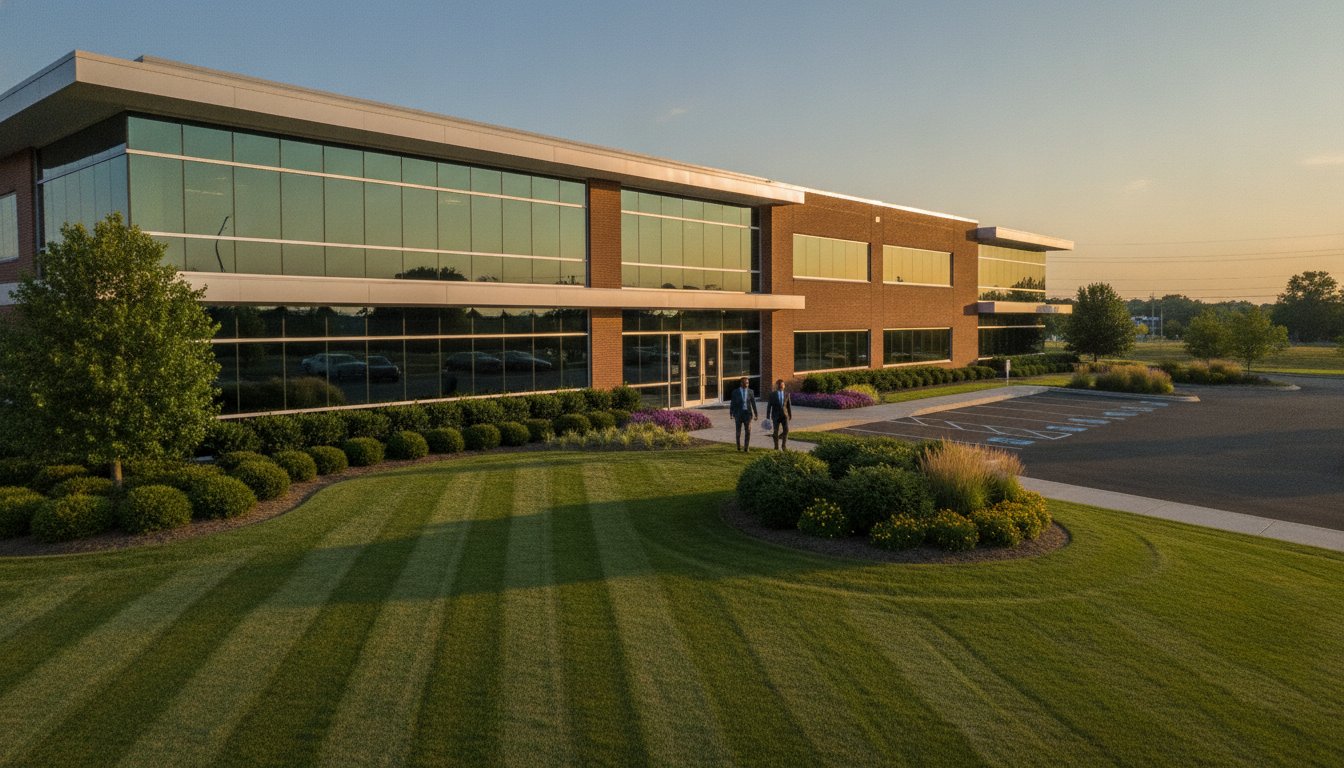
A manicured commercial exterior does more than decorate a parcel. It projects stability, attention to detail, and operational excellence to prospective tenants, visiting clients, and daily patrons. Commercial turf faces extreme microclimates that residential lawns rarely encounter. Expansive asphalt parking lots radiate ambient heat straight into adjacent turf strips, while steady pedestrian traffic crushes delicate leaf blades and compacts root zones. Routine commercial lawn fertilization mt juliet businesses rely on delivers targeted ratios of nitrogen, phosphorus, and potassium to fortify root systems against these compounding pressures.
Understanding the exact requirements of your business grounds ensures you protect your investment long before turf declines. To better understand how targeted agronomic programs support area properties, watch this helpful video:
The Direct Link Between Commercial Turf Health and Business Value
First impressions carry tangible financial weight. Commercial properties presenting lush, uniform green spaces project higher value, which supports tenant retention and customer trust. Applying sound turf management principles establishes dense root networks that bind the soil together, mitigating stormwater runoff near commercial entrances and curbing expensive site erosion. Consistent nutrient delivery protects your corporate capital by eliminating the massive disruption and expense of total sod replacement.
Why Mowing Contractors Cannot Replace Licensed Turf Treatment Specialists
Bundling fertilization into a standard weekly mowing contract rarely yields healthy commercial grass. Mowing teams focus on mechanical cutting schedules, sharp blades, and swift job turnaround rather than analyzing underlying soil chemistry. True commercial turf care demands calibrated commercial equipment and licensed expertise to properly apply products, adjust micronutrients, and monitor turf health across changing seasons.
A dedicated agronomic partnership provides distinct operational advantages:
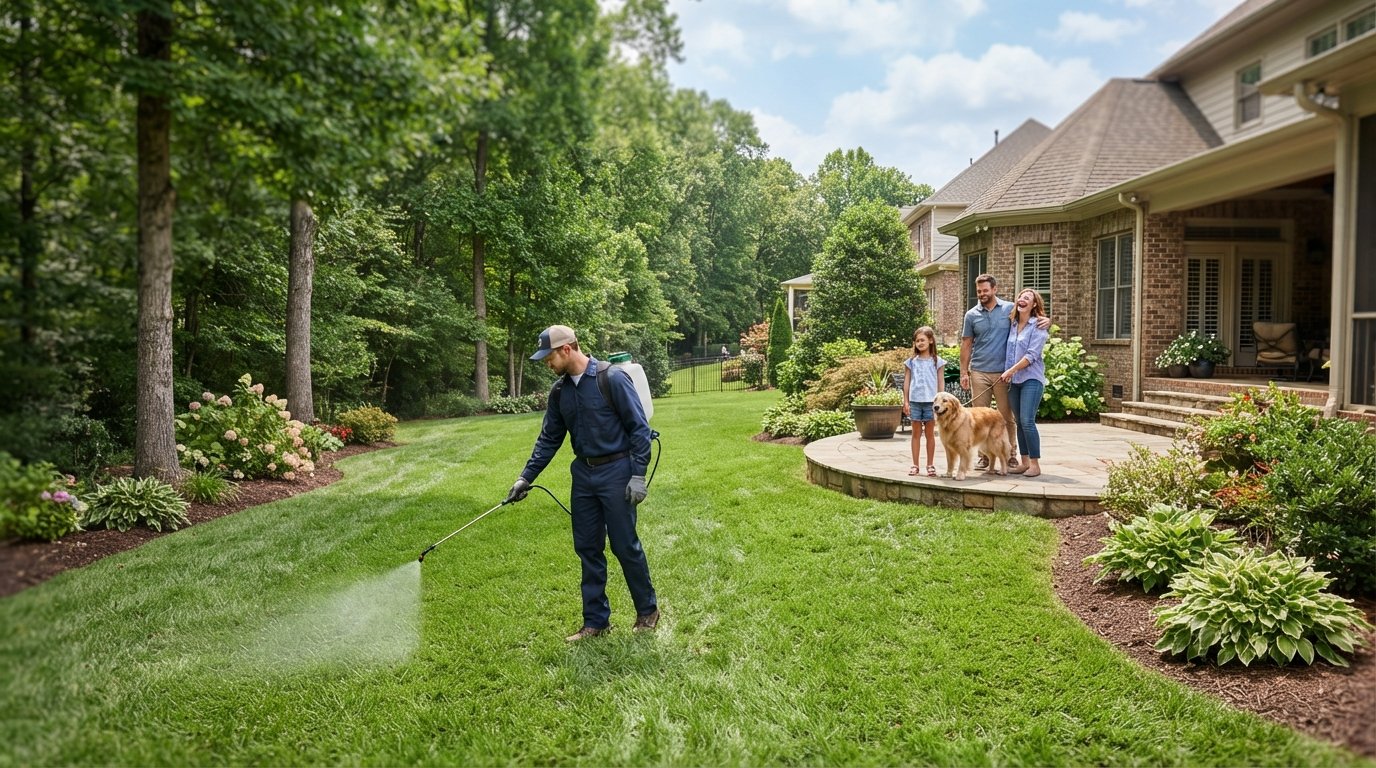
- Precise chemical application: Licensed technicians calibrate commercial spreaders and spray rigs to ensure accurate nutrient distribution without burning turf edges.
- Long-term root health: Targeted fertilizer and weed control builds resilient root systems that endure drought and foot traffic instead of just forcing short-lived top growth.
- Regulatory assurance: Professional applicators maintain rigorous state compliance, protecting your facility from application errors or chemical drift.
Choosing dedicated commercial lawn fertilization mt juliet specialists ensures your turf receives methodical care while freeing your facility team to focus on core operations.
Navigating Middle Tennessee Soil and Climate Demands on Commercial Turf
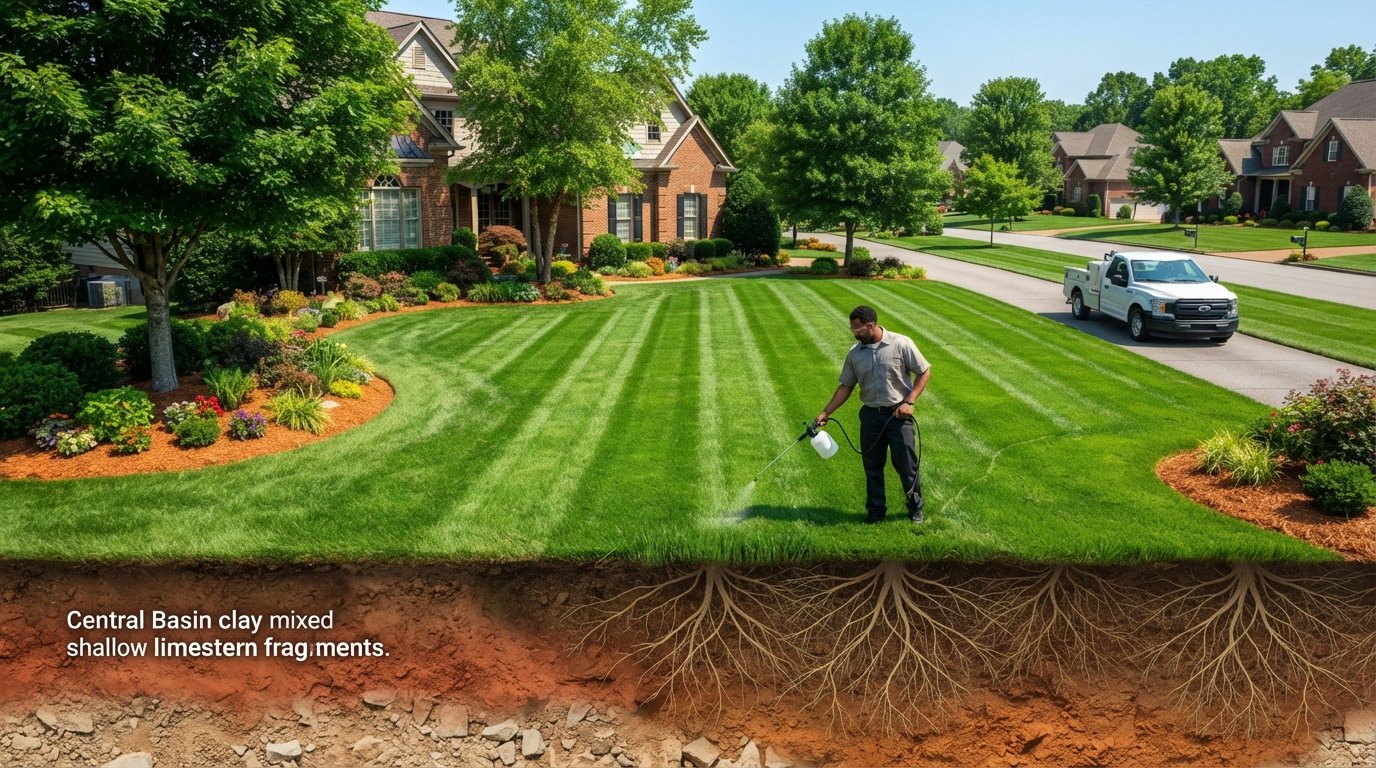
Managing grounds in Wilson County means wrestling with Middle Tennessee's transition zone, an agronomic pocket where brutal summer heat waves meet sub-freezing winter cold snaps. Beneath the turf surface, dense limestone-based red clay creates serious drainage hurdles. This tight soil compacts quickly, shedding rainfall during sudden storms and baking into hardpan during humid summer dry spells. Generic treatment approaches fail here because standard granular blends sit stranded on top of hard ground instead of absorbing into the root zone. Successful commercial lawn fertilization mt juliet grounds require demands precise timing around local weather windows to ensure nutrients penetrate deep into the profile.
Managing Heavy Clay Compaction on Mt. Juliet Commercial Sites
Dense clay particles bind together tightly, locking out the air, moisture, and essential minerals that root systems require to thrive. Daily foot traffic around office entrances, courtyard paths, and perimeter borders worsens this issue, choking root systems until turf thins out. Routine core aeration physically pulls plugs from compacted turf zones, opening vertical pathways that let fertilizer reach feeding roots below. This process alleviates physical stress, encourages deeper root penetration, and prevents topically applied products from washing away across sloped pavement.
Balancing Nutrients for Fescue and Warm-Season Commercial Grasses
Different turfgrass species require entirely distinct nutrient schedules to stay healthy under Middle Tennessee conditions:
- Tall Fescue: As a cool-season turf, tall fescue depends on robust autumn nitrogen feedings to recover from summer stress, develop winter carbohydrate reserves, and build deep root infrastructure. Heavy spring nitrogen must be avoided to prevent rapid top growth that welcomes disease.
- Warm-Season Species: Bermudagrass and zoysiagrass remain dormant through early spring, demanding targeted summer feedings when active growth peaks in July and August.
- Soil Chemistry Adjustments: Native limestone clay frequently exhibits alkaline or inconsistent pH levels. Professional soil testing establishes baseline chemistry before calculating fertilizer needs, ensuring sulfur or lime applications balance the soil so turfgrass roots can naturally absorb applied nutrients.
Managing competing species adds another layer of complexity. Bermudagrass that has spread into an established fescue lawn can be extremely difficult to eliminate completely. Management efforts generally focus on limiting its spread, reducing its presence, and helping the desired fescue remain as healthy and competitive as possible. If your property displays persistent thin spots or compaction challenges, you can speak with our local team to map out an agronomic strategy tailored to your specific site conditions.
Essential Components of a Commercial Fertilization and Weed Management Plan
A thriving commercial lawn requires an ongoing agronomic strategy rather than reactionary, one-time fixes. Middle Tennessee's unpredictable weather cycles mean that simply scattering fertilizer won't produce healthy turf unless you pair those nutrients with proactive weed suppression. Successful commercial lawn fertilization mt juliet facilities implement relies on slow-release feeding combined with precisely timed weed management visits. By steadily nourishing root systems while keeping competitive weed growth at bay, commercial grounds remain thick, visually consistent, and far better equipped to withstand environmental stress.
Seasonal Application Timelines for Middle Tennessee Businesses
Timing determines everything when working with transition zone turf. Commercial turf treatments follow a disciplined seasonal progression to protect corporate curb appeal:
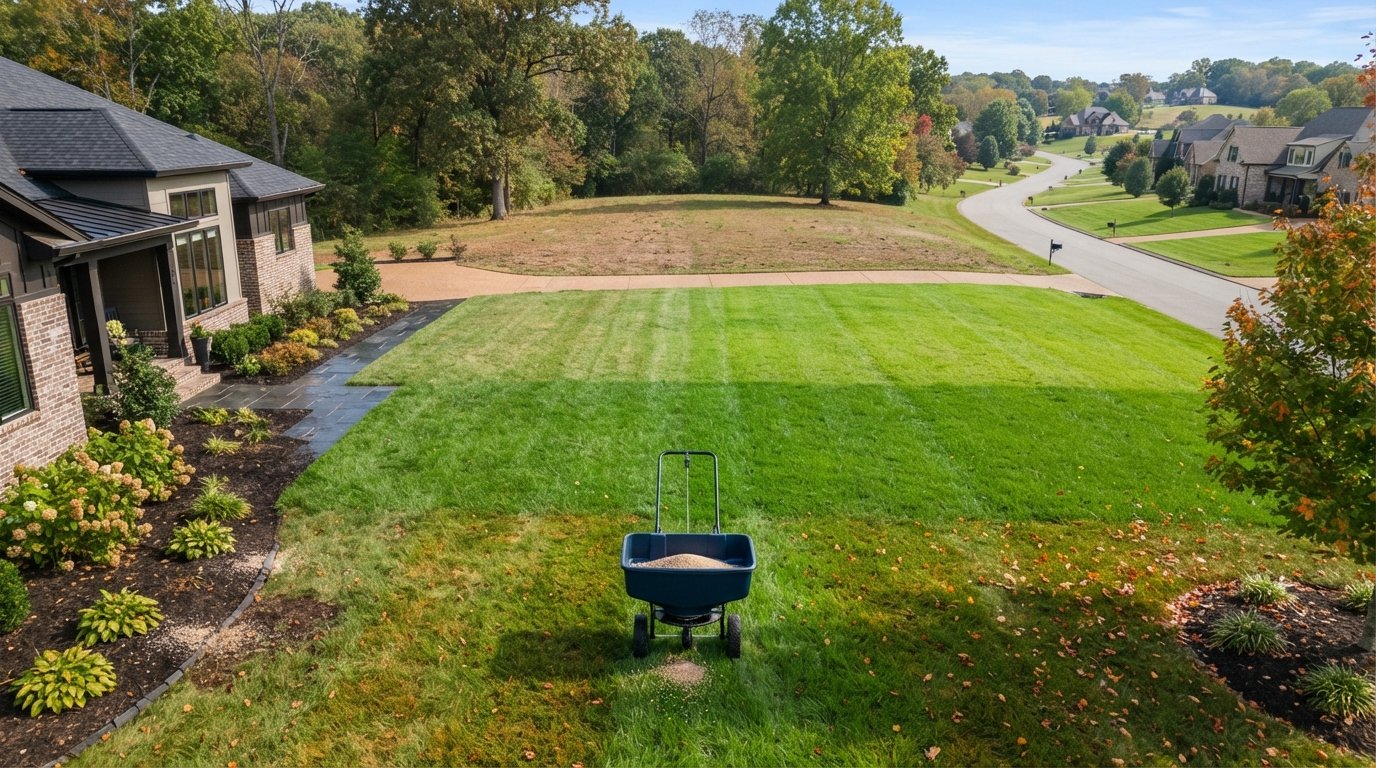
- Early Spring: Technicians lay down pre-emergent barriers to help control common lawn weeds such as crabgrass before seeds germinate. A light dose of balanced nutrients encourages early root awakening without sparking sudden mowing spikes.
- Late Spring to Early Summer: Slow-release nitrogen applications maintain deep green color through rising temperatures. Spot treatments manage unwanted weeds that breakthrough initial barriers, preserving a uniform appearance across parking strips and entryways.
- Late Summer and Fall: As summer heat breaks, treatment focuses heavily on root recovery. Dedicated fall fertilization strengthens cool-season turf, driving root expansion deep into the clay so plants store carbohydrates for winter survival.
Managing Difficult Weeds: Setting Realistic Turf Expectations
Commercial property managers should view weed management as continuous pressure reduction rather than total eradication. A professional weed control program helps reduce weeds and support healthy turf, but claiming any high-traffic site will stay permanently weed-free ignores biological realities. Birds, wind, and vehicular traffic constantly carry fresh weed seeds across commercial property lines.
Standard broadleaf weed treatment effectively manages species like dandelion, clover, and plantain. However, invasive grassy varieties require completely different agronomic strategies. Dallisgrass and Johnsongrass are invasive grassy weeds that can be more challenging to manage than common broadleaf weeds. Because they may not respond to the same treatments used for typical lawn weeds, a separate or targeted treatment approach may be recommended.
Similarly, warm-season encroachment demands clear expectations. Bermuda grass that has spread into an established fescue lawn can be extremely difficult to eliminate completely. Management efforts generally focus on limiting its spread, reducing its presence, and helping the desired fescue remain as healthy and competitive as possible. Combining targeted weed control with tailored commercial lawn fertilization mt juliet protocols gives your preferred turf the strength to crowd out opportunists naturally.
Managing Turf Diseases and Environmental Stress on Commercial Grounds
Middle Tennessee's sweltering summer climate creates an ideal breeding ground for destructive turf pathogens. When nighttime temperatures stay above 60 to 68 degrees and relative humidity climbs, commercial fescue enters severe survival stress. Dumping high-nitrogen fertilizers onto commercial grounds during these humid stretches triggers rapid, succulent leaf growth that invites fungal spores to take hold. Effective commercial lawn fertilization mt juliet properties need coordinates nitrogen delivery with strict irrigation management. Mismatched watering cycles keep foliage wet through the night, starving roots of oxygen and sparking rapid pathogen outbreaks.
Identifying and Treating Common Tennessee Lawn Diseases
Fungal issues require careful diagnosis rather than broad chemical drenching. Lawn disease treatments can help manage common diseases such as brown patch and dollar spot. However, some diseases, including Pythium, can develop and spread very quickly, making them considerably more difficult to manage. Treatment effectiveness can depend on the specific disease, weather conditions, severity, and how early the problem is identified.
A dependable commercial disease strategy focuses on three core practices:
- Early Symptom Detection: Identifying irregular circular lesions or copper-colored dollar spot patches before they merge into widespread blighted acreage.
- Rotational Fungicide Modes of Action: Rotating professional products prevents local pathogens from developing chemical resistance across recurring treatment cycles.
- Nutrient and Hydration Balance: Restricting quick-release nitrogen inputs during sweltering periods while adjusting commercial irrigation heads to run in early morning hours.
Mitigating Commercial Turf Stress Around Concrete and Asphalt
Commercial turf strips lining parking lots and main driveways endure extreme thermal punishment. Dark asphalt absorbs intense sunlight, radiating trapped heat outward and scorching adjacent grass crowns well after sunset. Applying standard fast-acting fertilizers in these exposed areas causes chemical burn and sudden browning.
Specialized commercial protocols utilize custom slow-release fertilizers that feed turf steadily without shocking heat-stressed root systems. Combined with targeted fertilizer and weed control treatments, this careful feeding maintains uniform green coverage along curb perimeters and entryway islands. If persistent summer thinning or fungal patches threaten your facility's exterior appearance, contact Performance Lawns today to build a targeted turf protection schedule for your property.
Choosing the Right Commercial Lawn Care Partner in Mt. Juliet
Selecting a commercial lawn partner requires looking past generic equipment fleets and glossy marketing promises. Commercial grounds demand rigorous agronomy, not hasty maintenance add-ons. Property managers often discover that low-bid landscape contractors assign chemical treatments to untrained cutting crews who lack the technical expertise to diagnose underlying soil deficiencies. Partnering with a dedicated turf care specialist ensures your property receives disciplined oversight, customized nutrient formulations, and reliable scheduling that keeps your business running smoothly without interruption.
Key Criteria for Vetting Mt. Juliet Commercial Lawn Contractors
Before handing over your property's exterior stewardship, vet prospective contractors against strict professional standards:
- Regulatory Licensing and Insurance: Verify that the company holds valid commercial pesticide licensing through the Tennessee Department of Agriculture, specifically with certified Category C03 (Ornamental and Turf) applicators who maintain their required continuing education credits.
- Agronomic Specialization: Confirm whether the team consists of dedicated treatment technicians or standard mowing personnel rotating through chemical duties. Specialized applicators understand proper calibration and herbicide chemistry.
- Property-Specific Formulations: Avoid providers selling one-size-fits-all national bags. Demand customized plans that directly address Wilson County limestone-clay profiles and site-specific drainage slopes.
- Operational Scheduling: Establish clear communication protocols so applications happen around peak business hours, preventing disruptions to tenants, delivery fleets, or visiting clients.
The Performance Lawns Approach to Commercial Turf Care
With over 15 years of dedicated Middle Tennessee lawn care experience, Performance Lawns operates as a locally owned, independent commercial turf specialist. We deliberately exclude weekly mowing and landscape construction from our business model. This singular focus ensures our licensed technicians dedicate all their training, equipment calibration, and daily attention to soil health, turf nutrition, and effective weed management.
We act as your reliable agronomic partner, lifting the technical burden off your maintenance team while delivering visible curb appeal that elevates your brand. Discover how our specialized fertilization and weed control services protect your investment through tailored transition zone schedules. If you are ready for a dependable local partner who delivers exceptional commercial lawn fertilization mt juliet facilities deserve, contact our team today to schedule a thorough property assessment.
Transform Your Commercial Grounds into a Lasting Asset
Protecting corporate curb appeal requires moving past standard mowing packages to embrace dedicated agronomic care. Wilson County's dense clay soil, intense summer humidity, and seasonal weed pressures demand structured nutrient timing and proactive treatment. When your turf receives calibrated applications designed for transition zone challenges, it develops the deep root system needed to endure heavy foot traffic and volatile weather patterns.
With over 15 years of dedicated Middle Tennessee lawn care experience, Performance Lawns delivers proven agronomic programs tailored to Wilson County clay soils. Our licensed commercial applicators focus solely on turf health, giving your property meticulous attention so you don't have to manage chemical schedules yourself. Investing in specialized commercial lawn fertilization mt juliet enterprises rely on ensures your facility always projects professional credibility. Request a Commercial Turf Assessment today to give your property the lasting vitality and resilience it deserves.
Frequently Asked Questions
Can commercial lawn fertilization keep our Mt. Juliet property completely weed-free?
No honest lawn care provider can promise a completely weed-free lawn. Wind, birds, stormwater, and daily vehicle traffic constantly introduce fresh seeds to commercial properties. A professional weed control program helps control common lawn weeds and reduce weed pressure over time. By pairing pre-emergent barriers with targeted post-emergent spot applications, commercial lawn fertilization mt juliet businesses invest in keeps desirable turf thick, vibrant, and capable of naturally crowding out unwanted broadleaf invaders.
How often should commercial lawns be fertilized in Middle Tennessee?
Commercial lawns in Mt. Juliet generally benefit from five to six strategically timed agronomic applications throughout the calendar year. Middle Tennessee transition zone conditions require tailored timing for cool-season tall fescue and warm-season grasses. Fescue requires robust autumn feedings to expand root systems, paired with balanced early spring treatments. Warm-season turf relies on steady summer feedings during active growth. Spacing treatments across seasonal transitions ensures root zones receive steady nutrients without triggering excessive surge growth.
Will commercial fertilization treatments disrupt our employees or customers?
Treatments are scheduled to avoid disrupting normal business operations or customer parking. Dedicated commercial applicators coordinate visits during off-peak hours, early mornings, or weekends depending on your facility's traffic flow. Liquid applications dry within one to two hours, after which treated turf is fully accessible. Technicians blow stray granular material off pedestrian walkways back into the grass and post clear safety notification flags at property entrances following every service.
What happens if our commercial lawn develops brown patch or fungal diseases?
Lawn disease treatments can help manage common diseases such as brown patch and dollar spot. However, some diseases, including Pythium, can develop and spread very quickly, making them considerably more difficult to manage. Treatment effectiveness can depend on the specific disease, weather conditions, severity, and how early the problem is identified. Technicians evaluate turf condition during each visit, rotating fungicide chemistries while adjusting nutrient inputs to mitigate disease development during humid periods.
How do you manage aggressive grassy weeds like Dallisgrass or Johnsongrass?
Dallisgrass and Johnsongrass are invasive grassy weeds that can be more challenging to manage than common broadleaf weeds. Because they may not respond to the same treatments used for typical lawn weeds, a separate or targeted treatment approach may be recommended. These deep-rooted perennial grasses spread via resilient underground rhizomes. Addressing them requires specialized post-emergent materials applied during specific seasonal growth windows alongside soil fertility practices that encourage thick turf growth.
Can invasive Bermuda grass be removed from our commercial fescue lawn?
Bermuda grass that has spread into an established fescue lawn can be extremely difficult to eliminate completely. Selective suppression treatments applied during the summer months slow down Bermuda development without killing cool-season fescue, while fall aeration and overseeding introduce resilient fescue varieties to keep the turf uniform and dense.
Why should we hire a specialized treatment company instead of our current mowing crew?
Dedicated treatment specialists focus entirely on soil chemistry, precise equipment calibration, and state-certified application standards. Mowing crews prioritize cutting schedules and rarely carry dedicated Category C03 commercial pesticide licensing. Specialized commercial lawn fertilization mt juliet providers like Performance Lawns bring over 15 years of dedicated Middle Tennessee experience. Because we deliberately exclude mowing and landscaping, our technicians dedicate their full expertise to soil health, weed suppression, and long-term turf vitality.