Mowing your commercial grounds every week will never solve a persistent weed problem. For property managers across the Volunteer State, maintaining crisp corporate campuses and pristine retail centers demands dedicated agronomic turf care, not casual mowing add-ons. Relying on basic mowing crews often leads to missed seasonal application windows, wasted budgets on generic treatments, and invasive broadleaf weeds that undermine your property's reputation. That is why investing in specialized commercial weed control services in Tennessee is vital for sustaining healthy turf and dependable curb appeal.
You already know that clean, uniform grounds directly influence tenant satisfaction and client confidence. But what should an effective commercial weed control program actually include to protect your business grounds in our unpredictable climate? In this 2026 guide, you'll discover how targeted commercial weed management protects your property's reputation, navigates regional soil conditions, and reduces weed pressure through proactive pre-emergent and post-emergent care. We outline the essential seasonal strategies, compliance standards, and contractor communication practices you need to maintain healthy turf with zero disruption to your daily operations.
Why Commercial Properties in Tennessee Require Professional Weed Management
First impressions dictate commercial property value. When prospective tenants, corporate executives, or retail shoppers arrive on site, the exterior landscape immediately sets expectations regarding your standard of operational care. Dense, unmanaged weeds encroaching across curb lines project neglect, whereas vibrant turf signals disciplined facility management. Relying on specialized fertilization and weed control addresses turf health at an agronomic level, separating dedicated chemical care from simple mechanical cutting.
Left unchecked, turf infestations rapidly migrate into expansion joints, curbs, and walking paths. Persistent root systems accelerate asphalt cracking, degrade parking lot surfaces, and create genuine tripping liabilities for pedestrians. Partnering with a dedicated turf specialist helps property managers reduce weed pressure significantly, safeguarding structural assets and preventing premature pavement repairs.
To see how commercial managers and turf experts maintain healthy, resilient turf across our region, watch this short guide:
Protecting Tenant Satisfaction and Commercial Property Value
Lease renewals and tenant contentment hinge on consistent property presentation. Prolific dandelions, crabgrass, and opportunistic invasive plant species detract from a business park's professional image. Engaging reliable commercial weed control services in Tennessee protects your annual grounds budget by preventing widespread turf decline. Proactive seasonal treatments maintain turf density, avoiding the steep capital expense of emergency sod installation or total lawn renovation.
Navigating Middle Tennessee's Transition Zone Climate
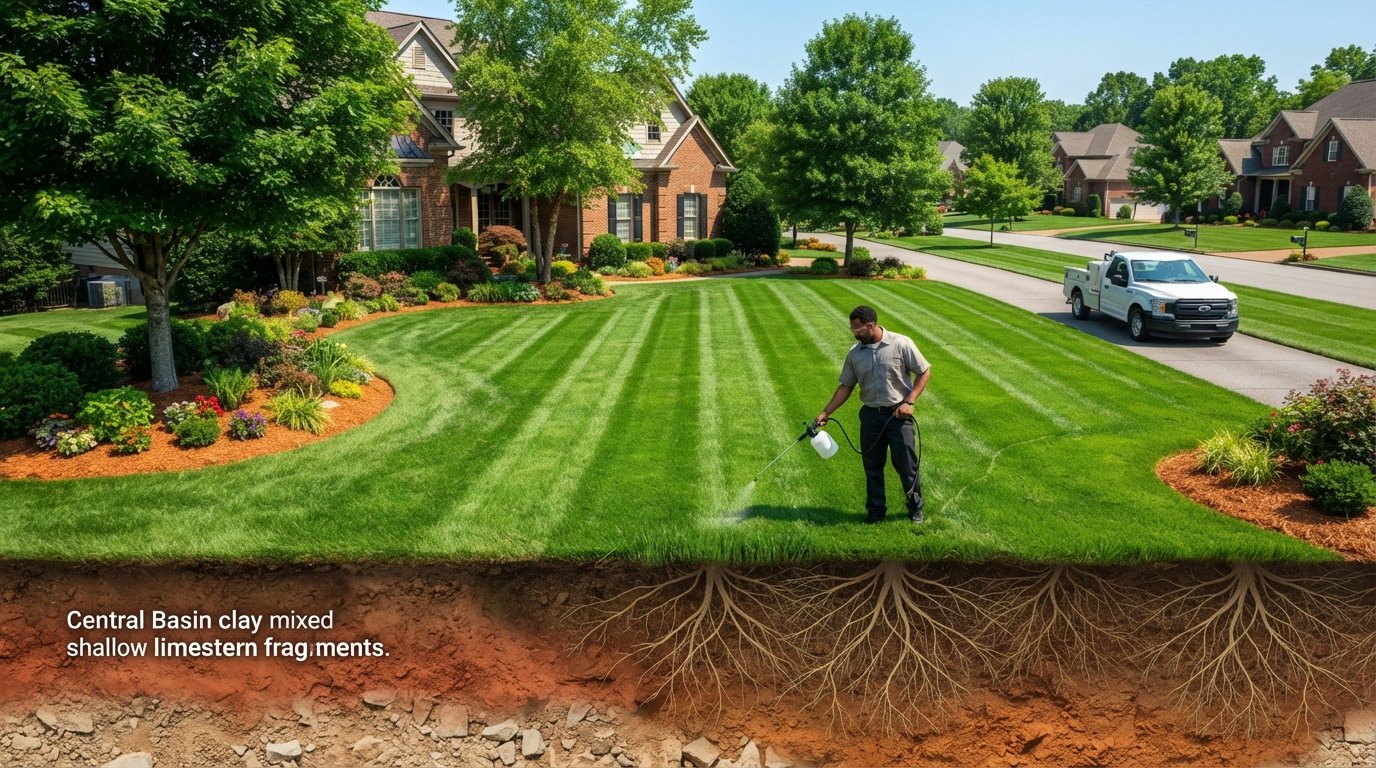
Tennessee sits directly within the challenging turf transition zone, where neither cool-season nor warm-season grasses enjoy perfect year-round conditions. Our severe summer heat and heavy humidity stress fescue, while volatile winter cold snaps shock Bermuda lawns. Middle Tennessee's dense clay soils compound these issues by holding moisture, creating ideal conditions for aggressive weed varieties to germinate.
A cookie-cutter treatment program designed for national use will fail under these regional pressures. Managing transition zone turf requires adaptive, regionally timed applications tailored to local soil temperatures and rainfall patterns:
- Targeted timing: Applying pre-emergents based on localized soil temperatures rather than arbitrary calendar dates.
- Soil conditioning: Alleviating compaction in heavy clay to help desirable turf roots outcompete weed seedlings.
- Dual-season protection: Countering cool-season broadleaf invaders in winter while defending against aggressive summer annuals.
By relying on specialized commercial weed control services in Tennessee, property directors secure predictable curb appeal without burdening their existing landscape mowing crews.
Common Middle Tennessee Weeds and Commercial Turf Challenges
Middle Tennessee turf faces intense botanical competition. The heavy clay soils across our region retain excess surface moisture during wet springs, only to bake into dense crusts under humid summer heat. These regional conditions allow opportunistic species to take advantage of thin turf. Deploying professional commercial weed control services in Tennessee delivers the precise agronomic solutions needed to protect commercial grounds while safeguarding sensitive ornamental beds from off-target drift.
Aggressive Broadleaf Weeds: Clover, Plantain, and Wild Violet
Heavily trafficked commercial lawns frequently suffer from compaction, creating prime territory for white clover and broadleaf plantain. Wild violet poses an even stiffer challenge; its dense underground rhizomes and waxy foliage deflect standard commercial sprays. Targeted post-emergent applications applied during active growth cycles help control common lawn weeds and prevent these broadleaf varieties from overrunning corporate lawns.
Tough Grassy Weeds: Crabgrass, Goosegrass, and Foxtail
Pavement and curbing absorb radiant heat, elevating adjacent soil temperatures along parking lots, sidewalks, and drive lanes. Crabgrass, foxtail, and goosegrass thrive in these heated zones. Applying balanced pre-emergent barriers in early spring helps block annual seeds from establishing roots. When peak summer conditions create stress gaps in turf, selective post-emergent spot treatments help manage unwanted weeds before they spread.
Difficult Perennial Invaders: Dallisgrass, Johnsongrass, and Bermuda Grass
Commercial facilities regularly confront stubborn perennials that resist standard turf maintenance. Dallisgrass and Johnsongrass are invasive grassy weeds that can be more challenging to manage than common broadleaf weeds. Because they may not respond to the same treatments used for typical lawn weeds, a separate or targeted treatment approach may be recommended. Standard fertilization and weed control applications will not automatically eradicate these deeply rooted competitors.
Managing mixed turf species demands equal precision. Bermuda grass that has spread into an established fescue lawn can be extremely difficult to eliminate completely. Management efforts generally focus on limiting its spread, reducing its presence, and helping the desired fescue remain as healthy and competitive as possible.
Partnering with a dedicated turf care specialist ensures your property receives customized solutions for these complex challenges. If persistent wild grasses are threatening your facility's presentation, you can consult our local turf team about specialized commercial weed control services in Tennessee tailored to your acreage.
Key Components of a Comprehensive Commercial Weed Control Program
Sustaining healthy commercial grounds requires a systematic, season-long agronomic strategy. Rather than reacting after weeds visibly break through, structured commercial weed control services in Tennessee combine preventative barriers with timely post-emergent interventions. A methodical protocol keeps turf resilient across seasonal weather shifts while safeguarding surrounding commercial landscaping.
Strategic Pre-Emergent Timing Across Middle Tennessee
Timing determines pre-emergent success. In Middle Tennessee, crabgrass and warm-season weeds begin germinating as soon as soil temperatures reach approximately 55 degrees at a two-inch depth. Waiting for a generic calendar date often means applying products too late. A successful strategy relies on split applications in early and mid-spring, ensuring protective chemical barriers endure despite heavy regional rainfall.
A second pre-emergent phase in late summer or early autumn is equally vital. This application establishes a barrier against winter annuals such as henbit, common chickweed, and annual bluegrass ( Poa annua ), which germinate in fall and create unsightly patches across corporate turf come spring.
Precise Post-Emergent Treatments and Drift Prevention
Even with dependable barriers, breakthrough weeds inevitably appear along high-heat perimeters and high-traffic turf corridors. Professional technicians utilize selective post-emergent herbicides that suppress weeds without harming desirable turfgrass varieties. Protecting the property's broader investment requires careful spray application standards:
- Low-drift nozzle technology: Calibrated droplet sizes keep treatments on the target turf, protecting commercial ornamental shrubs, annual beds, and perennial borders from vapor or droplet drift.
- Targeted spot spraying: Spot-treating visible weeds directly reduces chemical usage across broad office campuses.
- Weather monitoring: Scheduling treatments around wind speeds and midday heat spikes avoids turf burn and off-target movement.
Synergy Between Balanced Fertilization and Weed Suppression
Herbicides are only half the equation. The single most effective barrier against weed encroachment is thick, thriving turf that starves weed seedlings of sunlight, water, and nutrients. Dedicated fertilization and weed control services supply slow-release nitrogen, phosphorus, and potassium engineered to penetrate heavy clay soils without producing erratic, weak top growth.
Root systems fortified by steady soil nutrition develop the density needed to naturally crowd out opportunistic weeds. When customized fertilization and proactive weed treatments work together, commercial weed control services in Tennessee keep properties looking polished, uniform, and inviting throughout every business quarter.
How to Evaluate Commercial Weed Control Contractors in Tennessee
Hiring the right partner protects both your corporate balance sheet and your physical landscape. Many property managers bundle chemical turf care into standard maintenance agreements, assuming any crew with a mower can spray weeds. In practice, generic grounds crews frequently treat herbicide applications as an afterthought, leading to misdiagnosed weeds, incorrect tank mixtures, and damaged turf. Selecting specialized commercial weed control services in Tennessee ensures your facility benefits from dedicated agronomic precision rather than rushed add-on tasks.
Dedicated Treatment Specialists vs. General Mowing Crews
Mowing crews excel at mechanical upkeep, but turf chemistry requires dedicated focus. Professional chemical applicators spend every day studying soil conditions, calibrating application rates, and tracking environmental variables. They know how to target invasive broadleaf varieties while protecting desirable grasses. This division of labor allows your mowing contractors to focus on clean cuts while your turf specialist strengthens root systems. Property managers evaluating commercial providers should review clear vendor selection criteria when building their annual grounds plan.
Licensing, Environmental Compliance, and Safety Standards
State compliance is mandatory for any commercial property operating in Tennessee. The Tennessee Department of Agriculture (TDA) enforces strict regulatory standards for commercial pesticide applications. Before signing an agreement, confirm that your contractor meets key legal requirements:
- Commercial licensing: Verify that the business holds an active charter and that field technicians are certified under Category C03 (Ornamental and Turf).
- Environmental stewardship: Applicators must follow buffer protocols around retention ponds, drainage ditches, and pedestrian paths to prevent herbicide runoff into local waterways.
- Application documentation: Licensed commercial providers must maintain detailed chemical application records for a minimum of two years and supply transparent post-treatment safety notices for commercial grounds re-entry.
Confirming these credentials protects commercial facilities from environmental liabilities and chemical drift claims.
Commercial Account Management and Communication Protocols
Operational disruption damages tenant satisfaction. Professional commercial weed control services in Tennessee should provide proactive notifications well ahead of scheduled visits, allowing facility managers to coordinate parking, outdoor maintenance, and building access. Dedicated account managers who perform regular property walkthroughs can quickly identify breakthrough weeds and adjust treatment strategies before issues escalate.
If you're ready to partner with a licensed, dedicated turf specialist committed to reliable communication, contact our commercial turf team today to schedule an on-site property evaluation.
Performance Lawns: Middle Tennessee's Commercial Turf Treatment Partner
Commercial turf care demands localized expertise and unwavering reliability. For more than 15 years, Performance Lawns has managed the distinct regional pressures facing commercial facilities across Middle Tennessee. As an owner-operated provider based in Mt. Juliet, we focus strictly on turf treatments, weed control, and soil health. By avoiding general landscaping operations like mowing or construction, we pour our full energy into agronomic excellence, providing responsive commercial weed control services in Tennessee tailored for corporate office parks, medical campuses, retail centers, and HOA developments.
Local Middle Tennessee Expertise and Service Footprint
Soil chemistry varies noticeably across our local communities. Our team knows how to adjust programs for the dense limestone clay in Lebanon, the residential borders of Mt. Juliet, and the expansive lake-adjacent parcels of Hendersonville and Gallatin. Because we are locally based, property managers bypass distant call centers to reach decision-makers directly. This localized focus ensures prompt responses and proactive property inspections that keep commercial turf looking sharp throughout every season.
Collaborating with Your Existing Grounds Maintenance Team
Selecting a dedicated chemical specialist does not mean replacing your landscape provider. We operate as a collaborative partner alongside your current mowing and maintenance contractors, bridging the gap between mechanical trimming and advanced agronomic science. Our team communicates treatment schedules ahead of time, ensuring turf applications do not conflict with weekly cutting schedules or client traffic patterns.
Beyond weed management, our commercial services address the root causes of poor turf performance:
- Soil de-compaction: Discover how our professional aeration services open tightly bound clay to allow air, water, and essential nutrients to reach root systems.
- Commercial overseeding: Establishing disease-resistant, traffic-tolerant fescue varieties to maintain high canopy density across corporate campuses.
- Customized fertility: Applying balanced nutritional blends calibrated specifically to local soil tests.
Taking the Next Step for Your Commercial Property
A resilient corporate lawn begins with an honest baseline evaluation. Our licensed turf managers walk your facility with you, evaluating existing weed pressure, soil compaction, and drainage conditions to craft a tailored multi-step treatment proposal. You receive a clear, disciplined agronomic plan built around your operational schedule with zero disruption to daily business. When you are ready to raise your grounds standards with proven commercial weed control services in Tennessee, contact Performance Lawns today to begin your on-site property review.
Elevate Your Commercial Grounds with Agronomic Precision
Sustained commercial curb appeal begins deep beneath the turf canopy. In Middle Tennessee's unpredictable transition zone climate, thriving corporate lawns require specialized chemical science rather than quick mowing add-ons. Proactive pre-emergent barriers, targeted weed treatments, and balanced soil fertility work together to protect turf density, preserve tenant satisfaction, and reduce weed pressure across every commercial parcel.
Performance Lawns brings over 15 years of dedicated Middle Tennessee turf care expertise to properties throughout Mt. Juliet, Lebanon, Hendersonville, and Gallatin. Because we focus exclusively on chemical turf treatments and soil aeration, our licensed technicians integrate smoothly with your existing maintenance contractors, delivering reliable communication with zero disruption to daily business. If you want pristine, healthy grounds that project professional excellence, partner with Performance Lawns for your commercial weed management and see the difference dedicated local stewardship makes.
Frequently Asked Questions
Can commercial weed control treatments guarantee a completely weed-free property?
No reputable turf specialist will guarantee a completely weed-free lawn. Weed seeds constantly enter commercial grounds via wind, birds, and foot traffic. Instead, professional commercial weed control services in Tennessee focus on ongoing weed management. A structured program applies timely pre-emergents and selective post-emergents to dramatically reduce weed pressure, prevent pervasive infestations, and maintain healthier, thicker turf that naturally outcompetes unwanted weeds over time.
How quickly can tenants and visitors walk on commercial turf after weed treatments?
Foot traffic can safely resume once the liquid application has completely dried on the turf foliage. Under normal Tennessee weather conditions, this drying process typically takes between one and two hours. Our technicians post visible safety notification flags and coordinate visit times around your facility's peak business hours, ensuring zero operational disruption for employees, retail shoppers, or office visitors.
Why shouldn't our existing commercial mowing contractor handle weed spraying?
Mowing crews specialize in mechanical turf maintenance, whereas weed management requires dedicated chemical and agronomic science. General maintenance crews often lack the time, specialized equipment, and diagnostic expertise to calibrate application rates properly. Separating mechanical cutting from dedicated chemical care ensures your property receives precise herbicide dosing, timely seasonal applications, and proactive soil management without risking chemical drift or damaged turf.
How do commercial weed control services handle invasive grasses like Dallisgrass and Johnsongrass?
Dallisgrass and Johnsongrass are invasive grassy weeds that can be more challenging to manage than common broadleaf weeds. Because they may not respond to the same treatments used for typical lawn weeds, a separate or targeted treatment approach may be recommended. Standard fertilization and weed control programs won't automatically eliminate these persistent perennials; managing them requires customized, multi-season suppression strategies to protect the surrounding desirable turf.
Can Bermuda grass be eliminated from a commercial tall fescue lawn?
Bermuda grass that has spread into an established fescue lawn can be extremely difficult to eliminate completely. Because both are perennial turf species, non-selective chemical treatments would destroy the desired fescue alongside the Bermuda. Management efforts generally focus on limiting its spread, reducing its presence during peak summer heat, and strengthening the fescue canopy through fall aeration and overseeding to keep it healthy and competitive.
What licensing should a commercial weed control company hold in Tennessee?
Any company providing commercial weed control services in Tennessee must hold a commercial pest control operator charter issued by the Tennessee Department of Agriculture. Individual technicians applying products must be certified under Category C03 (Ornamental and Turf). Property managers should also verify comprehensive commercial liability insurance coverage and confirm that the contractor maintains detailed chemical application logs as required by state law.
How often are commercial weed control treatments scheduled throughout the year?
Commercial properties typically receive six to eight scheduled turf visits throughout the year. This schedule spans early spring pre-emergent applications, late spring broadleaf weed treatments, summer turf conditioning, and fall pre-emergents targeting winter annuals. Staging visits across key seasonal windows ensures protective chemical barriers stay active while providing consistent opportunities to spot-treat emerging weeds before they spread.