

Feeding your turf by arbitrary calendar dates is one of the quickest ways to stress your grass and waste fertilizer. True lawn health responds directly to soil biology, ground temperatures, and active root growth. Designing an effective seasonal lawn fertilization schedule means syncing every application with the natural biological rhythm of your yard.
If you've ever worried about scorching tender blades with excess nitrogen, felt uncertain about early spring versus autumn feeding, or struggled with heavy clay that blocks vital nutrient uptake, you aren't alone. Trying to manage weed pressure while protecting your soil can quickly turn weekend yard work into a frustrating chore.
This guide removes the guesswork so you can care for your property with confidence. You'll discover the exact application windows, balanced nutrient ratios, and regional soil strategies required for both cool-season and warm-season grasses. Here is your clear, month-by-month roadmap to cultivating strong, resilient turf that thrives through every season.
What Is a Seasonal Lawn Fertilization Schedule and Why Does It Matter?
A seasonal lawn fertilization schedule synchronizes nutrient delivery with your grass's natural biological rhythms and soil temperatures. Rather than guessing around generic holiday dates, targeted feeding matches the metabolic demands of the plant throughout the growing year. Applying balanced nutrients at the right physiological moments deepens root systems, enhances drought endurance, and bolsters natural resistance to environmental stress. Dense, well-fed turf acts as your lawn's best defense, naturally helping to reduce weed pressure by shading the soil surface and crowding out opportunistic seeds.
Timing your applications around plant development also protects the surrounding ecosystem. Calibrated feeding prevents nutrient leaching into local waterways and shields delicate leaf blades from damage. Watch this breakdown to see how proper timing makes a difference across grass types:
Understanding N-P-K Ratios and Soil Nutrients
Every commercial fertilizer package displays three prominent numbers representing the guaranteed analysis of primary macro-nutrients:
- Nitrogen (N): Stimulates vigorous blade growth, encourages stem development, and enhances green chlorophyll production.
- Phosphorus (P): Drives subterranean root architecture, which is vital during initial establishment and early overseeding periods.
- Potassium (K): Fortifies cellular walls, regulates internal moisture, and aids recovery from thermal and cold stress.
The Cost of Poor Timing: Overfeeding vs. Starvation
Precision matters just as much as nutrient selection. Feeding cool-season grass with heavy, fast-release nitrogen during midsummer heat stresses fragile roots and triggers severe fertilizer burn. Excessive succulent top growth under high humidity can also accelerate fungal lawn diseases like brown patch. Conversely, withholding nutrition during prime fall or spring root development leaves turf weak, thin, and unable to manage unwanted weeds. A structured fertilization and weed control strategy feeds the root system exclusively when soil temperatures allow active nutrient uptake.
The Month-by-Month Fertilization Schedule by Grass Type
One rigid calendar will not work for every lawn. Cool-season and warm-season grasses operate on reversed metabolic clocks. While fescue thrives in crisp autumn weather, Bermuda surges during sweltering midsummer heat. Transition zones complicate matters further, as yards often feature fescue alongside aggressive Bermuda runners. Bermuda grass that has spread into an established fescue lawn can be extremely difficult to eliminate completely. Management efforts generally focus on limiting its spread, reducing its presence, and helping the desired fescue remain as healthy and competitive as possible. Crafting an effective seasonal lawn fertilization schedule requires adjusting your timetable to your specific turf variety.
Cool-Season Turf Schedule: Tall Fescue and Kentucky Bluegrass
Cool-season varieties focus root development during the cooler margins of the year. According to EPA yard care guidelines, applying nutrients only when grass is actively growing prevents runoff and protects nearby waterways.
- March to April (Early Spring): When soil temperatures reach 50°F to 55°F at a 2- to 3-inch depth, apply a light nutrient blend alongside pre-emergent weed control to help manage crabgrass before germination.
- May to June (Late Spring): Deliver a controlled-release nitrogen feeding capped under 0.9 to 1.0 lb per 1,000 square feet. Halt nitrogen applications once soil temperatures reach 75°F to prevent root burnout.
- September to October (Early Fall): Deliver 60% to 75% of the lawn's annual nitrogen budget during this window. This critical feeding powers intense subterranean root growth and aids summer recovery.
- November (Late Fall): Apply a final winterizer feeding while the turf is still green to fortify carbohydrate reserves before true dormancy sets in.
Warm-Season Turf Schedule: Bermuda and Zoysia Grasses
Warm-season lawns remain dormant throughout early spring, meaning early nitrogen feeding will only stimulate unwanted weeds.
- Late April to May (Late Spring): Wait until soil temperatures consistently reach 65°F and rising before applying your initial nitrogen feeding. Early applications should also include pre-emergent weed treatment.
- June to July (Peak Summer): Deliver primary nitrogen feedings while temperatures soar. Warm-season turf metabolizes nutrients aggressively during summer heat to build thick, resilient foliage.
- August to September (Late Summer): Taper off nitrogen applications several weeks before the typical first frost. This pause enables plant cell walls to harden against winter cold stress.
If you're balancing mixed turf or need guidance tailored to your neighborhood's soil, you can always speak with a local lawn care specialist to calibrate your property's seasonal lawn fertilization schedule.
Integrating Weed Management and Soil Care into Your Fertilizer Schedule
Fertilizer alone cannot build resilient turf if opportunistic weeds siphon off vital nitrogen and ground moisture. Coordinating scheduled feedings with proactive weed control protects root space, sunlight exposure, and soil reserves. A professional weed control program can help reduce weed pressure and support healthy turf development throughout the changing seasons. Keep in mind that no treatment guarantees a completely weed-free lawn, as dormant seeds remain buried deep within the soil profile. Consistent weed management keeps competitive invaders in check so your grass captures every ounce of applied nutrition.
Invasive grassy species require a deliberate strategy during seasonal feeding cycles. Dallisgrass and Johnsongrass are invasive grassy weeds that can be more challenging to manage than common broadleaf weeds. Because they may not respond to the same treatments used for typical lawn weeds, a separate or targeted treatment approach may be recommended. Standard broadleaf products simply cannot manage these hardy perennials without damaging surrounding turf.
Pre-Emergent vs. Post-Emergent Timing
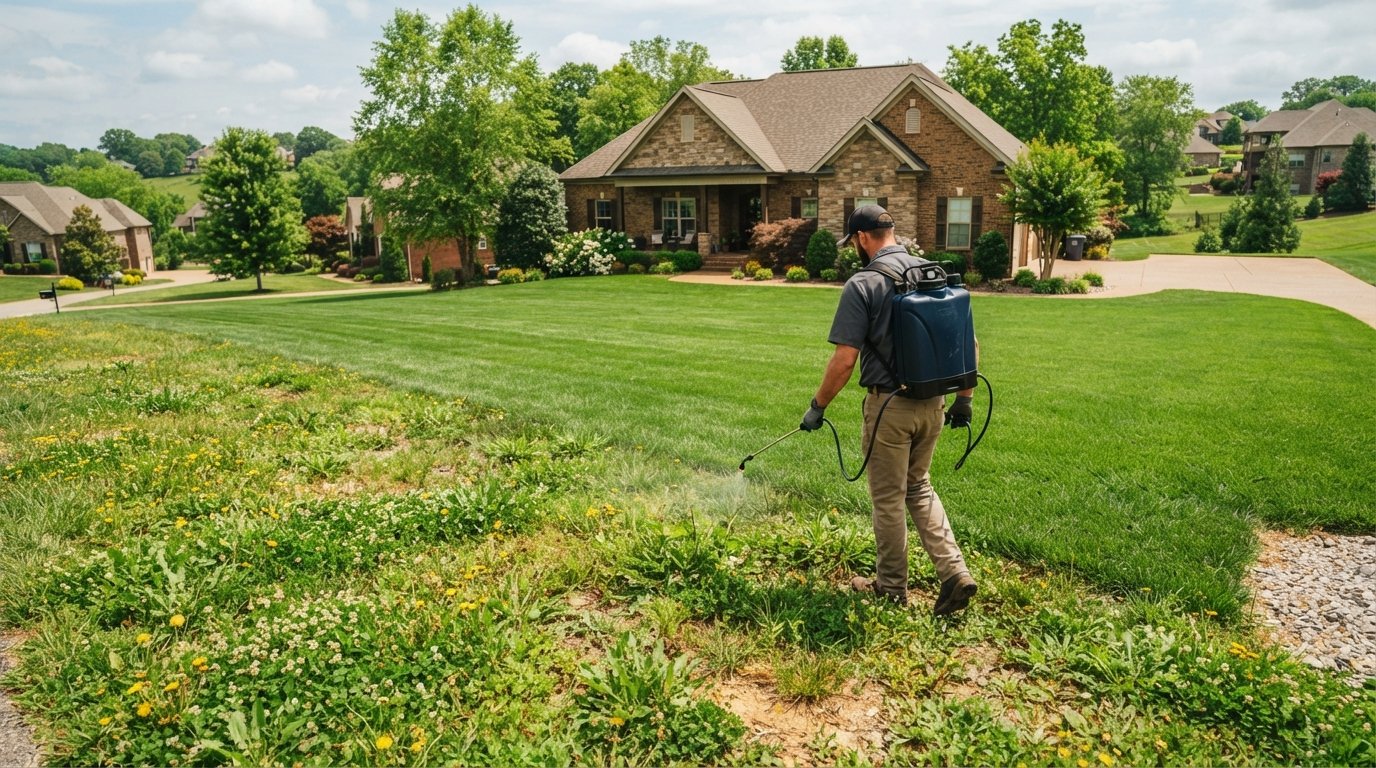
Precision timing preserves the integrity of your seasonal lawn fertilization schedule. Pre-emergent applications form an invisible barrier in the upper soil profile, preventing crabgrass seeds from taking hold as spring temperatures rise. Later in the cycle, targeted post-emergent applications help control common lawn weeds such as plantain, clover, and dandelion before they steal valuable fertilizer. You can explore regional weed strategies in Professional Weed Control in Middle Tennessee: The 2026 Homeowner’s Guide.
Unlocking Clay Soils: The Critical Role of Core Aeration
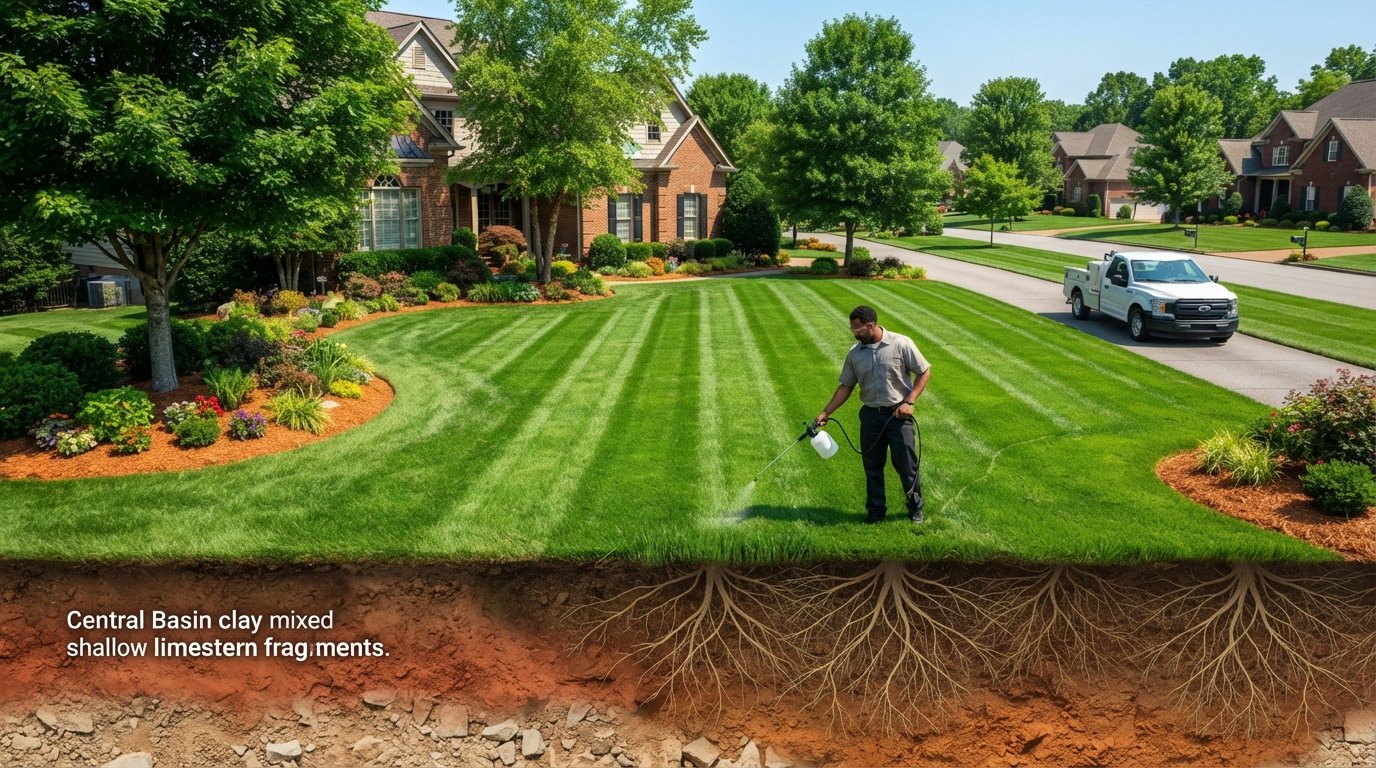
Heavy regional clay compacts tightly under regular foot traffic and wet weather, forming an impenetrable barrier just below the surface. This crust prevents granular fertilizer from penetrating deep into root zones. Mechanical core aeration pulls thousands of hollow plugs from the ground, relieving compaction and introducing oxygen directly into the root zone. Combining early autumn feeding with professional aeration services and overseeding ensures your seasonal lawn fertilization schedule fuels deep root growth rather than surface runoff.
Common Fertilization Mistakes That Damage Seasonal Turf Health
Good intentions can backfire when treatments ignore natural plant biology. Applying heavy treatments at the wrong point in your seasonal lawn fertilization schedule stresses grass crowns and wastes valuable product. Soil chemistry also plays a decisive, invisible role. If foundational soil pH drifts outside the optimal 6.0 to 7.0 window, applied nitrogen and potassium become chemically locked in the dirt, remaining unavailable to roots regardless of how much fertilizer you spread.
The Dangers of Summer Over-Feeding and Turf Disease
Pumping quick-release synthetic nitrogen into cool-season lawns during humid summer months forces rapid, watery blade growth. These fragile leaf tissues lack thick cell walls, leaving them defenseless against fungal pathogens. Lawn disease treatments can help manage common diseases such as brown patch and dollar spot. However, some diseases, including Pythium, can develop and spread very quickly, making them considerably more difficult to manage. Treatment effectiveness can depend on the specific disease, weather conditions, severity, and how early the problem is identified. Homeowners can explore targeted local strategies in Lawn Disease Prevention Services: The 2026 Middle Tennessee Guide.
Spreader Calibration, Striping, and Chemical Burn
Application mechanics dictate real-world turf outcomes. Miscalibrated broadcast spreaders distribute pellets unevenly, causing contrasting dark green stripes next to pale, starved strips. A more damaging mistake happens during turns: leaving the hopper gate open while pivoting dumps concentrated fertilizer salts across small patches. This heavy dose draws moisture right out of plant roots, leaving dead, scorched turf rings. Licensed operators prevent this damage by calibrating spreaders for specific granular densities and utilizing slow-release, polymer-coated granules that dissolve steadily over weeks.
Protecting your property requires balancing nutrient delivery with proper equipment calibration. If you suspect nutrient lockup, notice sudden leaf discoloration, or want to protect your grass from application mistakes, contact the team at Performance Lawns to set up a balanced feeding program tailored to your soil.
Why Partnering with a Local Lawn Treatment Specialist Delivers Superior Results
Mass-market fertilizer bags found at big-box retailers rely on generic formulas designed to sell across entire continents. These off-the-shelf blends rarely match the nuances of transition zone weather, unpredictable spring rains, and stubborn clay foundations. Managing a seasonal lawn fertilization schedule on your own often turns into an endless cycle of calculating square footage, unjamming balky spreaders, and storing bulky chemical bags in the garage. Partnering with a dedicated turf specialist replaces that trial and error with proven agronomic science. Regular professional visits provide trained sets of eyes on your yard, catching early signs of fungal stress, insect activity, or heavy soil compaction before turf damage spreads.
The Local Advantage: Agronomic Science for Regional Turf
Regional soils demand regional answers. Performance Lawns brings over 15 years of dedicated turf management experience to homeowners in Mt. Juliet, Lebanon, Gallatin, and Hendersonville. Instead of relying on a one-size-fits-all approach, custom liquid and granular treatments account for regional heavy clay soils and zero-phosphorus environmental standards. To see how specialized regional protocols protect local yards, read Professional Lawn Treatments in Mt. Juliet: The 2026 Homeowner’s Guide.
Simplify Your Life with Comprehensive Lawn Care Programs
Maintaining healthy turf shouldn't demand your entire weekend. Between calibrating equipment, timing applications around erratic rainfall, and hauling heavy fertilizer bags, DIY lawn maintenance quickly drains personal leisure time. Professional service lifts that physical burden while delivering even, uniform coverage through commercial-grade sprayers and spreaders.
Homeowners enjoy lasting peace of mind backed by a no-risk service guarantee and deep community pride. Rather than guessing when to feed, you gain an experienced partner committed to your yard's enduring health. Explore full-service treatment plans with Performance Lawns fertilization and weed control programs to execute an accurate seasonal lawn fertilization schedule without the weekend stress.
Cultivate a Resilient, Vibrant Lawn Through Every Season
Achieving thick, healthy turf comes down to syncing nutrients with real soil biology rather than arbitrary calendar dates. Tailoring nutrient ratios to your specific grass species, relieving dense clay compaction with core aeration, and pairing slow-release feedings with targeted weed control establishes lasting strength against regional weather extremes.
You don't have to navigate complex chemical formulas and shifting weather windows alone. As a locally owned and operated independent turf specialist with over 15 years of local Middle Tennessee lawn treatment experience, Performance Lawns backs every customized application with a comprehensive no-risk guarantee. Take the uncertainty out of your seasonal lawn fertilization schedule and enjoy an outdoor space you can truly take pride in. Request Your Custom Lawn Care Plan Today to get started.
Frequently Asked Questions
How many times a year should I fertilize my lawn?
Most residential lawns in Middle Tennessee thrive on four to six carefully timed applications per year. Cool-season fescue lawns require primary feeding sessions during early spring and throughout the fall, whereas warm-season Bermuda grass demands consistent nutrition across the summer months. Following a balanced seasonal lawn fertilization schedule tailored to your grass species prevents nutrient overload, minimizes leaching, and supplies continuous root nourishment through active growth windows.
Can I apply fertilizer and weed control at the exact same time?
Yes, combining fertilizer with selective pre-emergent or post-emergent weed control is a standard and effective practice. Pre-emergent barriers applied alongside early spring feeding help control common lawn weeds by blocking seedling growth. However, timing must remain precise. Applying post-emergent weed treatments during extreme summer heat or when turf is drought-stressed can burn foliage, so treatments should always align with local weather and ground conditions.
What should I do if my lawn develops Dallisgrass or Johnsongrass?
Dallisgrass and Johnsongrass are invasive grassy weeds that can be more challenging to manage than common broadleaf weeds. Because they may not respond to the same treatments used for typical lawn weeds, a separate or targeted treatment approach may be recommended. Standard fertilization and weed control programs won't automatically eliminate them. Contacting a local turf professional in Mt. Juliet or Gallatin ensures you get a specialized treatment plan to manage these tough perennial grasses safely.
Why is fall the most important time to fertilize cool-season grass?
Autumn brings cooler air temperatures alongside warm soil, creating ideal conditions for cool-season tall fescue roots to absorb nitrogen without forcing rapid top growth. Delivering the majority of your lawn's annual nitrogen budget between September and November promotes deep root expansion, repairs summer drought stress, and builds carbohydrate reserves. These stored nutrients protect the grass through winter and ensure a vibrant, early green-up once spring arrives.
Will a professional fertilization program guarantee a completely weed-free yard?
No reputable service can promise a completely weed-free yard. Millions of dormant weed seeds remain buried within local soil, waiting for wind, birds, or heavy rain to bring them to the surface. A professional weed control program can help reduce weed pressure, manage unwanted weeds, and support healthy turf development. By thickening your turf canopy over time, your lawn naturally resists new weed germination much more effectively.
Can lawn disease treatments completely prevent brown patch or Pythium?
Lawn disease treatments can help manage common diseases such as brown patch and dollar spot. However, some diseases, including Pythium, can develop and spread very quickly, making them considerably more difficult to manage. Treatment effectiveness can depend on the specific disease, weather conditions, severity, and how early the problem is identified. Professional fungicide applications suppress active mycelium, but cultural practices like proper watering and balanced feeding remain essential for ongoing defense.
How long should children and pets stay off the lawn after fertilization?
As a standard safety precaution, keep children and pets off treated areas until the application has dried completely or has been thoroughly watered in. Liquid applications generally dry within one to two hours under sunny conditions, while granular treatments should be watered into the soil before resuming normal yard activities. Adhering to these simple precautions allows the turf to absorb nutrients efficiently while keeping your family safe.