Recurring weeds do not always mean your lawn needs more spot treatments. They may signal that prevention, timing, or weed identification needs a closer look. If crabgrass, clover, or other weeds keep returning despite routine care, you’re not alone. Conditions around Lebanon shift through the year, affecting cool-season and warm-season turf and the kinds of weeds that appear. Well-planned weed prevention programs in Lebanon TN account for those differences instead of relying on one approach for every lawn.
A professional program can combine preventive treatments, which target weeds before they emerge, with post-emergent control for weeds already visible. The right approach also depends on turf type and accurate weed identification. Challenging grassy weeds such as Dallisgrass and Johnsongrass may need a targeted approach beyond common broadleaf weed treatments. This guide explains what ongoing weed control and fertilization can accomplish, how timing and lawn conditions affect results, and how to set realistic expectations. Performance Lawns, INC provides fertilization and weed control for residential and commercial properties in Lebanon and across Middle Tennessee, including Mt. Juliet, Gallatin, and Hendersonville.
Weed prevention program goals in Lebanon, TN
A weed prevention program is a series of lawn treatments intended to help manage unwanted growth and support healthy turf over time. It is not a one-time promise of a flawless lawn. Instead, weed prevention programs in Lebanon TN aim to reduce weed pressure through approaches suited to the property, the turf, and the weeds present.
Prevention and treatment address different stages of weed growth. Preventive treatments are timed to target certain weeds before they emerge, while post-emergent treatments address weeds already growing. A thoughtful program may use both. One treatment will not necessarily address every weed species or lawn condition, so it helps to understand what the treatment is intended to manage and what may need a different approach.
The following video discusses weed control in a no-till garden. Its setting differs from a residential lawn, but it illustrates how control methods can vary with the growing environment.
Prevention versus treatment for visible weeds
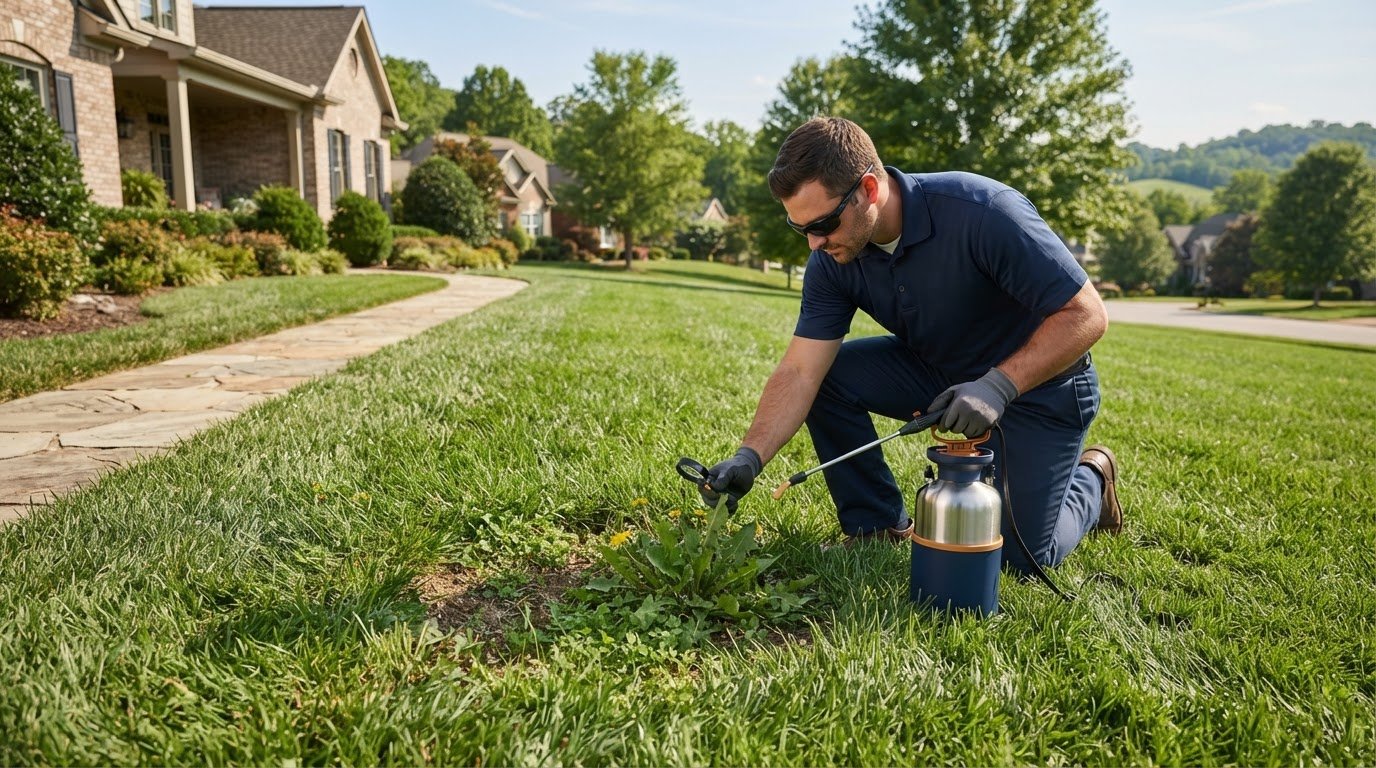
Preventive weed control depends on timing treatments for targeted weeds before they emerge. Once weeds are visible, their identity and growth stage help determine the appropriate treatment. A broadleaf weed and an invasive grassy weed may call for different approaches. Dallisgrass and Johnsongrass, for example, can be more challenging to manage than common broadleaf weeds and may require targeted treatment. Understanding the range of weed control strategies helps explain why no single method fits every lawn.
Why Lebanon lawns need a property-specific approach
Lebanon’s transition-zone conditions support both cool-season and warm-season turf, and seasonal weed pressure can change as weather and growing conditions shift. In Middle Tennessee, spring pre-emergent timing is generally late February through late March, before soil temperatures consistently reach 55°F. Fall treatments for winter weeds are generally timed from late August to mid-September. These are broad regional windows, not automatic dates for every property.
The right plan considers turf type, current lawn condition, observed weeds, and weather. A professional assessment helps guide preventive and visible-weed treatments, along with fertilization to support turf health. Performance Lawns, INC provides fertilization and weed control for homes and businesses in Lebanon, with care tailored to local lawn needs. The goal is to help control common weeds and maintain healthier turf, not to promise a completely weed-free lawn. Results depend on weed species, timing, and changing lawn conditions.
How weed prevention timing and turf conditions shape results in Lebanon
Good weed control starts with an assessment, not a calendar alone. The right treatment depends on what is growing, the condition and type of turf, and whether a weed is about to emerge or is already established. For homeowners comparing weed prevention programs in Lebanon TN , these details explain why a plan should respond to the lawn rather than apply the same treatment everywhere.
Why weed identification comes before a treatment choice
Broadleaf weeds generally have wider leaves with branching veins, while grassy weeds tend to have narrower blades with parallel veins. Appearance can be misleading, especially when weeds are young or growing among turf. Correct identification helps guide treatment choice and timing because different weed types may respond differently. Broadleaf weeds, grassy weeds, sedges, and weeds at different growth stages can require distinct control approaches. A treatment intended for one group may not manage another.
The lawn itself matters, too. Turf type, thin or bare patches, and overall condition can affect which approach is appropriate. A property-specific assessment helps distinguish a problem that calls for preventive care from one that needs attention to visible weeds, while keeping the desired grass in view. When describing a problem area, note whether it is in a sunny or shaded spot, whether the same weed returns there, and whether the turf is thinning. These details help clarify what is happening across the lawn.
When grassy weeds need a separate approach
Dallisgrass and Johnsongrass are invasive grassy weeds that can be more challenging to manage than common broadleaf weeds. They may not respond to the same treatments used for typical broadleaf weeds, so a targeted or separate approach may be recommended. Do not assume a standard fertilization and weed control program will eliminate them.
Bermuda grass presents a special challenge when it spreads into an established fescue lawn. It can be extremely difficult to eliminate completely. Management generally focuses on limiting its spread, reducing its presence, and helping the desired fescue remain healthy and competitive. Ongoing attention may be needed.
Timing matters because preventive treatments are intended to act before targeted weeds emerge. Weather, soil conditions, and weed growth stages influence that window, so a fixed date will not suit every property or season. Visible weeds call for a different evaluation. Results depend on matching treatment to the plant and lawn conditions rather than expecting one application to address everything.
Performance Lawns, INC provides fertilization and weed control for Lebanon lawns, tailoring professional care to turf and observed weed pressure. If you’d like to discuss the conditions affecting your lawn, get in touch with our team.
Does a recurring weed prevention program outperform a one-time treatment?
Recurring care is often better suited to managing weed pressure over time, while a one-time treatment focuses on a particular need at a particular moment. That does not mean every lawn requires the same plan or that repeated treatments will remove every weed. Results depend on weed type, lawn conditions, and timing. The value of a program is continuity: it can address changing conditions instead of treating one visible problem as the whole story.
| Approach | Main goal | What to expect |
|---|---|---|
| One-time treatment | Address a specific weed concern or treatment need | May help manage targeted weeds, but does not provide ongoing attention as new weeds emerge or conditions change. |
| Recurring program | Support continued weed control and turf health | Allows treatments and fertilization to be considered over time, with an approach suited to observed weeds and lawn conditions. |
What recurring lawn weed control can help accomplish
A recurring program can help control common lawn weeds and reduce weed pressure through treatments matched to the lawn’s needs. Pairing weed control with fertilization can also support healthier, more attractive turf. Strong turf can better compete for growing space, but it is not immune to weeds. New growth, weather, and changing lawn conditions can all affect what appears and how well a treatment performs.
That is why weed prevention programs in Lebanon TN should not be judged by whether every weed disappears after one visit. A treatment may take time to show its effect, and new weeds may emerge later in the season. Ongoing care focuses on managing the problem as conditions change, not promising a perfect outcome. When comparing plans, look for a clear explanation of how the treatment approach relates to your turf and the weeds you see.
When a weed may need more than standard program treatments
Some weeds require a different approach from treatments commonly used for broadleaf weeds. Dallisgrass and Johnsongrass are invasive grassy weeds that can be more challenging to manage, so targeted or separate treatment may be recommended. Do not assume a standard fertilization and weed control program will resolve them automatically.
Bermuda grass that has spread into an established fescue lawn can be extremely difficult to eliminate completely. Management generally focuses on limiting its spread, reducing its presence, and helping the fescue remain healthy and competitive. These situations may require continued attention beyond routine broadleaf weed control.
Performance Lawns, INC provides professional fertilization and weed control for residential and commercial properties in Lebanon. To discuss care suited to your lawn’s conditions, get in touch with our team.
How to evaluate a weed prevention program for your Lebanon lawn
A useful program should reflect what you want to improve and what is actually happening in the lawn. Before choosing ongoing care, take stock of the turf, visible weeds, and areas where the same problem keeps returning. This makes it easier to understand whether an approach fits your property instead of relying on a one-size-fits-all promise.
A four-step checklist
- Identify your goal. Are you looking to prevent certain weeds before they emerge, treat weeds you can already see, or address both?
- Describe the lawn. Note whether it is a fescue lawn or another turf type, if known. Point out thin areas, bare spots, and places where weeds keep returning.
- Discuss the treatment approach. Consider whether the plan accounts for weed identification, timing, and your lawn’s condition. Some grassy weeds call for a different approach than common broadleaf weeds.
- Set realistic expectations. Clarify what the treatments are intended to manage, what may need targeted attention, and why results can vary with weed type, weather, and turf health.
Questions that clarify the fit
Be ready to describe the weeds you have noticed and where they are growing. You do not need to identify every plant yourself. Photos or a clear description of its location and appearance can help explain the issue. Share whether the lawn is fescue or another grass type, if you know, and whether you are seeking prevention, visible weed treatment, or both.
Also mention any persistent grassy weeds. Dallisgrass and Johnsongrass can be harder to manage than common broadleaf weeds and may need separate or targeted treatment. Bermuda grass spreading through an established fescue lawn is a particularly difficult, ongoing management issue. The focus is generally on limiting its spread and helping the desired fescue stay healthy, not promising complete elimination.
Signs of a clear, realistic plan
A sound plan explains its goals and timing in plain language, identifies how lawn and weed conditions shape treatment choices, and is honest about limitations. The approach should be tailored to the property, not framed as a guarantee that every weed will disappear. Performance Lawns provides fertilization and weed control services for residential and commercial lawns in Lebanon, Mt. Juliet, Gallatin, and Hendersonville, with care focused on managing weeds and supporting turf health.
For context on your lawn’s needs, talk with our team about your lawn. A clear description of the turf and recurring problem areas is a practical place to start.
Choose local weed prevention and control with Performance Lawns
Choosing a lawn program is about more than responding to the weeds you can see today. Weed type, turf condition, treatment timing, and realistic goals all shape a sound approach. Performance Lawns is locally owned and serves Lebanon and Middle Tennessee, including Mt. Juliet, Gallatin, and Hendersonville. The company brings more than 15 years of experience to professional lawn treatments for residential and commercial properties.
What local homeowners can expect from professional lawn treatments
Performance Lawns provides fertilization and weed control to help manage common lawn weeds and support healthier turf. The approach should account for the property’s condition, grass type, and observed weed pressure. Preventive care and treatment of visible weeds serve different purposes, so the right balance depends on what is growing and the lawn’s needs.
That is the practical value of weed prevention programs in Lebanon TN : ongoing attention can help reduce weed pressure and maintain a more attractive lawn as conditions change. It is not a promise that every weed will disappear. Some grassy weeds, including Dallisgrass and Johnsongrass, can be more challenging than common broadleaf weeds and may call for separate or targeted treatment. Bermuda grass in an established fescue lawn can also be extremely difficult to eliminate completely. Management generally focuses on limiting its spread and helping the desired fescue remain healthy and competitive.
Take the next step toward a healthier Lebanon lawn
As you consider lawn care, keep four details in view: the weed type, the timing, the turf, and the outcome you hope to achieve. A clear picture of recurring problem areas and the condition of the grass helps guide a treatment approach suited to the property. Consistent care can help manage unwanted weeds, but results vary with weed species, weather, and lawn conditions.
Performance Lawns brings local experience and a property-focused approach to lawn care in Lebanon, Mt. Juliet, Gallatin, and Hendersonville. If recurring weeds are affecting the look and health of your lawn, discuss your Lebanon lawn and its weed-control needs with the team.
Build a healthier lawn with a plan that fits
The right weed control plan starts with your lawn, not a one-size-fits-all schedule. Weed type, turf condition, and treatment timing all influence the approach, while recurring care can help manage weed pressure as conditions change. Some grassy weeds may need targeted attention beyond standard broadleaf weed treatments, so realistic expectations matter.
For homeowners considering weed prevention programs in Lebanon TN , the goal is consistent management and healthier turf, not a promise that every weed will disappear. Performance Lawns is locally owned and operated in Middle Tennessee, including Lebanon, and brings more than 15 years of experience to professional lawn treatments.
Share what you have noticed in your lawn and discuss an approach suited to its needs. Discuss weed control for your Lebanon lawn with Performance Lawns. With thoughtful care and clear expectations, you can take a confident next step toward a healthier, more attractive lawn.
Frequently Asked Questions
Can a weed prevention program keep my Lebanon, TN lawn completely weed-free?
No. A professional program should not promise a completely weed-free lawn. It can help manage common weeds and reduce weed pressure, but results depend on weed species, lawn conditions, and treatment timing. New weeds may still appear as conditions change. Invasive grassy weeds, including Dallisgrass and Johnsongrass, may need a separate or targeted approach. Set goals around healthier, more attractive turf over time, not perfection.
When should weed prevention treatments begin in Lebanon, TN?
There is no one start date that fits every Lebanon lawn. Timing depends on the weeds being targeted, turf type, weather, and the lawn’s current condition. Preventive treatment is intended to address targeted weeds before they emerge, while visible weeds may need treatment at a different point. A property-specific program considers these factors rather than relying on one universal schedule for every lawn.
What is usually included in a professional weed prevention program?
A professional program generally uses recurring fertilization and weed control to help manage common lawn weeds and support healthier turf. The approach depends on the property, grass type, and weeds present, so a specific number of visits or fixed treatment sequence should not be assumed. Performance Lawns provides lawn treatments in Lebanon, Mt. Juliet, Gallatin, and Hendersonville. Some grassy weeds may require targeted care beyond common broadleaf weed treatments.
Is one weed treatment enough to control lawn weeds?
One treatment may address a specific weed or immediate concern, but it should not be viewed as a lasting solution for every weed. Prevention and ongoing control depend on the species, treatment timing, and lawn conditions. New weeds may emerge, and some established weeds can be harder to manage. A recurring approach can help reduce weed pressure over time, with expectations focused on management rather than total elimination.
Are Dallisgrass and Johnsongrass handled by standard broadleaf weed treatments?
Not necessarily. Dallisgrass and Johnsongrass are invasive grassy weeds that can be more challenging to manage than common broadleaf weeds. They may not respond to the same treatments, so a separate or targeted approach may be recommended. Identifying the weed helps guide treatment choices and set realistic expectations. A standard fertilization and weed control program should not be assumed to eliminate them.
Can Bermuda grass be removed from an established fescue lawn?
Bermuda grass that has spread into an established fescue lawn can be extremely difficult to eliminate completely. Management generally focuses on limiting its spread, reducing its presence, and helping the desired fescue remain healthy and competitive. A standard weed program should not be presented as a promise of full removal. Depending on the lawn’s condition, continued management or additional treatment strategies may be needed over time.
Does fertilization help reduce weeds in a Lebanon lawn?
Fertilization supports turf growth, while weed control targets unwanted plants. As part of a broader lawn-care approach, healthier, more competitive turf can support a better-looking lawn, but fertilizer alone should not be expected to eliminate weeds or prevent future growth. The appropriate plan depends on turf type, lawn condition, and weed pressure. Pairing fertilization with professional weed control can help support turf health and manage common weeds.