Signs of Lawn Disease in Tennessee: The Homeowner’s 2026 Diagnostic Guide
What if the brown, brittle patches spreading across your backyard aren't actually thirsty? It is incredibly frustrating to invest your hard earned money into extra watering and DIY treatments only to see your grass continue to wither under the Mid-Tennessee sun. We understand the stress of watching a once vibrant lawn struggle; it's a mix of confusion, financial drain, and the fear of losing your entire investment to a single humid summer. Identifying the specific signs of lawn disease in Tennessee is the only way to stop the cycle of wasted effort and dying turf.
You deserve a lawn that reflects your pride in your home, your investment in your property, and your commitment to your community. This 2026 diagnostic guide will help you distinguish between simple heat stress and aggressive fungal pathogens, giving you the clarity needed to act before the damage becomes permanent. We will examine the visual signatures of common local threats like Brown Patch, explore the environmental triggers of the disease triangle, and show you how professional stewardship and core aeration can restore your lawn to its lush, green potential.
Why Middle Tennessee Lawns Are a Fungal Playground
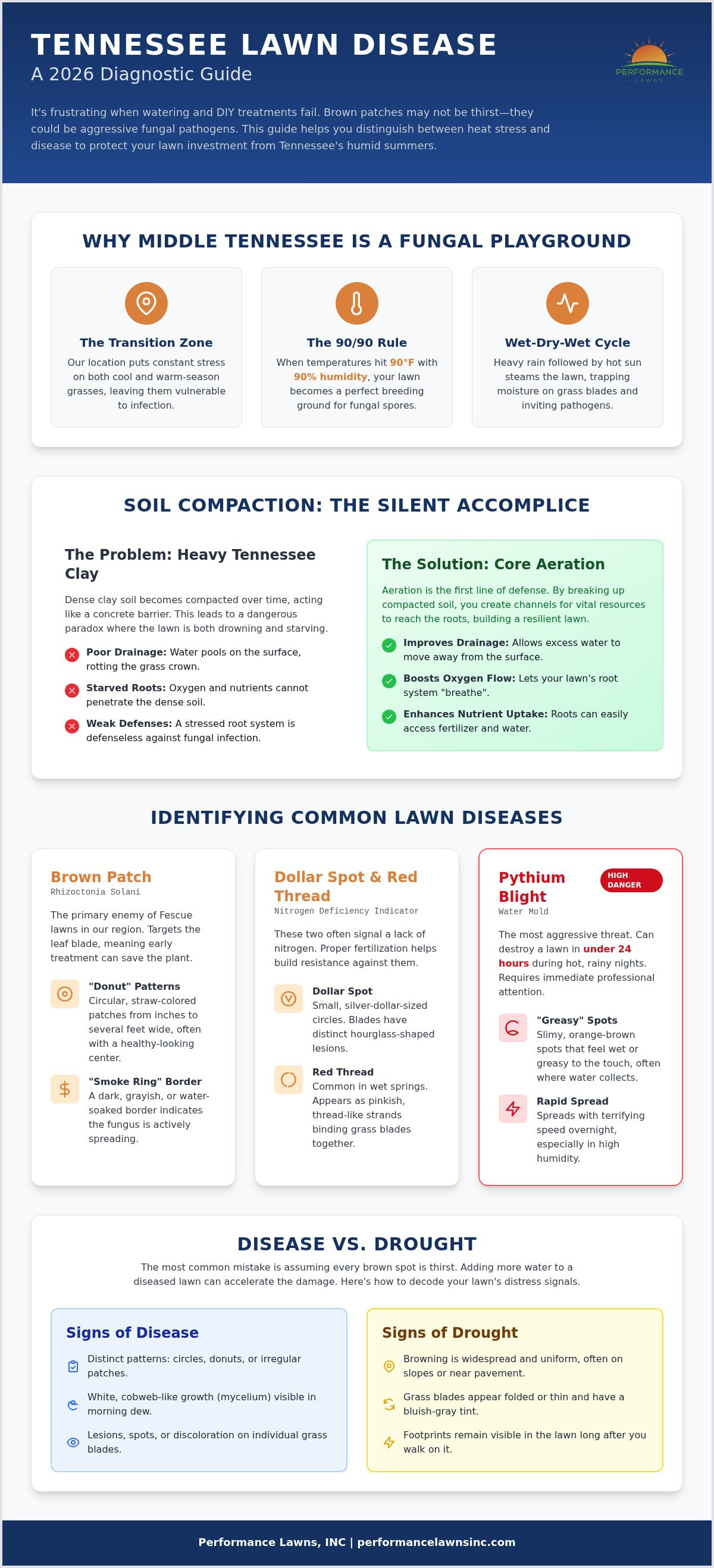
Tennessee sits in the heart of the Transition Zone, a horticultural middle ground where neither cool-season nor warm-season grasses are ever truly at peace. This geographic reality creates a constant state of physiological stress for your turf. Because your grass is often struggling to adapt to our volatile weather, it becomes highly susceptible to infection. Recognizing the early signs of lawn disease in Tennessee is not just about aesthetics; it is about protecting a living investment that is under constant environmental duress.
Fungal pathogens thrive on what we call the 90-90 Rule. When the thermometer hits 90 degrees and humidity reaches 90%, the conditions transform your backyard into an active laboratory for spores. This isn't a matter of bad luck. It is a predictable biological response to our specific climate. In these high-heat, high-moisture windows, pathogens move with incredible speed to colonize weakened grass blades.
The Impact of the Middle Tennessee Climate
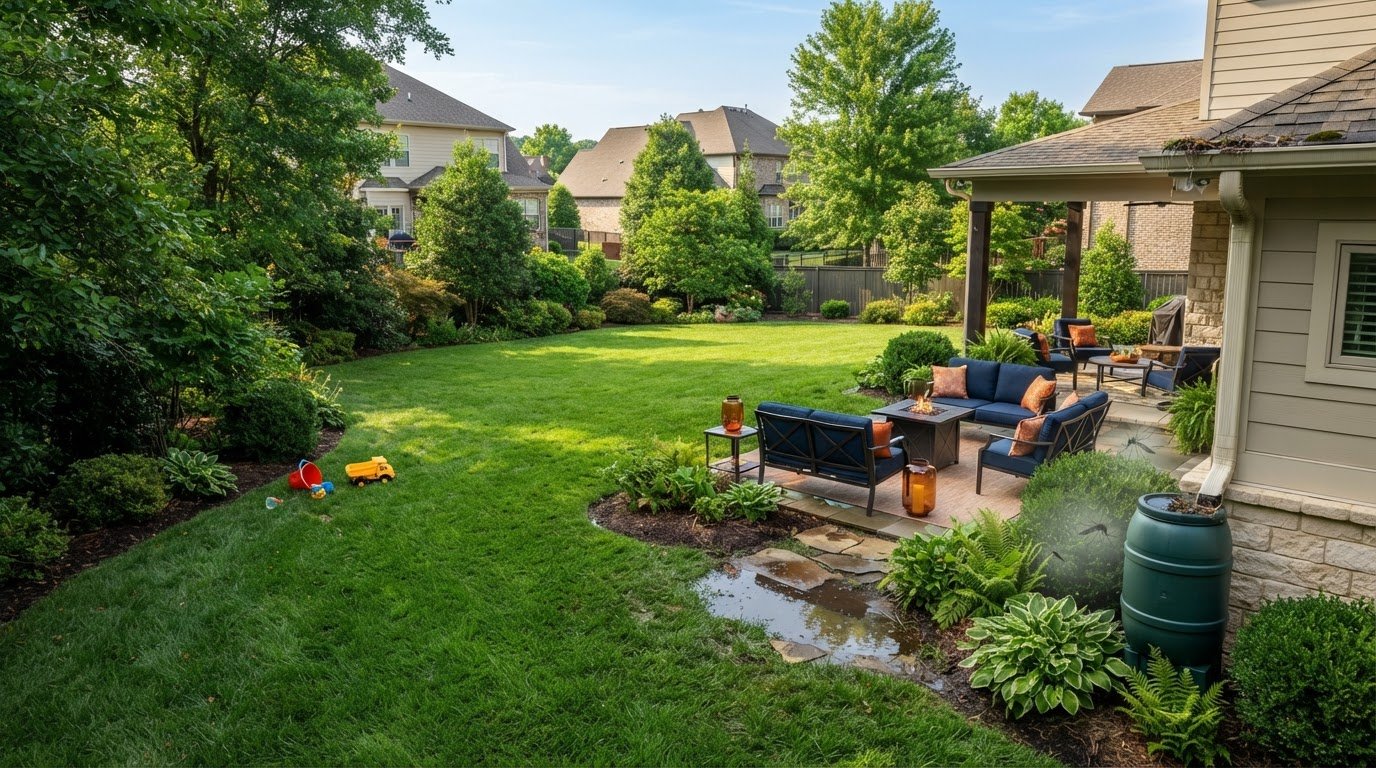
The local weather pattern often follows a wet-dry-wet cycle that acts like a natural incubation chamber. After a heavy afternoon downpour in Mt. Juliet, Lebanon, or Hendersonville, the sun often returns to steam the lawn. If your yard has restricted airflow due to dense suburban fencing or heavy tree lines, that moisture sits on the leaf blades for hours. In Middle Tennessee, our humidity does not just affect our comfort; it creates a microscopic ecosystem where lawn pathogens thrive. This persistent surface moisture is a leading invitation for common lawn diseases to take root and spread across your property.
Soil Compaction: The Silent Accomplice
Underneath your grass lies the true culprit: heavy Tennessee clay. This soil is notorious for its density, which leads to severe compaction over time. Compacted clay acts like a basin, holding water at the surface where it rots the crown of the grass while simultaneously starving the roots of oxygen and nutrients. This creates a dangerous paradox where your lawn is drowning and starving at the same time.
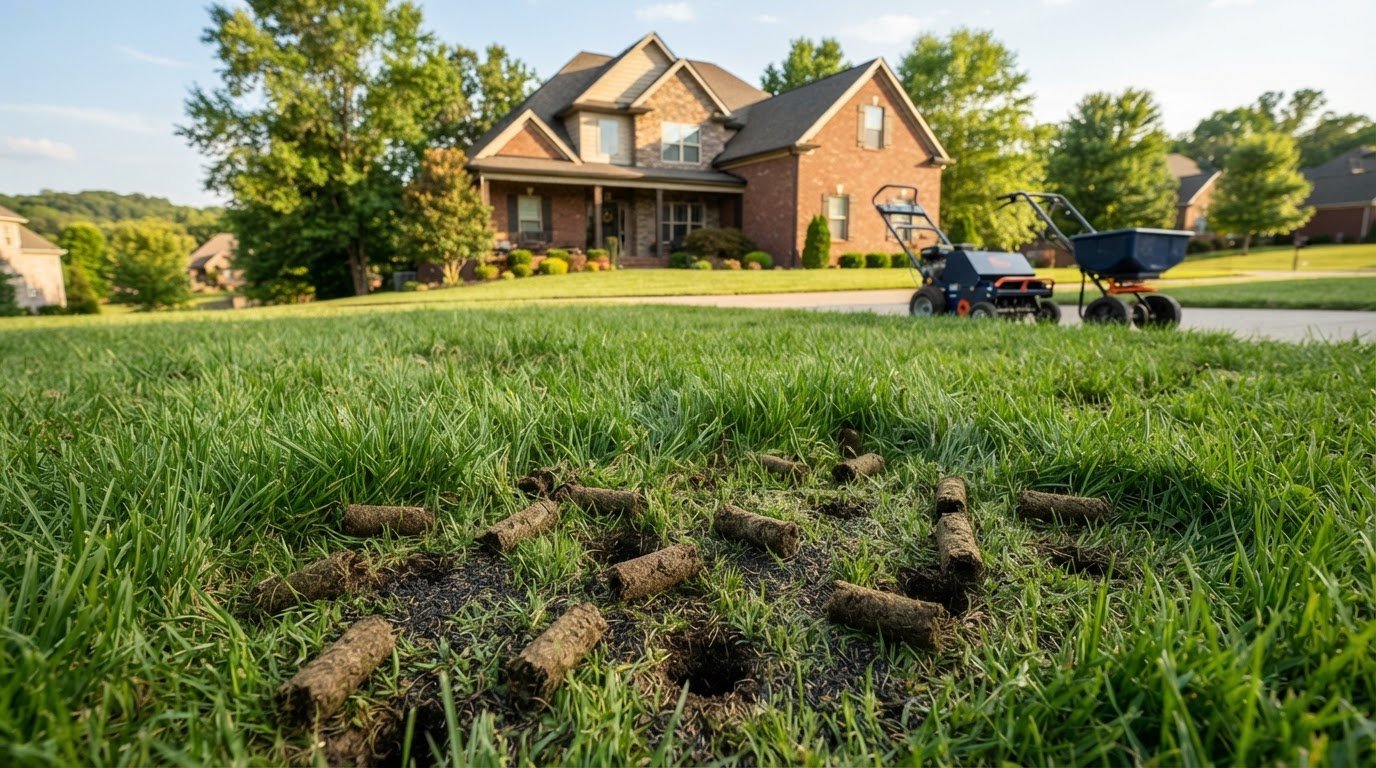
Weak root systems are essentially defenseless against infection. We view soil stewardship as your first line of defense. By utilizing residential aeration, you can break up that heavy clay, improve drainage, and allow your lawn to breathe. A lawn that can breathe is a lawn that can fight. When you address the soil, you aren't just treating a symptom; you are investing in the long-term health, resilience, and beauty of your outdoor space.
Identifying Common Visual Signatures of Lawn Disease
Walking your lawn in the quiet of an early morning is the best way to catch the signs of lawn disease in Tennessee before they escalate into a full-scale renovation project. You aren't just looking for brown grass; you're searching for the active biological signatures of an invader. Identifying the specific signs of lawn disease in Tennessee requires a keen eye for color, texture, and pattern. Early detection in Mt. Juliet lawns can save thousands in renovation costs by stopping the spread before the root system collapses.
The most important distinction to make is between "active" fungus and "dormant" damage. Active fungus often presents as white, cobweb-like mycelium visible in the morning dew. If you only see straw-colored blades without any fuzzy growth, the disease may have already finished its cycle, leaving behind dead tissue. Look for the "Smoke Ring" effect, which is a dark, water-soaked border around the edge of a brown patch. This ring indicates the fungus is currently feeding on healthy grass and expanding its territory.
Brown Patch (Rhizoctonia Solani)
Brown Patch is the primary enemy of Middle Tennessee Fescue lawns. It creates classic circular "donut" patterns where the center of the patch may appear healthy while the outer ring is dying. These straw-colored patches can range from a few inches to several feet in diameter. In our humid climate, you will often see a dark, grayish border that signals an active infection. This disease targets the leaf blade rather than the root, which means timely lawn treatments can often save the turf if caught early.
Dollar Spot and Red Thread
Dollar Spot is easy to identify by its small, silver-dollar-sized circles that rarely grow larger. If you examine individual blades, you will see distinct hourglass-shaped lesions with reddish-brown borders. Red Thread is more common during our wet Tennessee springs, appearing as pinkish, thread-like structures that bind grass blades together. Both of these issues often signal a nitrogen deficiency in the soil. Following proper Cultural Practices to Reduce Lawn Disease, such as maintaining a consistent fertilization schedule, helps your turf build the strength to resist these specific invaders.
Pythium Blight: The "Greasy" Danger
Pythium Blight is a water-mold that can destroy a lawn in 24 hours, making it one of the most aggressive threats in the region. It appears as "greasy" or slimy orange-brown spots, often in areas where water tends to collect. This disease spreads with terrifying speed during hot, rainy Hendersonville nights when the humidity remains trapped at the soil level. Because of its rapid lifecycle, Pythium requires immediate professional attention to prevent total turf loss. If you notice these greasy signatures, you can reach out to our local experts for a clear diagnostic plan and rapid recovery strategy.
Disease vs. Drought vs. Pests: Decoding Your Lawn’s Distress
The most common mistake homeowners make is assuming every brown spot is a sign of thirst. In our region, "just adding more water" can be the most dangerous thing you do to a struggling lawn. If you are seeing the signs of lawn disease in Tennessee, increasing your irrigation frequency actually provides the fuel that fungal spores need to spread. Moisture trapped on the leaf blade overnight creates a highway for pathogens. You have to be sure of the cause before you reach for the hose. Overwatering a diseased lawn doesn't save it; it accelerates the destruction by creating a permanent damp environment where fungi thrive.
We believe in a diagnostic approach that prioritizes accurate identification over guesswork. When your lawn shows signs of distress, it is communicating a specific need. By taking a few minutes to perform simple field tests, you can distinguish between environmental stress, insect damage, and active infection. This clarity prevents you from wasting money on the wrong solutions and helps you protect the long-term health of your outdoor space.
The "Tug Test" and Other Diagnostic Tricks
To determine if you are dealing with insects or infection, try the "Tug Test." Grab a handful of the affected brown grass and pull upward firmly. If the grass resists but the blades look spotted or frayed, it's likely a disease. However, if the turf lifts away from the soil like a piece of loose carpet, you probably have a grub infestation. Grubs eat the roots, severing the connection to the soil entirely. If you suspect insects are the culprit, seeking lawn pest treatment in Mt. Juliet is the next logical step for your property's health.
The "Screwdriver Test" is another vital tool for your diagnostic kit. Take a standard flathead screwdriver and try to push it into the soil in a brown area. If it slides in easily, the soil is moist enough and the problem is likely fungal. If you can't push it in at all, your soil is severely compacted. This compaction prevents water from reaching the roots, causing the grass to wilt even if the surface is wet. Breaking this compaction through residential aeration is often more effective than any sprinkler schedule.
Comparison Guide: What is Killing Your Grass?
Distinguishing between these common issues requires looking at the fine details of the grass blade and the soil structure. Identifying the signs of lawn disease in Tennessee early allows you to pivot your strategy toward recovery rather than just survival. Use this guide to compare the symptoms:
- Disease: Look for "leaf lesions" (spots on the blades), a greasy or slimy texture, or white fuzzy growth in the morning. Roots usually remain firmly attached.
- Drought: Look for "footprinting." If you walk across the grass and your footprints remain visible rather than the grass springing back, it is thirsty. The color will typically be a dull, bluish-gray.
- Grubs/Pests: Look for irregular patches that expand quickly. The grass will feel spongy underfoot and can be easily pulled up from the ground.
Once you have identified the true source of the problem, you can move forward with professional lawn treatments that address the root cause, ensuring your lawn survives the humid Tennessee summer with its beauty intact.
Cultural Prevention: Building a Resilient Tennessee Turf
Cultivating a healthy lawn in Middle Tennessee is an act of local stewardship. Rather than simply reacting to the visual signs of lawn disease in Tennessee, we advocate for a proactive shift in focus. By fixing the environment, you remove the conditions that pathogens require to thrive. This move from symptom management to environmental restoration protects your lifestyle, your property value, and your long-term investment. A resilient lawn isn't built by luck; it is built through disciplined, science-based care.
Proper mowing and watering are the foundations of this resilience. We recommend maintaining a mowing height of 3.5 to 4 inches for Fescue. This height shades the soil, keeps root temperatures lower, and prevents the environmental stress that invites infection. Combine this with a "Deep and Infrequent" watering philosophy. By watering deeply only a few times a week in the early morning, you allow the leaf blades to dry completely before nightfall. This simple habit denies fungal spores the damp, humid surface they need to colonize your turf.
Aeration and Overseeding: The Disease Preventative
Our heavy clay soil is the primary driver of disease susceptibility in the region. Professional core aeration is your most powerful tool for breaking up this compaction. By physically removing soil plugs, we introduce vital oxygen directly to the root zone. This is critical because many aggressive lawn pathogens are anaerobic, meaning they thrive in stagnant, low-oxygen environments. Aeration makes the soil inhospitable to these invaders while strengthening the turf's natural defenses through improved drainage and nutrient uptake.
When you pair this with overseeding, you are building a genetic defense in your yard. We utilize high-quality, disease-resistant cultivars that are specifically selected for the Middle Tennessee climate. The August and September months represent the "Golden Window" for this service. Establishing these new, resilient plants during the fall ensures your lawn has the structural integrity and genetic diversity to survive the humid summers that often trigger the signs of lawn disease in Tennessee.
Proper Fertilization and Nutrient Balance
Balance is essential for a healthy, durable turf. Many homeowners accidentally invite Brown Patch by "pushing" too much nitrogen in the late spring. This leads to rapid, succulent growth that is incredibly easy for fungi to penetrate. A professional fertilization and weed control program ensures your grass receives the right nutrients at the right time, fostering steady, durable growth rather than a dangerous, forced surge.
Maintaining this nutrient balance is a year-round commitment to property health. For a deeper look at how we structure these applications to prevent disease, you can read our guide on Professional Lawn Treatments in Mt. Juliet: The 2026 Homeowner’s Guide. If you are ready to stop guessing and start growing a lawn that resists disease naturally, contact our team today to schedule a professional evaluation of your soil health.
Professional Treatment and Recovery in Middle Tennessee
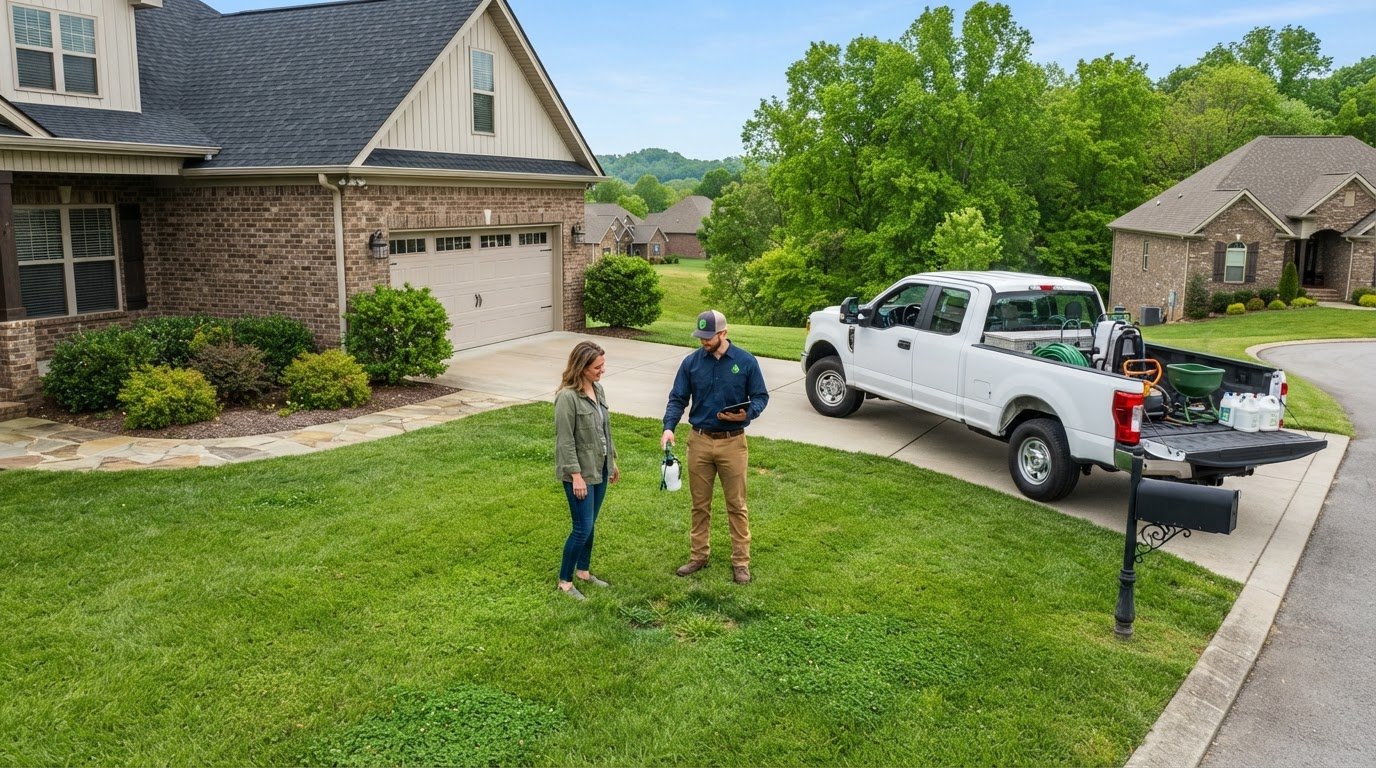
There comes a point where DIY efforts reach their limit. While retail fungicides offer a temporary fix, they often fail to address the underlying soil conditions that invite pathogens back year after year. When you notice the signs of lawn disease in Tennessee, professional intervention is the most reliable way to protect your investment. We bring over 15 years of experience in Middle Tennessee turf health to every property, ensuring your lawn receives the disciplined, expert care it deserves. Our approach is rooted in accurate diagnosis, targeted application, and a deep commitment to our local community.
Performance Lawns operates with a clear moral compass and a focus on long-term results. We offer a no-risk guarantee on all treatment programs because we believe in the integrity of our work. We don't just apply products; we act as dedicated stewards of your outdoor space. By removing the burden of complex diagnostics and high-stakes chemical applications, we provide you with the peace of mind that comes from a healthy, thriving landscape. For homeowners in Mt. Juliet, Lebanon, and Hendersonville, this partnership is the key to a worry-free summer.
Curative vs. Preventative Fungicides
Of course, for those who want to eliminate the worry of lawn disease permanently, high-quality synthetic turf is an increasingly popular alternative. Even if you are not in the South Florida region where specialists like Pro Turf Greens are based, their work serves as a prime example of how artificial solutions can provide a lush, maintenance-free landscape that remains vibrant in any climate.
Similarly, for high-end protection of your other mobile assets, PFM Performance Auto Group offers professional automotive window tinting and electronics installation, demonstrating how specialized care can preserve the value and performance of your property, whether it's your lawn or your vehicle.
Understanding the timing of fungicide applications is essential for a successful recovery. Curative treatments are designed to stop an active infection in its tracks, essentially "putting out the fire" before it spreads to the rest of your yard. However, it's important to remember that these treatments stop the disease but do not regrow grass that has already died. For high-risk lawns with a history of fungal issues, preventative programs are far more cost-effective. These programs create a protective barrier that prevents spores from ever taking root. We utilize specialized liquid lawn treatments that offer fast-acting results and superior coverage compared to standard granular options.
Your Road to a Healthy 2027 Lawn
Recovery is a methodical process that extends beyond a single application. To ensure your turf bounces back and stays resilient, we follow a comprehensive recovery plan: targeted treatment, core aeration, professional overseeding, and balanced nutrition. This holistic strategy addresses the immediate infection while fixing the soil compaction that caused the stress in the first place. By acting now, before the peak of summer humidity further complicates the health of your turf, you set the stage for a lush, vibrant lawn in the coming year.
Don't let the signs of lawn disease in Tennessee dictate the future of your property. You can contact Performance Lawns for a free health assessment to get a clear, professional diagnostic plan. Let us help you reclaim your lawn and enjoy a simplified, high-end outdoor experience that lasts for seasons to come.
Secure the Future of Your Tennessee Turf
Protecting your outdoor investment starts with a shift from reaction to restoration. You now have the diagnostic tools to identify the signs of lawn disease in Tennessee, from the circular "donut" patterns of Brown Patch to the tell-tale "Tug Test" for subsurface pests. Remember that a truly healthy lawn is a byproduct of professional stewardship, balanced nutrition, and the structural relief provided by core aeration. By addressing the soil health and environmental stress today, you prevent the permanent damage that fungal pathogens can cause tomorrow.
Performance Lawns is a locally owned and operated team with 15+ years of Middle Tennessee expertise. We take personal responsibility for the aesthetic and functional health of our community's landscapes, offering a no-risk service guarantee that ensures your peace of mind. You don't have to navigate these complex turf challenges alone. Our experts are ready to act as your knowledgeable guide, removing the burden of diagnosis while delivering high-end results for your home and family.
Get Your Free Lawn Health Assessment Today and take the first step toward a lush, resilient backyard that survives the humidity of 2026 and beyond. We look forward to helping you cultivate a property you can truly be proud of.
Frequently Asked Questions
How do I know if my lawn has a fungus or just needs water?
You can distinguish between the two by using the "Screwdriver Test." If you can easily push a screwdriver into the soil but the grass remains brown and brittle, the issue is likely fungal rather than a lack of moisture. Look closely at the blades for lesions or a greasy texture. Drought-stressed grass typically turns a dull bluish-gray and will retain visible footprints when you walk across it.
Is it too late to treat Brown Patch in my Tennessee yard?
It is never too late to stop a fungal infection from spreading to healthy areas, but you must understand that fungicides won't bring dead grass back to life. Curative treatments halt the active pathogen immediately to protect the remaining turf. Once the spread is controlled, we focus on a recovery plan involving aeration and overseeding in the fall to fill in the damaged patches and restore your lawn's density.
Can I treat lawn disease myself with store-bought products?
While retail products are available, they often lack the concentration and specific active ingredients found in professional-grade fungicides. Homeowners frequently struggle with identifying the exact pathogen, leading to wasted money on the wrong chemicals. We use calibrated equipment and commercial-strength treatments to ensure even coverage. This professional approach prevents the fungus from developing chemical resistance, which is a common problem with repeated, low-dose DIY applications.
Does core aeration really help prevent lawn disease?
Core aeration is your best defense against recurring fungal issues in Middle Tennessee. By physically removing plugs of heavy clay, we improve oxygen flow and drainage at the root zone. Many aggressive pathogens are anaerobic, meaning they thrive in the stagnant, wet conditions found in compacted soil. Aeration disrupts this environment, making it inhospitable for spores while strengthening the grass's natural ability to resist the signs of lawn disease in Tennessee.
What is the most common lawn disease in Mt. Juliet?
Brown Patch remains the most prevalent fungal threat for homeowners in Mt. Juliet and the surrounding areas. Because so many local lawns utilize Tall Fescue, the combination of our high humidity and 90-degree summer nights creates the perfect environment for this pathogen. It typically appears as circular, straw-colored patches with dark, water-soaked borders. Catching these signs early is vital for preventing the fungus from colonizing your entire property.
Will lawn disease go away on its own in the winter?
Fungal pathogens don't disappear when the temperature drops; they simply go dormant in the soil or the thatch layer. While the visible damage might be hidden by winter dormancy, the spores are waiting for the return of warm, humid weather. If you don't address the underlying environmental causes like soil compaction and nutrient imbalance, the disease will almost certainly reappear with renewed vigor during the following spring and summer seasons.
How much does a professional lawn disease treatment cost?
The cost of professional intervention depends on the size of your property and the specific type of fungus we are treating. We focus on providing value-driven programs that prevent the need for expensive, full-lawn renovations. Rather than offering a one-size-fits-all price, we provide a detailed assessment to ensure you only pay for the specific treatments your soil requires. Investing in professional diagnostics now saves significant money on long-term turf replacement.
Are the fungicides Performance Lawns uses safe for my pets?
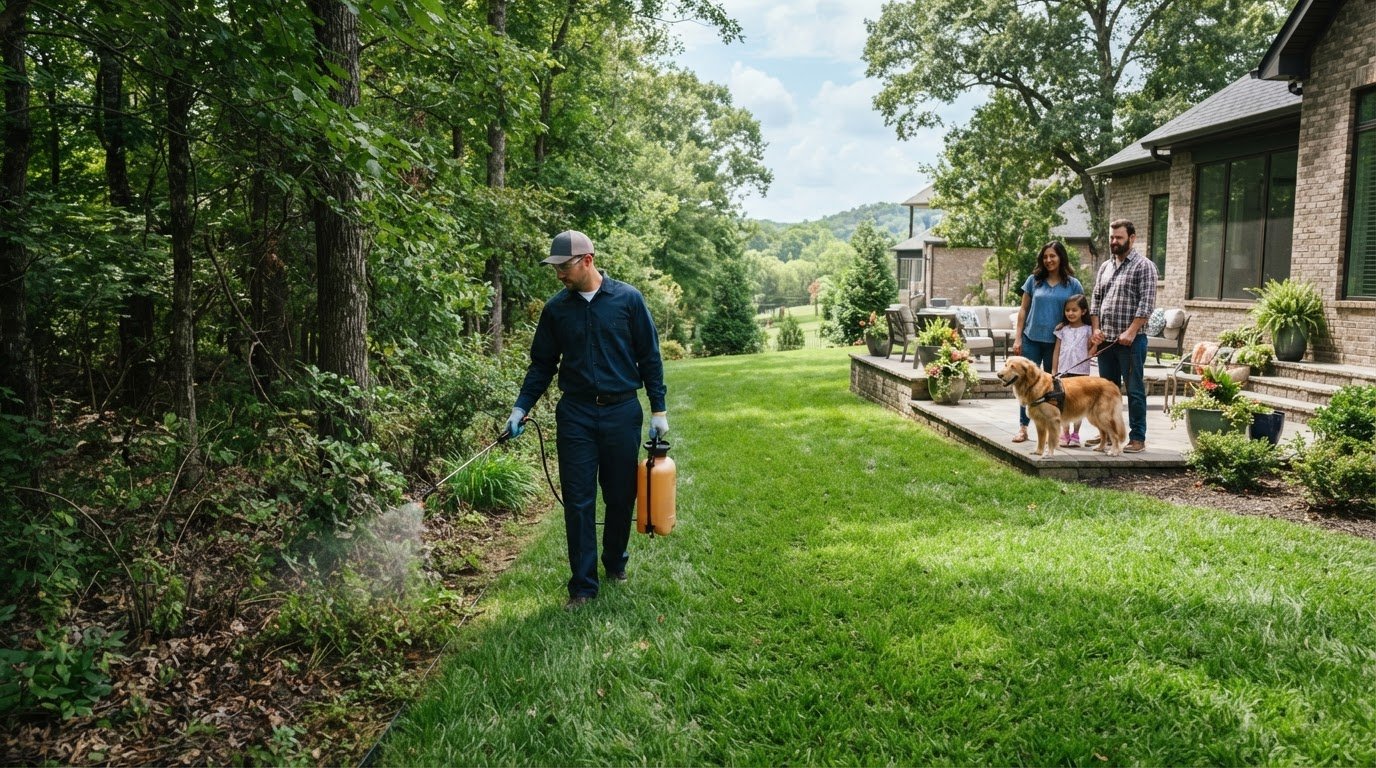
We prioritize the safety of your family and pets in every treatment we apply. Our liquid fungicides are designed to be professional-grade and effective, yet they are safe for pets to return to the lawn once the application has dried completely. We recommend keeping dogs and cats off the grass for a few hours after service. We always provide clear communication and specific instructions to ensure you feel confident and at peace.