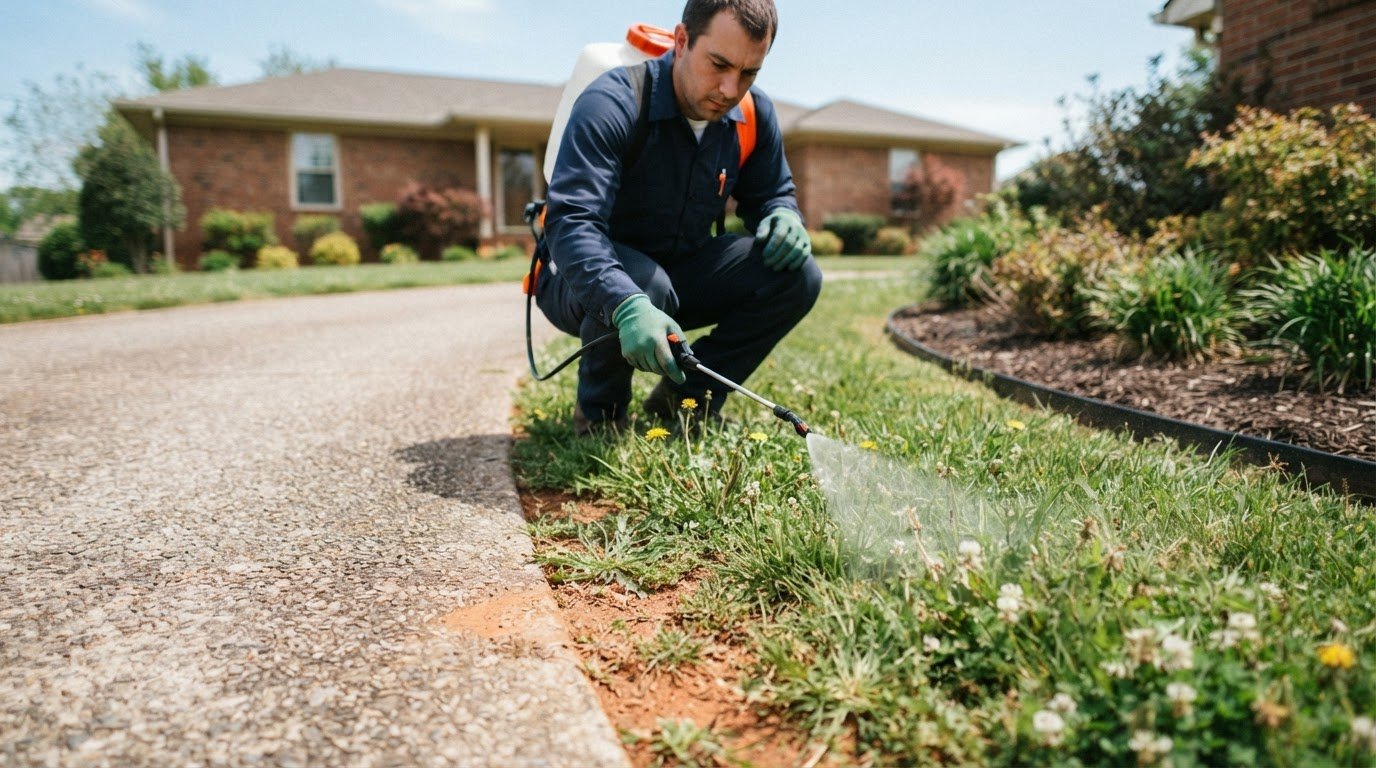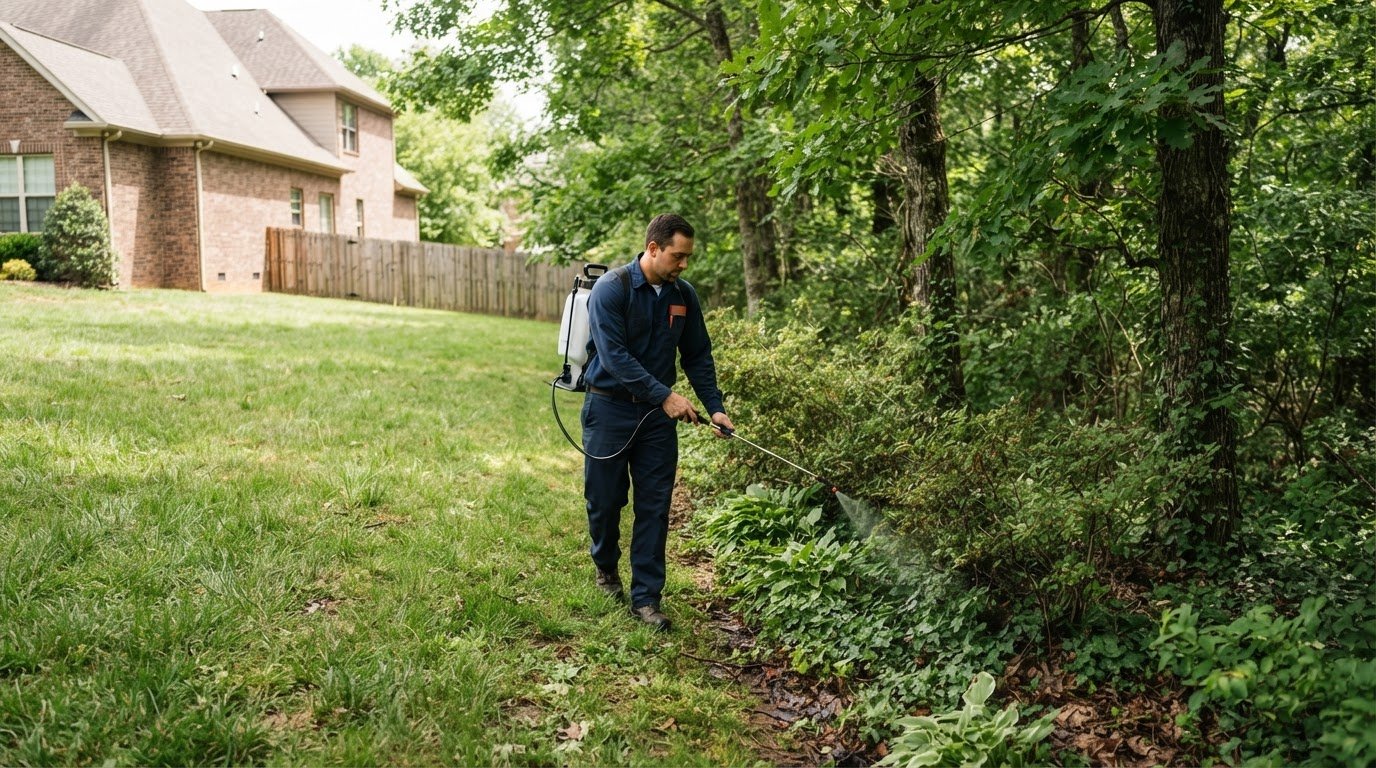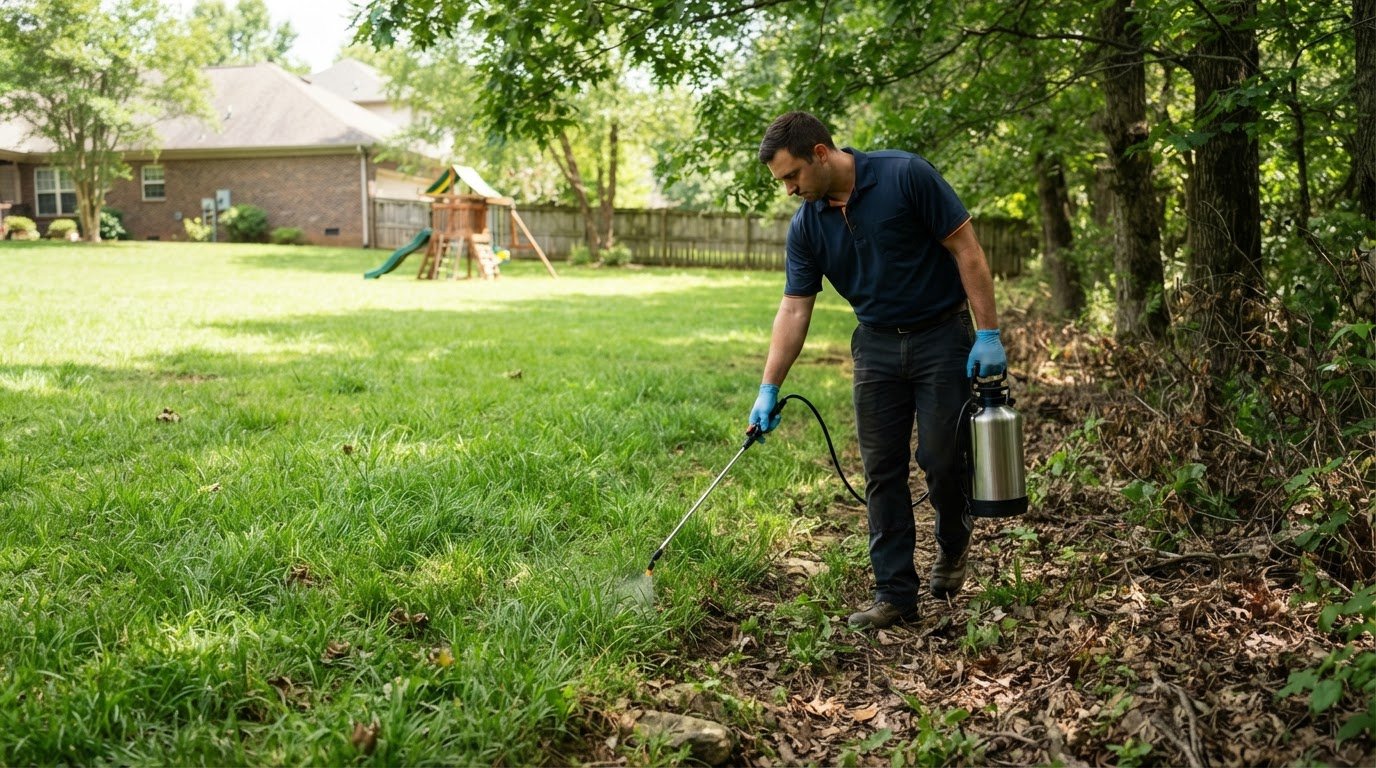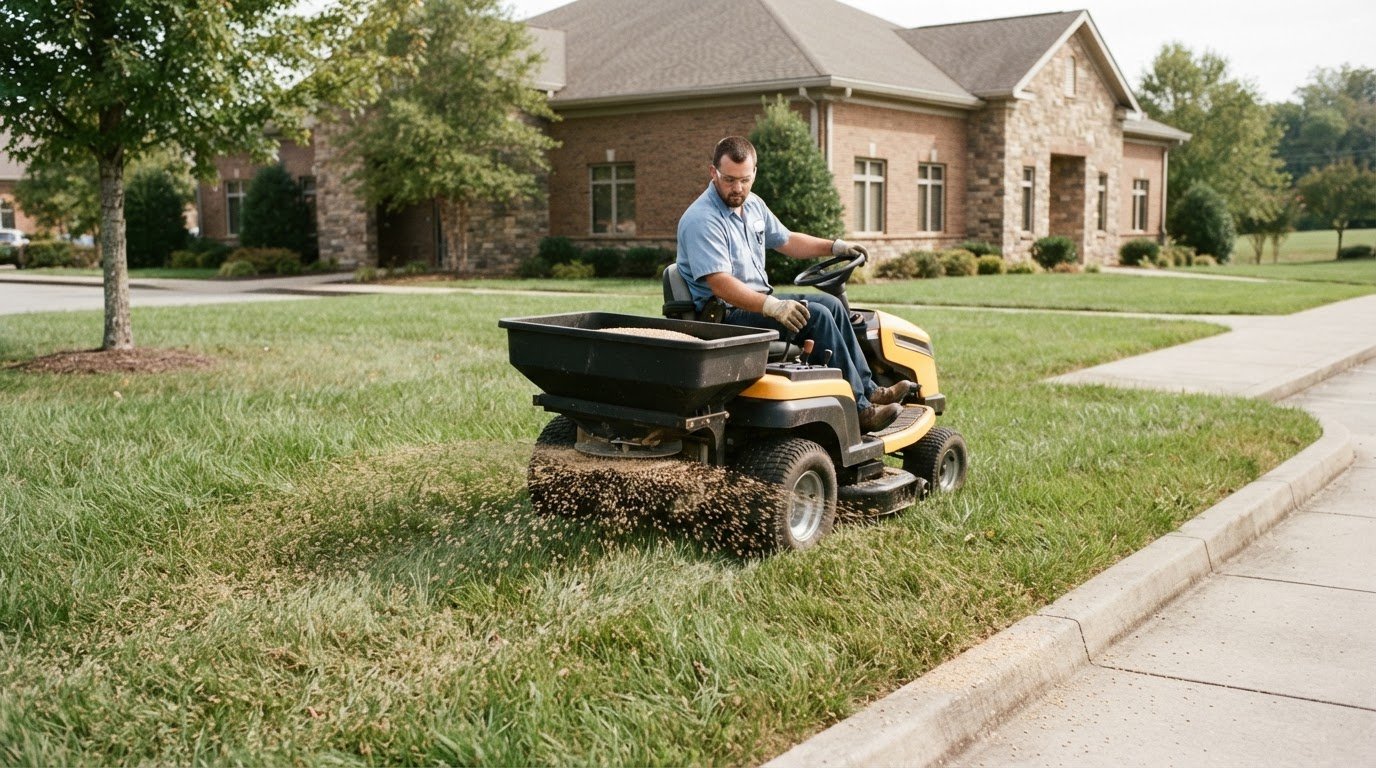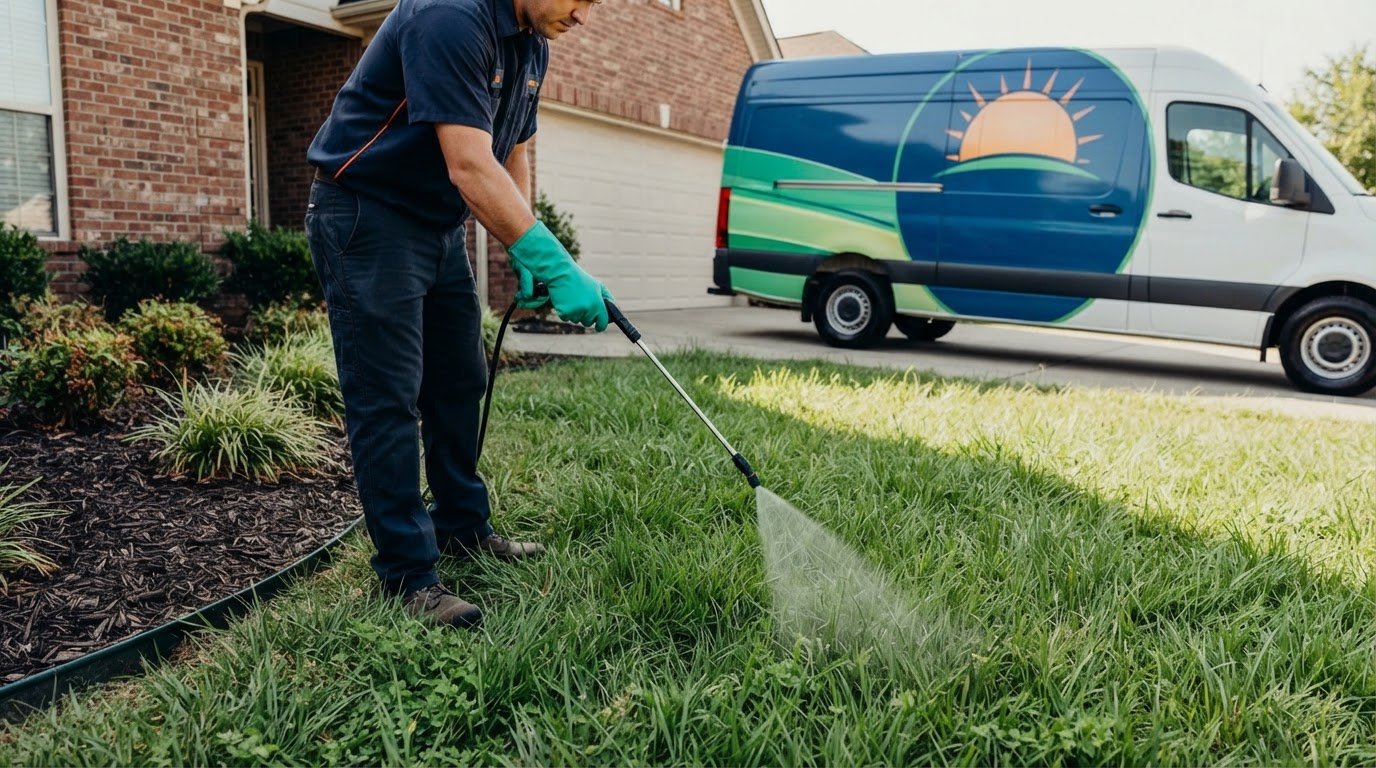


A green lawn isn’t automatically a lawn that needs spring fertilizer. An early spring lawn green-up service in Mt. Juliet should account for grass type, active growth and weed timing, rather than treating color alone as the signal to feed. Pre-emergent weed control, for example, is timed before soil temperature reaches 55°F, while post-emergent treatments address weeds that have already appeared.
It’s natural to want a quick boost when the yard starts waking up, especially after winter leaves thin patches, standing water, or uneven color. This guide explains when lawns in Mt. Juliet, Lebanon, Gallatin, and Hendersonville typically green up, how professionals assess winter damage and drainage, and when fertilization or weed control may be appropriate. You’ll also learn what a professional lawn care program can include, so you can choose next steps for a healthier lawn without rushing into a treatment that doesn’t fit its needs.
1. When does grass green up in spring?
Spring color depends on grass type, soil temperature, and sustained growth conditions, not the calendar alone. In Mt. Juliet, cool-season grasses such as fescue can begin growing when temperatures average 45–55°F. Warm-season grasses, including Bermuda, generally green up later, as temperatures rise. A lawn may therefore show green growth in one area while another remains dormant.
Soil warmth is a useful timing signal. Cool-season grasses grow best in soil from 60 to 75°F, while warm-season varieties thrive around 70 to 85°F. Grass beside pavement may green up first because concrete absorbs heat and warms nearby soil. Air temperature matters too: the University of Minnesota Extension identifies 55–75°F as the optimal air-temperature range for shoot growth in cool-season turf.
Crabgrass prevention has its own temperature window. Pre-emergent weed control should be applied before soil temperature reaches 55°F; crabgrass germination is associated with soil temperatures of 53–55°F sustained for 5 days. That narrow overlap makes timing important: too early can mean the product is active before germination conditions arrive, while waiting too long can miss the preventive window. Pre-emergent products can remain active for several weeks after application, according to the University of Maryland Extension.
Early treatments can also create problems. Fertilizing dormant warm-season grass can expose it to cold damage and pest problems, while overseeding or using herbicide at the wrong growth stage can interfere with new grass getting established. Newly seeded lawns should not receive herbicide products until the grass has been mowed two or three times. Applying weed-and-feed too early also adds fertilizer before the lawn may need it.
Match other lawn care to the grass type, too. Cool-season lawns are best aerated in fall, while warm-season lawns are typically aerated from late spring to early summer. Aerating at the wrong point in the growth cycle can stress turf instead of supporting recovery. Wait to mow in spring until grass is actively growing and the soil is no longer wet and soggy. Repeated traffic on dormant or frost-covered turf can damage it.
Thatch, thin growth, and compacted soil can affect how evenly a lawn greens up, so color alone won’t explain every bare patch. Potassium is one nutrient involved in lawn fertility, but fertilizer timing and nutrient needs depend on grass type and growth stage. For an early spring lawn green-up service in Mt. Juliet, the key is to identify the grass, assess active growth, and then time weed control, fertilization, and aeration accordingly.
2. Assessing lawn damage, bare spots, weeds, and drainage
Winter can leave a lawn uneven, but brown turf isn’t always dead. A professional assessment can distinguish seasonal dormancy from damaged crowns, thinning, disease, and poor drainage. Grass type matters: dormant zoysia can remain brown while nearby fescue is actively growing. Base treatment decisions on the turf’s condition, not color alone.
Diagnose bare spots before applying fertilizer or overseeding. Compacted soil, shade, foot traffic, pests, and runoff can all limit grass growth, and each calls for a different response. A thin fescue lawn may benefit from overseeding when conditions support establishment. Bermuda grass spreading through established fescue is much harder to eliminate completely. Management focuses on limiting its spread and helping fescue stay competitive.
Weeds also offer clues. Broadleaf and grassy weeds don’t necessarily respond to the same treatment. Dallisgrass and Johnsongrass can be more challenging than common broadleaf weeds and may call for a separate, targeted approach. Identifying the weed helps match control to the species and surrounding grass, rather than applying a broad treatment that may miss the problem.
Drainage problems often show up as persistent puddles, soft ground, or thinning turf along a slope. Compacted soil can slow water movement and restrict root growth, while low spots may collect runoff. These patterns matter before aeration or reseeding. Aeration can help address compaction, but it won’t correct grading or redirect water. An assessment should identify whether the main issue is compacted soil, runoff, shade, or a combination.
Disease symptoms need a separate assessment. Brown patch and dollar spot can typically be managed through a lawn disease program. Pythium can develop and spread rapidly under favorable conditions, making it more difficult to manage. Treatment effectiveness depends on the disease, weather, severity, and how early it is identified. Distinguishing disease from winter injury helps prevent an unsuitable fertilizer application from becoming the first response.
A soil test every two or three years can show soil pH, nutrient levels, and organic matter. Those results help assess whether fertilizer is appropriate, instead of treating every pale patch as a nutrient problem. A measured review of grass type, weeds, bare areas, and drainage gives spring care a clear starting point. For a professional assessment and lawn care guidance, share where the damage appears and how water behaves there.
Fast-growing grass should be mowed at no less than 3 inches to inhibit weeds, helping maintain coverage while limiting opportunities for unwanted growth.
3. Pre-emergent and post-emergent weed control
Professionals in Mt. Juliet time pre-emergent control around soil temperature and crabgrass germination, then match fertilizer to active grass growth. Pre-emergent weed control belongs before soil temperature reaches 55°F. Spring fertilization generally follows two or three mowings after grass begins greening, rather than being applied automatically at the first sign of color.
Treatments serve different purposes. Pre-emergent herbicide targets weeds before they emerge; post-emergent treatment addresses weeds that are already growing. A lawn with visible broadleaf weeds, for example, needs a different assessment from one receiving preventive crabgrass control. Product selection also depends on grass type, since the desired turf must tolerate the treatment.
Timing is especially important where overseeding is planned. Newly seeded grass should not receive herbicide products until it has been mowed two or three times. Pre-emergent grass herbicides can remain active for several weeks after application, according to the University of Maryland Extension. That residual activity makes treatment sequencing important when a lawn needs both weed management and new grass establishment.
Time fertilizer to the lawn’s growth, not simply the season. A spring application is generally timed after two or three mowings, once turf is actively growing. Nitrogen applied too early can feed grass before its roots are ready to use nutrients. For warm-season grasses, applying nitrogen at the wrong time can also increase susceptibility to cold damage and pest problems.
Post-emergent treatment starts with accurate weed identification. Dallisgrass and Johnsongrass are invasive grassy weeds that can be more challenging to manage than common broadleaf weeds. They may require a separate or targeted treatment approach. Bermuda grass that has spread into an established fescue lawn can be extremely difficult to eliminate completely. Management focuses on limiting its spread and helping the desired fescue remain healthy and competitive.
Growth stage helps determine whether a treatment fits. Bluegrass and other cool-season grasses respond to spring conditions differently from warm-season turf, so professionals consider grass type, temperatures, and recent mowing. Applying fertilizer and weed control together through a weed-and-feed product can add fertilizer before the lawn needs it. A tailored fertilization and weed control program aligns treatment timing with the lawn’s growth and weed pressure.
Watering and mowing can affect treatment timing, too. Wet conditions may delay mowing, while newly seeded areas need time to establish before herbicide use. A professional assessment accounts for active growth, existing weeds, and planned overseeding before scheduling treatments. This helps reduce weed pressure while supporting healthy turf, rather than relying on one spring application for every lawn.
4. Professional lawn care programs
A professional program schedules treatments throughout the year instead of relying on a single spring application. Most lawns need fertilizing two to four times a year, with timing shaped by grass type, active growth, and nutrient needs. In Mt. Juliet, that means distinguishing cool-season turf from warm-season grasses before deciding what to apply and when.
Spring feeding should match the lawn’s growth stage. A late-spring fertilizer application is recommended six to eight weeks after the early-spring application. That spacing gives turf time to use nutrients between treatments, rather than adding fertilizer simply because the calendar says spring. If grass remains dormant, feeding it before active growth can be poorly timed, especially for warm-season turf.
Fall has its own sequence. A second fall fertilizer application can be made six to eight weeks after the first as part of a full program. In Mt. Juliet, a late-fall nitrogen feeding is intended to support earlier spring green-up without an early-spring nitrogen surge. The program should still account for grass type and whether the lawn is actively growing or entering dormancy.
Weather and watering affect fertilizer performance. Light rain after application is ideal, while heavy rain before fertilizer soaks in can wash it away. When granular fertilizer is applied to dry grass, light watering afterward helps move the granules toward the soil. Scheduling around rainfall can help keep nutrients in place and reduce avoidable runoff.
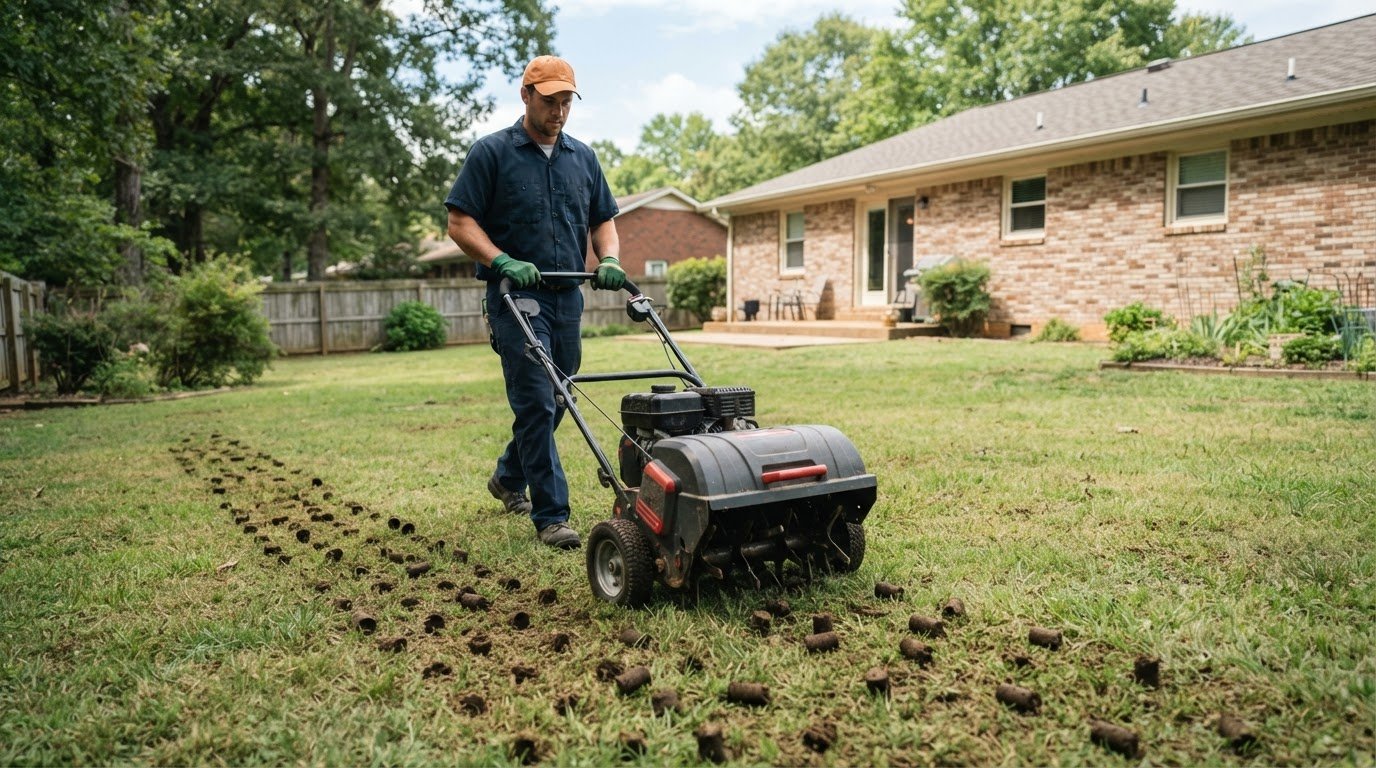
A complete program can also coordinate fertility with soil care. University of Maryland Extension describes typical lawn aeration cores as about 2–4 inches deep. Aeration can be scheduled for the appropriate growth season, rather than folded into a fertilizer visit without regard to turf type. For warm-season grasses, late spring to early summer is the aeration window; cool-season lawns are best aerated in fall.
Grass type changes the calendar. Zoysiagrass fertilizer applications should be made in April, June, and August. This differs from a spring-only approach and shows why a tailored program considers the species growing in each lawn. Bermuda grass, fescue, and zoysia have different growth cycles, so the same treatment timing won’t suit every property.
Between applications, mowing and watering support the program but don’t replace it. Leave grass clippings on the lawn when mowing leaves them finely dispersed, returning organic material to the surface. Watering needs change with weather and growth, and mowing height should match the grass type. Coordinating these practices with fertilizer, weed control, and aeration helps support steady growth through spring and summer.
Spring Lawn Care Services in Mt. Juliet, TN
Useful spring services address what limits green growth, rather than simply adding color. In Mt. Juliet, Lebanon, Gallatin, and Hendersonville, a professional lawn assessment can identify thin turf, nutrient needs, weed pressure, shade, and soil conditions. Those findings help determine whether fertilization, weed control, overseeding, or another treatment belongs in the plan.
For a cool-season lawn with bare or thin areas, spring seeding can help establish fescue and bluegrass. The service should account for existing grass, open soil, and whether herbicide could interfere with seed establishment. Newly seeded areas need a different treatment sequence, so don’t schedule weed control and overseeding as if they were unrelated tasks.
Fertilizer timing matters as much as the product. Spring lawn fertilizer is generally applied about three weeks after grass starts greening. Grass roots begin actively absorbing nutrients around 65°F soil temperature, making growth and soil warmth useful signals. Applying fertilizer before turf is growing can add nutrients without supporting the intended response. Air temperatures below 70°F and above 35°F are recommended for application.
Some lawns need a quicker cosmetic lift than fertilizer provides. Liquid iron products can show greening results within days rather than weeks, but iron works best after grass has started growing. Wait if the lawn is fully dormant. This matters for warm-season turf, which can remain brown while dormant even as nearby cool-season grass greens.
Shade can also slow spring color. Reducing shade from trees and shrubs may help turf green up faster by allowing more sunlight to reach the lawn. An assessment can identify whether shade is concentrated beneath a canopy, along a fence, or beside a structure. That context helps distinguish light-related thinning from nutrient stress or drainage problems.
When compacted soil or thin turf needs attention, professional aeration and overseeding can address soil conditions and encourage denser growth. Timing depends on grass type: cool-season lawns are typically aerated in fall, while warm-season lawns are aerated from late spring to early summer. Scheduling this work in the suitable season helps avoid disturbing turf at the wrong point in its growth cycle.
Spring care is most effective when services fit the lawn’s condition and sequence. A professional plan can coordinate seed establishment, fertilizer, weed treatment, and soil care without treating every yard alike. To discuss what your Mt. Juliet lawn needs this spring, request a lawn care assessment.
Performance Lawns, INC
Performance Lawns, INC helps homeowners in Mt. Juliet, Lebanon, Gallatin, and Hendersonville address spring lawn concerns with appropriate treatments and seasonal care. When uneven green-up, thin turf, or active weeds call for professional attention, lawn treatments can include weed control and fertilization or residential aeration and overseeding where appropriate. The right approach depends on grass type, growth stage, and soil condition, so treatments can be coordinated rather than chosen by color alone.
If you’d like help planning spring care for your lawn, contact Performance Lawns, INC.
Set Your Lawn Up for the Season Ahead
Spring is a useful starting point for a lawn care plan that can adjust as grass enters active growth. If you’re considering an early spring lawn green-up service in Mt. Juliet, focus on the outcome you want to support, whether that’s stronger turf, managed weed pressure, or attention to thin areas. Knowing your priorities helps shape the next step.
Performance Lawns offers Lawn Treatments, Weed Control and Fertilization, and Residential Aeration & Overseeding. These services address different lawn needs, so the right fit depends on your turf and its condition. Ongoing care can respond to changing growth through the season, rather than relying on a single treatment to address every concern.
Give your lawn a thoughtful start. Contact Performance Lawns to discuss your spring lawn care needs, and move into the season with a plan suited to your property.
Frequently Asked Questions
Should a professional fertilize my lawn if it already looks green?
Not necessarily. A professional considers the lawn’s condition and recent care before recommending fertilizer. For example, a uniformly green lawn that received suitable care last fall may not need another feeding simply because spring has arrived. Weak, sparse turf is a different case. Sharing your recent treatment history helps distinguish a genuine nutrient need from a desire for faster color.
What month is best to fertilize?
There isn’t one best month for every lawn in Mt. Juliet, Lebanon, Gallatin, or Hendersonville. Grass species, previous applications, and current growth all influence the schedule. Start by identifying the dominant turf and reviewing when it was last fertilized. For zoysia, a seasonal plan may use several scheduled feedings rather than one application; cool-season lawns follow a different annual rhythm.
When does grass green up in spring?
Look for sustained new growth, not just a brief color change after a mild day. A lawn may green up unevenly where sunlight, exposure, and turf composition vary across the property. For example, a sunny front strip can look active while shaded grass responds slowly. A professional can assess whether those differences reflect local conditions or a separate lawn problem.
When should early spring lawn treatments begin in Mt. Juliet, Tennessee?
Start planning before widespread spring growth begins, so treatment timing can account for the property’s history and goals. Useful details include when the lawn was last fertilized, whether any areas were recently seeded, and where water tends to collect. This information helps sequence treatments around the lawn’s actual condition instead of using one date for every yard.
Which grass types are common in Mt. Juliet lawns, and how do their spring green-up needs differ?
Fescue, Kentucky bluegrass, ryegrass, Bermuda, and zoysia are all relevant to lawns in Mt. Juliet, Lebanon, Gallatin, and Hendersonville. Some properties contain more than one grass type, especially where sunny and shaded areas have different conditions. A professional should identify the turf in the areas being treated, rather than assume the whole yard has the same needs. Mixed grass stands can affect treatment selection and expectations.
What early spring lawn care do professionals recommend for cool-season and warm-season grasses?
Professionals tailor the plan to each lawn’s condition, including visible thinning, treatment history, and whether the grass is actively growing. They can also note where traffic, shade, or runoff may limit turf performance. A thin patch beside a downspout, for instance, may need a different response from a uniformly pale section. The goal is to match care to the cause.
Which local lawn care companies offer early spring green-up services in Mt. Juliet, TN?
Performance Lawns, INC provides professional lawn treatments for homeowners in Mt. Juliet, Lebanon, Gallatin, and Hendersonville, including fertilization and weed control, as well as residential aeration and overseeding. For a useful initial discussion, describe the lawn’s main concern and any recent work, such as seeding or fertilizer application. That context helps connect the service to your specific concern instead of treating green-up as a one-size-fits-all package.
How do professionals determine fertilizer timing and application rates for Tennessee lawns in early spring?
Professionals use the lawn’s measured area, grass type, soil information, and fertilizer analysis to determine an appropriate application. They also consider recent feeding, since adding nutrients without accounting for previous treatments can be unnecessary. Weather and site conditions matter for scheduling as well. Sloped areas or runoff concerns may call for careful attention to application timing and follow-up watering.