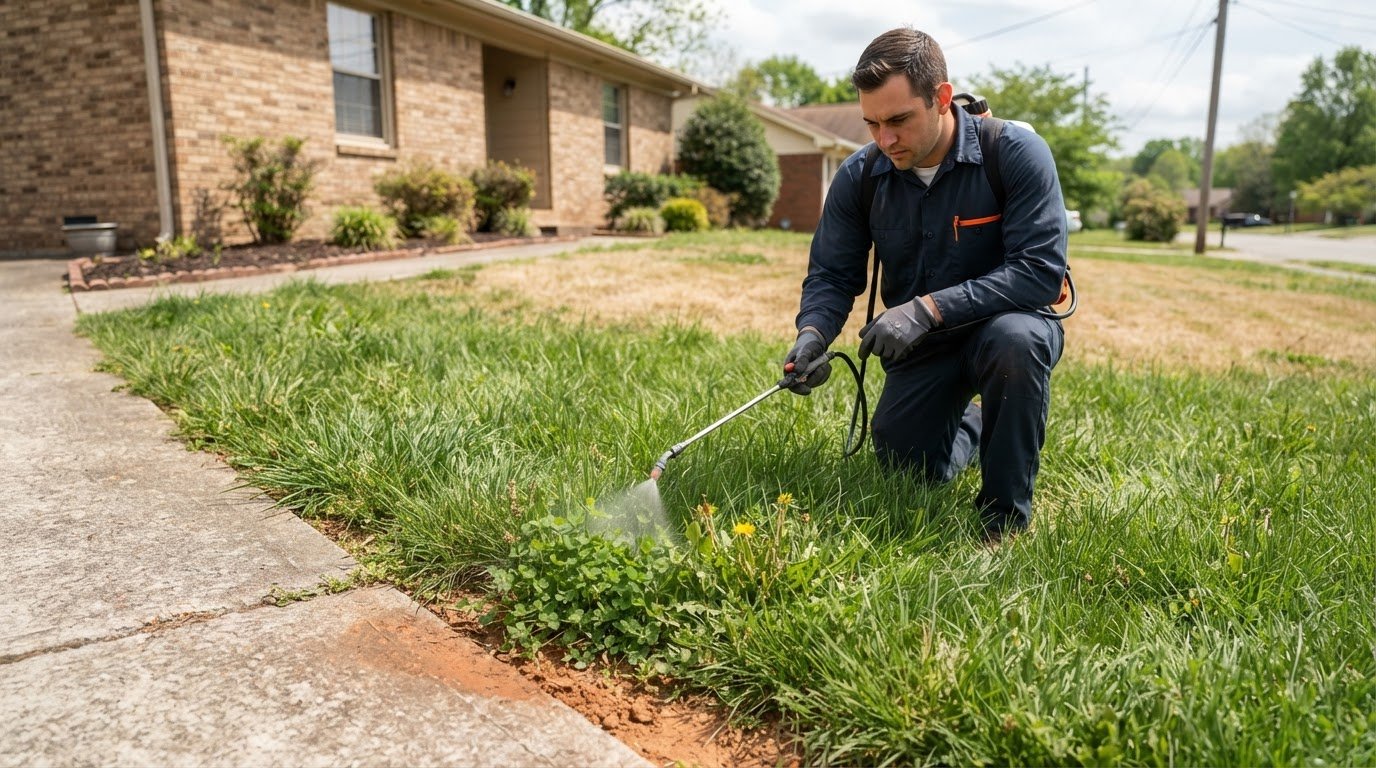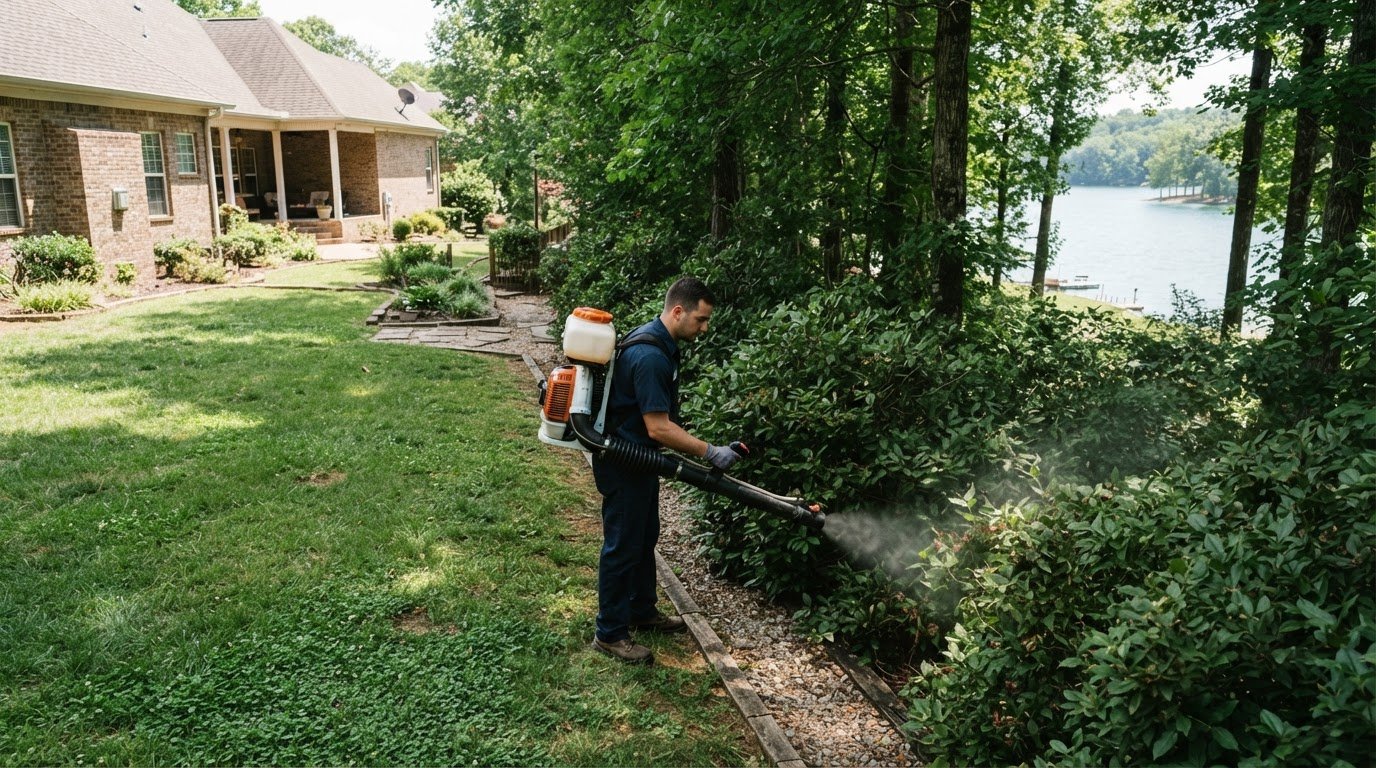


The right fertilizer isn't simply the one with the highest nutrient number. A sound commercial fertilizer application in Lebanon, TN starts with agronomic guidance to match the product and application method to the turf’s needs, whether that points to granular, foliar, or soluble fertilizer.
Choosing a fertilizer can feel complicated when products differ in nutrient analysis, form, and intended use. The right choice depends on the property’s needs and how the product delivers nutrients, not on assuming one option suits every site.
This article explains how agronomic guidance informs fertilizer selection, what distinguishes granular, foliar, and soluble products, and which factors shape a commercial application plan in Lebanon. Understanding these choices can help you make more informed decisions about maintaining healthy turf.
Agronomic expertise and product guidance
Fertilizer selection starts with the turf, the site, and the intended application. A commercial property in Lebanon may have areas with different traffic, shade, drainage, or maintenance needs. These conditions can affect which fertilizer form and nutrient balance are appropriate. Agronomic guidance connects site conditions to product selection instead of relying on one formula for every area.
Fertilizer analysis shows the guaranteed nutrient percentages by weight of the total product. The familiar three-number format identifies nitrogen, phosphate, and potash in that order. For example, a 46-0-0 analysis provides nitrogen, with no guaranteed phosphate or potash. A 24-0-11 analysis includes nitrogen and potash, while 14-14-14 includes all three primary nutrients.
Those examples aren't interchangeable recipes. A professional considers the turf’s condition and purpose before selecting an analysis. A product high in nitrogen, such as 46-0-0, differs substantially from a balanced 14-14-14 fertilizer. The label helps clarify what each product guarantees; site conditions and the application plan guide whether that balance fits.
Granular fertilizer consists of dry particles distributed across turf. Its practical fit depends on the site, the product, and the planned application. Some listed fertilizer products state a duration of 3 months, but that duration belongs to those products, not every granular fertilizer. Product labels and the intended timing matter when planning an application.
Foliar fertilizer is applied to plant leaves, while soluble fertilizer dissolves in water before application. The terms describe different product characteristics: foliar identifies the application route, and soluble describes the ability to dissolve. A soluble product may be suitable for foliar application when its label and intended use allow it.
Timing also matters. Application options may include spring, fall, or the growing season, depending on turf growth, the selected product, and the site’s needs. For commercial properties, an agronomic plan can account for differences between areas rather than treating any application date as a universal schedule.
A useful professional assessment connects several decisions:
- Site conditions: Identify turf areas, use patterns, and differences that may affect application planning.
- Nutrient analysis: Compare guaranteed percentages, such as 24-0-11 and 14-14-14.
- Product form: Match granular, foliar, or soluble fertilizer to the intended application.
- Timing: Consider spring, fall, or the growing season alongside product directions.
Labels provide essential product details, but they are not a complete agronomic plan. In Tennessee, fertilizer labels identify guaranteed nutrient percentages by weight of the total product. If a label claims a nutrient is slowly released, it must identify and guarantee that nutrient. These details help compare products and clarify what the analysis represents before planning an application.
Fertilizer selection is separate from grassy weed treatment. Dallisgrass and Johnsongrass can be more challenging to manage than common broadleaf weeds, and may not respond to treatments used for typical lawn weeds. A separate or targeted treatment approach may be recommended. Bermuda grass in an established fescue lawn is extremely difficult to eliminate completely; management generally focuses on limiting its spread and presence. Fertilizer supports turf nutrition, but it is not a substitute for targeted weed management.
Application planning should also account for water movement. Excess irrigation water can wash fertilizer into waterways and contribute to pollution, according to the U.S. Environmental Protection Agency. Following product directions and considering site conditions helps keep an application plan grounded in responsible turf care. Considering analysis, form, timing, and water makes fertilizer selection more deliberate.
Product form: the product listings include fertilizer with a 21-0-0 nutrient analysis, another example of how the guaranteed balance can differ between products. The product listings also include fertilizer in 50 lb. packages. Package size and analysis are useful details to verify when matching a product to the site and planning how it will be handled. They do not replace a review of the label, intended use, and application plan.
Product documentation is another part of fertilizer guidance. In Tennessee, soil conditioner containers must show the product’s net weight, name, guaranteed analysis, purpose, directions and applicable cautions, and registrant name and address. Packaged fertilizer labels must present required information on the package or an attached tag, while bulk-product information must accompany delivery. Reviewing this information helps keep product selection and application planning grounded in the stated contents, purpose, and directions. On a commercial property, these details can support consistent decisions across areas with different turf conditions and maintenance needs.
Tennessee regulations for commercial fertilizer application
Tennessee fertilizer rules cover product labels, business records, reporting, and certain ingredient standards. For commercial applications in Lebanon, labels identify guaranteed nutrient percentages by weight of the total product. This clarifies what the fertilizer contains, while required records and reports document distribution and sales. Each requirement addresses a different stage, from product identification to state reporting.
A label claiming a nutrient is slowly released must identify and guarantee that nutrient. Tennessee labels may not use a slowly released nutrient designation when the nutrient is less than 15% of the relevant guaranteed primary nutrient. These requirements make the label’s wording and nutrient analysis important together. A release claim cannot stand alone without its required nutrient guarantee.
Nitrogen described on a Tennessee fertilizer label as organic has a specific guarantee requirement. The water-insoluble nitrogen guarantee must be at least 60% of the nitrogen designated as organic. Labels must also list guarantees for additional plant nutrients on an elemental basis. These details distinguish nutrient forms and ensure additional nutrient guarantees use the required basis.
Recordkeeping is another part of Tennessee fertilizer regulation. Under 43-11-106, fertilizer sellers and distributors must keep guaranteed-analysis statements and other required fertilizer labeling in permanent records. They must make those records available to the Commissioner or the Commissioner’s agent upon request. This connects the product’s label information with records retained by the seller or distributor.
Custom fertilizer mixes have specific labeling requirements. A Tennessee custom mix must state its net weight and guaranteed analysis, along with the names and addresses of the distributor and consumer. The labeling statement must accompany the mix and be supplied to the purchaser at delivery. This information links the mix and its analysis to the parties receiving and distributing it.
The delivery method also determines where required product information appears. For packaged fertilizer, the information must be on the package or an attached tag. For bulk fertilizer, it must accompany delivery. In practice, packaged products carry their information on the product or tag, while bulk deliveries require accompanying documentation.
Tennessee quarterly fertilizer tonnage reports include more than total sales. Reports must state the quantity of each grade sold, the county of distribution, the fertilizer form, and whether distribution was for farm or non-farm use. These categories organize information by product and destination. Accurate records help support the details required for each reporting period.
The reporting deadline is specific: Tennessee quarterly fertilizer tonnage reports and inspection fees are due by the 15th day of the following month. That deadline applies to both the quarterly report and its inspection fees. Keeping sales and distribution details organized supports preparation of the required report, including grade, county, form, and use classification.
Tennessee also sets an investigational allowance for fertilizer nutrient analysis. The maximum is 1 unit, or 1%. A nutrient deficiency beyond the investigational allowance may incur a penalty equal to three (3) times the commercial value of the deficiency. The allowance and potential penalty make the stated analysis and the product’s actual nutrient content consequential.
Ingredient standards address certain metals, too. Tennessee commercial fertilizers containing guaranteed phosphates or micronutrients are adulterated if their metal content exceeds levels established by the American Association of Plant Food Control Officials’ Statement of Uniform Interpretation and Policy number 25. Tennessee also defines hazardous-waste-derived fertilizer adulteration by reference to U.S. Environmental Protection Agency permitted metal levels in 40 CFR Parts 261, 266, and 268.
For commercial properties, these requirements give useful context for product documentation and delivery records. If you’re planning fertilizer service and want to discuss the needs of your property, connect about commercial fertilizer application.
Additional nutrient guarantees can include calcium, magnesium, and boron. For fertilizer registration, Tennessee accepts a minimum calcium guarantee of 1.0000%, a minimum magnesium guarantee of 0.5000%, and a minimum boron guarantee of 0.0200%. Each percentage belongs to its named nutrient, so these figures should be treated as distinct guarantee thresholds rather than as one combined level. Keeping the nutrient and its stated minimum paired makes the registration details clear and preserves the difference between the three accepted guarantees. These values address calcium, magnesium, and boron individually, alongside the other label and registration details described above.
How professionals choose commercial fertilizer application methods and equipment for lawns and fields
Choose an application method based on the property, not the machine. A professional assesses the turf area, access points, slopes, obstacles, and intended use. An office lawn with narrow planting beds needs different equipment planning than an open athletic field. These details affect product handling, route planning, and how evenly the target area can be covered.
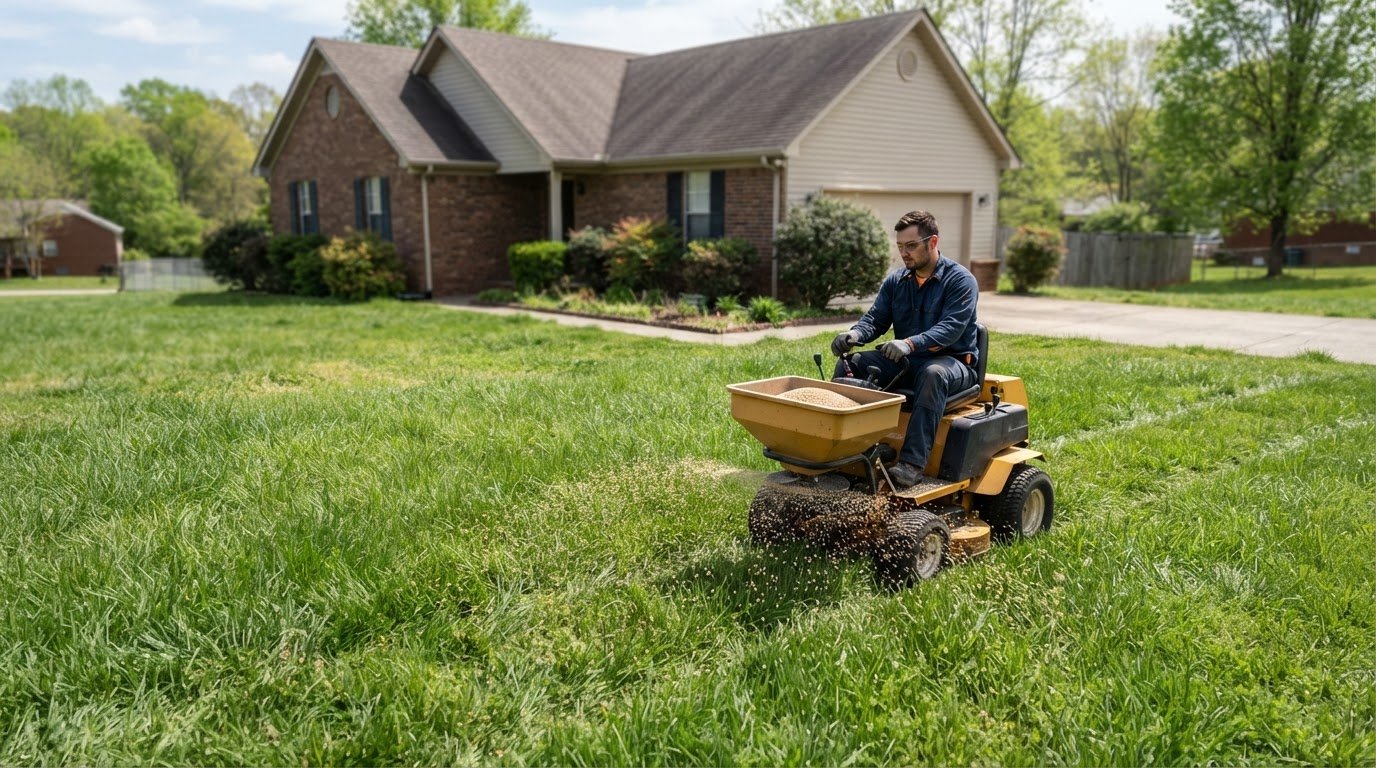
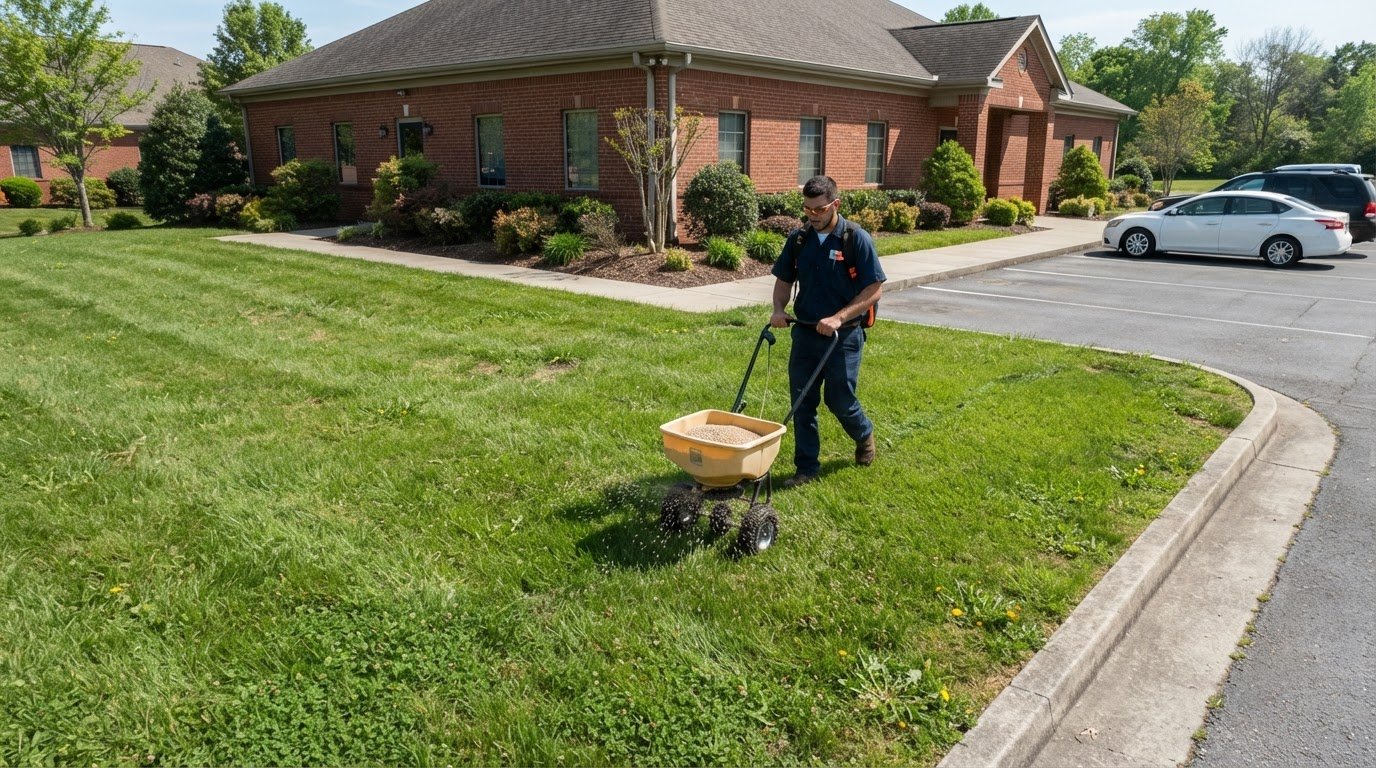
For granular fertilizer, professionals commonly consider a broadcast spreader or a drop spreader. A broadcast spreader distributes material outward across a wider path, while a drop spreader releases it beneath the hopper. The right choice depends on the site layout, product, and need to control placement near sidewalks, beds, or other boundaries.
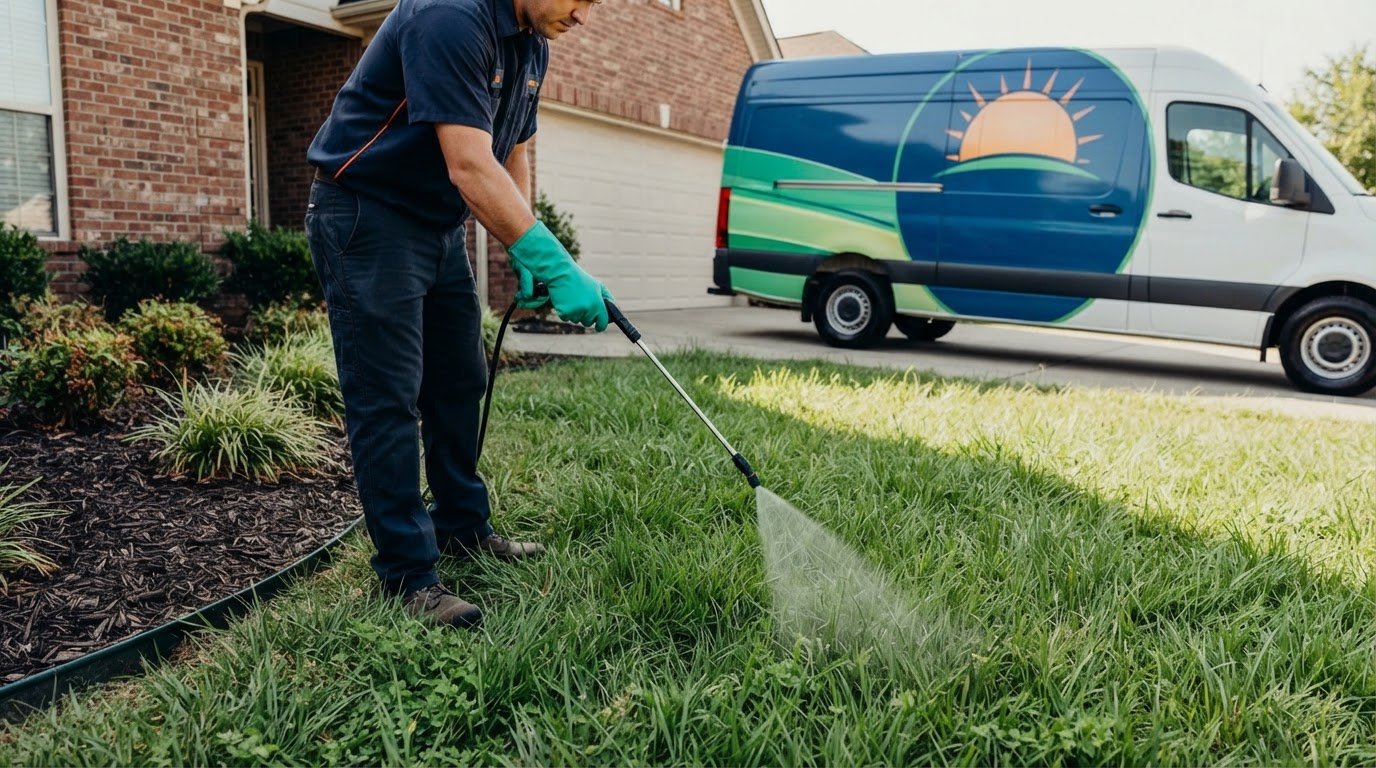
Liquid applications use spraying equipment selected for the treatment area and product directions. A professional considers access, obstacles, and the desired coverage pattern before choosing a setup. Open turf may allow a different route than narrow strips beside buildings. The aim is to direct the application onto the intended surface and limit drift onto adjacent areas.
Preparing equipment is part of application quality. Before work begins, the professional matches equipment settings to the fertilizer and planned coverage. For a spreader, this includes checking its output and maintaining a consistent route. For spraying equipment, the professional checks the setup and confirms that the equipment distributes the material as intended.
Coverage planning matters on properties with multiple turf zones. A professional can divide the site into manageable sections, such as a main lawn, roadside strip, and athletic field. Marking boundaries in the work plan helps track completed areas and reduce missed strips or unnecessary overlap. Gates, parked vehicles, and pedestrian routes can also affect the application sequence.
Commercial lawns and fields can have very different site conditions. A maintained office lawn usually has planted edges, signs, and walkways. An open field may have broader, uninterrupted turf and different access needs. Equipment and route decisions should reflect these differences. Agricultural crop fields also have different production goals, so lawn-turf guidance should not be treated as a crop-fertilizer plan.
Before selecting equipment, a professional weighs factors such as:
- Area shape: Open turf, narrow borders, and irregular corners affect equipment access.
- Product form: Granular and liquid products require compatible application equipment.
- Site boundaries: Walkways, planting beds, and pavement influence placement and route planning.
- Use patterns: Athletic fields, entrances, and common lawns may need separate work zones.
- Application conditions: Wind, surface moisture, and irrigation plans can affect scheduling and placement.
These factors explain why one machine is not ideal for every commercial property. A broadcast spreader may suit an open lawn, while a drop spreader can allow more controlled placement beside a planting bed. Liquid application may be a better fit for a product intended for spraying. Equipment should follow the product directions and property layout, not convenience alone.
After application, a professional reviews the treated area and work path. This final check can reveal an untreated corner, a blocked section, or material deposited beyond the intended turf. On a site with multiple zones, the work plan helps confirm which areas were treated and which need separate consideration. Clear documentation supports consistent service on later visits.
For commercial fertilizer application in Lebanon, TN, equipment choices should match turf, product, and site access. Discuss a commercial fertilizer plan for your property.
Performance Lawns: Residential & Commercial Fertilizer & Weed Control
Performance Lawns provides fertilizer and weed control for residential and commercial properties. For a commercial property in Lebanon, the service combines fertilizer planning with ongoing weed control, tailored to the site’s turf and application needs.
Turn to Performance Lawns for fertilizer service and help managing common weeds. Challenging grassy weeds may need a separate or targeted approach. Bermuda grass in an established fescue lawn is extremely difficult to eliminate completely; management generally focuses on limiting its spread and presence, and may require ongoing or additional strategies. Treatments support care of your grounds, but do not promise every weed will disappear.
Contact Performance Lawns to discuss fertilizer and weed control for your commercial property.
Set a Clear Direction for Your Commercial Turf
Choose a plan that reflects how your outdoor spaces are used. Commercial fertilizer application in Lebanon, TN can support the broader care of your grounds when product decisions and follow-up treatments align with the site’s priorities. Consider which areas need attention first, the appearance you want to maintain, and how fertilizer and weed control fit into ongoing property care.
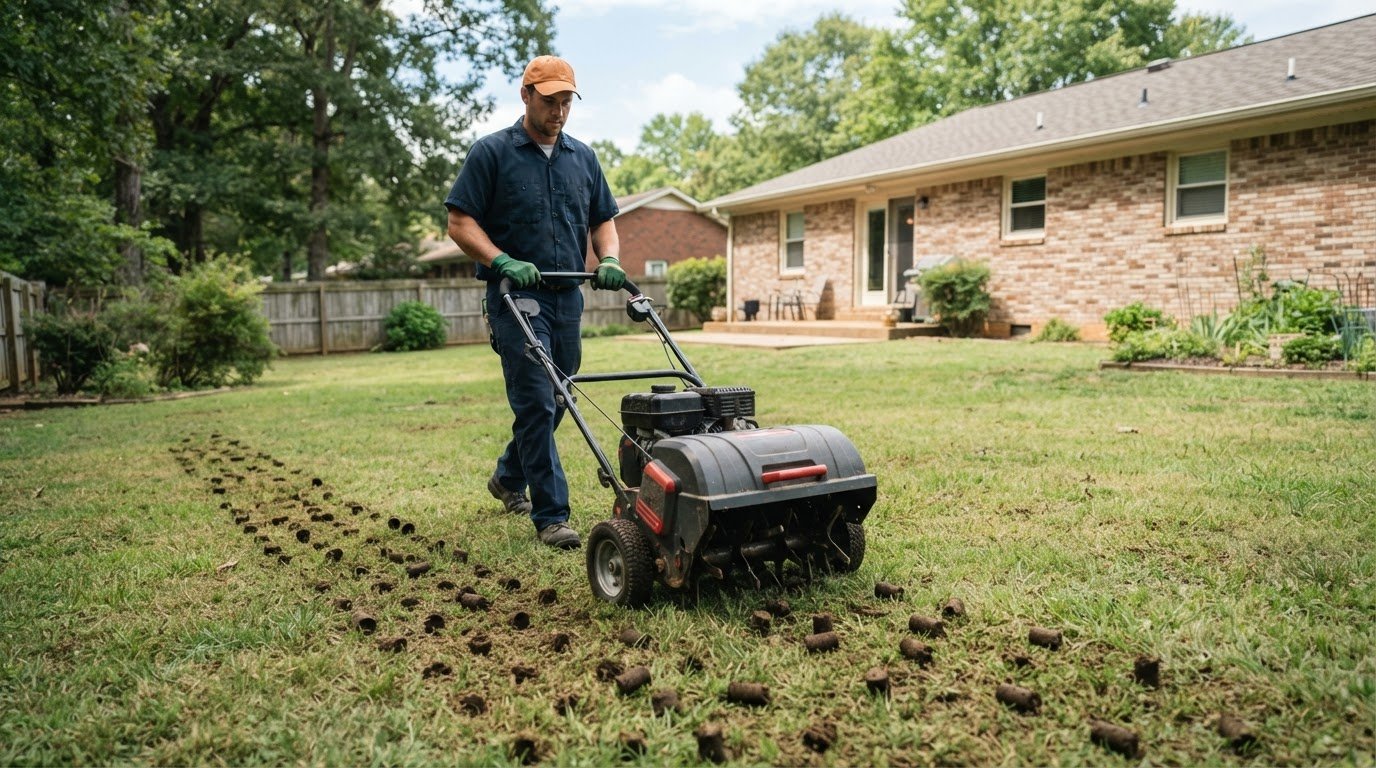
Performance Lawns, INC offers lawn treatments, weed control and fertilization, and residential aeration and overseeding. For commercial properties, its fertilizer and weed control service is a practical next step when you’re ready to discuss professional turf care.
Contact Performance Lawns, INC to discuss fertilizer application and take the next step toward a well-cared-for property.
Frequently Asked Questions
What do commercial fertilizer application services in Lebanon, TN include?
Commercial fertilizer application can involve assessing the site, applying fertilizer, and planning weed control for business properties. A professional considers how the grounds are used, which turf areas need attention, and whether different zones require different care. For example, an entrance lawn and a high-traffic common area may have different priorities. In established fescue lawns, Bermuda grass can be extremely difficult to eliminate completely; management generally focuses on limiting its spread and presence, and ongoing or additional strategies may be needed. Performance Lawns, INC provides fertilizer and weed control for residential and commercial properties seeking coordinated turf care.
Which lawn fertilization companies serve Lebanon, Tennessee?
Performance Lawns, INC serves commercial and residential properties in Lebanon, Tennessee, with fertilizer and weed control. Its local service area also includes Mt. Juliet, Gallatin, and Hendersonville. For a business property, commercial fertilizer and weed control address lawn nutrition alongside ongoing management of common weeds. This service suits owners seeking professional turf treatments rather than mowing or landscape construction.
How do professionals determine the best fertilizer schedule for lawns and landscapes in Lebanon, TN?
Professionals build an application schedule around turf type, current condition, property use, and maintenance history. They also consider seasonal growth patterns and whether irrigation or recent treatments affect timing. Landscape beds may need a different plan from turf because plant types and growing conditions vary. For example, a shaded lawn area may need a different approach from exposed, heavily used turf.