Broadleaf Weed Control for Middle Tennessee Lawns
Last Saturday, you stepped onto your porch with a coffee, expecting a sea of uniform green, but instead found a stubborn army of dandelions and clover. It's a common frustration for homeowners across Middle Tennessee, where finding effective broadleaf weed control for lawns feels like a constant battle against the local climate. You've likely spent hours wandering big-box store aisles, feeling confused by labels and worried about whether those chemicals are truly safe for your children or pets.
We understand that a lawn is more than just grass; it's a place for family, a source of pride, and a significant investment in your home's value. You deserve a thick, resilient, and healthy landscape that naturally crowds out weeds and stays vibrant throughout the shifting seasons. Our mission is to provide the clarity and results you need to enjoy your outdoor space without the recurring stress of DIY failure.
In this guide, you'll learn how to identify common local weeds, discover the precise timing required for successful treatments, and see how professional expertise can simplify your outdoor experience. We'll show you how to move beyond temporary fixes to create a lasting, lush environment that enhances your curb appeal, protects your property value, and provides total peace of mind.
What are Broadleaf Weeds? Identifying the Invaders
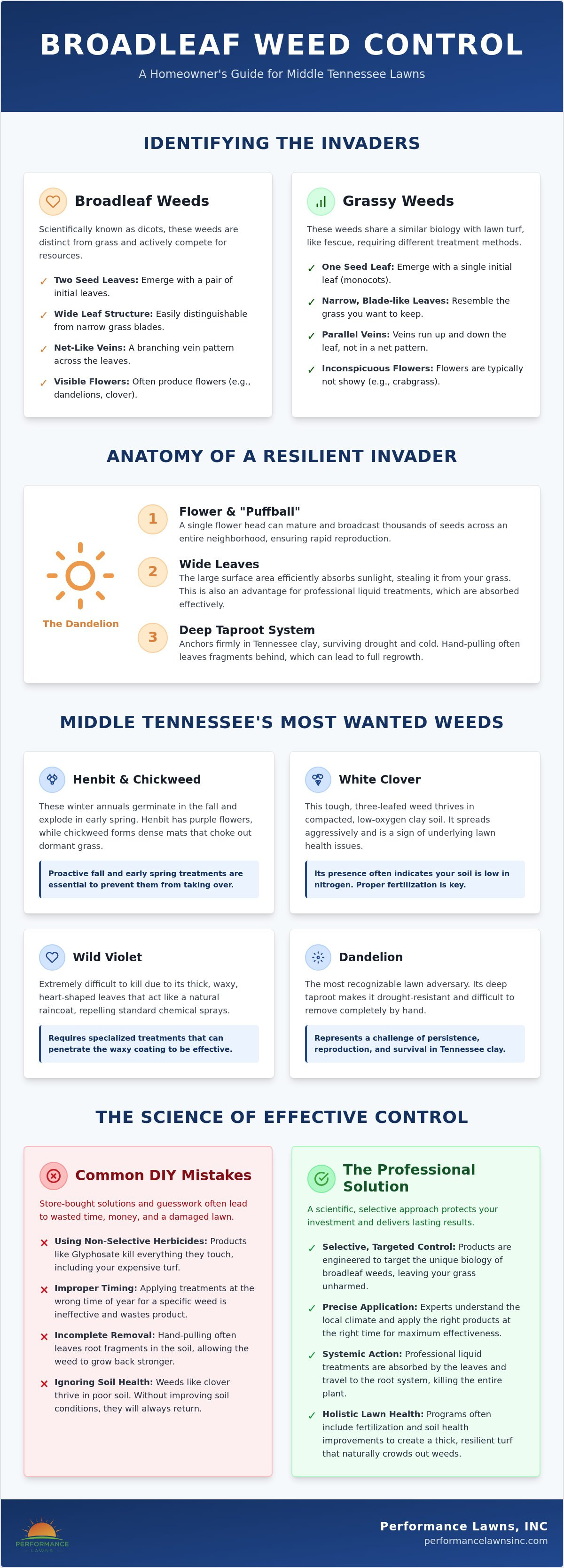
A healthy lawn is a living ecosystem that requires a sharp eye and a disciplined approach to protect. Identifying the specific botanical nature of your invaders is the first step toward reclaiming your yard from unwanted growth. Broadleaf weeds are scientifically classified as dicots, which means they emerge from the soil with two seed leaves. These plants are characterized by wide leaves, a net-like vein pattern, and frequently produce visible flowers that disrupt the uniform green of your turf. Because they look and grow so differently from your grass blades, they stand out as unsightly patches that diminish your property's aesthetic value.
These invaders aren't just an eyesore; they're aggressive competitors. They actively steal the essential nutrients, water, and sunlight your grass needs to thrive and remain resilient. Effective broadleaf weed control for lawns requires a selective approach. This means using specialized liquid fertilization and weed management programs that target the unique biology of the weed without causing harm to the surrounding turf. Without this precision, you risk damaging the very lawn you're trying to save.
Broadleaf vs. Grassy Weeds: Why the Difference Matters
Understanding the distinction between weed types is vital for your lawn's long-term health. Grassy weeds, such as crabgrass, share a similar biology with your lawn and require specialized pre-emergent or post-emergent herbicides. Broadleaf weeds are often easier to target with selective post-emergent treatments because their leaf structure is so distinct. A common and costly mistake is using non-selective killers like Glyphosate. These products are designed to kill almost any plant they touch, which means they'll destroy your grass just as quickly as the weeds. Choosing the right product ensures you're protecting your investment while eliminating the problem.
The Anatomy of a Broadleaf Weed
A broadleaf weed is a non-grassy plant with net-veined leaves and often visible flowers. Their physical structure makes them particularly resilient against casual removal efforts. Many species, like the common dandelion, develop a deep, sturdy taproot system. This makes hand-pulling difficult because any piece of the root left behind can lead to a full regrowth. However, their anatomy also offers an advantage for professional treatment. The large surface area of their leaves allows for better absorption of liquid treatments, ensuring the product reaches the root system to eliminate the plant entirely. By understanding how these plants function, we can apply more effective broadleaf weed control for lawns that delivers lasting results.
Common Broadleaf Weeds in Mt. Juliet and Middle Tennessee
Middle Tennessee occupies a unique horticultural space known as the transition zone. This geographic location means our landscapes face a relentless double threat from both northern and southern weed species. In Mt. Juliet, the heavy clay soil often becomes compacted, creating a low-oxygen environment where grass struggles but invaders thrive. Whether you live in Lebanon or Hendersonville, the seasonal shifts in temperature and moisture trigger distinct flushes of growth. The humid Tennessee summers provide the perfect nursery for these resilient plants to multiply. Achieving effective broadleaf weed control for lawns in this region requires an understanding of these local environmental pressures.
Cool-Season Bully: The Resilient Dandelion
The dandelion is perhaps the most recognizable adversary for local homeowners. It's defined by a bright yellow flower and a remarkably deep taproot that anchors it firmly into the Tennessee clay. This root system allows the plant to survive droughts and cold snaps that might kill off weaker species. Once the flower matures into its iconic "puffball" stage, a single plant can broadcast thousands of seeds across your neighborhood. This rapid reproduction is why dandelions are the primary spring concern for those seeking a uniform, green lawn. They represent a challenge of persistence, reproduction, and survival.
Winter Invaders: Henbit and Chickweed
While many homeowners wait until spring to think about weeds, the battle often begins in the cooling temperatures of autumn. Henbit and chickweed are winter annuals that germinate in the fall, remain low to the ground during winter, and explode into growth as soon as the ground thaws. Henbit is easily identified by its square stems and tiny purple flowers that carpet lawns in early spring. Chickweed forms dense, tangled mats that physically choke out your fescue while it's in a dormant state. Proactive management is the only way to prevent these winter guests from claiming your yard before the growing season even begins.
Tough-to-Kill Species: White Clover and Wild Violet
Some weeds are particularly stubborn because they signal underlying issues with your lawn's health. White clover often indicates that your soil is low in nitrogen, as this plant can pull nitrogen from the air to survive where grass cannot. Wild violet is even more challenging due to its thick, waxy leaves that act as a natural raincoat, causing standard big-box sprays to slide right off. Improving your soil health and aeration can help your turf compete more effectively against these specialized invaders. If you find yourself losing ground to these resilient species, it may be time to consult with a local expert who understands the specific needs of Middle Tennessee turf.
The Science of Selective Broadleaf Weed Control
Effective broadleaf weed control for lawns is a matter of biological precision. Unlike non-selective products that clear everything in their path, selective herbicides are engineered to read the unique physiology of your plants. They distinguish between the narrow blades of your fescue or bluegrass and the wide, net-veined structures of invaders. This technical accuracy ensures that your lawn remains unharmed while the weeds are systematically eliminated. It's a sophisticated approach that prioritizes the long-term health, aesthetic beauty, and functional value of your outdoor space.
The true power of professional treatment lies in systemic action. When a treatment is applied, it doesn't just burn the surface of the plant. Instead, it enters the plant's vascular system and travels through the stems and down into the very heart of the root. This is critical for species with deep taproots, such as the dandelions we identified previously. By destroying the weed from the inside out, we prevent the stubborn regrowth that often plagues DIY attempts. This method provides a level of permanence that surface-level pulling simply cannot match.
Safety and stewardship are the foundations of our work in Mt. Juliet. As local experts, we maintain rigorous standards to protect your children, your pets, and the local environment. We don't just apply products; we manage the health of your community. This involves precise timing, weather monitoring, and the use of calibrated equipment to ensure every drop stays exactly where it belongs. Our commitment to integrity means we treat your property with the same care we would our own.
Pre-Emergent vs. Post-Emergent Strategies
A comprehensive plan requires a two-pronged attack to be successful in the Middle Tennessee climate. Pre-emergent treatments create a proactive barrier in the soil, stopping weed seeds from successfully breaking the surface. This is your first line of defense against the seasonal flushes of growth. Post-emergent treatments target the visible, active weeds already competing for space in your turf. Using both strategies together creates a cycle of protection that keeps your lawn uniform and resilient throughout the entire year.
Liquid vs. Granular Broadleaf Treatments
Many homeowners rely on granular weed and feed bags from big-box stores, but these products often fall short of expectations. Liquid applications provide superior coverage because they coat the entire surface area of the weed's foliage. Liquid selective herbicides are absorbed through the foliage and travel to the root for a complete kill. This method also allows for better drift control during broadleaf weed control for lawns . Our professionals use specialized nozzles and low-pressure systems to ensure the spray stays on your turf and away from your prized garden beds, delivering a cleaner and more effective result.
The Best Time for Broadleaf Weed Control in Tennessee
Timing isn't just a detail; it's the foundation of a successful lawn care strategy. In Middle Tennessee, the Transition Zone climate creates a volatile environment where weed germination dates can shift significantly based on annual weather trends. If you apply treatments too early or too late, you're often wasting resources and leaving your turf vulnerable. Achieving effective broadleaf weed control for lawns requires a deep understanding of these local shifts and a commitment to seasonal discipline.
Summer in Tennessee presents a unique challenge. When temperatures consistently hit the 90-degree mark in Mt. Juliet and Lebanon, your fescue enters a state of survival. Spraying herbicides during these extreme heat waves can easily scorch your grass, causing more damage than the weeds themselves. It's a time for patience and professional judgment. For a complete look at how we manage these variables, see our guide on professional weed control Middle Tennessee homeowners rely on for year-round health.
The Fall Advantage: Targeting the Root
September and October are arguably the most important months for broadleaf eradication. During this window, perennial weeds like dandelions and clover are preparing for dormancy. They actively move energy and nutrients from their leaves down into their root systems. This natural biological process helps systemic herbicides reach the very bottom of the taproot, ensuring a more permanent kill. Treating in the fall is also your best defense against the "purple yard" of Henbit that often takes over in the spring. While you're focusing on broadleaf species, it's also worth reviewing crabgrass control Middle Tennessee strategies to ensure your late-season plan is comprehensive.
Spring Prevention: Setting the Stage
The "Spring Rush" begins as early as February in Mt. Juliet. As the soil begins to thaw and temperatures rise, the first flush of dandelions and chickweed begins to wake up. Early spring applications are designed to catch these invaders before they have a chance to flower and broadcast seeds across your property. This is also the ideal time to pair weed control with high-quality fertilization. By feeding your grass early, you encourage a thick, dense canopy that naturally outcompetes any weeds trying to take hold. This proactive approach simplifies your maintenance for the rest of the year and builds a more resilient landscape.
Ready to take the guesswork out of your seasonal maintenance? Contact us today to schedule your professional lawn treatment.
Professional Control vs. DIY: Why Local Expertise Wins
Many homeowners in Middle Tennessee begin their journey toward a better yard with a trip to a big-box retailer, hoping for a simple solution to a complex biological problem. However, consumer-grade sprays are frequently diluted or lack the specific chemical balance required to tackle our unique transition-zone invaders. Effective broadleaf weed control for lawns isn't a one-size-fits-all task. It requires the technical skill to calibrate equipment, the knowledge to select the right product for the specific weed, and the patience to wait for the ideal weather window. By choosing professional management, you remove the burden of trial and error while ensuring your property receives the highest standard of care.
The difference between a DIY attempt and a professional program often comes down to coverage and concentration. Commercial-grade products are designed to penetrate the resilient defenses of weeds that typically resist homeowner-level sprays. Our specialized equipment ensures every square inch of your turf is treated with the exact amount of product needed, no more and no less. This level of precision protects your family and pets while delivering the uniform, green results that increase your home’s curb appeal, property value, and neighborhood standing.
The Performance Lawns, INC Difference: 15 Years of Local Knowledge
Performance Lawns, INC has spent over 15 years studying the specific soil profiles and weed resistance patterns unique to Middle Tennessee. We understand how local clay soil affects nutrient uptake and how our humid summers can stress your fescue. When you partner with us, you're not just hiring a service; you're engaging a dedicated local steward who treats your lawn with the same integrity as their own. We offer a no-risk guarantee to our neighbors in Gallatin and Lebanon, providing the peace of mind that comes from knowing your landscape is in expert hands. Explore our fertilization and weed control services to see how we create lasting results through professional expertise.
Beyond the Spray: Aeration and Turf Density
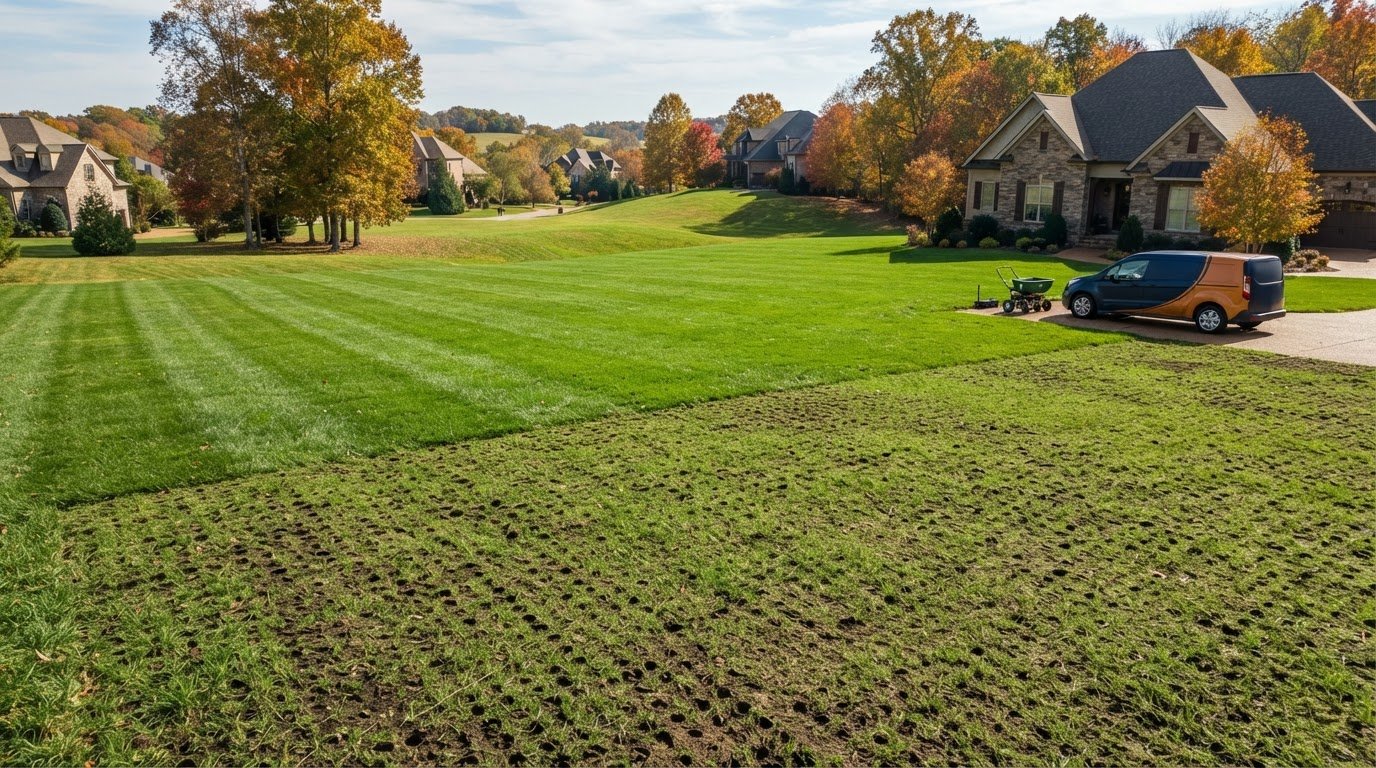
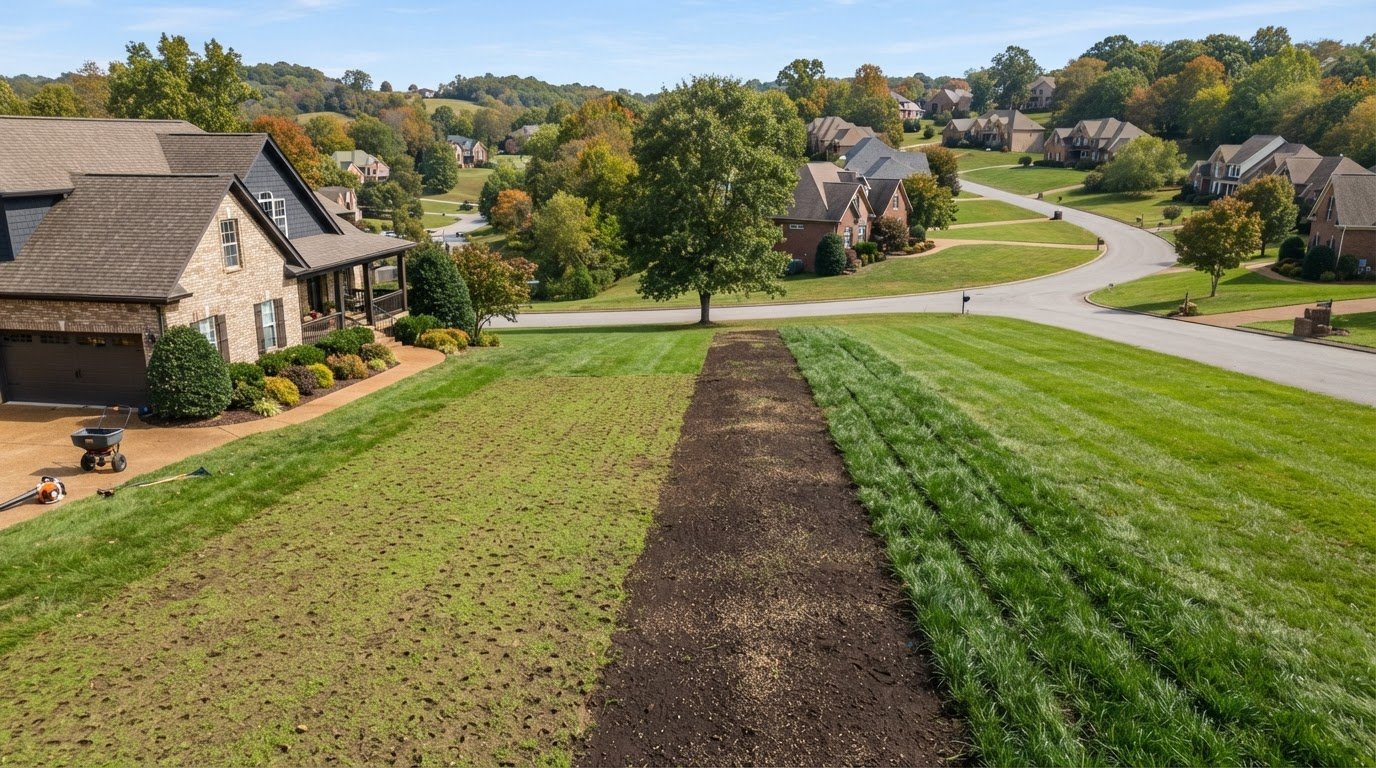
True weed management extends beyond the application of herbicides. A thick, lush lawn is the most effective defense against broadleaf invaders, as a dense canopy naturally blocks the sunlight and space that weed seeds need to germinate. This is where residential aeration and overseeding play a vital role. By relieving soil compaction and introducing fresh, resilient grass seed, we help your turf become so dense that weeds simply have nowhere to grow. Investing in broadleaf weed control for lawns is ultimately an investment in your property’s enduring quality, aesthetic beauty, and personal pride. We're here to act as your partner in that long-term success.
Reclaim Your Lush Middle Tennessee Landscape
Achieving a pristine yard in our unique transition zone requires more than just luck. It demands a deep understanding of local weed biology, the discipline to wait for the perfect weather window, and the precision of professional-grade treatments. By prioritizing soil health and turf density, you transform your property from a constant battleground into a resilient sanctuary. Effective broadleaf weed control for lawns is the cornerstone of this transformation, ensuring your fescue remains the star of the show while invaders are kept at bay.
As a locally owned and operated business in Mt. Juliet, Performance Lawns, INC takes immense pride in our 15+ years of local experience. We're here to remove the burden of complex chemical management while delivering high-end results backed by our no-risk guarantee. You shouldn't have to spend your weekends wrestling with stubborn dandelions or worrying about chemical safety. We treat every yard with the integrity and care it deserves, acting as a principled partner in your home's long-term value and personal pride.
Get Your Free Weed Control Estimate from Performance Lawns, INC today to start your journey toward a thicker, greener landscape. We're ready to help you enjoy the vibrant outdoor experience you've always wanted.
Frequently Asked Questions
What is the most common broadleaf weed in Middle Tennessee?
Dandelions are the most prevalent broadleaf weed across Middle Tennessee, followed closely by white clover and henbit. Our transition zone climate allows these resilient plants to thrive in the heavy clay soil common in Mt. Juliet. While dandelions are visible in spring, their deep taproots require a strategic approach to ensure they don't return. Professional broadleaf weed control for lawns ensures these invaders are targeted at the root for a more permanent solution.
Will broadleaf weed killer kill my grass?
Selective broadleaf herbicides won't harm your grass because they're specifically engineered to target only non-grassy plants. These products read the biological differences between your fescue and broadleaf invaders like wild violet or clover. You should avoid non-selective products like glyphosate, which kill any vegetation they touch. Using professional-grade, selective treatments protects your turf's health while systematically eliminating the weeds that diminish your property's aesthetic value and curb appeal.
How long should I wait to mow after a weed control treatment?
You should wait at least 24 to 48 hours to mow after a professional weed treatment. This delay allows the liquid product to be fully absorbed through the leaf surface and travel down to the root system for a complete kill. Mowing too soon removes the treated foliage before the systemic action is finished. By being patient, you ensure the treatment is as effective as possible, protecting your investment in a uniform, green lawn.
Is broadleaf weed control safe for my dogs and cats?
Yes, our treatments are safe for your dogs and cats once the liquid application has completely dried. We recommend keeping pets off the lawn for a few hours after the technician finishes the service. Once dry, the product is bonded to the plant and won't easily rub off on paws or fur. As dedicated local stewards, we prioritize the safety of your family and pets during every visit to your property.
Why do weeds keep coming back even after I spray them?
Weeds often return because thousands of seeds can remain dormant in your soil for years, waiting for the right conditions to sprout. If your turf is thin or compacted, invaders find the sunlight they need to germinate. A one-time spray isn't a permanent fix; you need a consistent program that combines broadleaf weed control for lawns with aeration and overseeding. This holistic approach builds a dense canopy that naturally crowds out new growth.
When is the best time of year to spray for weeds in Mt. Juliet?
The most effective times to spray in Mt. Juliet are early spring and mid-fall. February and March are critical for stopping early germinators before they flower and spread seeds. However, fall applications in September and October offer the best results for perennial weeds. During this time, plants are moving energy to their roots for winter, which helps the herbicide travel deeper into the root system for a more reliable kill.
Can I apply weed control and grass seed at the same time?
You generally cannot apply standard weed control and grass seed at the same time. Most herbicides are designed to stop seeds from germinating, which means they'll prevent your new grass from growing just as effectively as they stop weeds. We typically recommend waiting several weeks between seeding and applying certain treatments. Our team can help you coordinate these services to ensure your new fescue has the best possible start without weed competition.
Do I need to water my lawn after a broadleaf weed treatment?
You don't need to water your lawn immediately after a treatment; in fact, you should wait at least 24 hours. Most liquid broadleaf treatments need time to become "rainfast" so they aren't washed away before the plant absorbs them. If heavy rain is in the immediate forecast, we'll often reschedule your service to ensure the product remains effective. This methodical approach ensures your treatment delivers the high-end results you expect for your landscape.