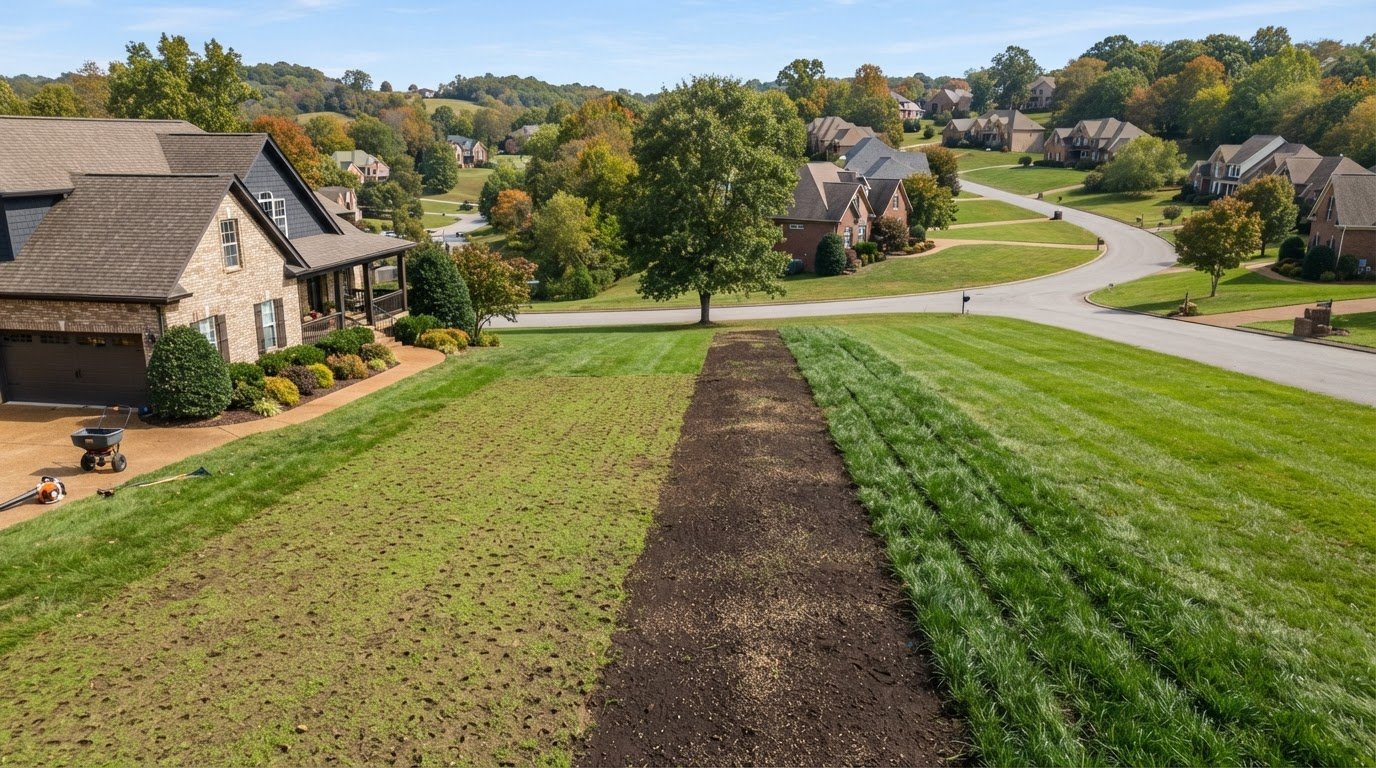


Most homeowners in Middle Tennessee are essentially throwing money away every fall by spreading expensive seed onto ground that's as hard as a Nashville sidewalk. If you've watched your Fescue thin out and brown under the summer heat, you know the frustration of seeing your hard work disappear into the red clay. It's a cycle of effort, expense, and eventual disappointment that many of our neighbors in Mt. Juliet and Lebanon face every single season.
This guide changes that cycle by revealing the professional secrets to successful lawn revitalization and overseeding. We'll move beyond surface-level fixes to address the soil health, compaction, and timing issues that truly dictate your results. You'll discover a clear, actionable plan to transform your property into a thick, resilient, and barefoot-ready landscape. We're going to cover the essential equipment you need, the precise window for planting in the Tennessee transition zone, and the soil-first strategy that ensures your investment actually takes root and thrives.
Evaluating Your Turf: Is Your Lawn a Candidate for Revitalization?
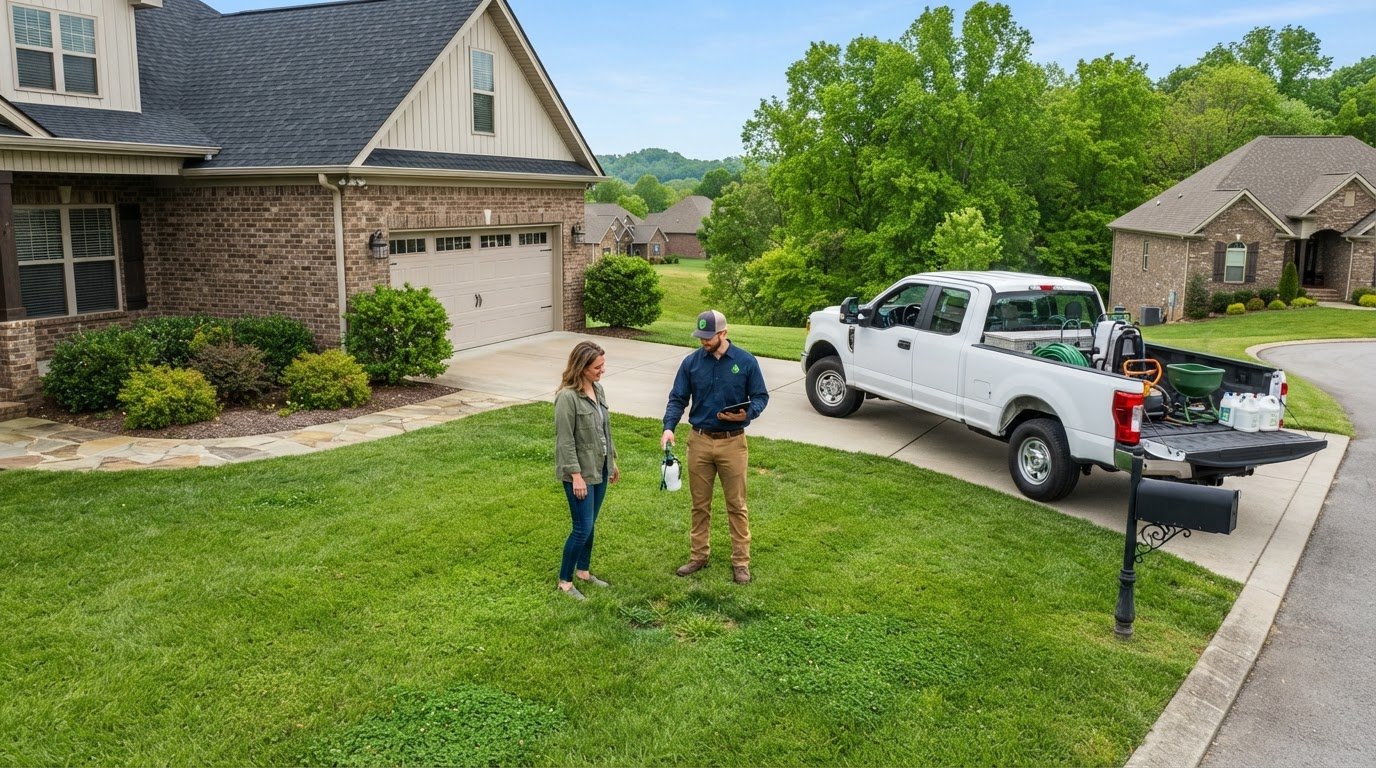
Before you invest in seed and fertilizer, you must determine if your existing lawn is worth saving. We follow a simple industry standard known as the 50 Percent Rule. If more than half of your yard consists of healthy, established grass, a strategic plan for lawn revitalization and overseeding can bring it back to life. However, if weeds or bare red clay have claimed the majority of your property, you might be looking at a full renovation rather than a simple boost. Assessing your lawn's health is the first step in protecting your time, effort, and financial investment. This proactive approach to maintenance is a philosophy shared by experts in property management laurel md, who understand that consistent care is the key to long-term asset appreciation.
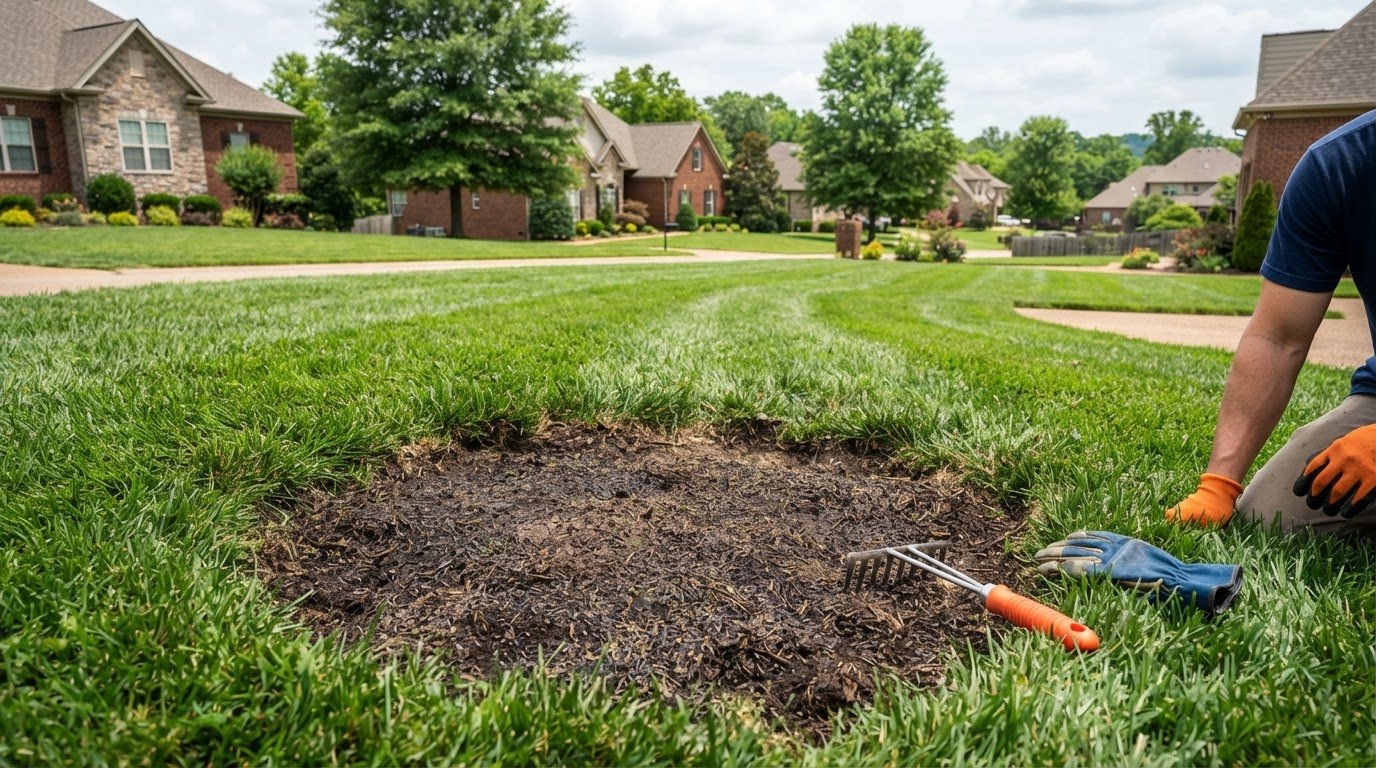
In Middle Tennessee, our Tall Fescue lawns face a unique set of challenges. The transition zone climate creates summers that are punishingly hot and winters that can be surprisingly harsh. You might notice your grass turning brown in July, but this doesn't always mean it's dead. Fescue often enters a state of dormancy to conserve energy. If the crowns of the grass remain firm and greenish-white, the plant is alive. If the turf pulls up easily like a carpet or feels brittle and hollow, the summer heat has likely won the battle.
Signs Your Soil is the Real Problem
Success starts beneath the surface. Our regional clay soil is notorious for compaction, which literally suffocates grass roots. You can test this yourself using a simple screwdriver test. If you cannot easily push a standard screwdriver six inches into your soil, your grass cannot breathe, drink, or grow. High-traffic areas or sloped properties in Mt. Juliet often suffer from heavy runoff, where water simply slides over the surface rather than soaking in. Incorporating organic lawn management techniques through proper residential aeration ensures that oxygen, water, and nutrients reach the root zone. Without addressing this compaction and removing excessive thatch buildup, new seed will simply sit on the surface and perish.
The Cost of Waiting: Why Late August and September Matter
Timing is everything in the Nashville area. We strongly advise against the "Spring Seeding Trap." While the mild weather in April looks inviting, young grass roots rarely have enough time to establish themselves before the June heat arrives. Fall is the non-negotiable window for success. By starting in late August or September, you take advantage of warm soil and cooling air temperatures. This specific window allows Fescue to develop a deep, resilient root system throughout the autumn and winter. Early action also creates a thick canopy that naturally prevents winter weeds from taking hold, ensuring your lawn remains a point of pride, value, and beauty.
Correcting the Foundation: Aeration and Soil Preparation
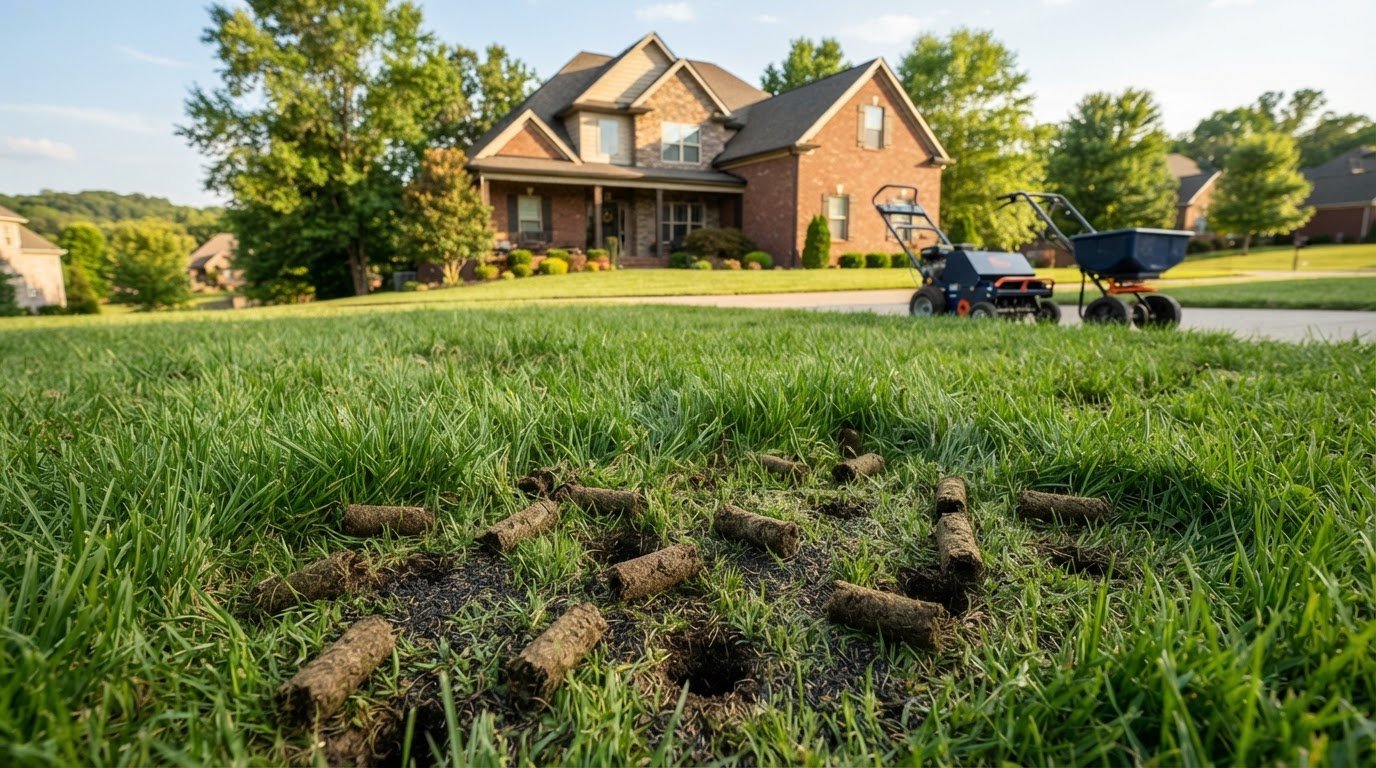
Success isn't just about the seed you buy. It's about the bed you prepare for it. In Middle Tennessee, that bed is often compacted red clay that resists growth. Core aeration is the non-negotiable first step in lawn revitalization and overseeding. Unlike liquid treatments that only affect the surface, mechanical core aeration pulls physical plugs of soil from the earth. This process creates thousands of small pockets that allow the ground to expand, breathe, and receive. It breaks the cycle of compaction that prevents deep root growth and ensures your new Fescue isn't just sitting on a hard, impenetrable shelf. Additionally, if you are concerned that your lawn's health is being impacted by subsurface issues like a failing drain field, you can learn more about septic system maintenance to protect your property's foundation.
Before the seed hits the dirt, you must also address thatch. Thatch is that spongy layer of dead organic matter that sits between the green blades and the soil. While a thin layer is healthy, too much acts like an umbrella. It sheds water and catches seed before it can reach the earth. Proper preparation involves clearing this debris so you achieve maximum seed-to-soil contact. This cleaning step is what separates a professional result from a DIY attempt that fails to take hold.
Soils in Mt. Juliet and Lebanon are notoriously heavy and dense. This density prevents oxygen from reaching the roots and blocks the path of nutrients from your fertilization program. Mechanical aeration is the only reliable way to fracture this clay. By pulling cores, we provide a direct highway for water, air, and nutrients to reach the root zone. You can learn more about our specific process in our guide to Core Aeration for Residential Yards. This mechanical intervention is the difference between a lawn that survives the summer and one that truly thrives.
Nutrient Priming: Fertilization and pH Balance
Even the best seed will struggle if the soil chemistry is out of balance. We recommend starting with a soil test to check your pH levels. Middle Tennessee soil often leans acidic, which can lock up nutrients and make them unavailable to the plant. Adjusting this balance and applying a high-quality starter fertilizer gives your new Fescue a critical competitive edge against weeds. Following a professional lawn renovation checklist ensures you don't miss these foundational steps. Taking the time to prime the soil is an essential part of successful lawn revitalization and overseeding. If you're ready to fix your foundation, reach out to our local team for an expert evaluation.
The Ultimate Lawn Revitalization and Overseeding Checklist
Achieving a lush, resilient lawn in Middle Tennessee isn't a matter of luck. It's the result of a disciplined, five-step sequence designed to overcome our heavy clay and erratic weather. When you follow a structured plan for lawn revitalization and overseeding, you're not just throwing seed at a problem; you're investing in a long-term transformation of your outdoor space. This process requires precision, patience, and a commitment to the foundational health of your turf. For those seeking a more comprehensive approach to their residential outdoor spaces, Alma Gardening Company provides specialized expertise in sustainable landscape design and installation.
- Step 1: Scalping the Turf. You must mow your existing grass to its lowest possible setting, approximately 1.5 to 2 inches. This allows sunlight to reach the soil surface and reduces competition for the new seedlings.
- Step 2: Mechanical Core Aeration. We pull physical plugs of soil at a depth of 2 to 3 inches. This relieves compaction and creates the "pockets" necessary for seed-to-soil contact.
- Step 3: High-Quality Fescue Application. Spread a premium, weed-free Tall Fescue blend at the recommended rate. Using a local-centric blend ensures the grass can handle our specific climate.
- Step 4: Starter Fertilization. Apply a phosphorus-rich starter fertilizer. This triggers immediate root development, helping the young plants establish themselves before the first frost.
- Step 5: Consistent Irrigation. This is the homeowner's most critical responsibility. You must keep the soil surface consistently moist for the first 21 days to ensure germination.
The Pre-Seeding "To-Do" List
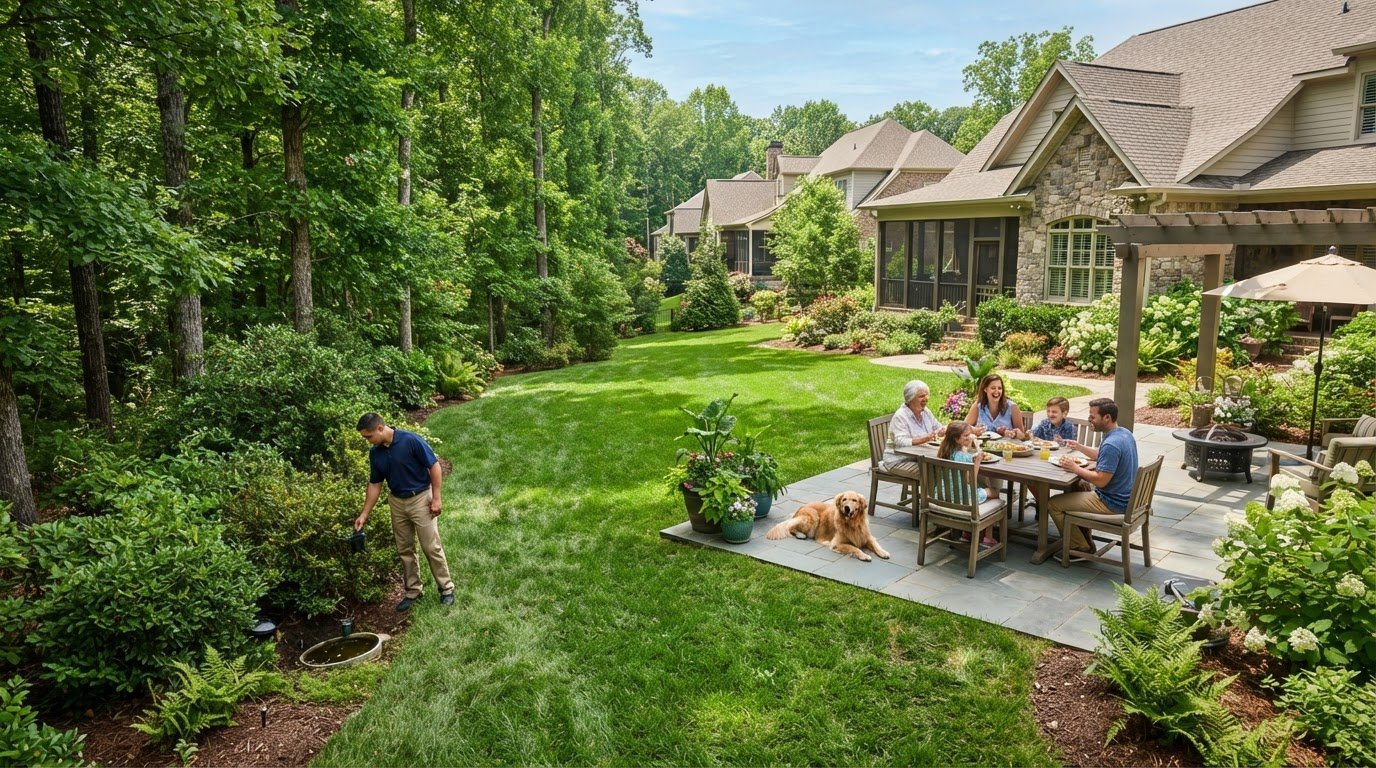
Before the equipment arrives, you need to clear the path for success. Start by managing aggressive weeds at least two weeks prior to seeding. Identifying the underlying causes of turf deterioration, such as disease or poor drainage, allows you to fix those issues before the new seed goes down. You should also clearly mark all irrigation heads, valve box covers, and invisible fence lines. This simple step prevents costly damage during the heavy-duty aeration process and ensures the job is completed safely and efficiently.
The Seeding and Application Phase
Precision during the application phase prevents the common "more is better" mistake. Over-seeding can lead to crowded seedlings that compete for limited nutrients and water, resulting in a weak, disease-prone lawn. We calculate the exact poundage needed for your specific square footage to ensure optimal density. Once the seed is down, we focus on ensuring it makes direct contact with the earth. This might involve dragging the lawn or light rolling to settle the seed into the aeration holes. For those looking for professional assistance with residential aeration and overseeding, our team provides the specialized equipment and local expertise needed for a barefoot-ready result.
Professional Overseeding vs. DIY: A Comparison for Middle TN
Many homeowners view a weekend spent on the lawn as a rite of passage. However, the reality of DIY lawn revitalization and overseeding often involves hidden costs that go far beyond the price of a bag of seed. Between equipment rental, the physical toll of labor, and the risk of poor germination, the perceived savings often evaporate quickly. Professional spreaders are calibrated to the tenth of a pound, preventing the seed waste and uneven growth patterns common with consumer-grade models. We provide the Performance Lawns, INC No-Risk Guarantee and 15 years of local experience, removing the uncertainty that comes with a solo project. Choosing a professional partner ensures your investment yields a lush, healthy return without the stress of trial and error; similarly, for those who want to avoid the complexities of chemical balancing and cleaning, Tortuga Pools provides the expert care needed to keep your swimming pool in top condition.
Equipment Matters: Pro-Grade Aerators vs. Rental Units
The machines available at local rental yards are often lightweight versions of the heavy-duty equipment we use daily. In the dense clay of Mt. Juliet and Gallatin, these rental units frequently fail to pull deep, consistent cores. Our professional-grade aerators use hydraulic weight and precision tines to reach the necessary depths, ensuring the seed has a true home. A professional crew can revitalize a 10,000 sq. ft. lawn in a few hours, a task that might take an unpracticed homeowner an entire exhausting weekend. Working with a licensed and insured team also removes the liability and safety risks associated with operating heavy machinery on your property; for other high-stakes maintenance like exterior cleaning, you can learn more about how experts like Ehrman's Power Wash handle specialized equipment to protect your home's value.
The "contractor grade" seed found in big-box stores often contains weed seeds and filler that can compromise your lawn's health for years. We exclusively use "Blue Tag" certified Fescue blends specifically selected for the Tennessee transition zone. This certification is the highest standard in the industry, guaranteeing high germination rates and zero noxious weeds. These varieties are chosen for their deep green color, drought resistance, and natural disease defense. By blending multiple Fescue cultivars, we create a diverse turf canopy that can withstand local stressors better than a single-variety lawn. This scientific approach to seed selection ensures your lawn remains resilient through the humid summers and cold winters typical of Lebanon and Gallatin.
If you want to skip the rental lines and guarantee a thick, barefoot-ready lawn this season, contact our team of local experts for a professional evaluation and quote.
Post-Care: Protecting Your Revitalization Investment
The heavy lifting is over, but the success of your lawn revitalization and overseeding now rests on a disciplined post-care routine. This phase is about stewardship, patience, and consistent care. The first 21 days are the most critical window for your new Fescue. During this time, the seeds are vulnerable as they begin to swell, germinate, and send out their first delicate roots. Any lapse in moisture or premature physical stress can jeopardize the entire project. Think of this period as a short-term investment that secures the long-term beauty and resilience of your property; professional firms such as Morgan Property Solutions Inc. recognize that this level of attention to detail is what ultimately protects a property's market value.
Watering is the most vital component of this phase. You must keep the seed bed consistently moist without allowing water to pool or run off. In Middle Tennessee, we must also navigate local water conservation efforts. As of August 2026, Nashville homeowners are requested to follow a voluntary schedule, watering between 7 p.m. and 4 a.m. Odd-numbered addresses water on Mondays, Wednesdays, and Fridays, while even-numbered addresses take Tuesdays, Thursdays, and Saturdays. Following these guidelines ensures you remain a good neighbor while still providing the hydration your young turf requires.
The Homeowner’s Watering Schedule
For the first 14 days, focus on short, frequent bursts of water. Your goal is to maintain surface moisture so the seeds never dry out. From day 15 to 28, you should transition to deeper, less frequent soakings. This encourages the roots to grow downward into the clay in search of moisture, creating a more drought-tolerant plant. Be mindful of Spring Hill’s mandatory restrictions if you live in that area. From May through September, Spring Hill odd-numbered addresses water on Mondays, Wednesdays, and Saturdays, while even addresses use Sundays, Tuesdays, and Thursdays. No watering is permitted on Fridays. Avoiding late-evening saturation can also prevent "damping-off" disease, which thrives in stagnant, overnight moisture.
Long-Term Maintenance and Protection
Resuming your normal maintenance routine requires a gentle touch. We follow the "3-inch rule" for new Fescue. Do not mow the lawn until the new grass has reached at least three inches in height, and ensure your mower blades are professionally sharpened to avoid tearing the young plants. You should also wait until you have mowed the new grass at least three times before applying any post-emergent weed control. This allows the root systems to mature enough to handle the treatment without stress.
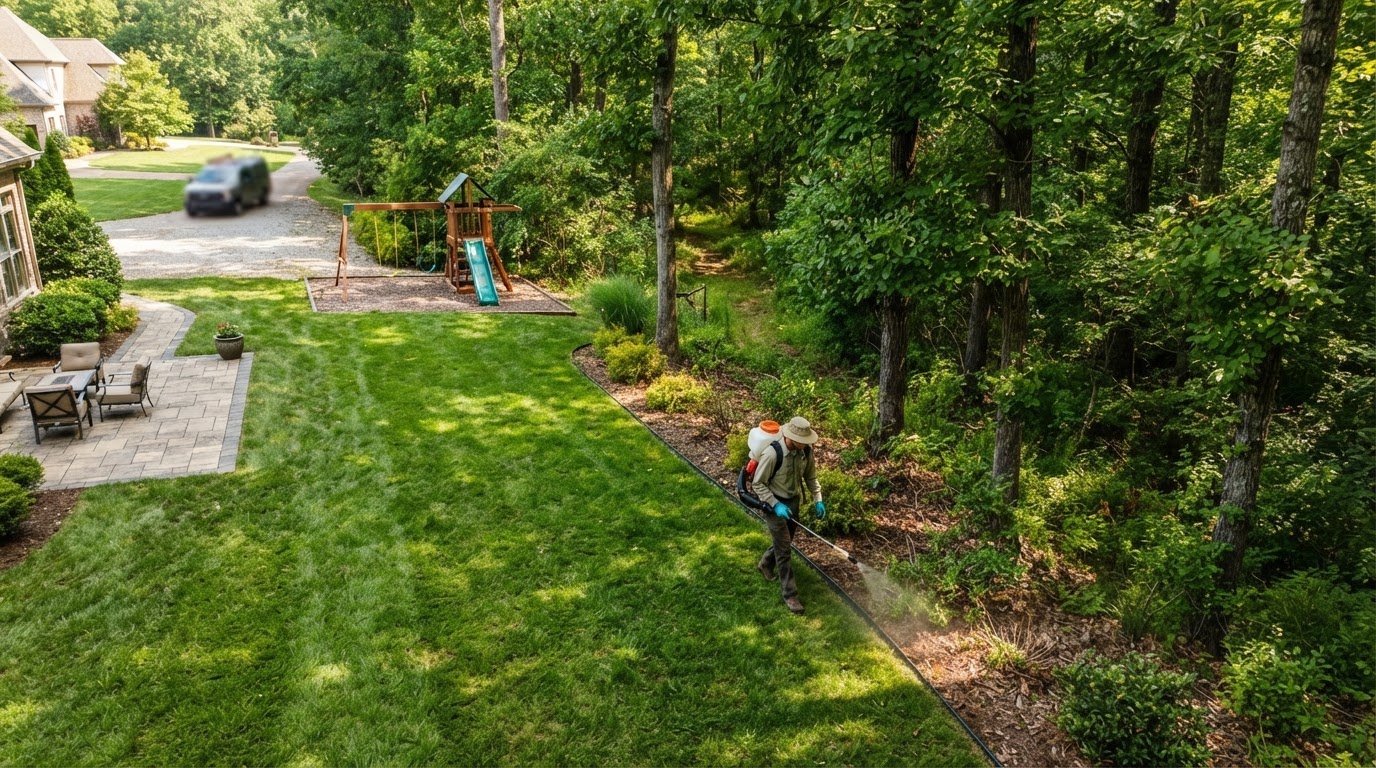
Finally, keep a close watch for fall pests. Armyworms can devastate a newly seeded lawn in a matter of days if left unchecked. Integrating a protective layer of Professional Lawn Treatments in Mt. Juliet can safeguard your young turf from these seasonal threats. By combining your diligent watering with our expert oversight, you ensure your lawn remains a thick, green, and barefoot-ready landscape for years to come.
Cultivating a Resilient Legacy for Your Tennessee Home
Your lawn is more than just a patch of grass; it's an investment in your property's value, your family's outdoor freedom, and our community's aesthetic health. Achieving a thick, barefoot-ready landscape requires moving beyond surface-level fixes to embrace the soil-first strategy we have explored. By prioritizing mechanical core aeration, selecting certified seed blends, and committing to a disciplined watering schedule, you can finally break the cycle of thinning turf. This season represents the perfect window to establish a resilient foundation that will thrive for years to come.
Professional lawn revitalization and overseeding removes the guesswork and heavy labor from your autumn checklist. As a locally owned and operated partner with 15 years of Middle Tennessee expertise, Performance Lawns, INC is dedicated to delivering high-end results with a neighborly touch. We stand behind our work with a no-risk guarantee on all treatments, providing you with the peace of mind you deserve. Get Your Free Revitalization Quote from Performance Lawns, INC today to begin your lawn's transformation. Let's work together to create the vibrant, healthy landscape your home deserves.
Frequently Asked Questions
When is the best time for lawn revitalization in Middle Tennessee?
The ideal window for lawn revitalization and overseeding in Middle Tennessee is late August through September. This timing allows cool-season Fescue to germinate in warm soil while avoiding the punishing heat of July and August. If you wait until spring, the young roots won't have enough time to establish before the summer drought hits. By planting in the fall, you give your turf several months of cool weather to develop a deep, resilient root system.
Do I really need to aerate before overseeding my lawn?
Yes, mechanical core aeration is an essential prerequisite for successful overseeding. In our region, the heavy red clay becomes extremely compacted over time, which prevents seeds from reaching the soil. Aeration creates physical openings that allow seeds to settle into the earth rather than sitting on top of thatch. Without these pockets, your germination rate will drop significantly, and much of your expensive seed will simply wash away or fail to take root.
How long does it take for new Fescue seed to germinate?
Just as compacted soil can hinder your lawn's growth, shifting ground can affect the stability of your home's hardscapes; to ensure your property remains safe and level, you can discover Airlift Concrete Experts for expert advice on concrete maintenance and identifying when to address structural concerns.
You can expect to see the first green sprouts of new Fescue within 7 to 21 days, depending on soil temperature and moisture levels. Consistent irrigation is vital during this window to ensure the seeds stay hydrated and active. While some varieties might pop up sooner, the full stand won't be visible for several weeks. It's important to remain patient and keep up your watering schedule even if you don't see immediate results across the lawn. During this vulnerable growth phase, you can also explore Professional Pest Management Services to ensure your property is protected from invasive seasonal pests that might threaten your new turf.
You should limit foot traffic as much as possible for at least three to four weeks after the service is completed. Walking on the lawn can disturb the seeds or crush the delicate new seedlings as they emerge from the soil. While a quick trip to move a sprinkler is fine, you should keep pets and children off the grass during this establishment phase. Once the new grass has been mowed for the first time, it's generally safe to resume activity.
What is the difference between lawn renovation and overseeding?
Overseeding is the process of adding new seed to an existing, thinning lawn to increase density and health. Lawn renovation is a more aggressive approach used when a lawn is more than 50 percent weeds or bare dirt. Renovation often involves clearing existing vegetation or adding topsoil before starting fresh. For most Middle Tennessee homeowners, a consistent program of lawn revitalization and overseeding is enough to maintain a thick, beautiful landscape year after year without starting from scratch. Just as choosing a local lawn expert is key, finding a local specialist for other property needs like pest control is equally important; to see a comparison of local vs. national providers, click here.
Overseeding can improve these areas, but grass under large trees faces intense competition for sunlight, water, and nutrients. We use shade-tolerant Fescue blends to give these spots the best chance of success. However, if the shade is too dense, you might also need to thin out the tree canopy to allow more light to reach the ground. Even with the best seed, grass requires at least four hours of filtered sunlight to survive in the long term; if you are considering a more extensive property transformation that includes hardscaping or structural work, you can check out Green Earth, LC for examples of high-level landscaping and construction.
The investment for professional service varies based on the square footage of your property and the current condition of your soil. Factors like the amount of seed required and the degree of compaction in your Mt. Juliet lawn will influence the final estimate. While we don't provide flat rates, we offer personalized evaluations to ensure you're getting exactly what your turf needs. Investing in professional care ensures the job is done right the first time using industrial-grade equipment. For commercial property owners who need similar precision for their interior surfaces, you can learn more about Polished Concrete Atlanta to see how professional flooring solutions enhance industrial environments.
You should wait to mow until the new grass reaches a height of three to four inches. This typically takes three to five weeks after seeding. It's crucial to use a sharp mower blade to ensure a clean cut rather than pulling the young, tender roots out of the ground. Set your mower to its highest setting and avoid bagging the clippings for the first few mows to allow nutrients to return to the soil.